

Victorian Settee and Chairs
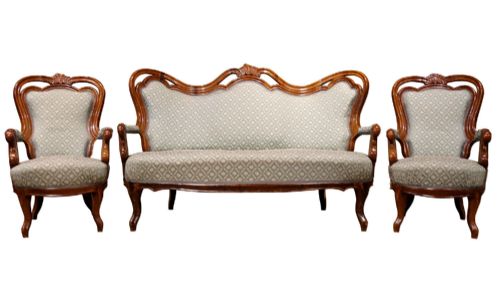
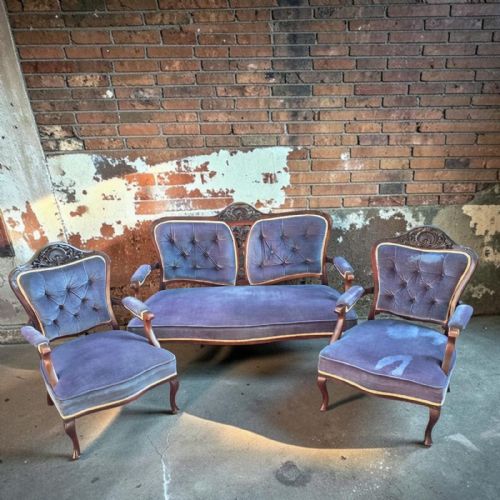
These walnut, mahogany and rosewood groupings bring together a matching victorian settee and chairs for formal rooms.
Victorian Settee and Chairs
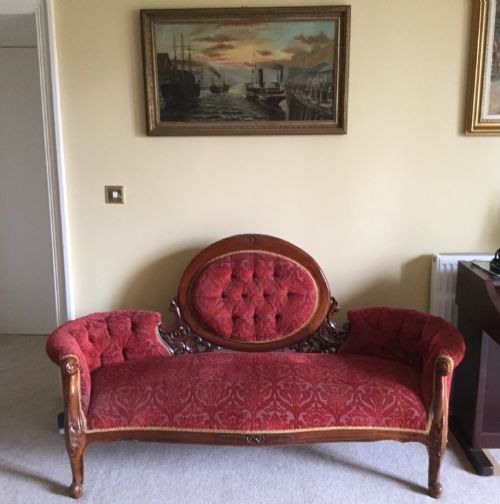
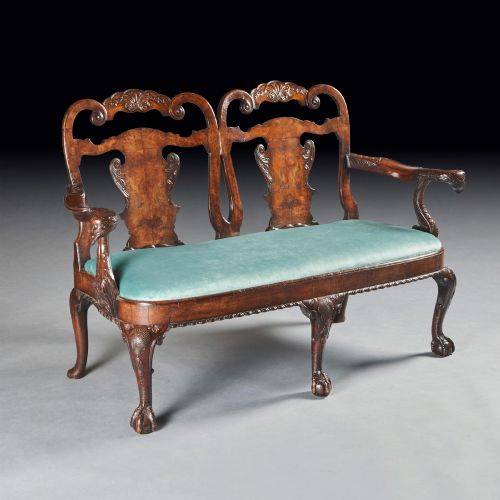
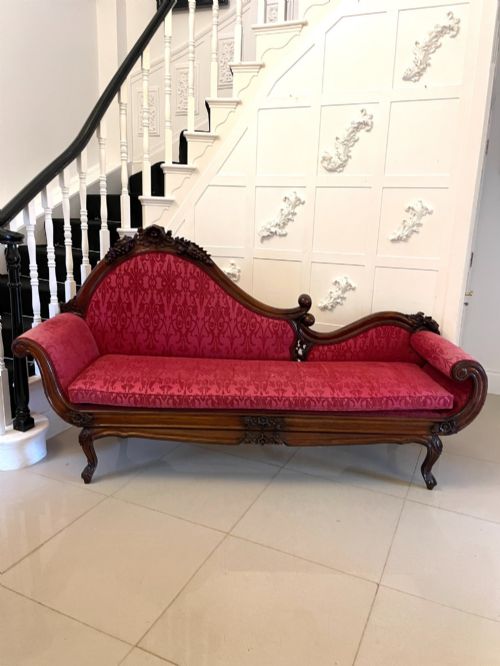
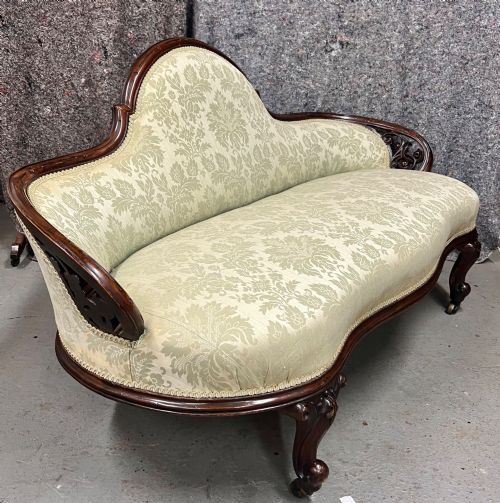
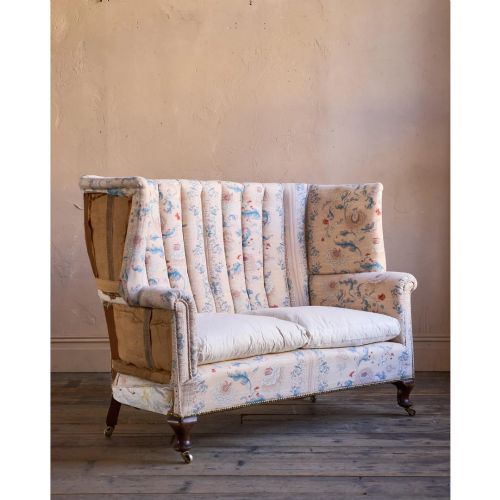
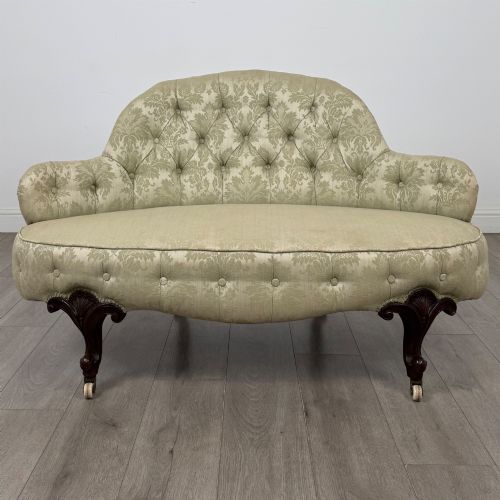
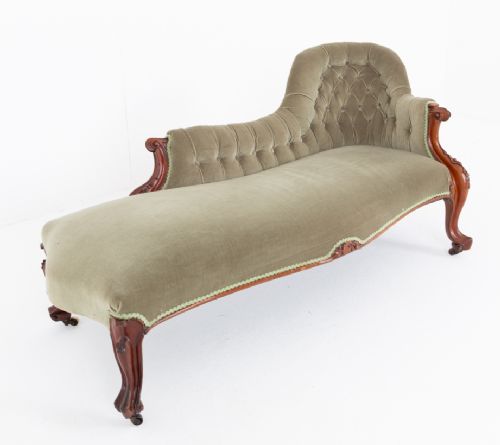
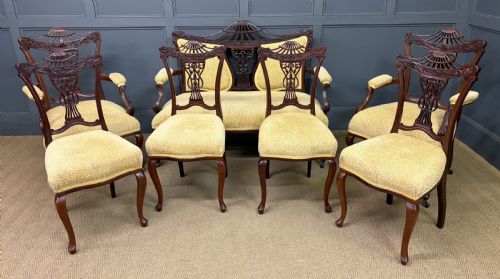
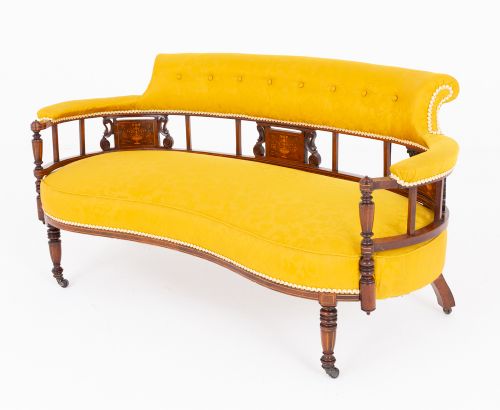
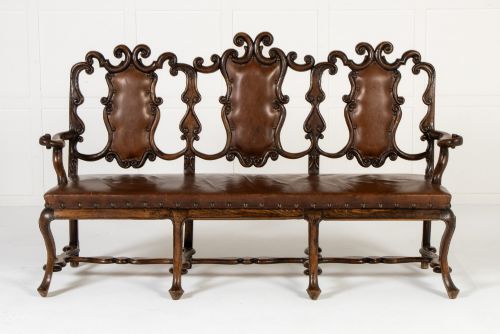
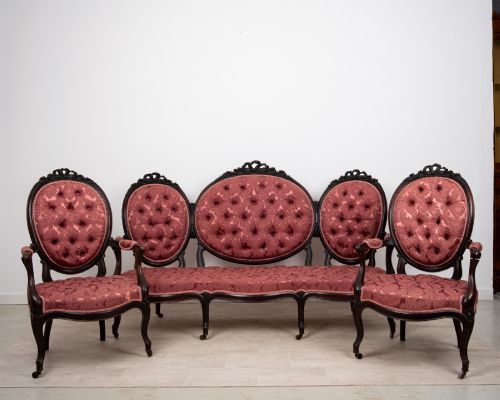
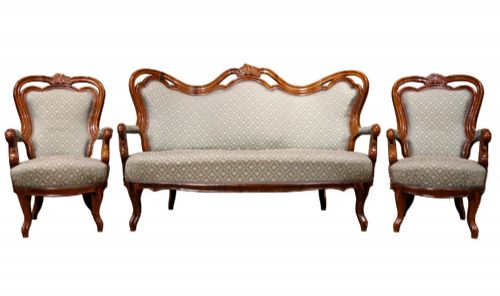
A victorian settee and chairs typically arrive as matched salon suites, drawing room suites or parlor suites spanning multiple pieces of seating furniture. The groupings range from compact three-piece sets consisting of a sofa and a pair of chairs to extensive eleven-piece ensembles including armchairs, side chairs and footstools. Alongside these formal parlour suites, individual settees, double-ended sofas, chaise longues and conversation seats appear frequently.
Most pieces date from the nineteenth century, running through early Victorian, mid-period walnut productions, late Victorian revivals and Edwardian transitions. Workshops utilised historical design idioms such as Rococo Revival, Georgian Revival, Baroque Revival, Carolean style, Egyptian Revival and Moorish Islamic influences. Buyers select these coordinated seating arrangements to furnish principal reception rooms with period-correct, unified furniture schemes.
Construction and Materials
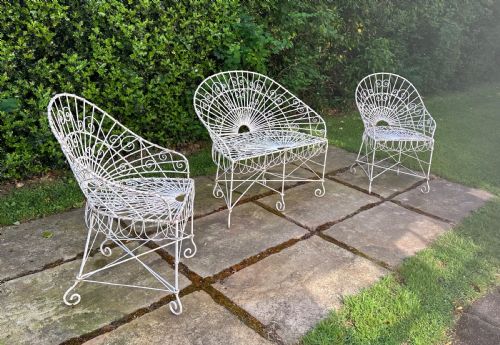
Cabinetmakers built the structural frames using dense timbers like walnut, mahogany, rosewood and ebonised wood, frequently incorporating elaborate hand-carved elements, showwood frames and inlaid details. Metal components such as brass hardware or cast iron appear in specific designs like garden benches and specialised frames. Structural support relies on traditional joinery methods paired with sprung settee bases designed to sustain heavy upholstery.
Upholstery defines the surface texture, utilising fabrics ranging from velvet, damask and brocade to deep-pile textiles and hand-dyed leather. Workshops applied techniques like deep buttoning, tufting and complex re-upholstering to finish the seating surfaces, matching the fabric across both the central settee and its companion chairs.
Victorian Settee and Chairs Retail Price Guide 2026
Typical asking prices for victorian settee and chairs among the pieces listed under this phrase on Sellingantiques today, from the lower quarter to the upper quarter. They describe what is for sale here now, not the wider market.
Moorish Islamic conversation seats offer curved seating arrangements designed so participants face opposite directions while chatting.
Assessing Quality
The standard of a victorian settee and chairs depends heavily on the ambition of the carved woodwork and the integrity of the timber frame. Suites featuring crisp, deep hand-carving in solid walnut or mahogany demonstrate superior cabinetmaking compared to simpler moulded frames. Maker attribution also plays a role, with documented pieces carrying distinct provenance commanding higher regard among collectors.
The harmony and completeness of the suite dictate its standing within the range. Coordinated groupings that retain their original matching upholstery fabrics, balanced proportions across every chair and sofa, and robust internal springing represent the highest tier of surviving nineteenth-century seating.
Holland and Sons·Jas Shoolbred·Howard and Sons·Val D'osne
The Victorian Settee and Chairs Glossary
- Chaise Longue
- An elongated upholstered chair designed for reclining, featuring a backrest at one end and sometimes a partial arm. These pieces often form part of a larger salon suite or stand alone in a boudoir.
- Salon Suite
- A matched set of seating furniture comprising a central sofa or settee accompanied by matching armchairs and side chairs. These suites were designed for formal entertaining in nineteenth-century drawing rooms.
- Showwood
- Timber framing left visible around the upholstered portions of a sofa or chair to display the grain and carved ornamentation. Walnut and mahogany were frequently utilised for this purpose.
- Deep Buttoning
- An upholstery technique where buttons are sewn deeply through the padding at regular intervals to create a patterned, tufted surface. This method provides both structural tension and decorative relief.
Victorian Settee and Chairs: Frequently Asked Questions
What is a salon suite?
A salon suite is a coordinated collection of seating furniture designed specifically for formal reception rooms during the nineteenth century. It typically includes a matching settee paired with armchairs and side chairs sharing identical carved frames and upholstery.
These groupings allowed Victorian homeowners to present a unified decorative scheme to visitors. The pieces were arranged to facilitate polite conversation in drawing rooms and parlours.
Were these suites always made of walnut?
No, while walnut is extremely common in nineteenth-century seating, makers also utilised mahogany, rosewood and ebonised wood. The choice of timber often reflects the prevailing fashion and the decade of manufacture.
Early Victorian pieces frequently display rich mahogany frames, whereas later decades saw a preference for figured walnut and exotic veneers. Garden variants utilised durable metals like cast iron rather than timber.
How should I arrange a settee and chairs?
Arranging a settee and chairs involves balancing the central sofa with its matching companion chairs around a focal point like a fireplace or table. Keeping the suite together in a principal reception room preserves its visual harmony.
Because the pieces share identical carved details and upholstery fabrics, placing them within the same space accentuates their craftsmanship. Larger eleven-piece suites can be distributed across spacious drawing rooms to create cohesive seating areas.