

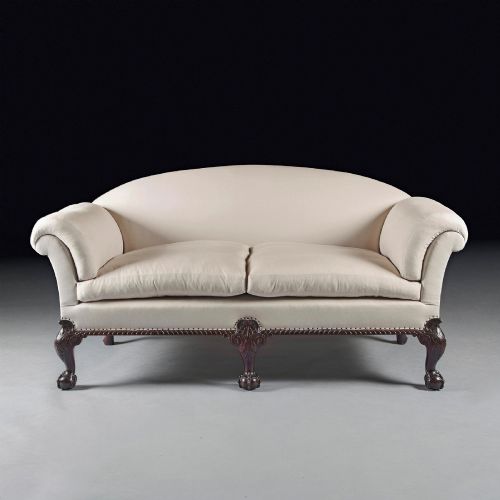
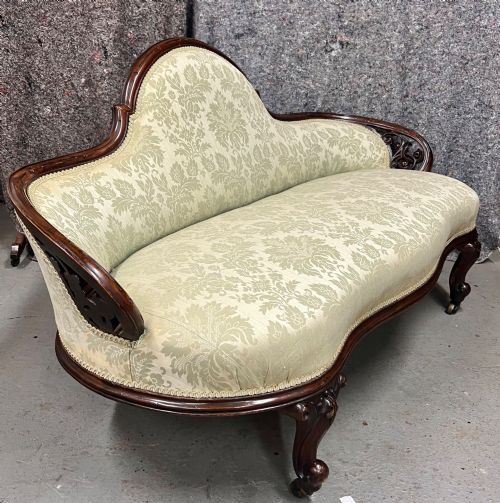
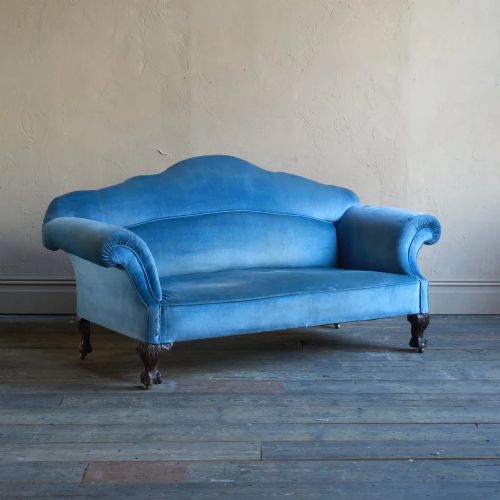
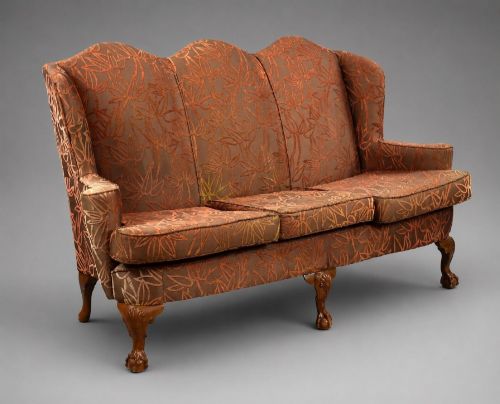
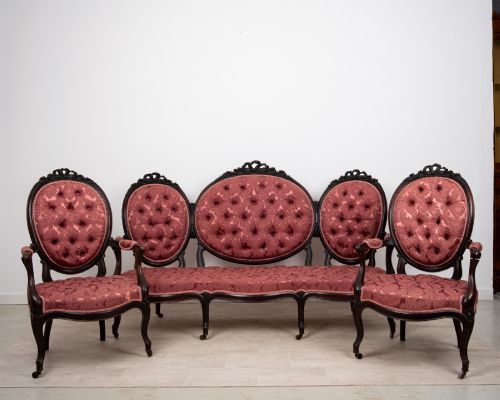


Carved Cabriole Leg Settee
These carved cabriole leg settee examples bring classical proportion and curved framework straight into a modern interior.
Identifying your carved cabriole leg settee
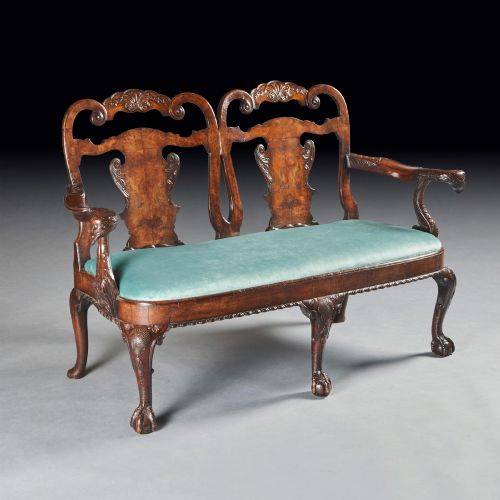
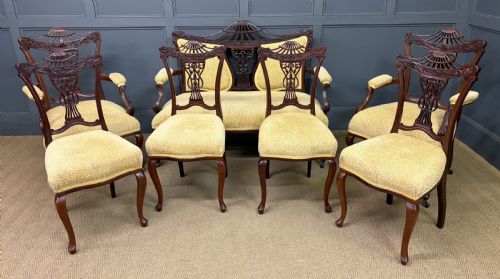
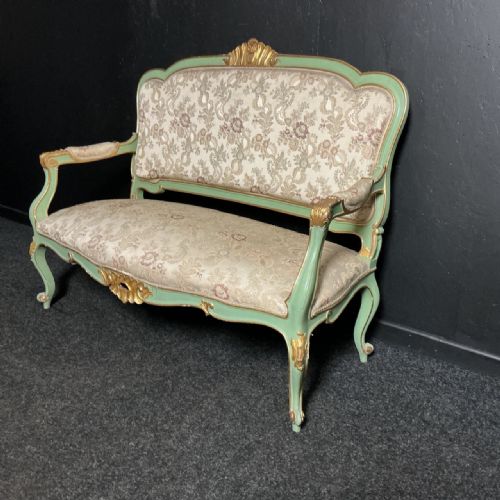
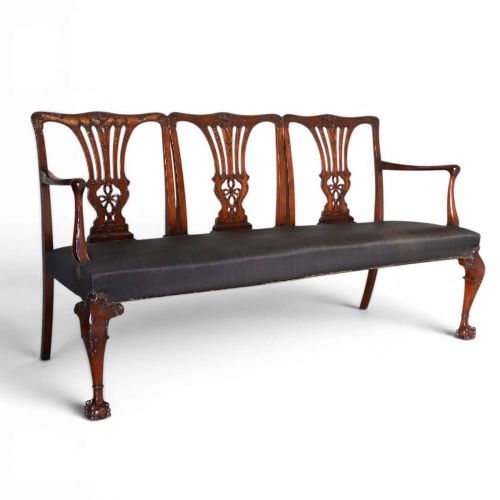
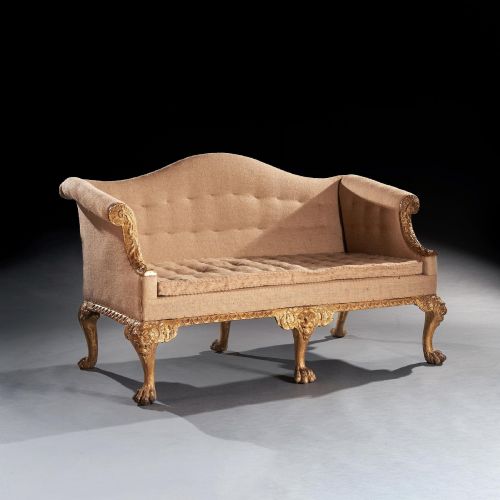
When you search for a carved cabriole leg settee, you are looking at upholstered seating supported by distinctive double-curved legs that swell outward at the knee and taper down to a pad, claw, or scroll foot. The pieces on this page span from the eighteenth century through to the nineteenth and early twentieth centuries, capturing periods of enthusiastic revival as well as original craftsmanship.
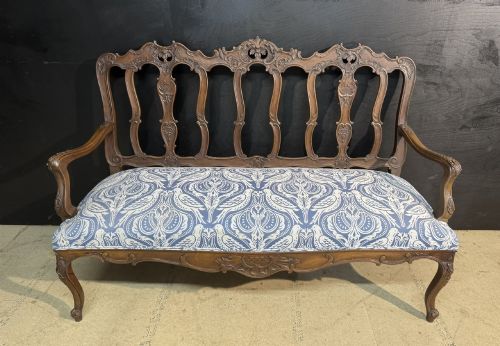
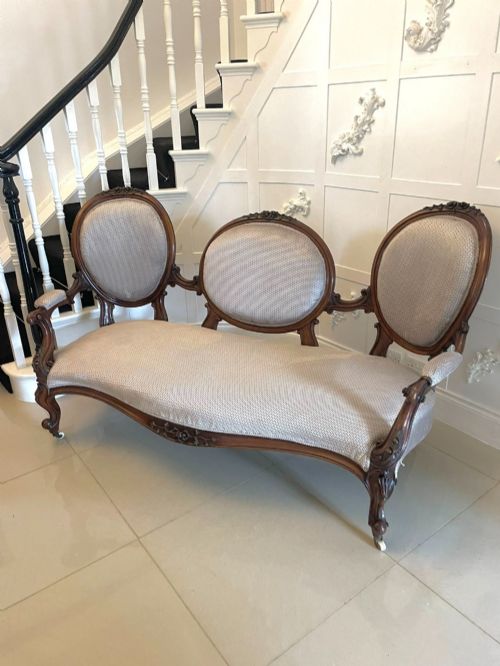
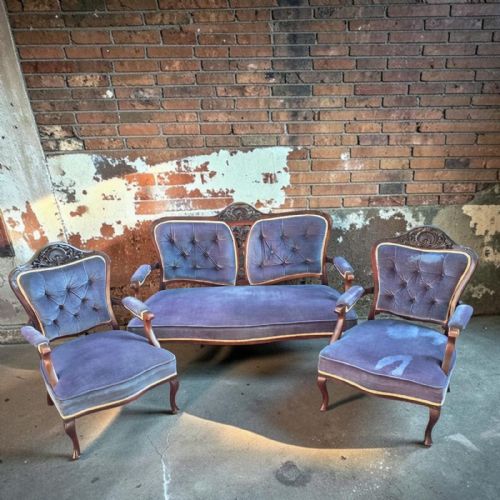
The forms range from twin and triple chair-back sofas to expansive three-piece suites and decorative Japanned frames. You will encounter styles reflecting George II designs, Chippendale traditions, Victorian Rococo revivals, and French Louis XV influences, each bringing distinct carving depth and silhouette to the room.
Origins vary between authentic period production and later revival movements from the late nineteenth and early twentieth centuries. Walnut and mahogany predominate as the primary timbers, frequently paired with cane panels, damask, velvet, or traditional textile upholstery.
Materials and construction methods
Cabinetmakers shaped these frames from dense hardwoods like walnut and mahogany, which possessed the structural strength required to support slender, curving cabriole legs without breaking under weight. Carvers worked directly into the timber to create surface ornamentation along the knees, rails, and crests.
Upholstery techniques involved resilient stuffing secured over webbing, finished with textiles such as velvet, damask, and general fabric upholstery, whilst alternative models incorporated woven cane panels into the backrests and seats.
Retail Price Guide 2026
Typical UK retail prices for carved cabriole leg settee, calculated from the Sellingantiques database of over a million retail prices indexed since 2003. This retail price guide relies exclusively on Sellingantiques data; no external sources or auction records are used, so the figures do not describe the wider market.
Some nineteenth-century makers could not resist adding subtle asymmetric flourishes to traditional symmetrical designs, ensuring future admirers spend hours squinting at the legs.
Judging the range
The distinction between ordinary and exceptional work lies in the fluidity of the timber curves and the crispness of the hand-carving. Superior examples show seamless integration between the leg and the seat rail, where ornamentation feels organic to the frame rather than applied as an afterthought.
Material selection and upholstery execution further define the tier of a piece. Dense, figured grain in walnut or mahogany and the survival of integrated cane work or rich period-appropriate textiles elevate the presence and integrity of the seating.
The Carved Cabriole Leg Settee Glossary
- Cabriole leg
- A furniture leg featuring a double curve, bulging outward at the knee and tapering inward toward the foot. This form derives from animal limbs and gained prominence in seventeenth and eighteenth-century design.
- Twin chair back
- A settee backrest constructed to resemble two distinct chair backs joined side by side. This layout frequently appears in eighteenth-century and revival seating designs.
- Rococo revival
- A nineteenth-century design movement mimicking the ornate, asymmetrical scrolling and naturalistic motifs of the mid-eighteenth century. It heavily influenced Victorian walnut seating.
- Damask fabric
- A reversible, figured textile woven with patterns formed by contrasting warp and weft threads. It is commonly utilised for traditional upholstery.
Frequently Asked Questions
How do I care for antique upholstery?
Vacuum textile surfaces gently using a soft brush attachment to remove dust without pulling the fibres. Keep the timber framework nourished with appropriate furniture wax while protecting delicate fabrics from direct sunlight.
Avoid placing these settees near heat sources that could dry out the wood or cause splitting in the antique frames.
Are these settees comfortable for daily use?
Most period and revival settees offer a firm sit due to traditional stuffing methods and dense internal webbing. They function well for reading and formal seating rather than lounging.
Adding supportive cushions can improve comfort whilst maintaining the structural integrity of the historic frame.
How do I distinguish revival pieces from originals?
Examine the tool marks, timber ageing, and construction methods hidden beneath the frame or inside the seat rails. Revival pieces from the Victorian and Edwardian eras often utilise machine-assisted cuts alongside hand-finishing.
Comparing the decorative carving style to documented pieces from specific reigns helps confirm whether a settee is eighteenth-century or a later interpretation.