



Vintage Parlour Settee
A vintage parlour settee brings elegance and upholstered comfort to a reception room, spanning Victorian, Edwardian, and French revival designs.
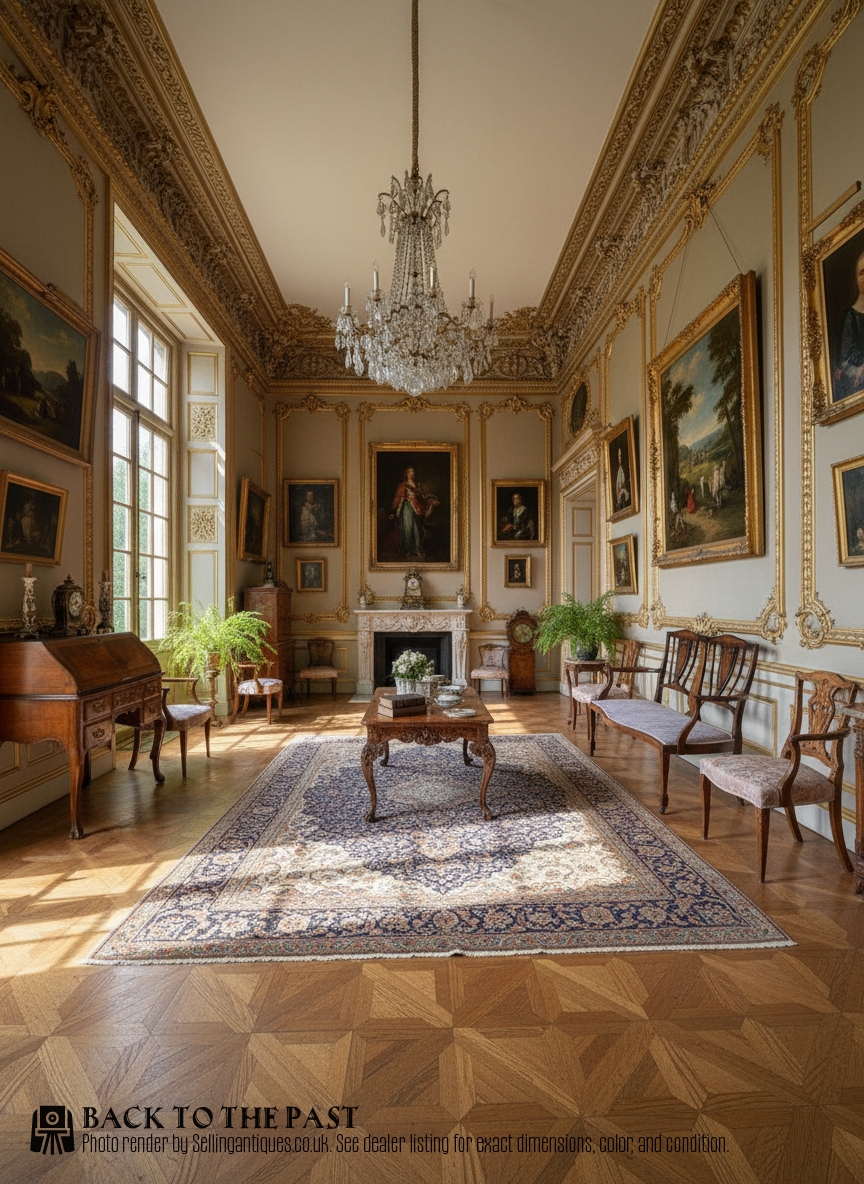
Vintage Parlour Settee
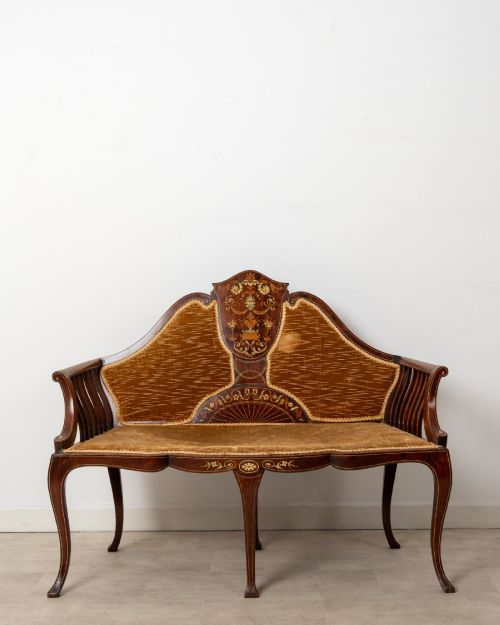
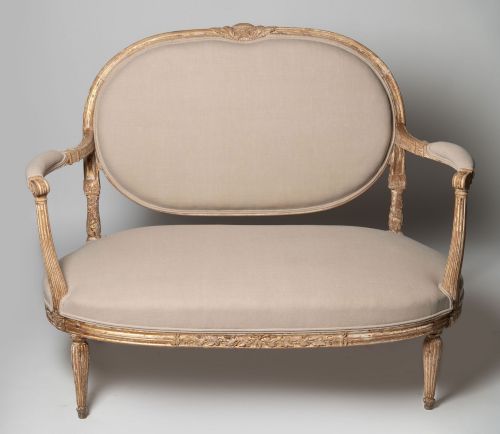
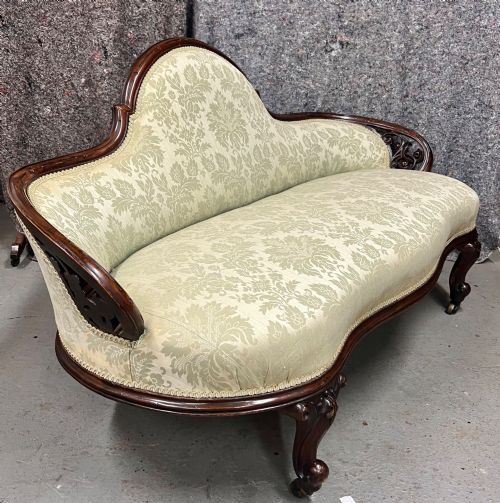
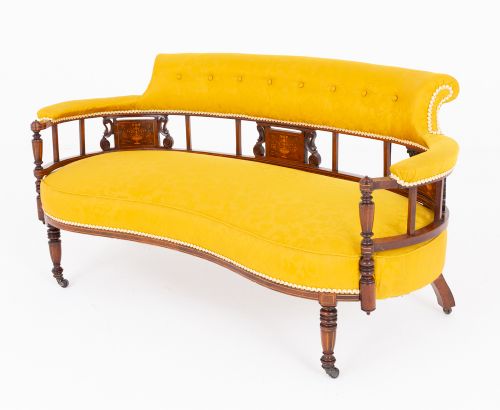
A vintage parlour settee represents the refined seating developed for nineteenth and early twentieth century formal reception rooms. These pieces encompass styles ranging from French rococo revival and Louis XVI to arts and crafts and Edwardian inlaid mahogany. Buyers encounter everything from compact two-seater settees to large country house sofas and complete salon suites.
The Edwardian mahogany inlaid settee stands as the most common form met on this page, often featuring satinwood inlay and delicate framing. Victorian walnut and mahogany framed pieces also appear frequently, alongside French giltwood and painted caned settees. Forms vary from simple two-seater sofas to triple-back settees and multi-piece salon suites.
Materials and construction
Makers constructed these frames predominantly from timbers such as mahogany, rosewood, oak, walnut, and giltwood. Satinwood inlay frequently decorates the surfaces of Edwardian examples, while French pieces utilise carved walnut, painted finishes, and occasional caning. Brass fittings appear on select hardware.
Upholstery relies upon traditional textiles including fabric, damask, and general upholstery fabric to cover the sprung or padded seats. Wood carving and hand-applied paint finish the structural frames, linking British craftsmanship with continental European revival styles.
Some Edwardian settees required careful sitting to protect the delicate satinwood inlay from enthusiastic guests.
Judgments of quality
Quality rests upon the crispness of timber carving, the precision of satinwood inlay, and the structural integrity of the wood frame. Pieces by notable firms like Maple and Co or Baumann display superior joinery and refined proportions compared to standard workshop output.
The selection of covering material and the preservation of original frames distinguish superior examples. Finer settees retain harmonious balance between the decorative woodwork and the upholstered areas, whether dressed in damask or silk.
Maple and Co·Baumann
The Vintage Parlour Settee Glossary
- Settee
- An upholstered seat for two or more persons with a back and arms. This form serves as the central seating option in a traditional parlour.
- Canapé
- A decorative settee originating in France, often featuring an exposed carved wooden frame and an open back.
- Inlay
- A technique where contrasting woods like satinwood are inserted into the primary timber surface to create decorative patterns.
- Bergère
- An enclosed upholstered armchair or sofa with wooden framing, sometimes featuring cane work on the sides or back.
Vintage Parlour Settee: Frequently Asked Questions
What defines a vintage parlour settee?
A vintage parlour settee is a formal upholstered seat designed for reception rooms during the nineteenth and early twentieth centuries. These pieces reflect various periods including Victorian, Edwardian, and French revival movements.
They appear in forms ranging from small two-seater couches to expansive salon suites with matching chairs. The construction combines solid timbers with decorative upholstery.
How do I identify an Edwardian settee?
Edwardian settees often feature light mahogany frames embellished with satinwood inlay and slender legs. Their aesthetic leans towards refined elegance rather than heavy Victorian ornamentation.
Many incorporate art nouveau influences or simplified neoclassical lines typical of the period around nineteen hundred.
Where were these settees originally used?
These pieces sat in the formal parlours, drawing rooms, and salons of nineteenth and early twentieth century homes. They provided comfortable seating for entertaining guests and social calling.
Today, they adapt easily to modern living rooms, bedrooms, or hallways as statement seating.
What is the difference between a sofa and a settee?
Historically, a settee denotes a lighter, often more formal upholstered seat with a wooden frame visible around the edges. A sofa traditionally implies a deeper, more fully upholstered structure built for lounging.
In antique terminology, the terms frequently overlap depending on the maker and period.