

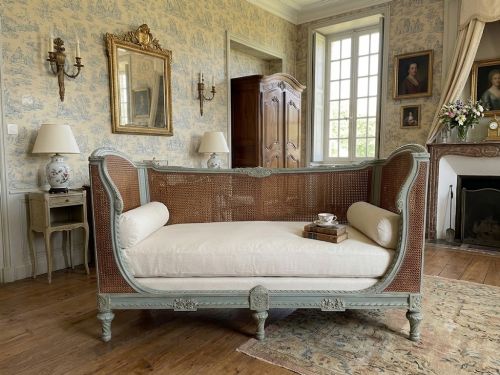
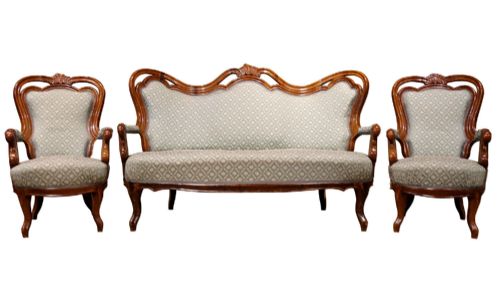
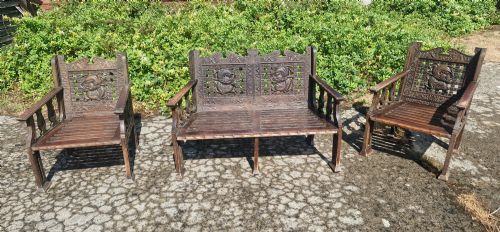
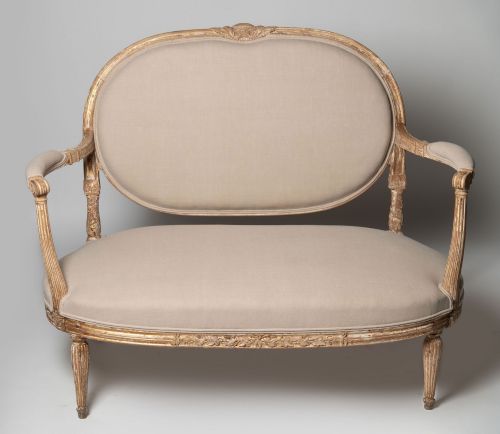
Carved Wood Settee
A carved wood settee brings substantial presence to a room, offering structural timber frames alongside upholstered comfort from the eighteenth century onward.
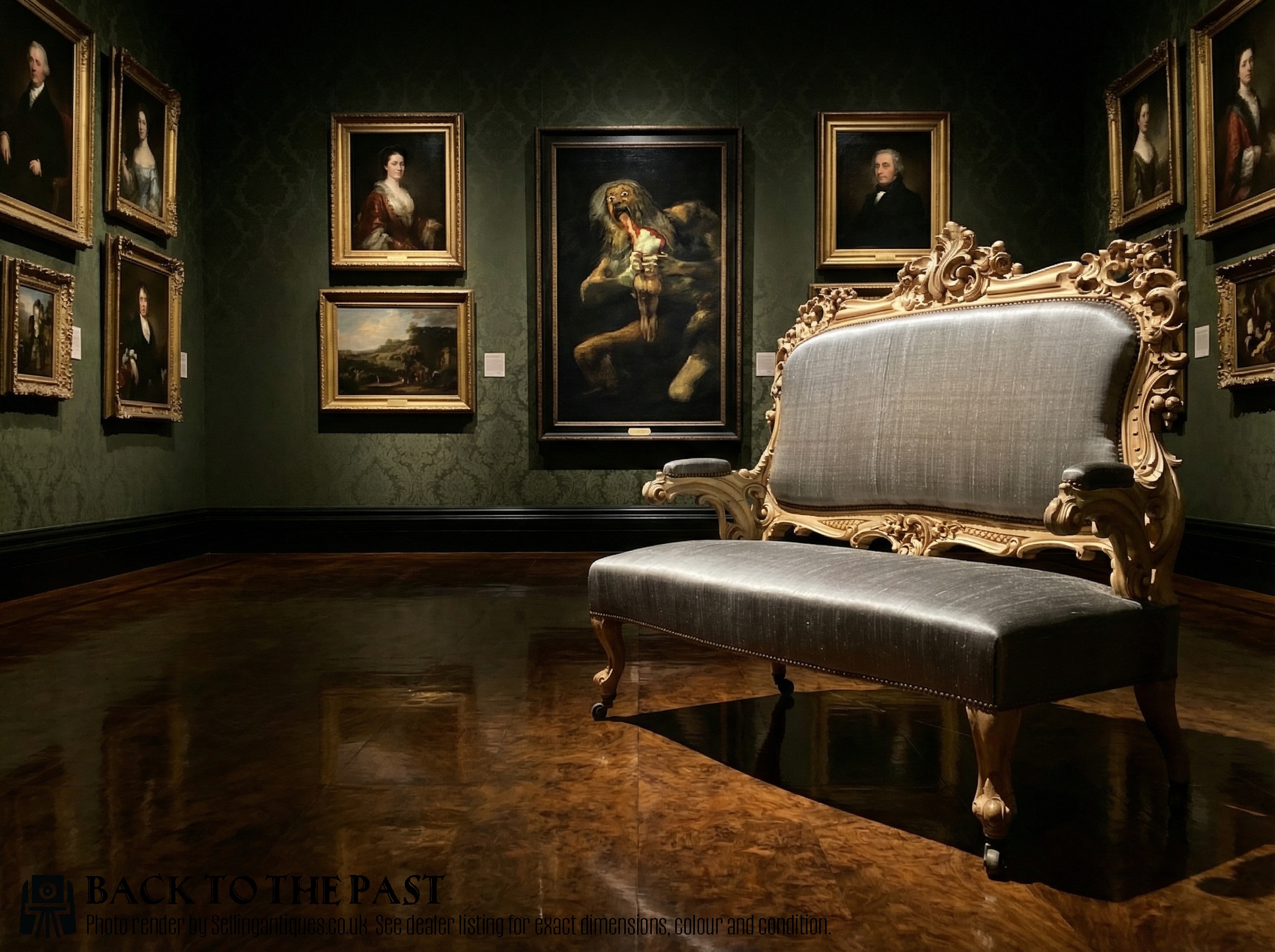
Carved Wood Settee
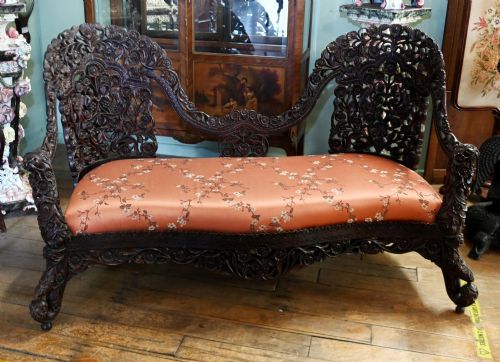
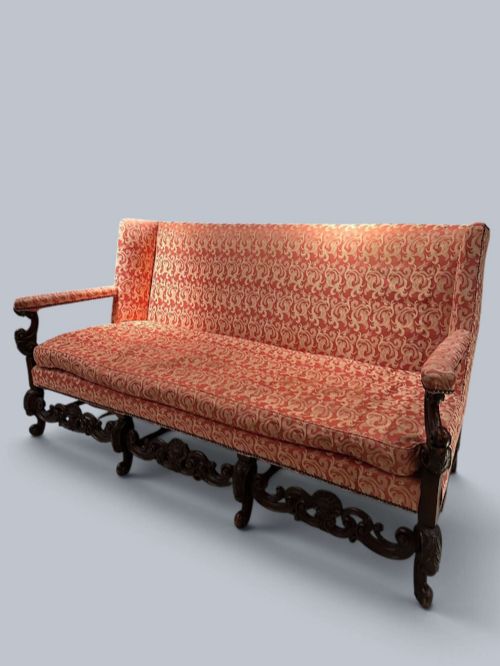
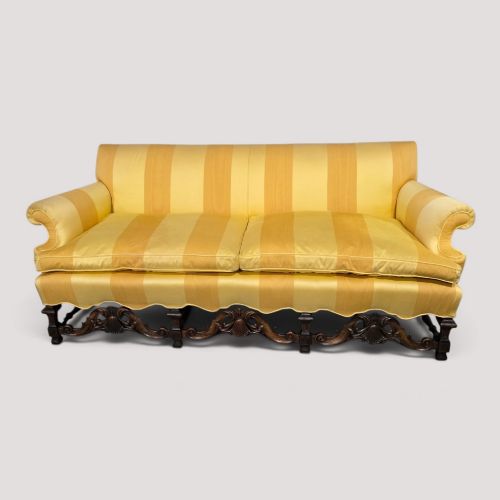
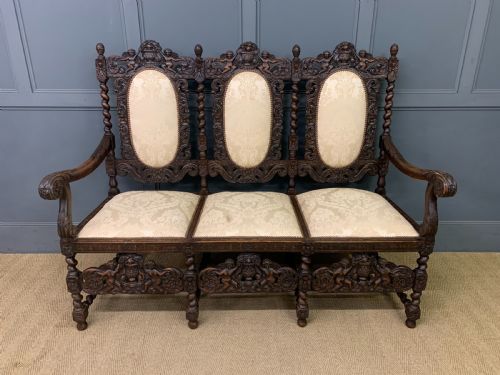
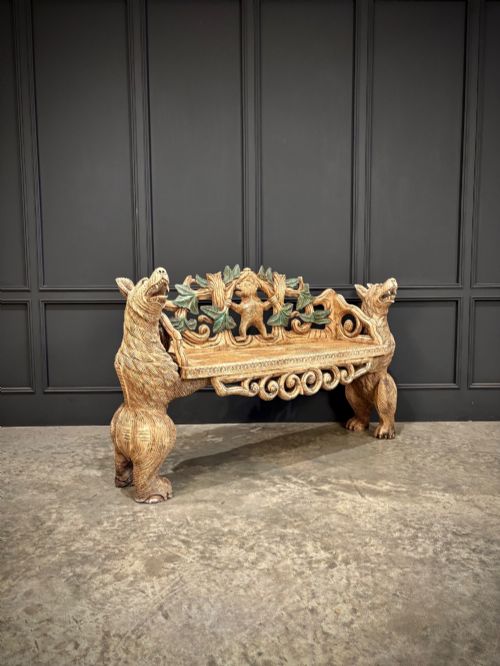
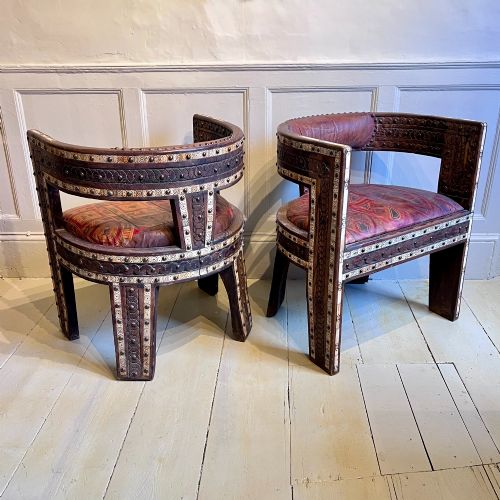
A carved wood settee encompasses seating built for more than one person, appearing across diverse periods from the eighteenth century through the Edwardian era and into the early twentieth century. These pieces emerge in English mahogany and rosewood, continental walnut and giltwood, alongside Anglo-Indian and regional hardwoods.
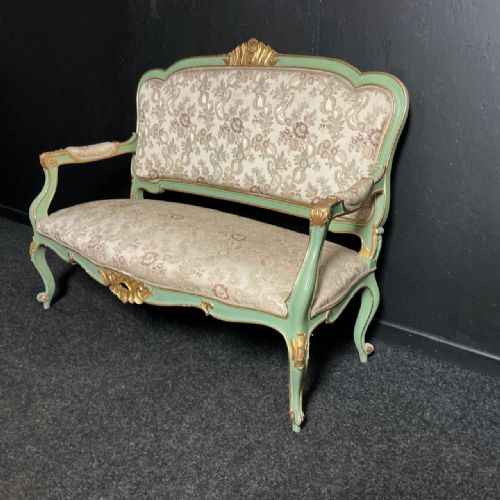
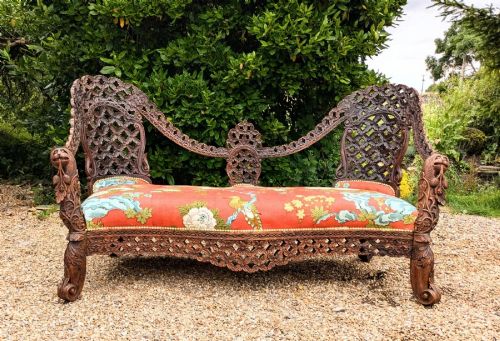
The most frequent examples on this page are French giltwood and walnut pieces from the nineteenth century, often following Louis XV and Louis XVI styles, alongside Victorian mahogany frames and twentieth-century salon suites. Forms range from double-ended sofas and canapés to robust country house benches and carved hardwood settees.

Materials and construction methods
Makers shaped these frames from dense timbers such as mahogany, walnut, rosewood, and hardwood, applying hand-carving to rails, arms, and legs. Giltwood surfaces received layers of gesso and gold leaf over timber bases, while other frames utilised ebonisation, paint, or simulated rosewood finishes.
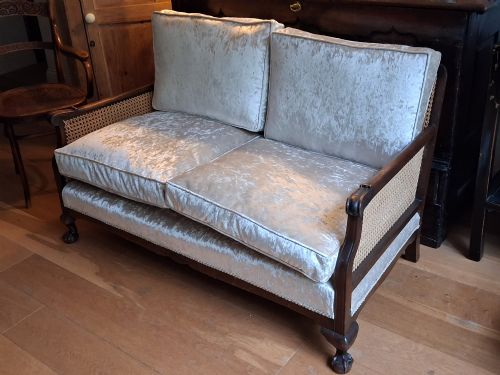
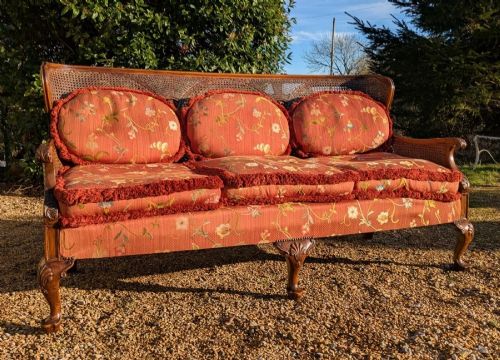
Upholstery techniques combined sprung bases, horsehair stuffing, and feather cushions covered in velvet, brocade, leather, or fabric. Caned panels also appeared on seats and backs, particularly on French and Anglo-Indian designs requiring integrated woven cane work.
Carved Wood Settee Retail Price Guide 2026
Typical asking prices for carved wood settee among the pieces listed under this phrase on Sellingantiques today, from the lower quarter to the upper quarter. They describe what is for sale here now, not the wider market.
Listings incorporate nineteenth-century Victorian pieces alongside eighteenth-century George III examples and early twentieth-century creations.
Distinctions in execution and design
Quality rests in the crispness of the hand-carving upon the timber and the depth of the structural joinery within the frame. Pieces with deeply undercut foliage, clean scrollwork, and substantial weight demonstrate superior craftsmanship compared to simpler or later revival examples.
The integrity of the original show wood, the retention of genuine gilding rather than later paint, and the harmony of proportions distinguish finer salon suites and parlour settees from standard production.
Giles Grendey
The Carved Wood Settee Glossary
- Canapé
- An upholstered French sofa featuring an exposed wooden frame. These pieces typically reflect formal seventeenth- and eighteenth-century design canons.
- Giltwood
- Timber coated with gold leaf applied over a prepared gesso ground. This finish is frequently found on formal continental salon seating.
- Bergere
- An enclosed upholstered armchair or sofa with wooden sides. The frame usually incorporates cane panels or upholstered padding.
- Double-Ended Sofa
- A seating form featuring scrolled ends of equal height at both sides. This layout allows a user to recline against either end.
Carved Wood Settee: Frequently Asked Questions
How do I identify a Louis XV style settee?
A Louis XV style settee displays characteristic asymmetric curves, cabriole legs, and carved floral motifs upon the wooden frame. The overall silhouette remains flowing and serpentine without rigid straight lines.
Such pieces often feature giltwood or painted finishes, reflecting mid-eighteenth-century French aesthetic preferences that were frequently revived during the nineteenth century.
What is a salon suite?
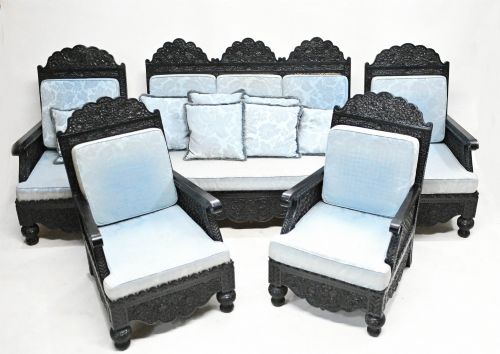
A salon suite comprises a matching set of seating furniture, typically including a settee alongside matching armchairs and occasional chairs. They were designed to furnish formal drawing rooms and reception spaces.
Surviving suites share identical wood types, carved details, and upholstery treatments, offering a unified decorative scheme for large interiors.
How should I care for a historic wood frame?
Preserving a carved wooden frame requires maintaining stable indoor humidity and avoiding direct sunlight to prevent timber shrinkage and cracking. Dusting with a dry, soft cloth protects the patinated surface.
Harsh chemical cleaners must be avoided, particularly on giltwood or ebonised surfaces where the historic finish sits delicately upon the gesso and timber.