


Golden Satinwood Sofa
A golden satinwood sofa brings luminous warmth to a room through finely figured timbers and elegant Regency or Edwardian craftsmanship.
Golden Satinwood Sofa
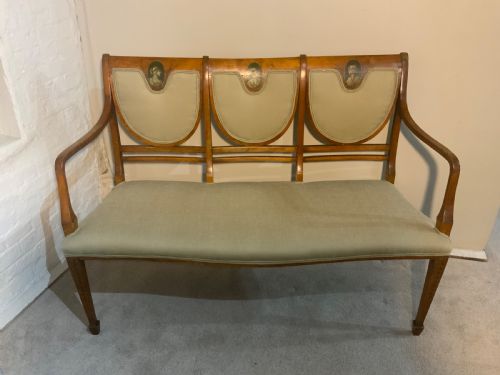
When you search for a golden satinwood sofa, you are looking at substantial seating pieces built from pale, figured timbers during the nineteenth and early twentieth centuries. The examples met on this page range from early nineteenth-century chair back settees and painted caned settees to Edwardian designs.
The forms originate in periods such as the Regency and Georgian eras, reflecting classical proportion and refined decorative schemes. Makers utilised distinctive light hardwoods to create seating that functions as both a comfortable bench and a statement of interior design.
Buyers will find that these settees and benches often incorporate contrasting crossbanding or painted details that highlight the natural sheen of the timber. Each piece demonstrates the enduring appeal of light-toned wood furniture in historic domestic settings.
Materials and construction
Cabinetmakers constructed these seating pieces using primary timbers of satinwood, supported by secondary structural woods like mahogany and accented with contrasting stringing in ebony and boxwood. Brass fittings and castors provide mobility and structural reinforcement to the legs.
Surfaces frequently feature intricate bandings, painted decorative elements, or woven cane panels that lighten the visual weight of the frame. Joinery relies on traditional methods designed to secure dense hardwoods while displaying the natural figure of the grain.
The listings on this site combine satinwood with brass, mahogany, fabric, ebony, boxwood, cane, and rosewood.
Judging the work
The standard of a golden satinwood sofa rests on the intensity and figuring of the grain chosen for the primary surfaces. Superior examples display carefully matched veneers and crisp execution of inlaid banding rather than plain or flat timber.
Proportion and the integration of decorative details dictate the visual success of the piece. Finer items exhibit balanced harmony between the structural frame and any painted or inlaid ornamentation.
The Golden Satinwood Sofa Glossary
- Satinwood
- A hard, durable timber known for its yellowish-gold colour and natural sheen. It takes a high polish and was favoured for fine cabinet work.
- Crossbanding
- A strip of veneer applied to the edge of a board so that the grain runs at right angles to the main surface. This technique creates a neat border.
- Cane
- Strips of rattan woven into an open mesh pattern for seats and back panels. It offers lightweight flexibility.
- Banding
- Narrow strips of contrasting wood inlaid around the edges of tabletops or furniture panels. It defines the geometric boundaries of the design.
Golden Satinwood Sofa: Frequently Asked Questions
What periods do these settees come from?
The pieces span the nineteenth and early twentieth centuries, encompassing the Regency, Georgian, and Edwardian eras. These periods defined distinct approaches to classical revival and light wood furniture.
Buyers will encounter specific variations in form and decoration that align with these historical dates, from early nineteenth-century chair back designs to later painted examples.
How were satinwood sofas used?
These seating pieces served as decorative and functional furniture in formal reception rooms, drawing rooms, and parlours. Their luminous timber made them focal points for light-filled spaces.
They provided refined seating while displaying the wealth and taste of the owner through expensive exotic woods and intricate inlay work.
How do I care for satinwood?
Satinwood requires gentle maintenance to preserve its natural golden lustre and polished finish. Keep pieces away from direct sunlight and excessive heat sources to prevent the timber from drying out.
Regular dusting with a soft, dry cloth is sufficient for daily upkeep, avoiding heavy silicone polishes that can build up on historic surfaces.
How do I identify Regency style?
Regency style draws heavily on classical Greek and Roman architecture, featuring clean lines, restrained ornament, and balanced proportions. Furniture from this era often incorporates sabre legs and contrasting dark inlays.
The aesthetic values clarity of form over excessive carving, allowing the natural grain of timbers like satinwood to remain the primary decorative feature.