




Antique Ladderback Armchair
An antique ladderback armchair offers sturdy timber frames and woven seating rooted in centuries of vernacular craftsmanship.
Antique Ladderback Armchair
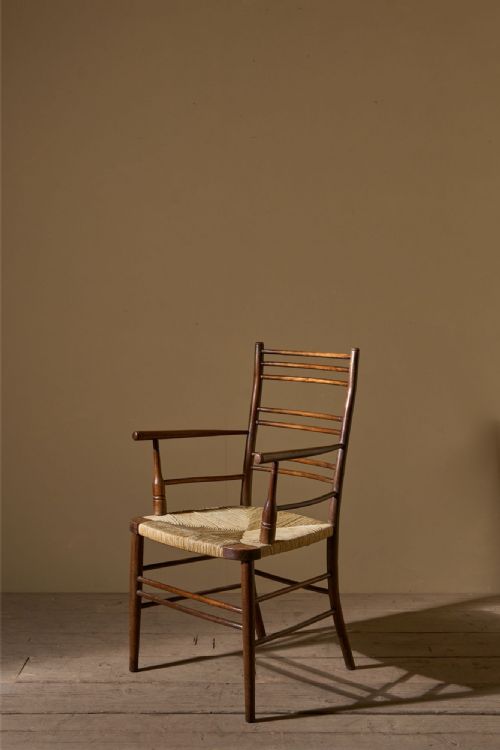
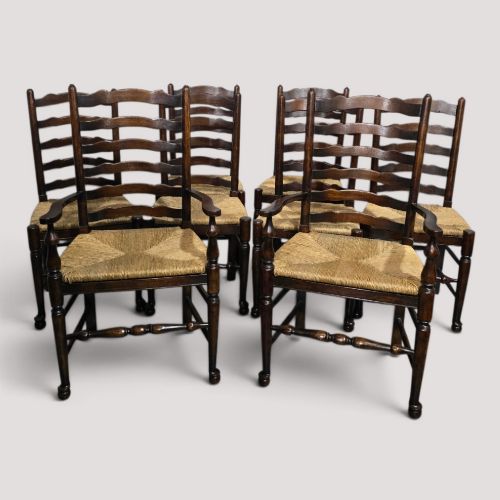
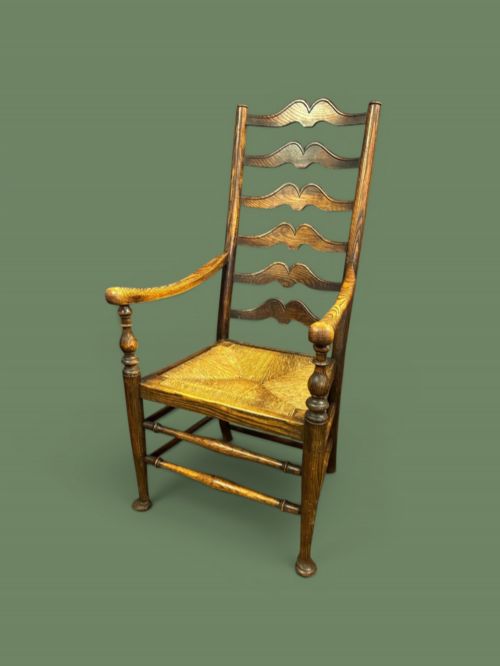
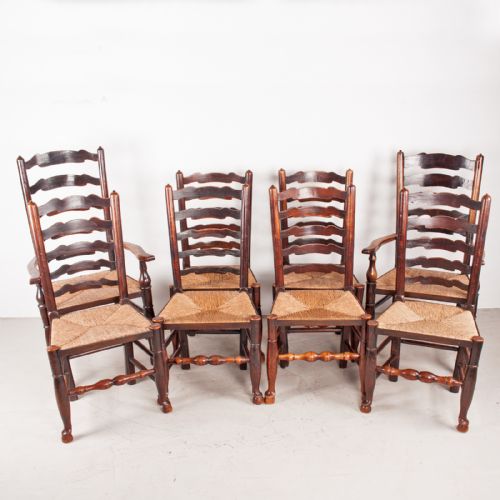
An antique ladderback armchair is a seating form defined by horizontal slats set between the upright posts of the backrest. Buyers searching this phrase encounter regional vernacular pieces alongside formal interpretations stretching across several centuries.
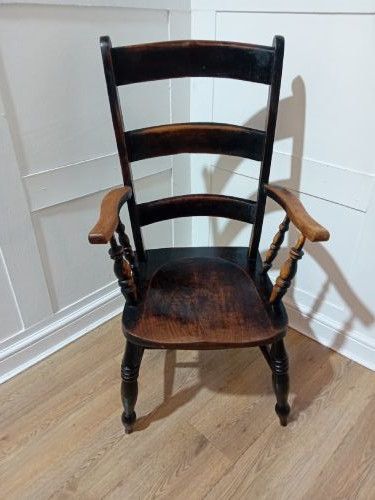
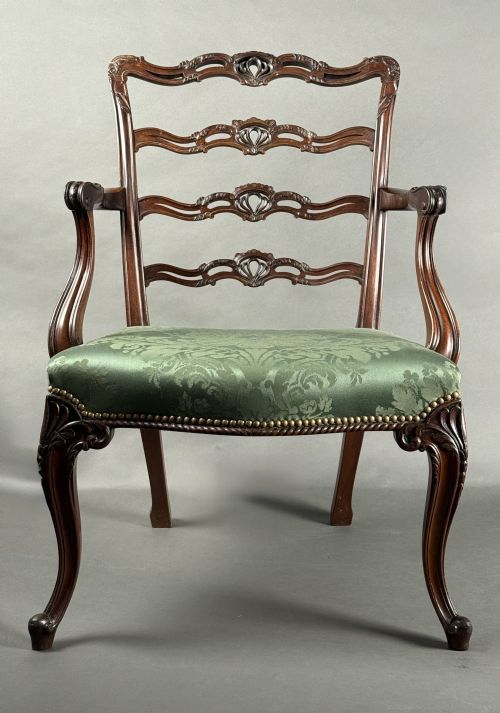
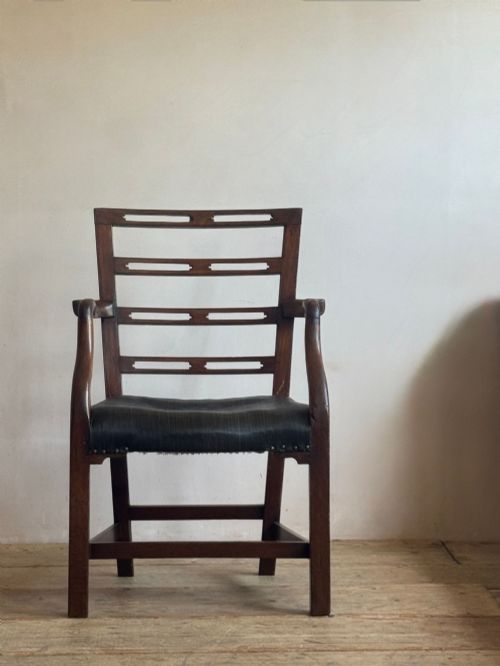
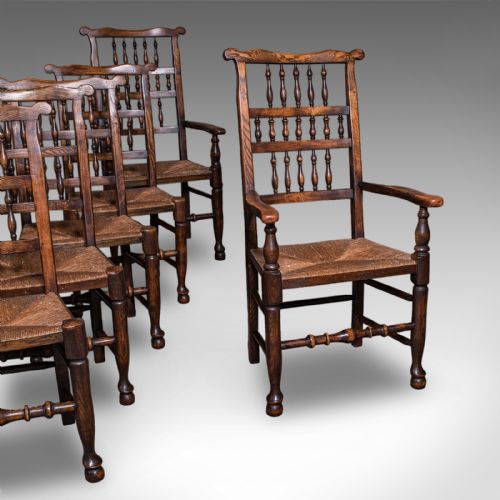
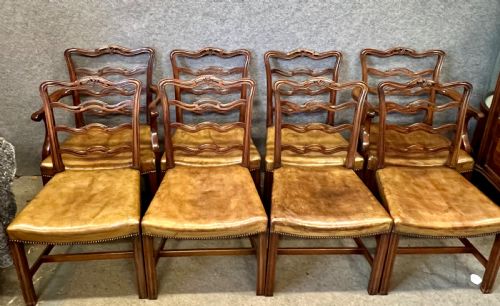
The versions met most frequently on this page originate from English and European rural traditions, spanning the eighteenth and nineteenth centuries. These chairs range from simple ash and elm kitchen seating to refined mahogany dining carvers.
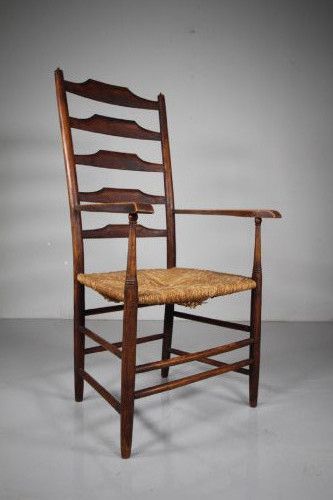
Makers utilised local timbers to build these chairs for daily domestic utility, resulting in diverse regional forms such as Lancashire, Cheshire, and Thames Valley variants. Many survivors retain original woven rush or sea grass seating pads.
Materials and Construction
Construction relies on solid hardwoods such as oak, ash, elm, beech, and mahogany, shaped using traditional turning and joinery techniques. Frames frequently combine different timbers, employing stronger woods for structural legs and lighter or more flexible woods for curved components.
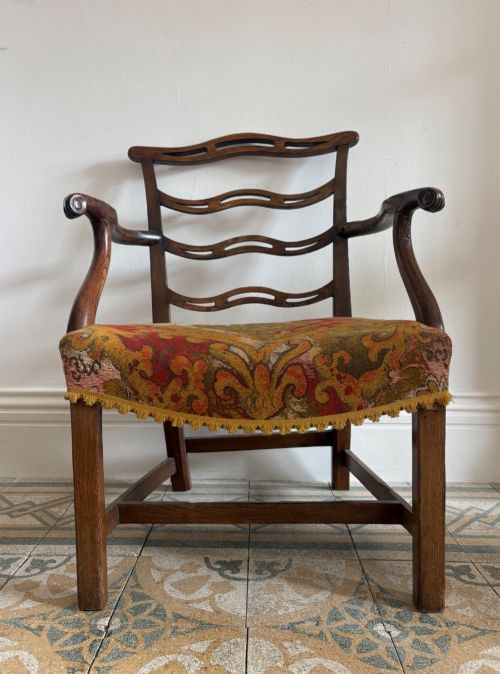
Seats are traditionally woven from natural materials including rush or sea grass, secured tightly around the internal rails of the chair frame. Some formal examples incorporate upholstered drop-in pads or tapestry fabric rather than woven seating.
Antique Ladderback Armchair Retail Price Guide 2026
Typical asking prices for ladderback armchair among the pieces listed under this phrase on Sellingantiques today, from the lower quarter to the upper quarter. They describe what is for sale here now, not the wider market.
Listings span the eighteenth, nineteenth, and early twentieth centuries, featuring oak, ash, elm, mahogany, and beech frames with rush or fabric seats.
Distinctions in Quality
Quality rests in the integrity of the timber frame, the rhythm and profile of the horizontal slats, and the tightness of the woven seating. Chairs retaining their original surface finishes and patination command greater attention from collectors than heavily restored examples.
Proportion and execution set individual pieces apart, distinguishing utilitarian workshop output from ambitious cabinetmaker designs. The subtlety of the turned finials and the tapering of the upright posts demonstrate the maker's hand.
Philip Clissett·Dicon Nance St.Ives Studio·Liberty & Co
The Antique Ladderback Armchair Glossary
- Carver
- An armchair, typically designed to match a set of dining chairs and featuring supportive armrests.
- Rush
- A wetland plant material traditionally woven to create durable, flexible seating pads within chair frames.
- Vernacular
- Everyday objects made by regional craftsmen for local use rather than high-style metropolitan workshops.
- Finial
- A decorative turned ornament projecting above the top of the rear upright posts on a chair.
- Spindle
- A slender turned wooden rod utilised in chair backs for structural support and visual rhythm.
Antique Ladderback Armchair: Frequently Asked Questions
What is an antique ladderback armchair?
An antique ladderback armchair is a traditional wooden seating form featuring horizontal horizontal slats, known as rungs or rails, set into the back uprights. These chairs were produced across centuries in various regional British and European workshops.
They serve as practical seating options that bring historic character and traditional timber textures into modern residential interiors.
How do I care for a rush seat?
Rush seats require gentle maintenance, keeping them away from excessive moisture and direct heat sources that can dry out the natural fibres. Regular dusting with a soft brush helps preserve the woven surface over time.
Weight distribution should remain sensible to prevent undue strain on the historic wooden frame and the tension of the weave.
Were these chairs used for dining?
Many ladderback armchairs functioned as carver chairs positioned at the heads of dining tables alongside matching side chairs. Others served as everyday kitchen seating or fireside chairs due to their sturdy construction.
Heavier examples in oak and ash suited domestic utility spaces, while mahogany versions occupied formal dining rooms.
How do I distinguish regional styles?
Regional styles reveal themselves through timber choices, turning profiles on the legs, and the specific shaping of the ladder slats. Lancashire and Cheshire variants often display distinctive slat configurations and sturdy ash or elm frames.
Comparing the stretcher placement and armrest profiles helps identify the likely geographic origin of vernacular workshop pieces.