

Elm Country Armchair
When choosing an elm country armchair, you select a robust vernacular seat shaped by generations of rural English makers.
Elm Country Armchair
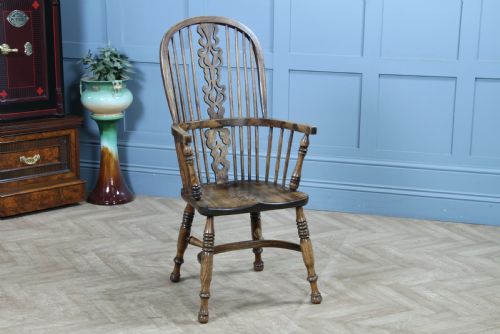
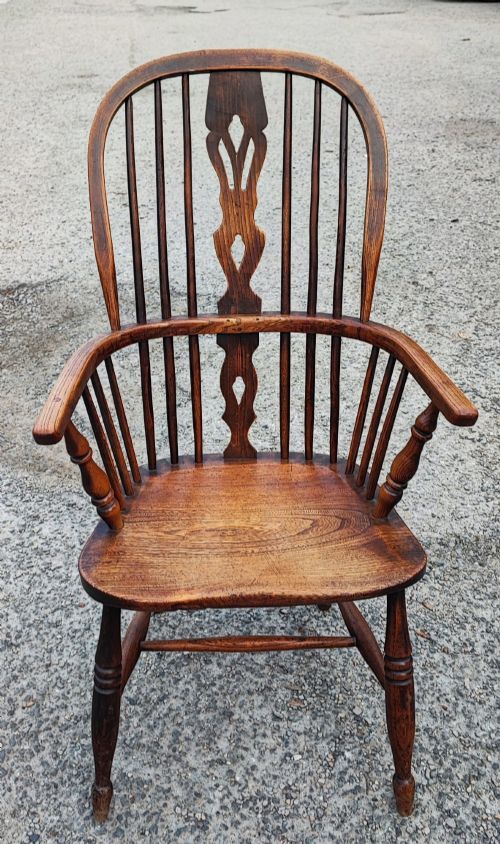
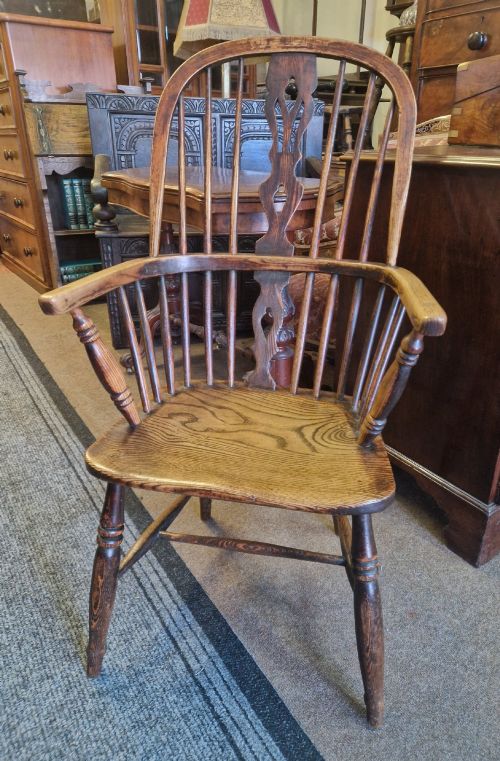
An elm country armchair represents the practical domestic seating of English farmhouses, cottages, and kitchens across the eighteenth and nineteenth centuries. These chairs combine sturdy local timbers with regional designs tailored for daily utility rather than formal parlour display.
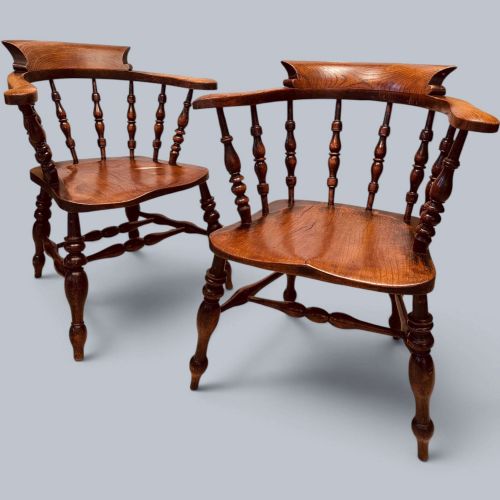
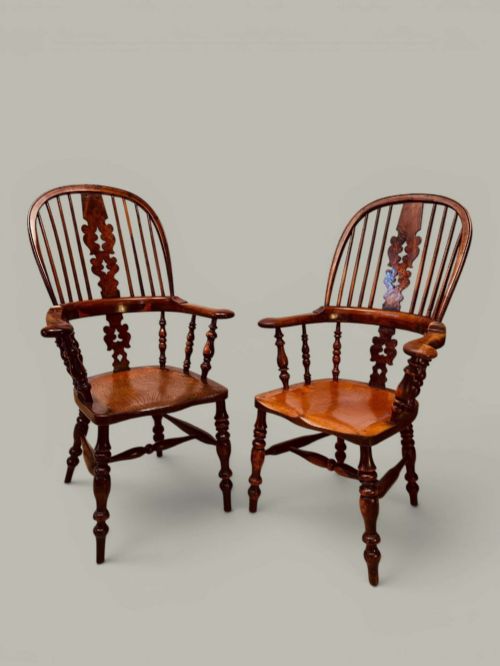
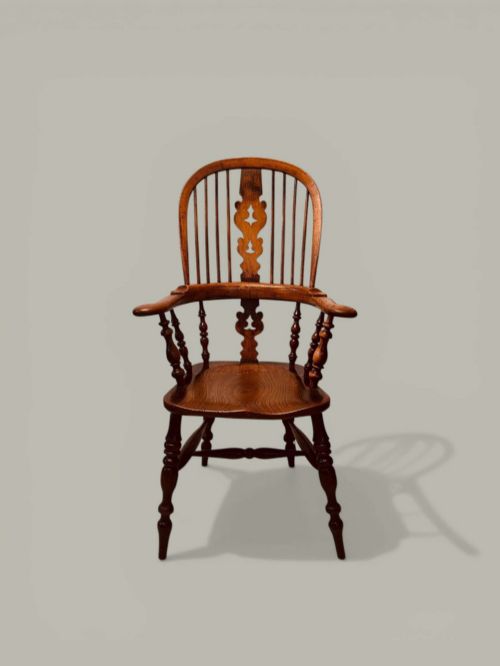
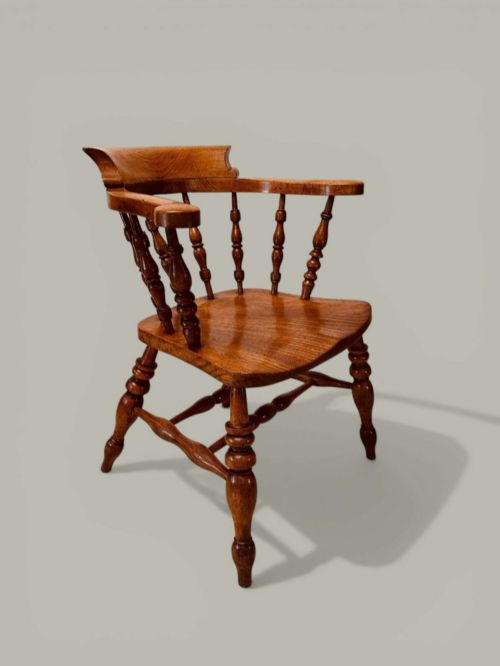
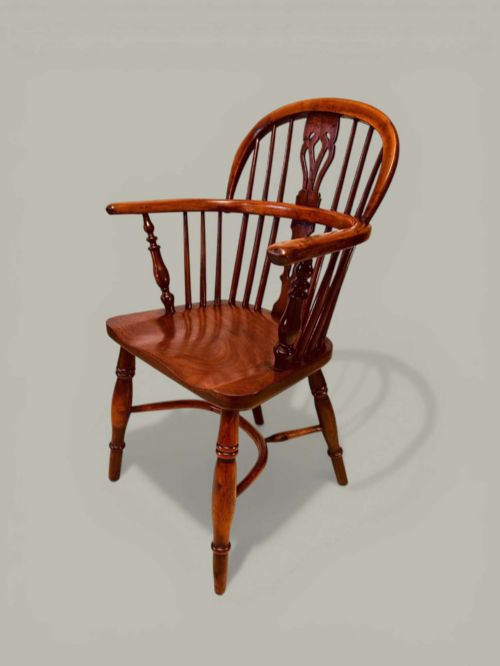
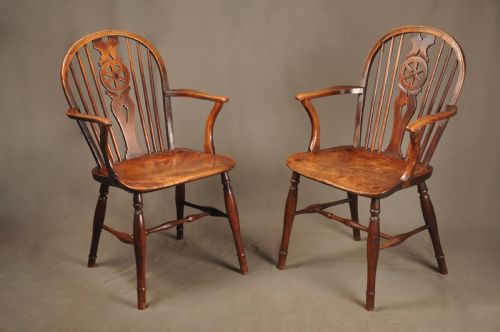
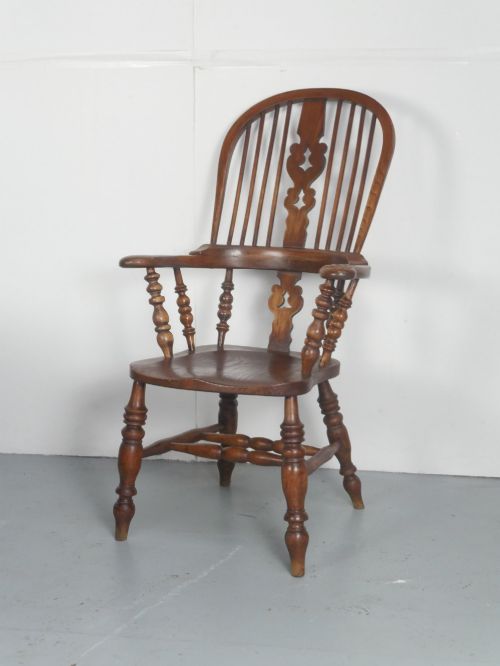
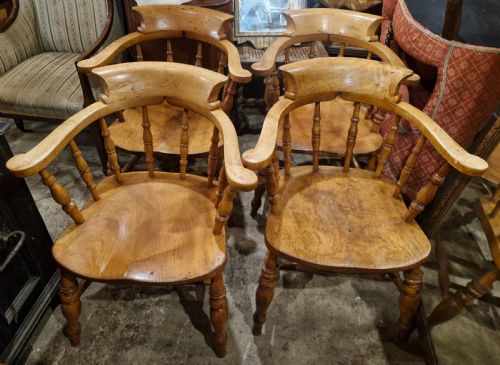
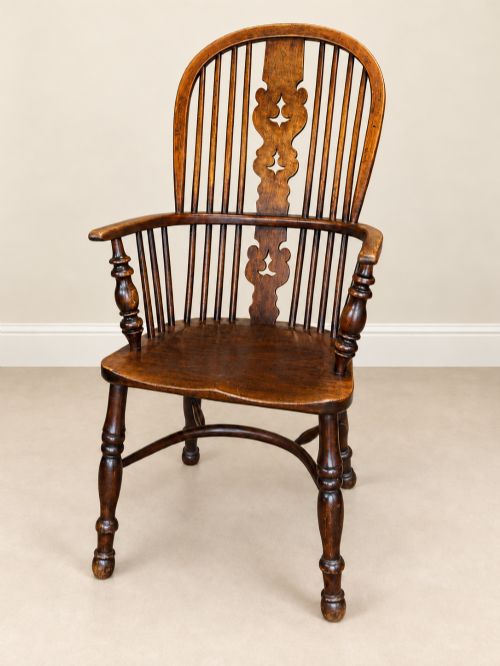
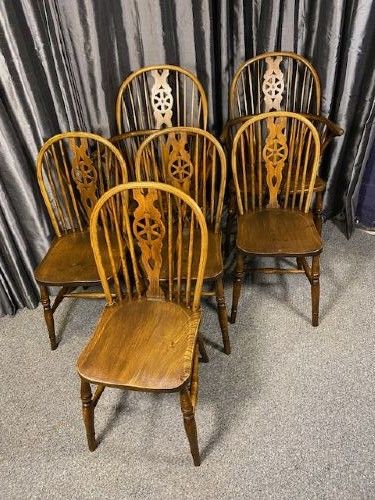
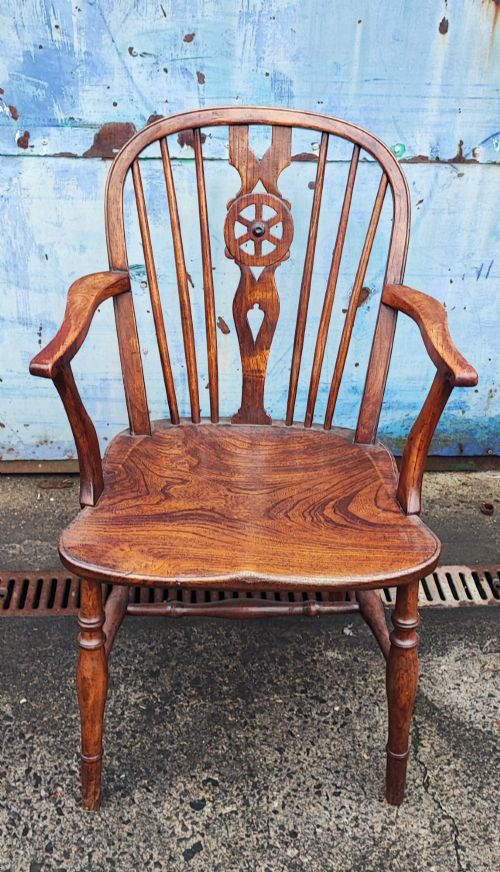
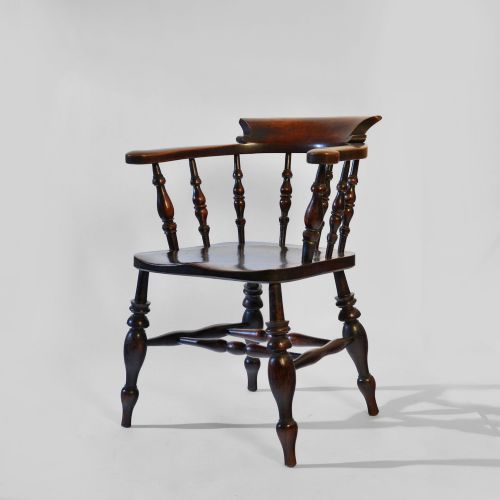
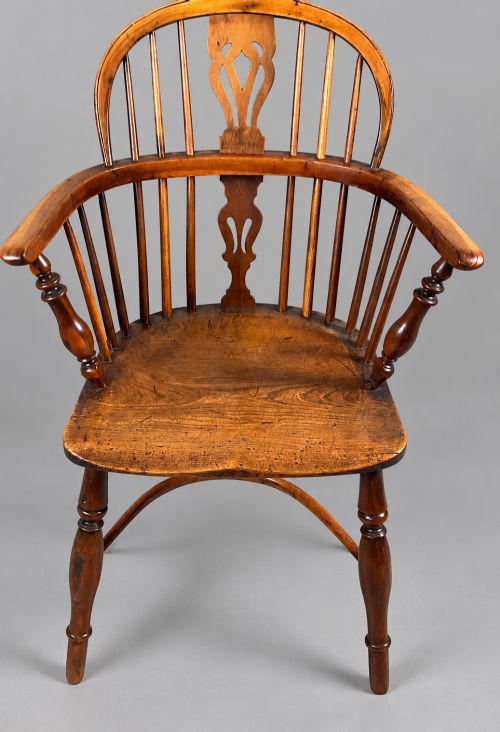
The most frequent examples encountered on this page are Windsor chairs, ladderbacks, and smokers' bows spanning the Georgian, Victorian, and Edwardian eras. Variations range from high hoop-backs and comb-backs to low kitchen carvers and children's versions.
Regional diversity shapes the selection, with origins traced to the Thames Valley, West Country, Lancashire, and other distinct local traditions. Buyers encounter sturdy armchairs that reflect the specific wood-turning and carpentry skills of their local markets.
Materials and Construction
Makers built these chairs using a combination of elm for the thick, sculpted seats and resilient hardwoods like ash, beech, or yew for the spindles, legs, and bentwood bows. Elm resisted splitting under heavy use, making it the primary choice for solid saddle seats.
Traditional construction relied on pegged joints, steam-bent components, and turned spindles fitted directly into bored holes in the solid seat block. Regional workshops utilised local pole-lathes and simple hand tools to shape individual components before assembly.
Elm Country Armchair Retail Price Guide 2026
Typical asking prices for elm country armchair among the pieces listed under this phrase on Sellingantiques today, from the lower quarter to the upper quarter. They describe what is for sale here now, not the wider market.
Makers occasionally utilised the tough, interlocking grain of elm for seats because cows kept rubbing against the trees in local lanes.
Markers of Quality and Character
Quality rests in the balance of proportions, the comfort and depth of the sculpted elm seat, and the integrity of the underlying frame. Superior examples display elegant steam-bent bows, crisply turned stretchers, and well-matched timber grains.
Makers who selected deeply figured yew or rich ash alongside the primary elm created more visually striking seating. The survival of an original surface finish or distinct regional markers, such as a crinoline stretcher, elevates the piece.
J SPENCER
The Elm Country Armchair Glossary
- Windsor chair
- A wooden chair constructed with a solid plank seat into which the legs and back spindles are separately inserted. This form dominates vernacular English seating.
- Smoker's bow
- A low-backed Windsor armchair with a continuous curved arm-rail and turned spindles, commonly found in nineteenth-century kitchens and inns.
- Crinoline stretcher
- An arched under-framing stretcher connecting the legs of a Windsor chair in a continuous loop. It provides structural rigidity and distinguishes certain regional builds.
- Comb-back
- A Windsor chair variation where the main vertical spindles rise to support a top horizontal rail resembling the teeth of a comb. These often appear on eighteenth-century examples.
- Vernacular furniture
- Domestic objects made by regional tradespeople following local traditions rather than metropolitan academic designs. These pieces prioritise utility and local materials.
- Spindle back
- A chair design featuring numerous slender turned vertical rods forming the back support. They offer lightweight strength to country seating.
Elm Country Armchair: Frequently Asked Questions
What is a country armchair?
A country armchair is a utilitarian wooden seat produced by regional carpenters and chair bodgers for domestic farmhouse or cottage use.
These chairs rely on native timbers like elm, ash, and beech, prioritising everyday comfort and structural endurance over formal decorative styles.
How do I identify a Windsor chair?
A Windsor chair is distinguished by its thick solid plank seat, which serves as the central anchor for both the legs below and the back spindles above.
Unlike framed chairs, the structural components are tenoned directly into the bored seat slab.
Where were these chairs made?
These chairs were produced in regional workshops and woodland bodging camps across various English counties, including the Thames Valley, Lancashire, and the West Country.
Local timber availability and distinct regional turning traditions determined the specific form of each chair.
How do I care for antique elm?
Antique elm benefits from stable indoor humidity and occasional applications of traditional microcrystalline wax to nourish the dry timber.
Avoid placing these chairs near direct heat sources or rapid temperature shifts to prevent wood movement and splitting.