

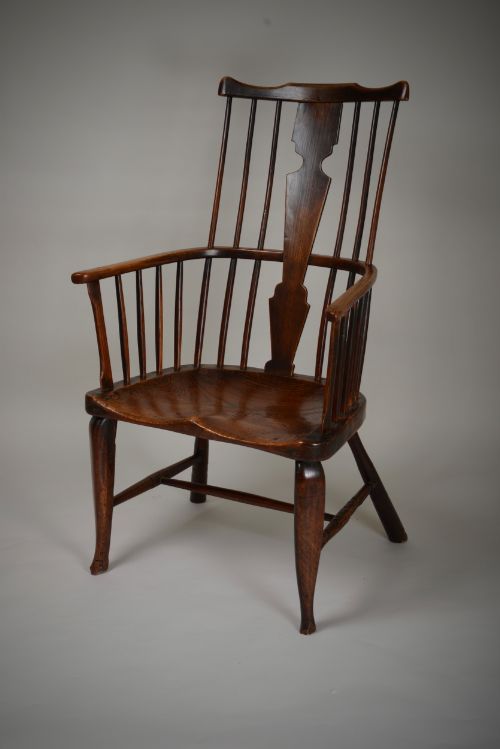
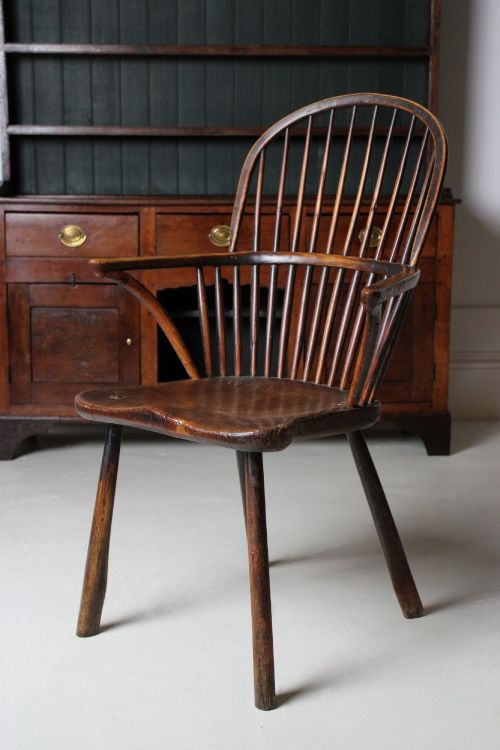
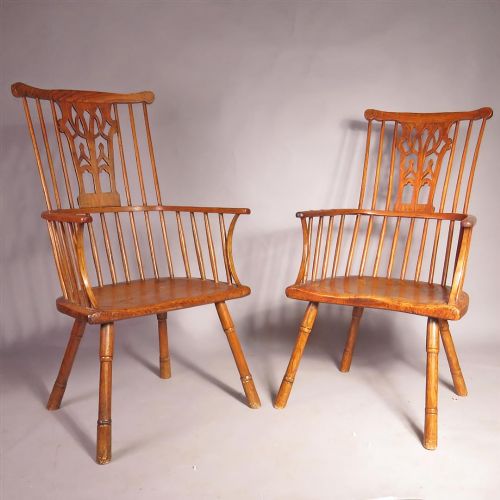
Georgian Elm Armchair
A georgian elm armchair brings honest country character into a room with its rich grain and sturdy vernacular build.
Understanding Georgian elm armchairs
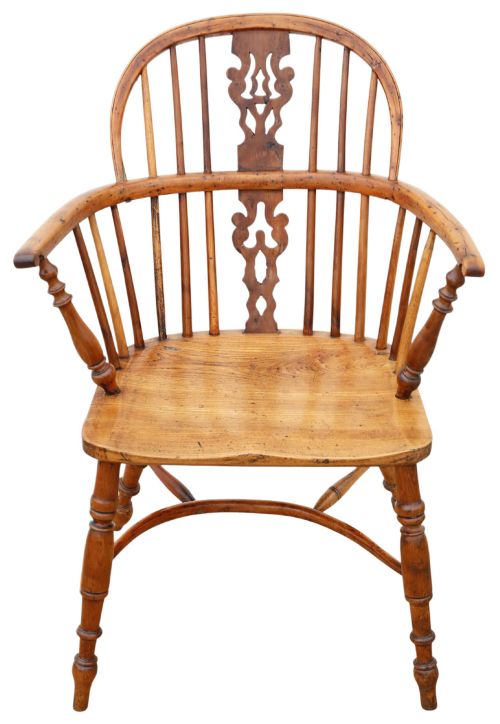
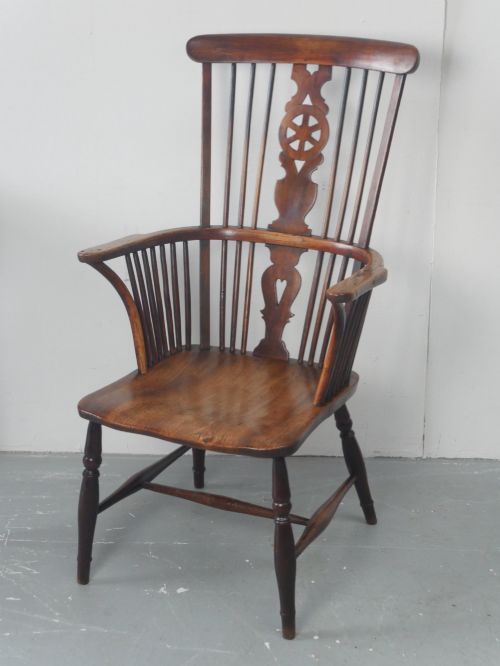
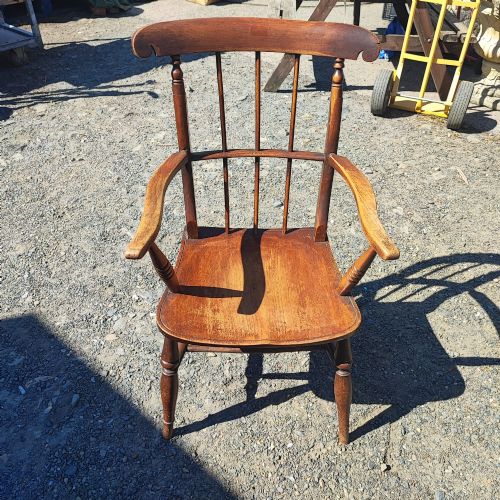
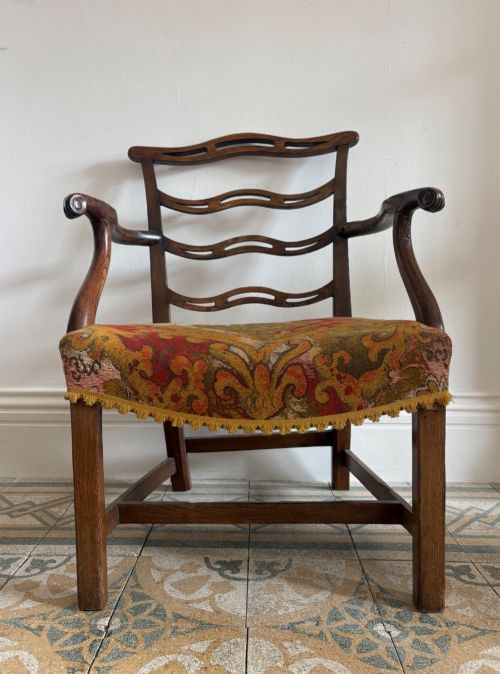
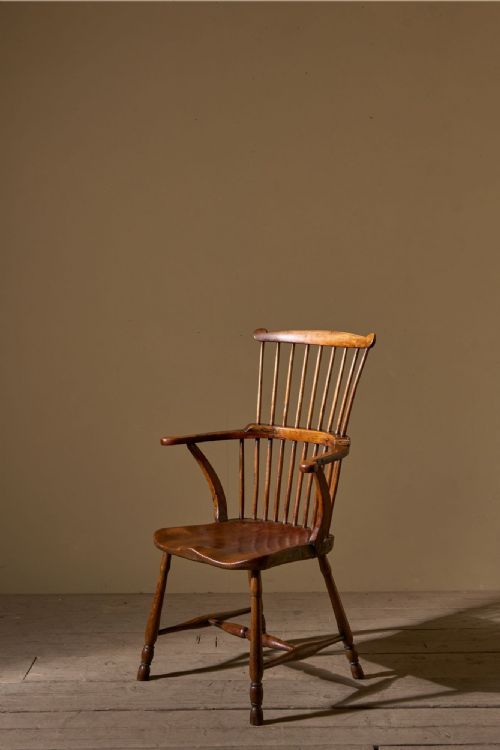
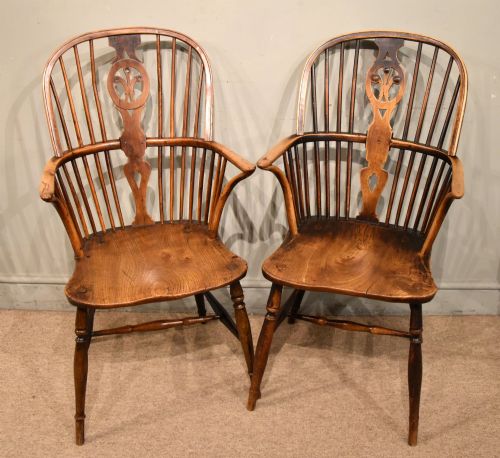
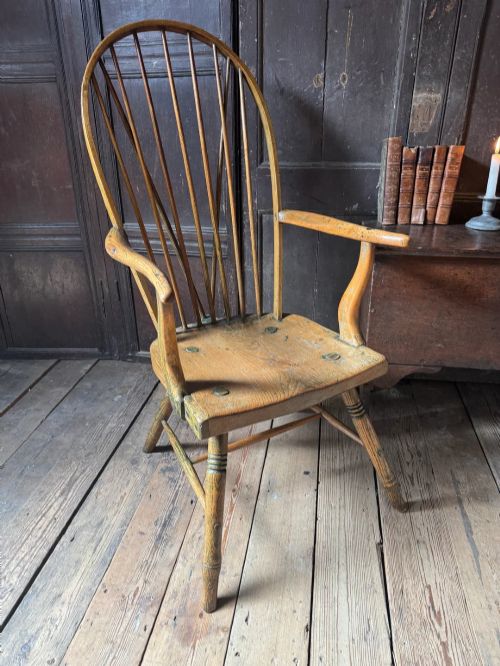
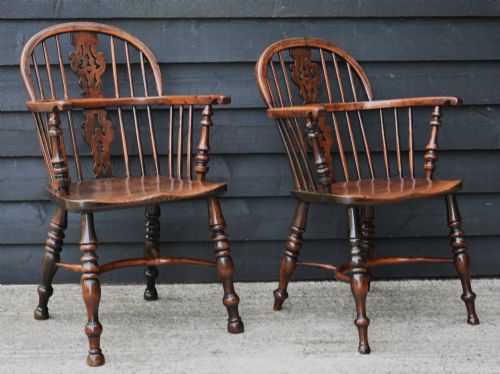
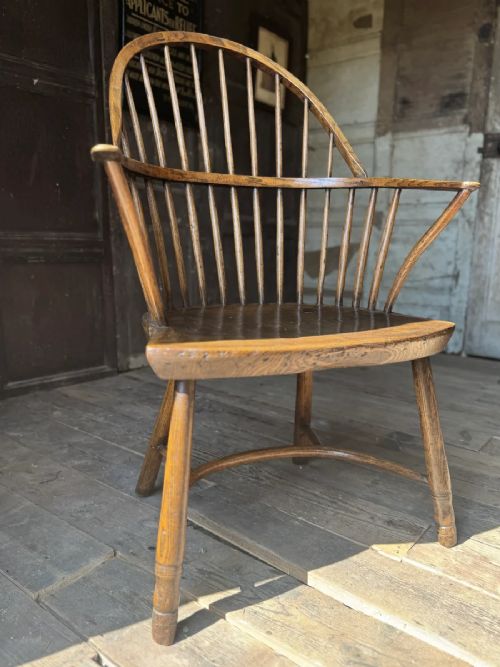
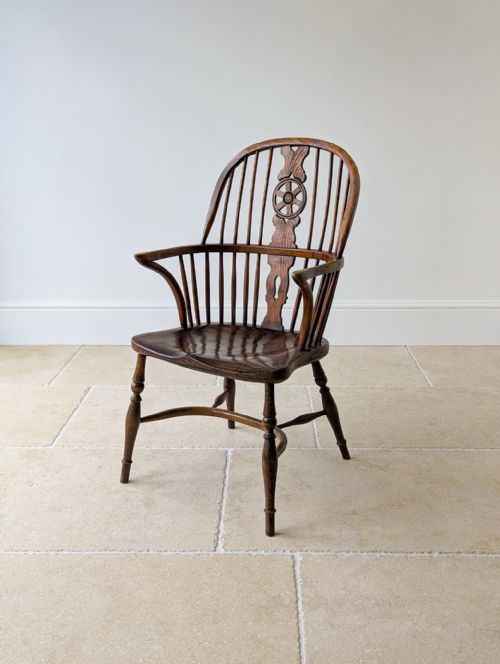
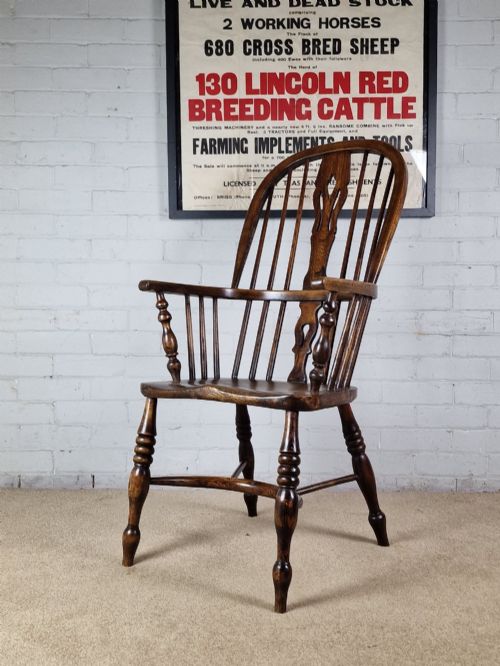
A georgian elm armchair represents the practical domestic seating produced across English provinces during the eighteenth and early nineteenth centuries. These pieces encompass regional variations including wheelback Windsors, spindle-back carvers, rush-seat country chairs, and low-back farmhouse designs.
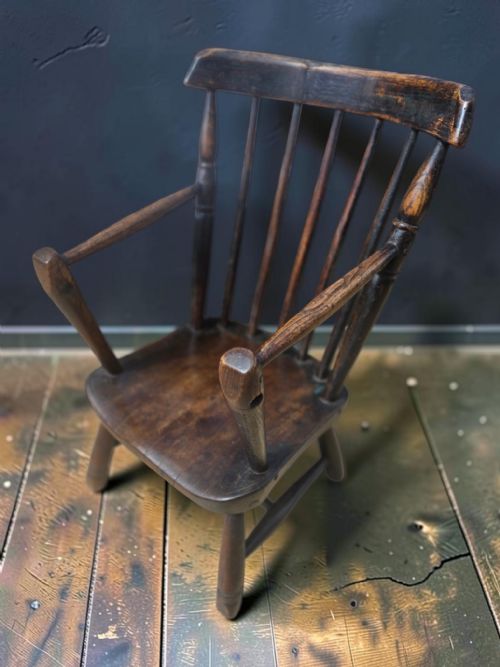
The versions most commonly met on this page combine elm with ash, fruitwood, beech, or yew, reflecting the local timber available to rural cabinet makers. Their forms range from sturdy Welsh and Shropshire armchairs to child-sized Windsor chairs fitted with crinoline stretchers.
Builders shaped these armchairs for daily utility rather than formal drawing rooms, resulting in honest joinery and comfortable proportions. Their enduring appeal lies in this functional honesty and the warm, patinated surface developed through generations of use.
Materials and construction
Makers utilised native British timbers, pairing tough elm for seats with ash, fruitwood, beech, or yew for spindles, arms, and legs. Elm resists splitting under heavy downward pressure, making it the ideal choice for solid, shaped saddle seats.
Joinery combined traditional turning on pole lathes with steam-bending for crest rails and arm bows. Component parts were frequently wedged and pegged together, creating rigid frames designed to withstand robust farmhouse service.
Retail Price Guide 2026
Typical UK retail prices for georgian elm armchair, calculated from the Sellingantiques database of over a million retail prices indexed since 2003. This retail price guide relies exclusively on Sellingantiques data; no external sources or auction records are used, so the figures do not describe the wider market.
Listings feature pieces spanning the georgian period through to eighteen eighty, incorporating elm, ash, rush, fruitwood, beech, and yew.
Evaluating quality and character
Quality in a georgian elm armchair rests primarily on the depth of the timber's figure and the integrity of the original construction. Superior examples retain their untouched surface patination, with deep amber tones born of age and friction.
Proportion and comfort distinguish better country pieces from routine utility items. Well-balanced arm curvatures, pleasing spindle layouts, and minimal structural replacement elevate an armchair above standard regional work.
The Georgian Elm Armchair Glossary
- Windsor armchair
- A chair built with a solid wooden saddle seat into which the legs, back spindles, and arms are separately jointed. This form provides robust structural integrity through its triangulated undercarriage.
- Crinoline stretcher
- A curved hoop stretcher connecting the legs of a chair to provide extra rigidity. It resembles the shape of nineteenth-century undergarments and often supports the sitter's feet.
- Vernacular
- Objects designed and built by local tradesmen following regional traditions rather than metropolitan pattern books. These pieces prioritize function and local material availability over academic style.
- Spindle back
- A chair back constructed from multiple thin turned or shaped wooden uprights fitted between a crest rail and the seat. This method distributes weight efficiently while keeping the frame lightweight.
- Saddle seat
- A thick wooden seat base carved into a concave, contoured shape to mimic a riding saddle. This shaping improves seating comfort on solid timber chairs.
Frequently Asked Questions
How do I identify a georgian elm armchair?
Look for deep, interlocking grain patterns on the solid seat and traditional pegged joinery typical of eighteenth-century rural workshops.
Examine the secondary woods, such as ash or fruitwood spindles, which indicate provincial English country production rather than urban mahogany manufacture.
Were these armchairs used in kitchens?
Many examples served as heavy farmhouse kitchen or dining chairs due to the resilience of elm and rush seating against daily wear.
Their sturdy construction also suited studies, hallways, and firesides across rural English homes.
How should I care for an elm armchair?
Keep the timber away from direct heat sources and sudden humidity changes to prevent the wood from shrinking or splitting.
Feed the dry surface periodically with traditional beeswax to maintain the natural lustre and protect the patinated finish.