




Regency Bar Back Chairs
Regency bar back chairs bring classical line and rich timber to the dining room, offering sturdy seats built to last centuries.
Regency Bar Back Chairs
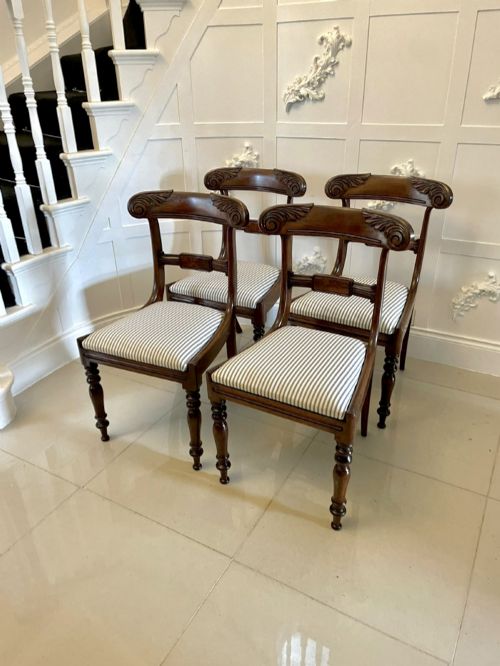
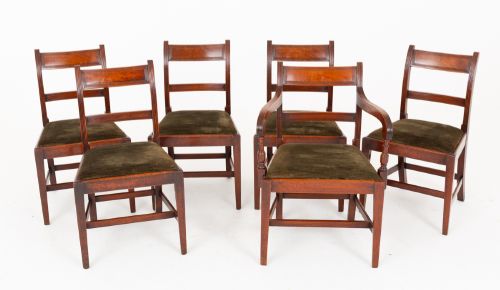
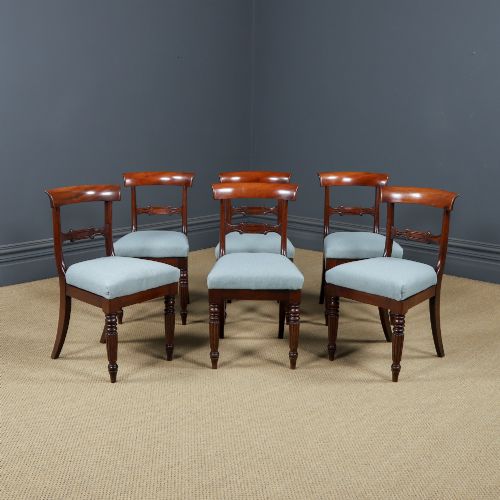
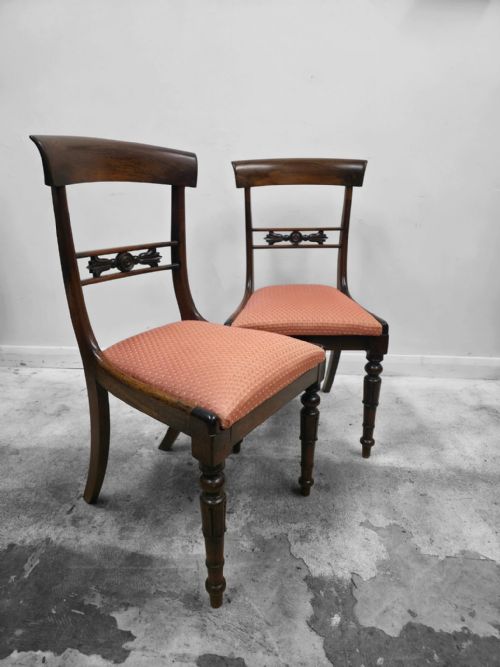
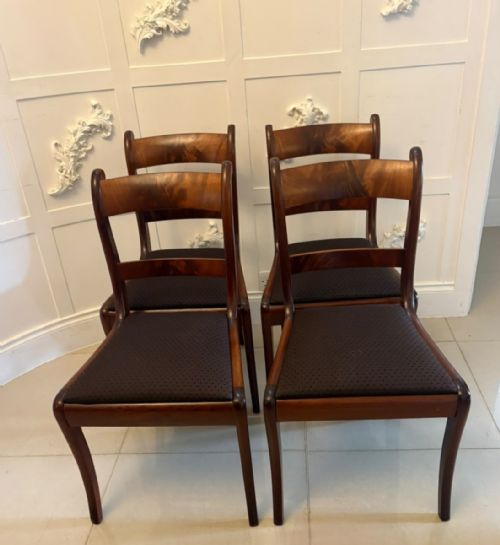
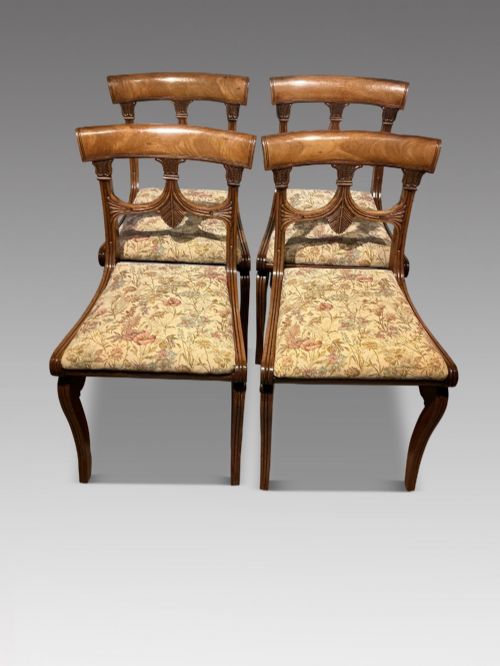
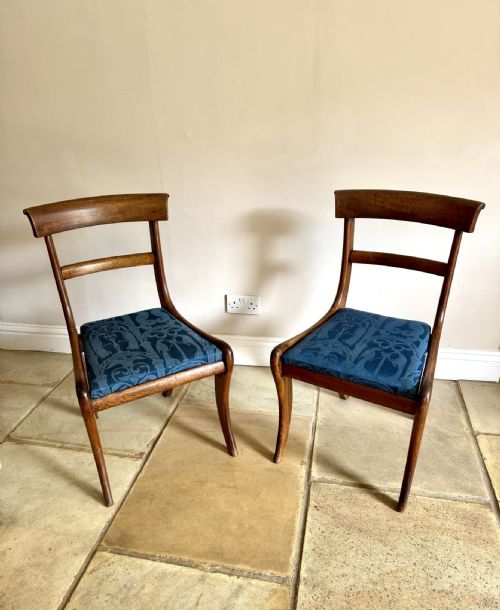
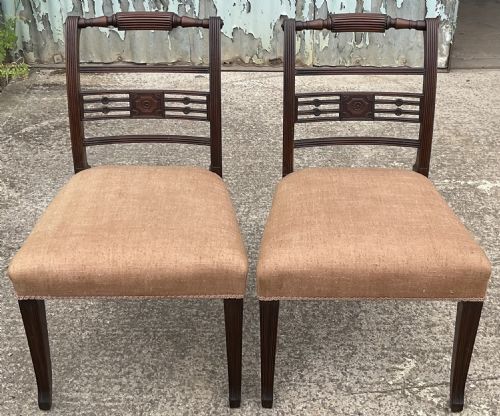
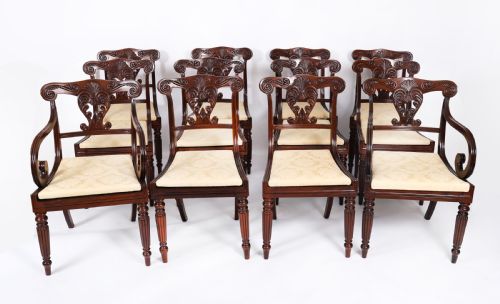
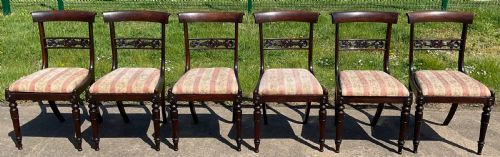
Regency bar back chairs take their name from the horizontal wooden rail that forms the top of the backrest, often shaped like a classical frieze or a tablet. Buyers searching this phrase will find dining chairs, carvers with armrests, and occasional pairs or large sets spanning the Regency, Georgian, and William IV periods.
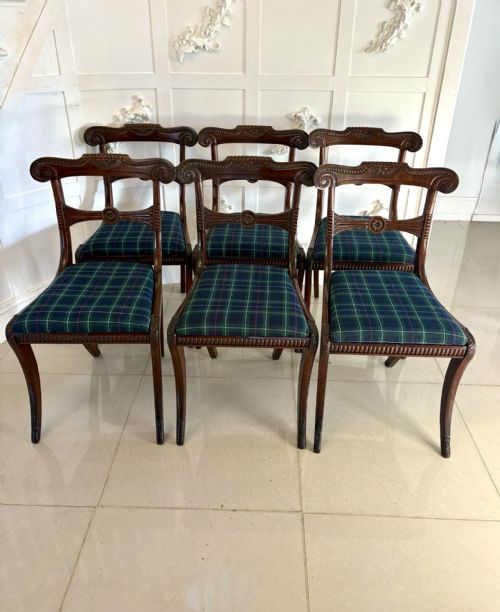
The version most commonly met on this page is the mahogany dining chair with a curved top rail and sabre or reeded legs, dating from the early nineteenth century. Sets frequently number four, six, eight, or twelve, reflecting the proportions of period dining rooms.
Makers often incorporated brass inlay, ebony stringing, or carved scroll details into the horizontal splat, connecting domestic seating to the wider neoclassical taste of the era.
How they were made
Cabinet makers built these chairs primarily from solid mahogany and flame mahogany, relying on the dense grain to hold crisp carved details along the crossbar. Rosewood also appears in select sets, prized for its dark, richly figured surface.
Construction techniques combined traditional joinery with steam bending to achieve the characteristic curve of the bar back and the sweeping rake of the sabre legs. Seat frames were designed for drop-in upholstery, later covered in materials such as leather, damask, velvet, or contemporary textile.
Decorative enhancements included fine brass inlay set flush into the wood, ebony stringing, and reeding turned along the front legs to catch the light.
Regency Bar Back Chairs Retail Price Guide 2026
Typical asking prices for regency bar back chairs among the pieces listed under this phrase on Sellingantiques today, from the lower quarter to the upper quarter. They describe what is for sale here now, not the wider market.
Listings feature mahogany and rosewood frames upholstered in leather, damask, and velvet across the Regency, Georgian, and Victorian periods.
What varies in quality
The distinction between standard examples and the finest works rests on the selection of timber and the depth of the carving. Prime sets utilise dense, highly figured flame mahogany or select rosewood, whereas simpler versions rely on plain stock.
Carving execution defines the upper tier, where details on the horizontal bar and the central splat remain sharp and undercut rather than shallow or mechanical. Structural integrity also varies, distinguishing chairs that retain their original rigid frame construction from those weakened by excessive timber shrinkage or poorly executed repairs.
Gillows
The Regency Bar Back Chairs Glossary
- Bar back
- A chair featuring a solid horizontal wooden rail across the top of the backrest. This form evolved from late eighteenth-century designs into the defining seat style of the Regency period.
- Sabre leg
- A curved, tapered leg that flares outward from the seat frame in imitation of a classical cavalry sword. It provides structural stability while maintaining a light profile.
- Carver
- An armchair designed to match a set of dining side chairs, usually placed at the head of the table. They feature integral armrests attached to the seat frame and back rail.
- Reeding
- Parallel semicircular mouldings carved directly into the surface of wood legs or rails. This decorative technique creates texture and linear shadow.
- Drop-in seat
- A separate wooden frame padded and upholstered independently before being dropped into the rebated recess of the chair seat. It allows for straightforward reupholstery.
Regency Bar Back Chairs: Frequently Asked Questions
How do I identify a true Regency bar back chair?
Look for structural hallmarks such as a steam-bent top rail, a substantial mahogany frame, and sabre or reeded legs characteristic of the early nineteenth century.
Examine the joinery beneath the seat, where pegged tenons and hand-cut elements indicate period manufacture rather than later revival work.
Can I mix different sets of chairs around a dining table?
Mixing sets requires careful attention to seat height, timber colour, and overall proportions to maintain visual balance in the room.
Pairing a large set of side chairs with matching carvers at either end provides a cohesive layout even if the primary timber grain varies slightly.
What is the difference between a side chair and a carver?
Side chairs are built without armrests to allow multiple seats to sit compactly side by side along the length of a dining table.
Carvers include supportive armrests integrated into the back design, offering a more formal seat intended for the host.
How should I care for antique mahogany chair frames?
Maintain the timber by applying a microcrystalline wax polish sparingly to nourish the dry grain and protect the original surface finish.
Keep the chairs away from direct heat sources and strong sunlight to prevent the mahogany from splitting or the upholstery fabric from fading.