

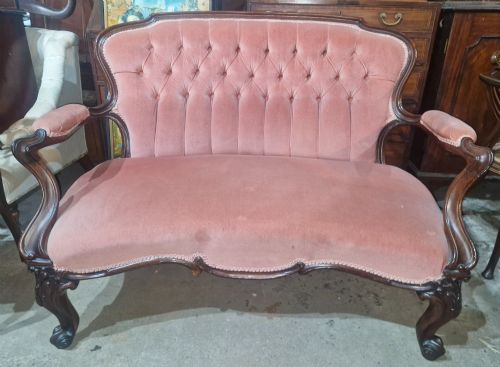
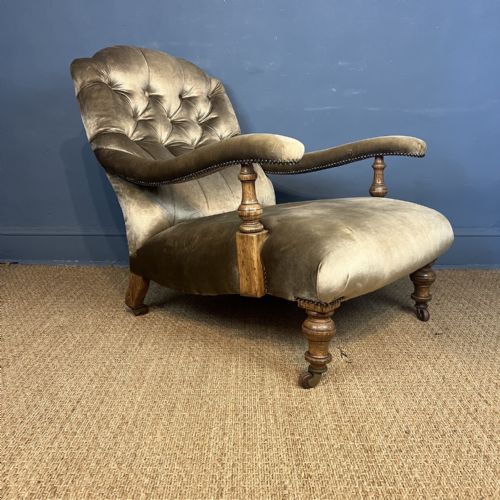
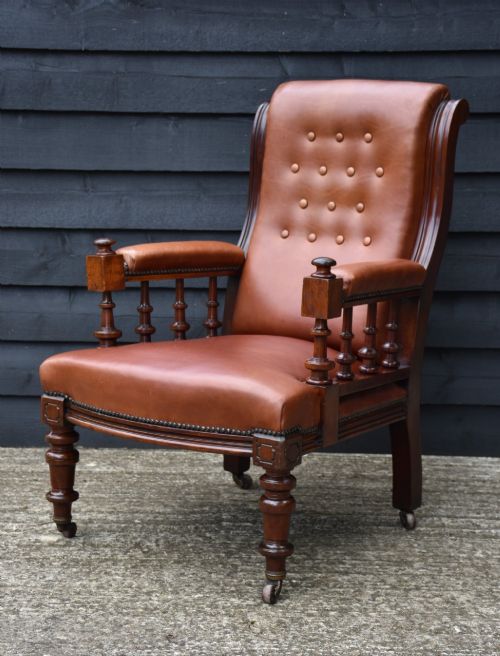
Victorian Button Back
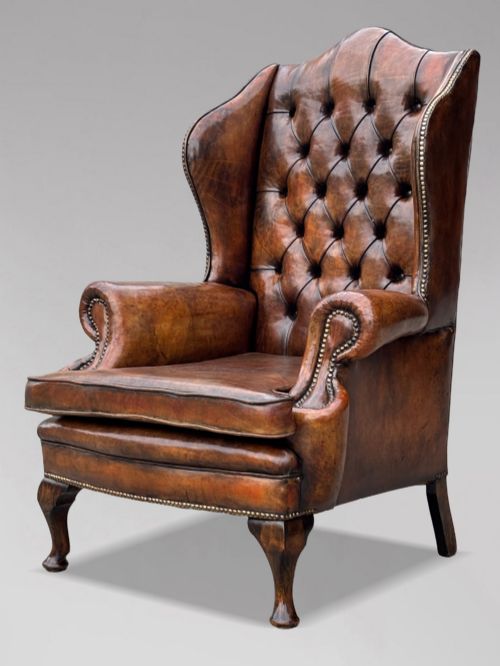
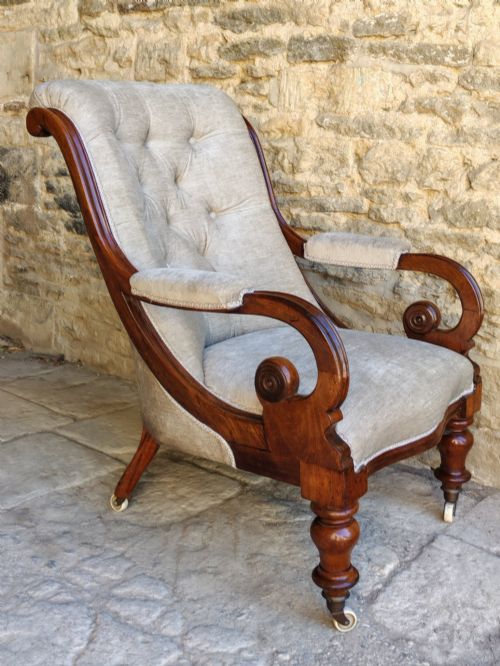
When you seek a victorian button back, you are looking for deeply upholstered seating defined by tight tufting and nineteenth-century craftsmanship.
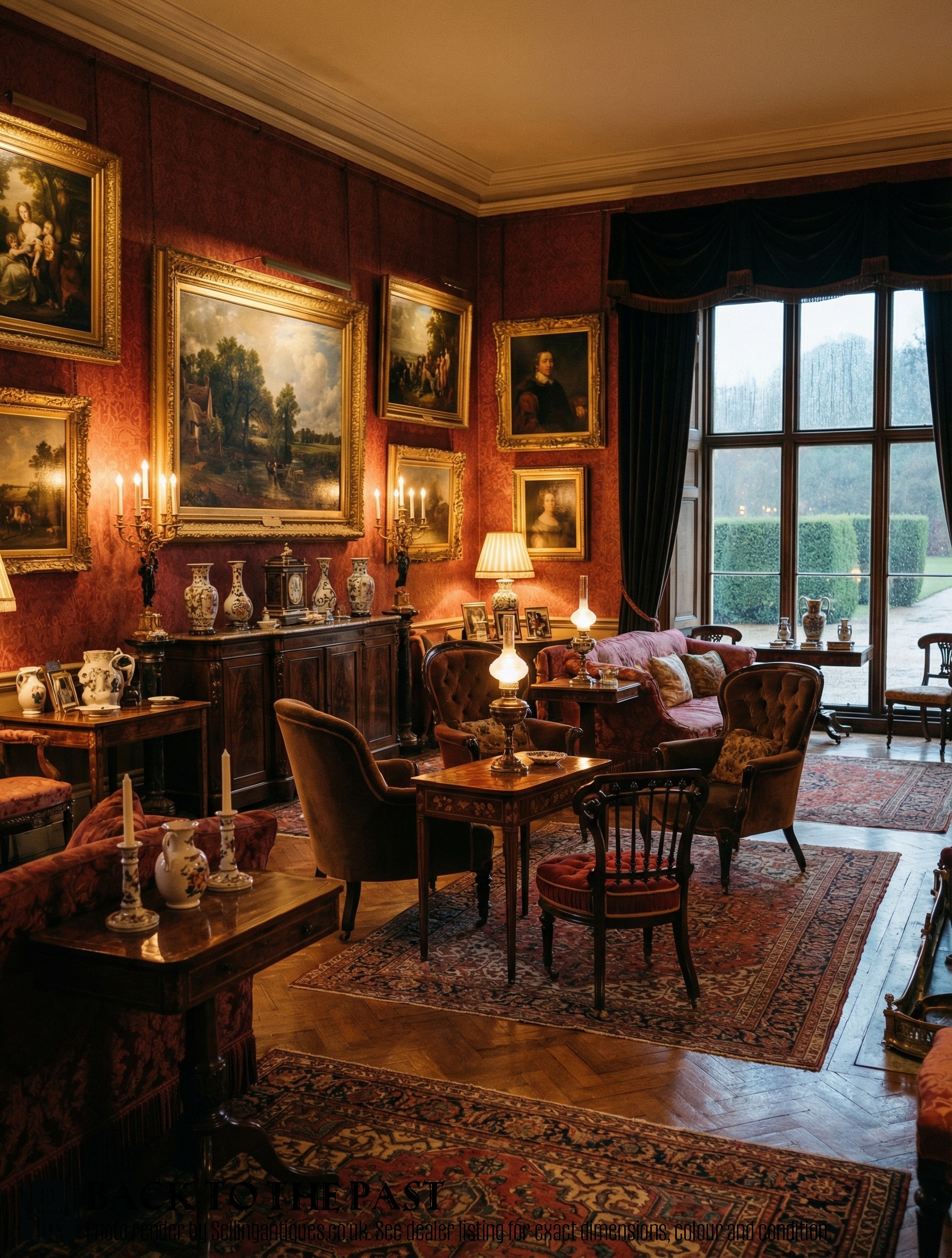
Victorian Button Back
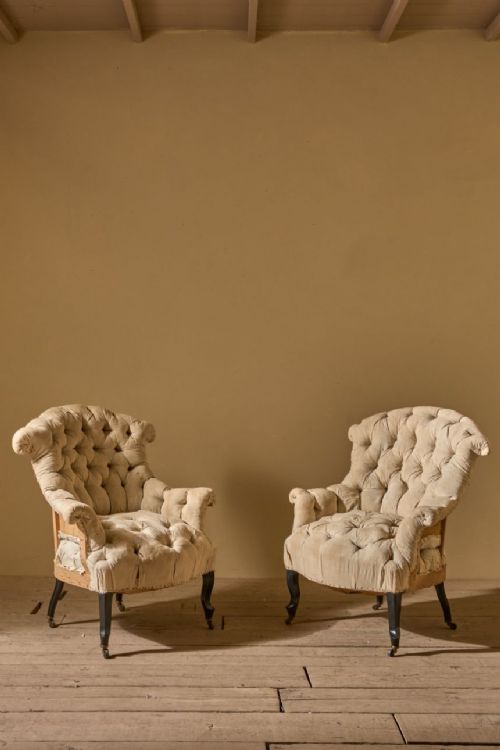
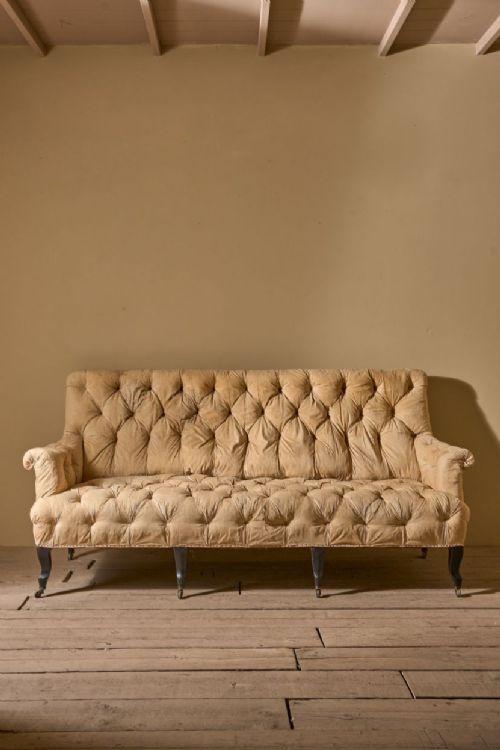
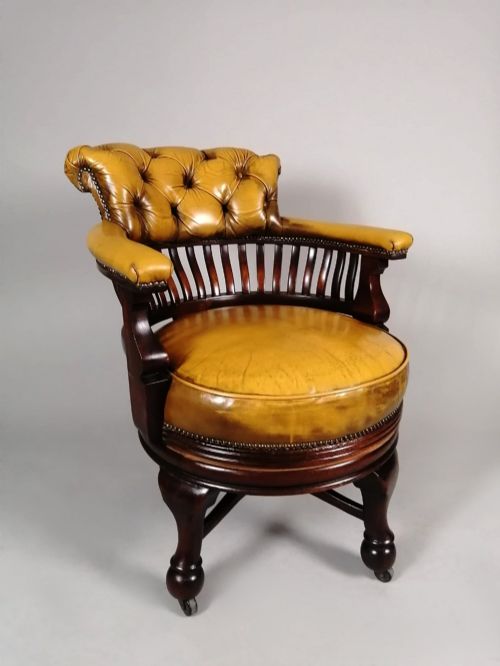
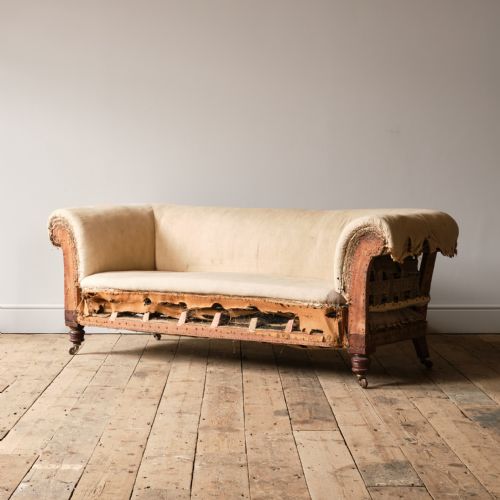
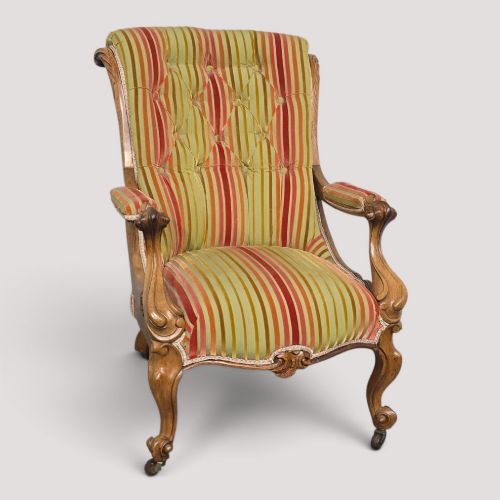
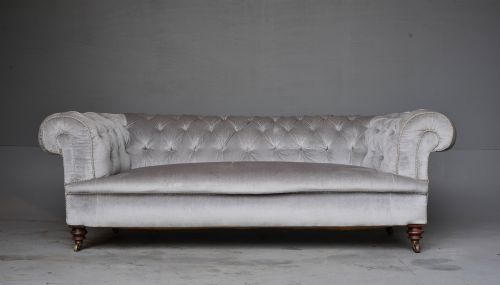
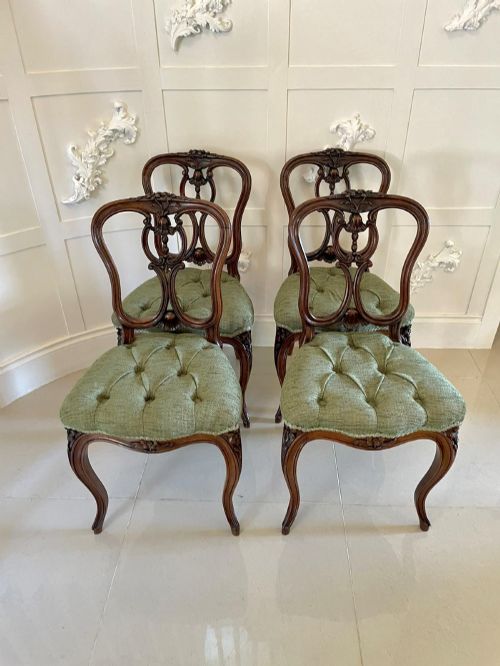
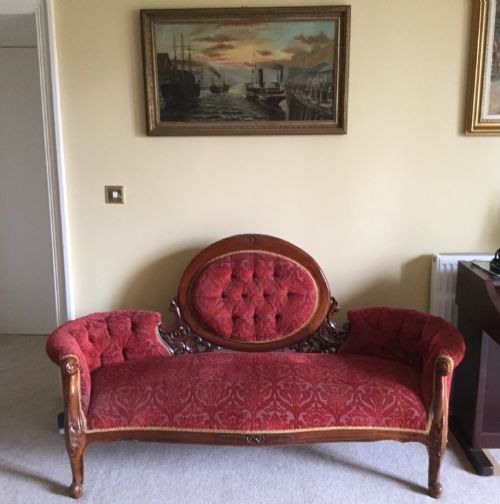
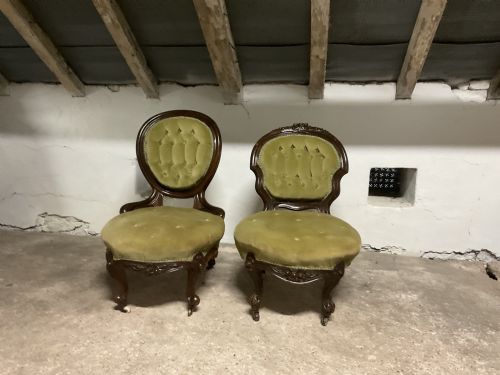
A victorian button back encompasses a variety of heavily upholstered seating designed for the nineteenth-century parlour, library, and bedroom. The selections here range from compact nursing chairs and occasional seats to large library armchairs, chaise longues, and Chesterfield sofas.
Most pieces date from the mid to late nineteenth century, reflecting periods such as 1850, 1860, and 1880, alongside occasional examples from the Regency and Edwardian eras. Forms vary widely between low-slung gentleman and ladies chairs, double spoon-back sofas, and country house armchairs.
Buyers will encounter frames shaped in the Victorian Rococo Revival and English Country House styles, utilising rich timbers like mahogany, walnut, and rosewood. The defining characteristic across these forms remains the signature buttoned upholstery technique.
Markers of Distinction
Quality in a victorian button back rests upon the crispness of the timber carving and the symmetry of the tufting across the backrest. Superior pieces display harmonious proportions, substantial frames in woods like rosewood or walnut, and finely tuned upholstery tension.
Maker attribution elevates certain examples, particularly those bearing the hallmarks of distinguished workshops known for robust framing and meticulous spring placement. The choice of original or high-grade replacement coverings, from supple leather to deep-pile brocade, also influences the character and standing of the piece.
Listings feature eighteenth and nineteenth-century forms including mahogany library armchairs, rosewood chaise longues, and walnut occasional chairs.
Howard and Sons·Gillows
The Victorian Button Back Glossary
- Buttoning
- The technique of pulling upholstery cords deep into the padding and securing them with covered buttons to create a geometric tufted pattern. This method keeps internal stuffings evenly distributed.
- Nursing chair
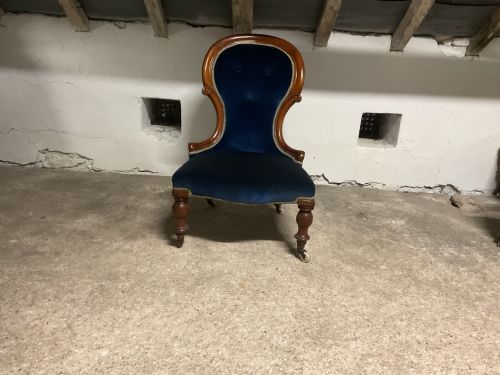
- A low-seated Victorian chair originally designed to allow a mother to tend to an infant comfortably. They often feature an expansive upholstered back without restricting armrests.
- Spoon-back
- An upholstered chair back shaped like the bowl of a spoon, curved to match the posture of the human spine. It is frequently bordered by carved rosewood or walnut.
- Chesterfield
- A large, heavily upholstered sofa featuring arms and back of the same height. Traditional versions incorporate deep buttoning across the interior surfaces.
- Chaise longue
- An elongated upholstered seat intended for reclining, combining a chair with an extended footstool. Victorian iterations often showcase a single scrolled end and exposed carved timber legs.
Victorian Button Back: Frequently Asked Questions
What is a victorian button back?
A victorian button back is a piece of nineteenth-century seating upholstered with deep tufting where buttons pull the fabric tight against the padding.
These chairs and sofas were staple furnishings in Victorian parlours, libraries, and bedrooms, offering both formal elegance and comfortable support.
How do I identify a nursing chair?
A nursing chair is typically shorter in height with a low seat designed for comfort and ease of movement in domestic spaces.
They frequently feature distinctive spoon-backs or buttoned upholstery without obstructive arms, making them well-suited for dressing rooms and bedrooms.
Where should I place a Chesterfield?
A Chesterfield sofa works best as a central statement piece in a study, library, or spacious living room.
Its deep proportions and buttoned leather or fabric upholstery require adequate surrounding space to showcase the nineteenth-century craftsmanship.
What woods were used for frames?
Cabinetmakers primarily utilised dense hardwoods such as mahogany, walnut, rosewood, and oak for structural frames.
These timbers allowed artisans to carve intricate details into cabriole legs and exposed wooden borders while supporting the heavy internal upholstery.