
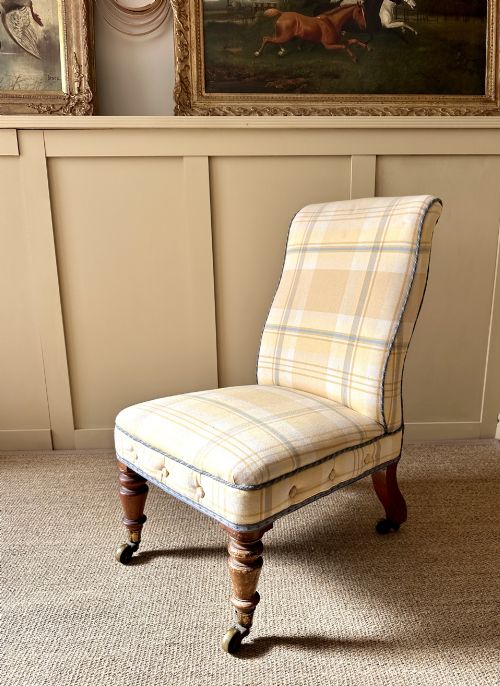


Late Victorian Nursing Chair
A late Victorian nursing chair offers low seating and upholstered comfort, bringing nineteenth-century domestic style straight into your home.
Late Victorian Nursing Chair
When you search for a late Victorian nursing chair, you are looking at nineteenth-century low seats designed for comfort and ease beside the bedroom or hearth. These pieces belong to the broader Victorian and late 19th-century periods, sharing company with bedroom chairs, slipper chairs, and low rocking chairs.
You are most likely to meet mahogany or walnut frames paired with button back upholstery, velvet, tapestry, or original fabric. Many examples sit low on turned wooden legs with brass castors, while others take more elaborate forms like the Aesthetic Movement low bathroom chair or hand-carved scroll back slipper chairs.
How they were made
Makers shaped these chairs from hardwoods such as mahogany, walnut, and ebonised wood, often incorporating hand-carved details on the wooden backs and scrollwork. Frames were constructed to support low seats, sometimes featuring inlaid woodwork or fluted legs.
Upholstery defined the function and finish, utilising velvet, tapestry, and various button back fabric coverings over internal padding. Brass castors were frequently fitted to the legs for mobility across carpets and floorboards.
Late Victorian Nursing Chair Retail Price Guide 2026
Typical asking prices for late victorian nursing chair among the pieces listed under this phrase on Sellingantiques today, from the lower quarter to the upper quarter. They describe what is for sale here now, not the wider market.
Some past examples arrived with stamped castors, proving that even the tiny wheels beneath your feet appreciated a maker's mark.
What varies in quality
The distinction between ordinary and superior pieces rests on the craftsmanship of the timber frame and the refinement of the carving. Hand-carved scroll backs and figured mahogany or walnut elevate certain pieces well above standard turned-leg models.
The integrity and preservation of the original materials also set examples apart. Frames retaining stamped castors, specialist ebonised and gilt finishes, or intact period fabric demonstrate a higher degree of original character.
The Late Victorian Nursing Chair Glossary
- Nursing chair
- A low-seated chair designed in the nineteenth century for comfort, traditionally used in bedrooms and nurseries. Their reduced height allowed sitters to tend to infants or dress with ease.
- Button back
- An upholstery technique where buttons are pulled deep into the padding to create a textured, tufted diamond pattern. This method secured the internal stuffing while adding decorative depth to the backrest.
- Slipper chair
- A low-framed upholstered chair with no arms, originally designed for ladies' bedrooms to sit upon while putting on shoes. They share similar low proportions with nursing chairs.
- Aesthetic Movement
- A late nineteenth-century design style that emphasised visual beauty over narrative subject matter. Pieces from this movement often display refined forms and dark ebonised finishes.
- Castor
- A small wheel fitted to the base of furniture legs to allow smooth rolling across floors. Many late nineteenth-century examples use brass fittings, and stamped versions indicate particular maker attention.
Late Victorian Nursing Chair: Frequently Asked Questions
What is a late Victorian nursing chair?
A late Victorian nursing chair is a low-seated nineteenth-century armchair or side chair designed for bedroom and nursery use. Their compact and low proportions made them practical for domestic tasks.
Today, they function well as accent seating in bedrooms, dressing rooms, or living spaces where lower furniture creates an intimate scale.
How do I use a nursing chair today?
These chairs fit naturally into bedrooms, dressing rooms, or corners of sitting rooms as occasional seats. Their low height makes them comfortable for reading or putting on shoes.
Because they take up less visual space than standard armchairs, they sit easily beside fireplaces or beside low bedside tables without crowding a room.
How do I date a late Victorian chair?
Dating relies on combining stylistic clues with the materials and construction methods visible on the frame. Late nineteenth-century pieces often reflect Aesthetic Movement lines or traditional mahogany and walnut framing.
Details such as turned wooden legs, brass castors, and button back upholstery point towards the decades around eighteen-eighty to nineteen-hundred.
What woods were used for these chairs?
Mahogany and walnut form the primary timber choices for these nineteenth-century seats. Workshops also utilised ebonised wood to achieve dark, polished surfaces favoured during the period.
Selected pieces incorporated gilt highlights or inlaid details on the woodwork to enhance the decorative finish of the frame.