


English Windsor Armchair
An english windsor armchair offers robust country seating, combining sculpted wooden seats with steam-bent frames.
English Windsor Armchair
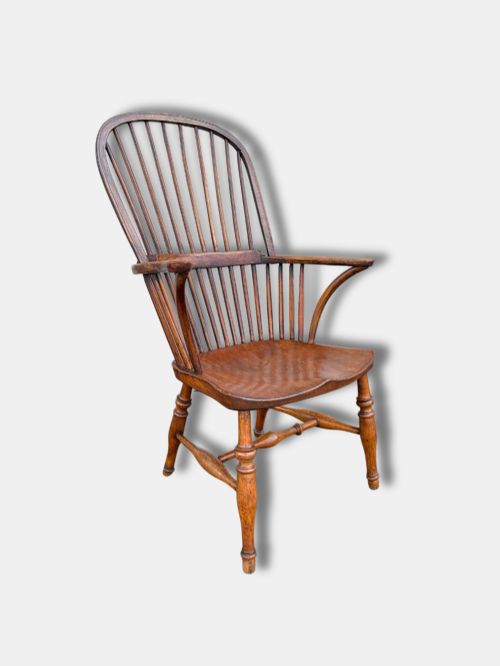
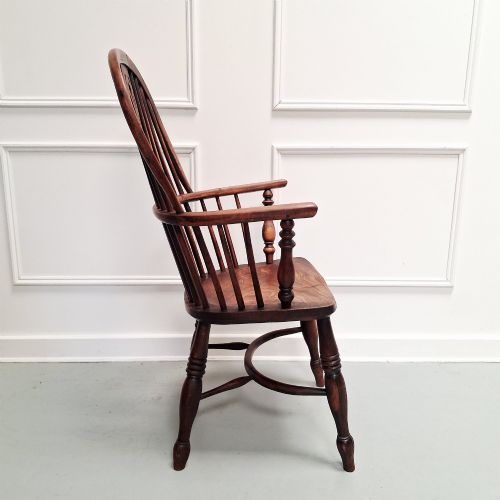
An english windsor armchair is a traditional wooden seating form characterised by a solid shaped seat into which legs and back spindles are wedged directly. Buyers seek these pieces for their rustic utility, organic timber grain, and enduring structural design. The versions met most frequently on this page originate from the eighteenth, nineteenth, and early twentieth centuries, spanning Georgian and Victorian country styles.
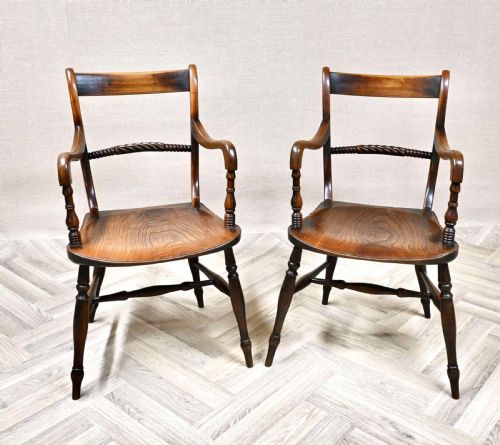
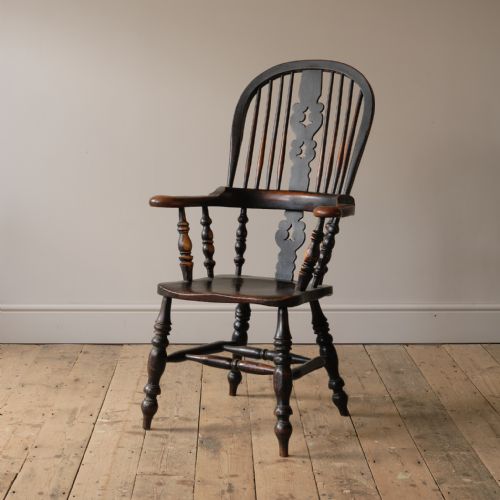
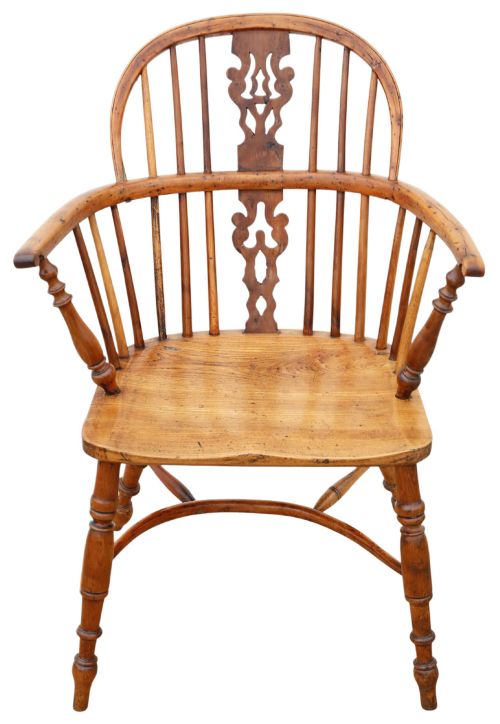
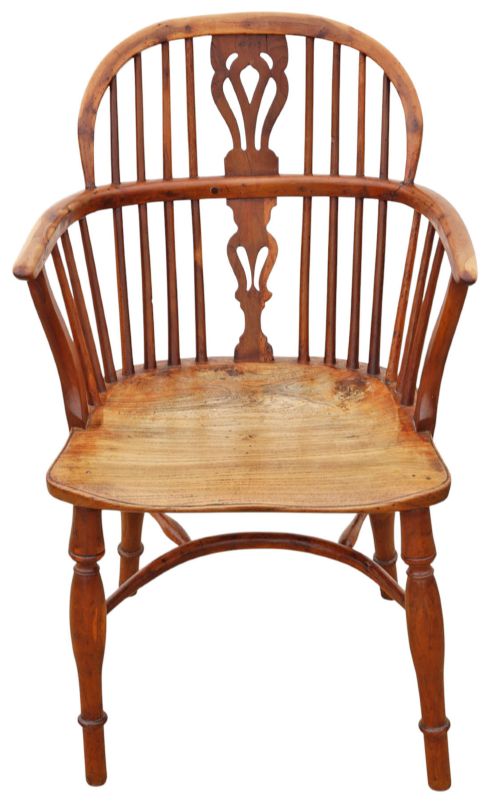
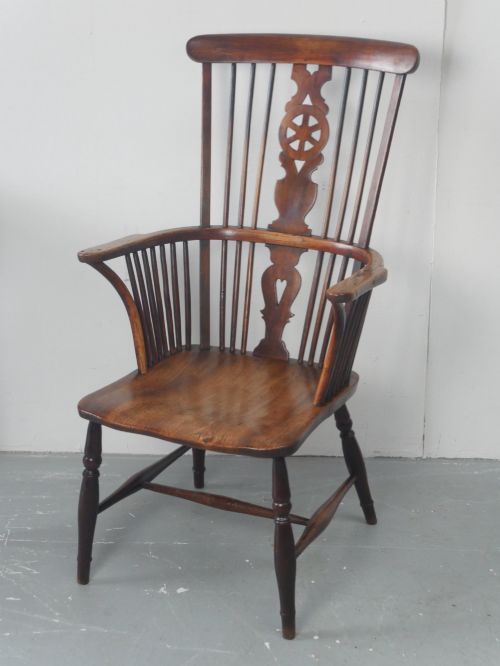
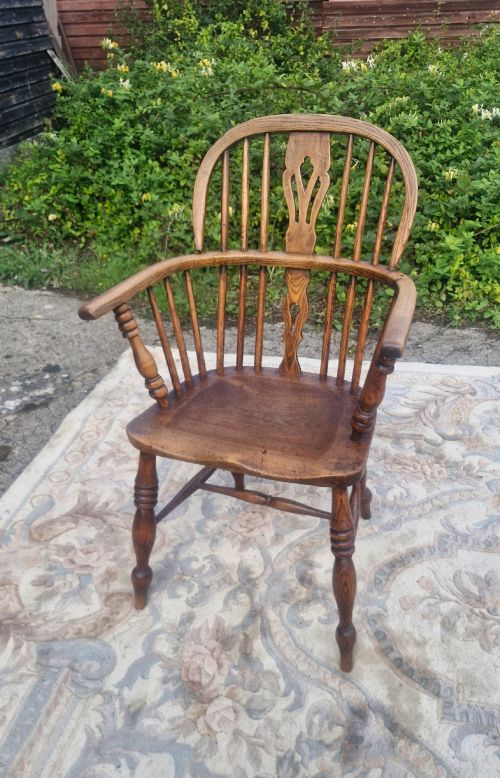
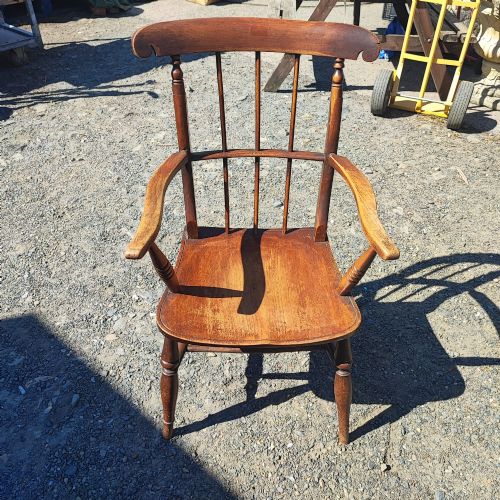
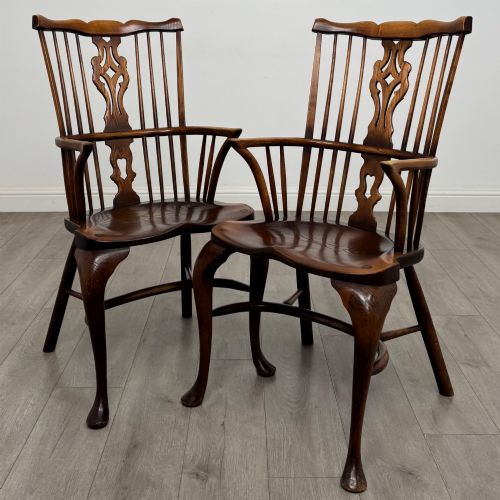
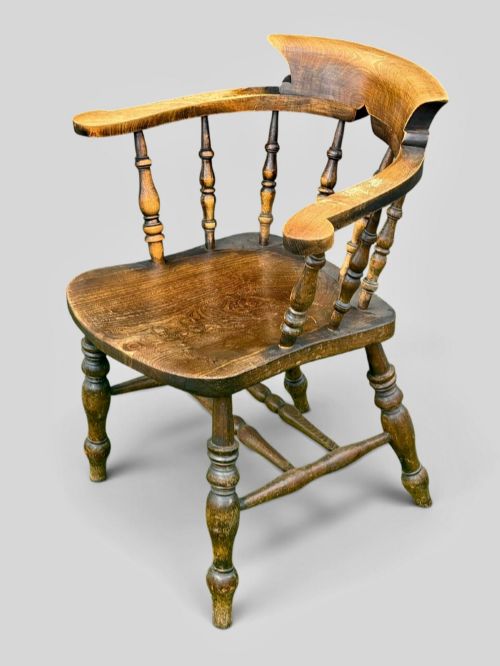
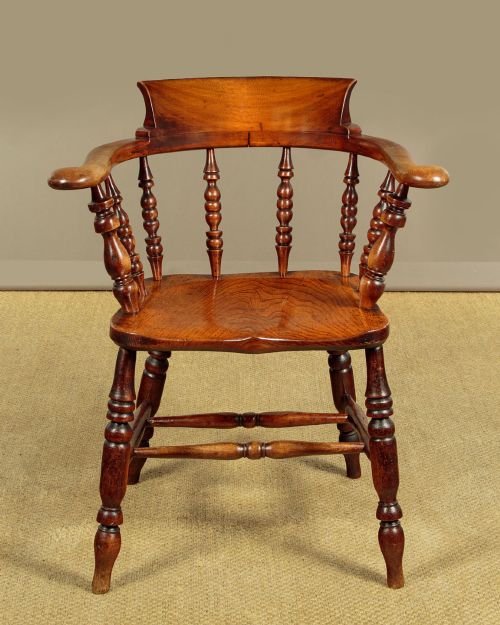
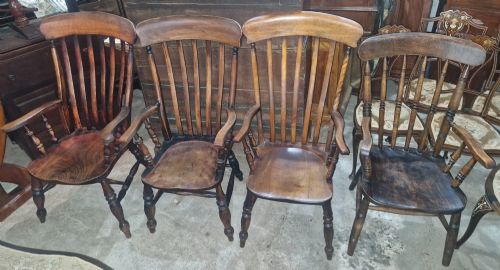
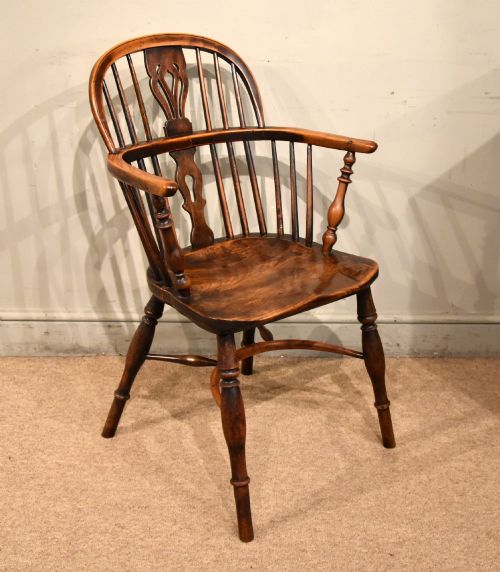
Forms range from low-back smokers bows and kitchen armchairs to high-comb backs and yew-wood wheelbacks. Regional variations such as Lincolnshire or Buckinghamshire types appear alongside simpler farmhouse models and rocking chairs. These pieces served historically in farmhouses, cottages, and country houses as durable seating for daily use.
How they were made
Maker construction relied on combining contrasting timbers to balance strength and flexibility within a single frame. Solid elm provided a heavy, crack-resistant seat slab, while ash and beech formed sturdy turned legs, arms, and back spindles. Yew wood served for higher-grade chairs, prized for its dense grain and rich warm colour.
Techniques centred on green woodworking and steam-bending to shape the continuous hoop backs or bow arms. Spindles were wedged and pegged into drilled mortise joints on the seat without using metal fasteners. Many examples retain surface finishes like original red paint or polished wax over aged wood.
English Windsor Armchair Retail Price Guide 2026
Typical asking prices for english windsor armchair among the pieces listed under this phrase on Sellingantiques today, from the lower quarter to the upper quarter. They describe what is for sale here now, not the wider market.
What varies in quality
Quality rests in the elegance of the spindle turning, the proportion of the arm bow, and the figuring of the timber grain. Chairs featuring high-comb backs or figured yew wood demonstrate superior craftsmanship compared to standard utility kitchen seating. The sculpt of the saddle seat itself dictates comfort and visual depth.
Structural integrity depends on the tightness of the original joints and the retention of matching turned components across matched pairs. Vernacular examples show varying degrees of rustic simplicity, where heavier country framing contrasts with refined workshop production.
J SPENCER·Gabbitass Worksop
The English Windsor Armchair Glossary
- Comb-back
- A Windsor chair design where the vertical back spindles rise through a horizontal headpiece, resembling a traditional hair comb.
- Hoop-back
- A single steam-bent piece of timber forming a continuous curve for the chair back and arm supports.
- Smoker's bow
- A low-back Windsor armchair, also known as a captain's chair, featuring a rounded low spindle rail and a generous elm seat.
- Wheelback
- A Windsor variant featuring a central carved splat shaped like the spokes and rim of a wooden cartwheel.
- Vernacular
- Objects made by local regional craftsmen following traditional local patterns rather than metropolitan high-style designs.
English Windsor Armchair: Frequently Asked Questions
What is an english windsor armchair?
An english windsor armchair is a traditional wooden seat featuring a solid sculpted wooden bottom with turned legs and independent back spindles socketed directly into the base.
These chairs developed across various English regions during the eighteenth and nineteenth centuries as sturdy, practical seating for domestic and rural use.
How do I identify periods?
Dating relies on observing structural forms, such as early eighteenth-century comb-backs or later Victorian low-back smokers bows, alongside timber choices like yew wood and ash.
Construction methods and regional styling clues help distinguish Georgian rural output from later nineteenth-century farmhouse production.
Where were they used?
These armchairs served primarily in rural farmhouses, country houses, and kitchens as heavy-duty seating for everyday life.
Their robust construction also suited them for vernacular settings, country inns, and workshops across various English counties.
How do I live with them?
Living with these chairs involves placing them around dining tables, in studies, or as standalone accent pieces in modern or traditional interiors.
Maintain the timber by avoiding excessive heat fluctuations and applying occasional wax to preserve the natural wood finish.