



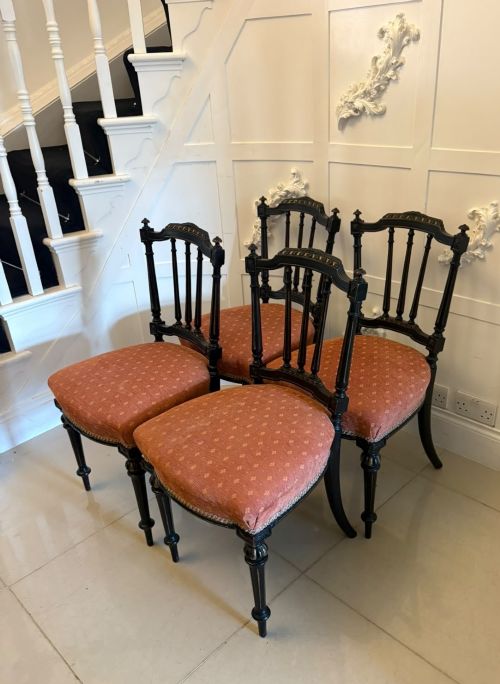
Turned Spindle Chair
A turned spindle chair is a sturdy timber seat built with lathe-turned uprights, sought after for its honest vernacular design and comfort.
Turned Spindle Chair
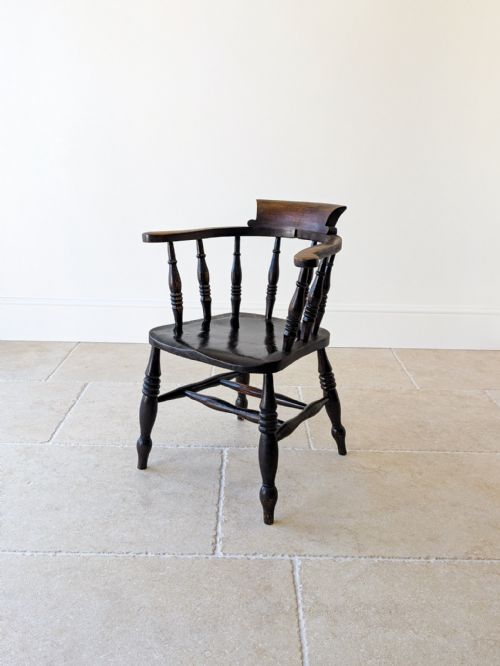
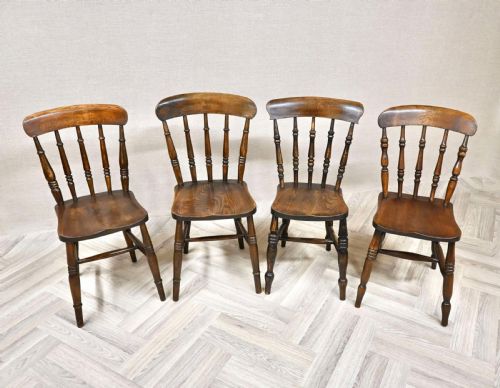
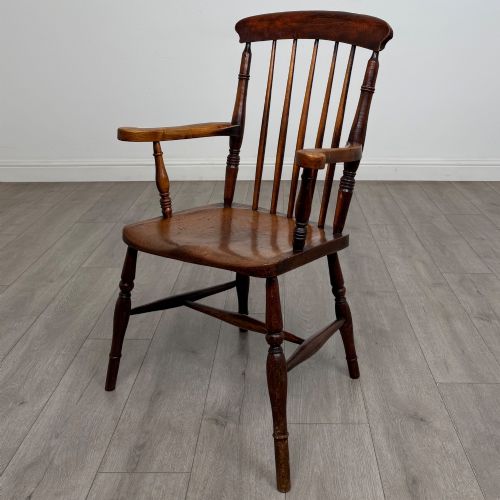
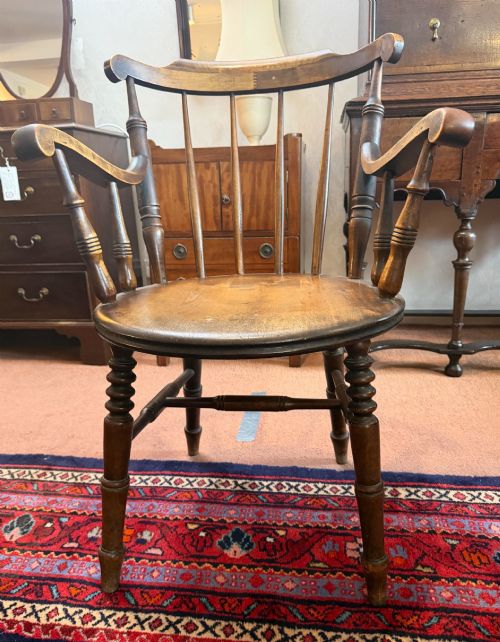
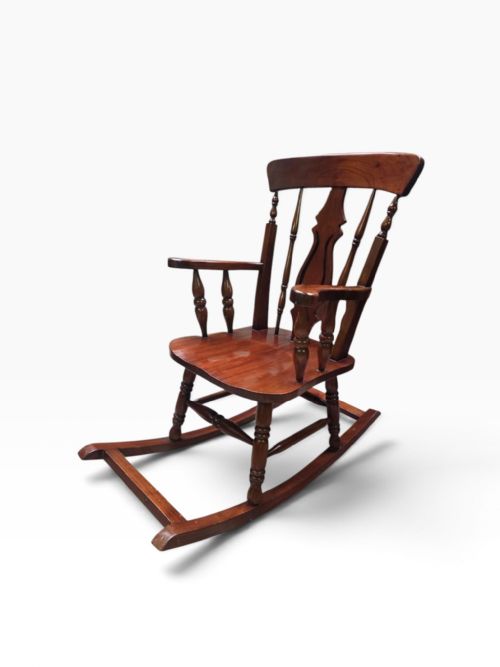
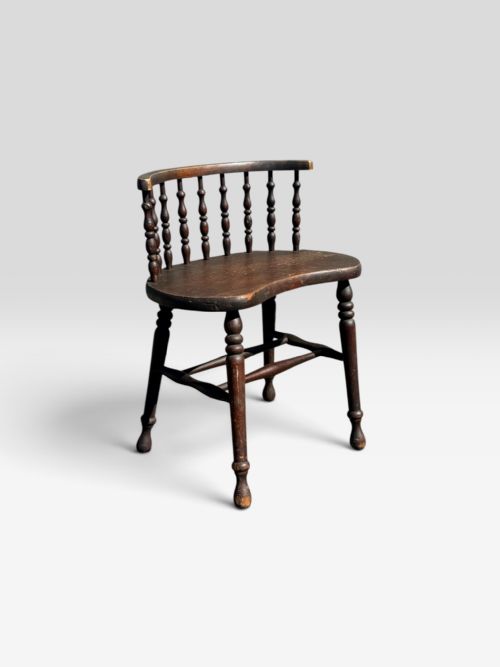
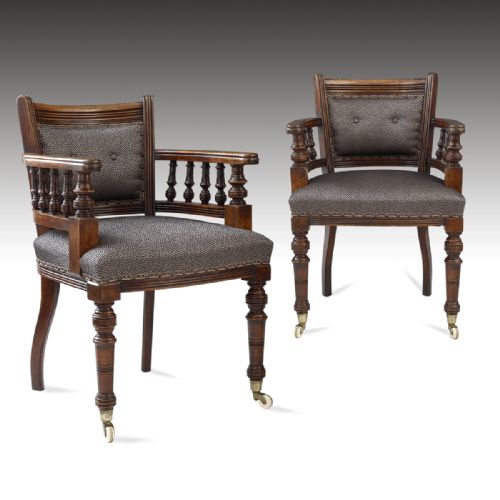
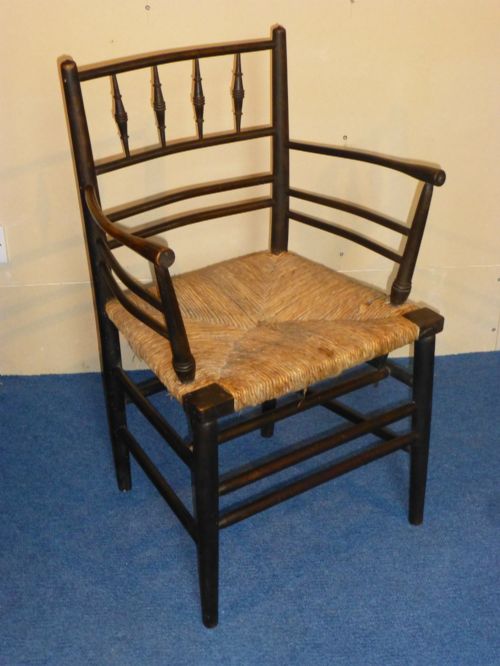
When you search for a turned spindle chair, you encounter a wide variety of functional seating forms shaped from solid hardwoods. The pieces span several decades of the nineteenth and early twentieth centuries, encompassing Victorian, Edwardian, and Arts and Crafts eras.
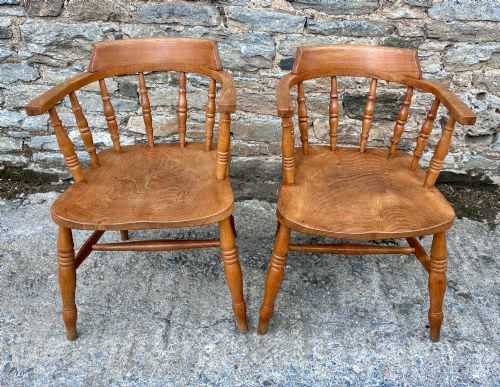
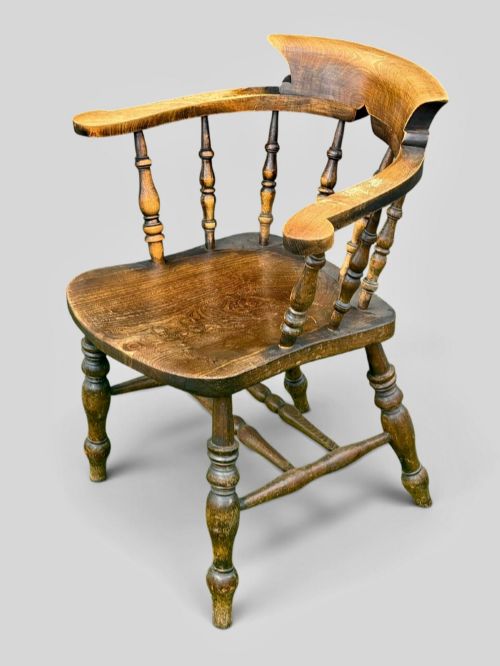
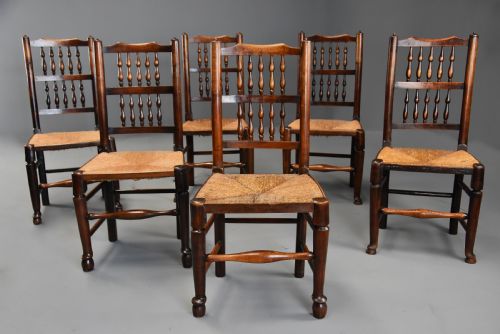
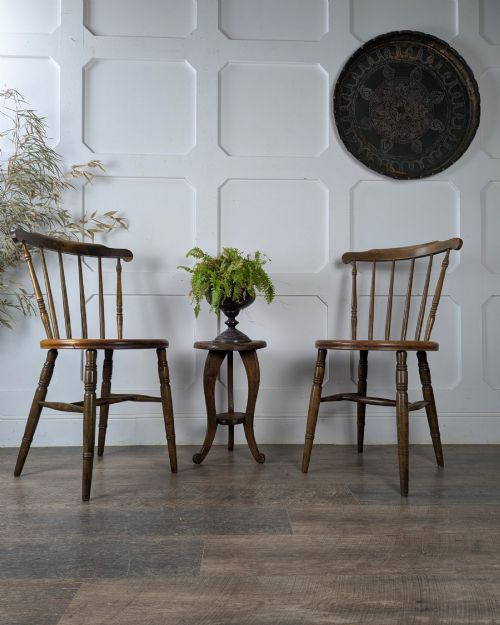
Armchairs, kitchen chairs, and smokers' bows dominate the selections, alongside rocking chairs, desk chairs, and dining sets. Many pieces reflect a country or regional vernacular origin, using traditional turning techniques to form uprights and spindles.
Makers utilised familiar forms such as captains chairs, Windsor chairs, and turners chairs. These sturdy items served domestic and working spaces alike, from farmhouse kitchens to libraries.
How They Were Made
Craftsmen built these chairs primarily from native timbers, frequently pairing flexible ash or beech for spindles and legs with solid elm for shaped seats. Oak and mahogany also appear in more formal library or desk variants.
Components were shaped on a lathe to create bobbin or turned profiles, then assembled using traditional joinery without metal fasteners. Seats were often hollowed out for comfort or fitted with rush inserts.
Turned Spindle Chair Retail Price Guide 2026
Typical asking prices for turned spindle chair among the pieces listed under this phrase on Sellingantiques today, from the lower quarter to the upper quarter. They describe what is for sale here now, not the wider market.
Listings feature woods such as elm, beech, oak, ash, and mahogany, reflecting nineteenth and early twentieth-century vernacular traditions.
What Varies in Quality
Quality rests in the selection of timber and the precision of the lathe work used to turn the spindles and uprights. Heavier, dense woods like elm and oak provide greater structural integrity than softer secondary timbers.
The harmony of the proportions and the preservation of the original surface patination distinguish superior examples from standard utility seating. Subtle variations in turning detail separate individual country workshops from mass production.
Morris & Co·Philip Webb·Codina·J Spencer
The Turned Spindle Chair Glossary
- Smoker's bow
- A low-backed Windsor armchair with a continuous curved arm rail, often featuring turned spindles below.
- Turned spindle
- A wooden rod shaped on a lathe to create decorative cylindrical or bulbous profiles.
- Windsor chair
- A wooden chair constructed with a solid elm seat into which the legs and back spindles are separately inserted.
- Rush seat
- A woven seating surface made from dried marsh grasses twisted into cords.
- Patina
- The surface sheen and colour developed on timber through decades of handling, light, and use.
Turned Spindle Chair: Frequently Asked Questions
What is a turned spindle chair?
A turned spindle chair is a wooden seat constructed using lathe-shaped uprights and stretchers. These pieces rely on traditional joinery and sturdy timbers like elm and ash.
They encompass various historical forms including kitchen chairs, library seating, and captain's chairs. The design prioritises structural strength and functional comfort.
How do I date a turned spindle chair?
Dating involves examining the timber species, construction methods, and tool marks visible on the underside of the seat. Victorian and Edwardian examples often display specific turning patterns and finish characteristics.
Earlier nineteenth-century pieces tend to feature heavier section framing and hand-turned components. Comparing the form to documented regional styles helps narrow the period.
Where were these chairs used?
These chairs served primarily in domestic kitchens, farmhouses, and informal sitting rooms. Sturdier variants also found places in offices, libraries, and country houses.
Their robust construction made them suitable for daily heavy use. Rocking and desk variants supported prolonged sitting in work or study spaces.
How should I care for a wooden chair?
Maintain timber chairs by keeping them away from direct heat sources and sudden temperature fluctuations. This prevents the wood from drying out and joints from loosening.
Apply occasional appropriate wax polish to nourish the surface and preserve the historic patina. Avoid harsh modern chemical cleaners that strip the original finish.