


Antique Pub Chair
An antique pub chair brings solid timber and heavy traffic history straight into a domestic room.
Antique Pub Chair
An antique pub chair is a robust seating form designed for heavy use in public houses, taverns and rural settings during the nineteenth and early twentieth centuries. When you search for this phrase, you encounter heavy armchairs, Windsor variations like the smokers bow, and tall stools made for commercial hospitality.
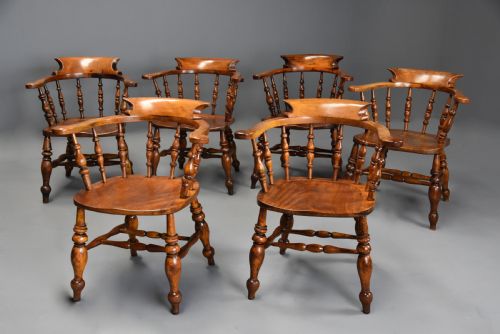
The versions most frequently met on this page date from the Victorian and Edwardian periods, running from the 1870s through to 1900. These pieces often arrive as single examples, pairs, or matched sets of four, six, or more.
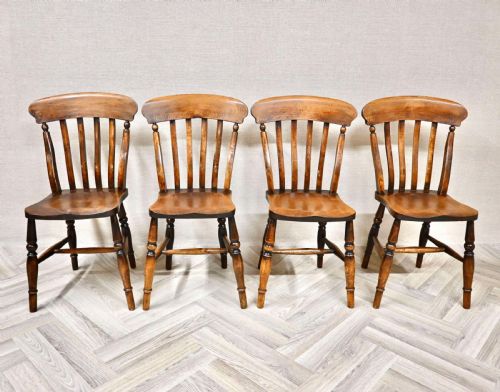
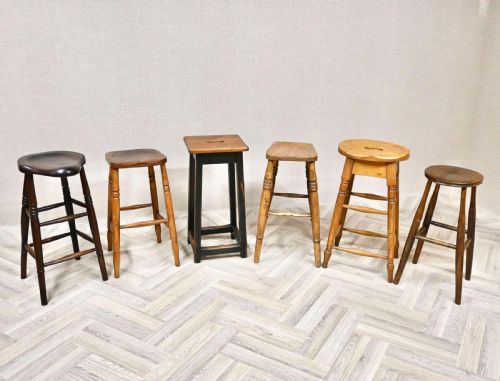
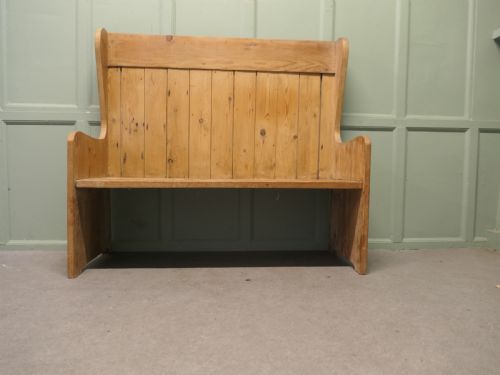
Forms span across classic captain chairs, lathback kitchen chairs, clerk stools, and high back pine settles. Their origins sit firmly in English country workshops where utility dictated every line of the design.
How they were made
Makers built these chairs using sturdy native hardwoods, frequently pairing elm seats with turned beech spindles and ash or alder frameworks. Selected pieces integrate leather seats, brass elements, or pine boards for settles and benches.
Construction relies on traditional joinery methods such as steam bending for the continuous armbows and Windsor wedged tenons for stability under constant movement. Turned legs and stretcher rails distribute weight evenly across the frame.
A clerk stool found here carries the quiet atmosphere of nineteenth century ledgers and ink-stained fingers straight into the room.
What varies in quality
Quality rests on the choice of timber and the depth of figuring in the grain, particularly where elm is used for solid saddle seats. Thicker planking and robust timber selection separate everyday commercial seating from finer bespoke examples.
The integrity of the original joints and the crispness of the turned spindle work define the standard of survival. Examples retaining their initial surface patina and structural rigidity stand apart from those altered or heavily rebuilt over decades of service.
The Antique Pub Chair Glossary
- Smokers bow
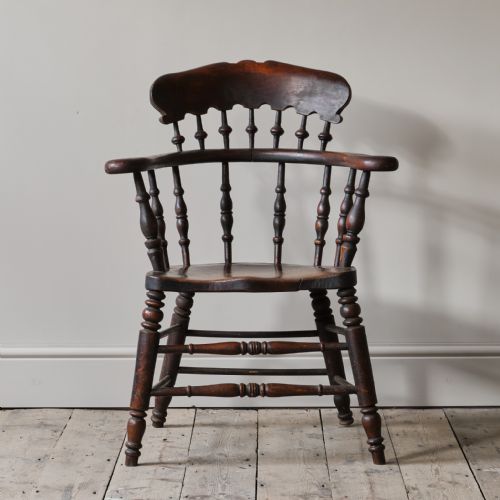
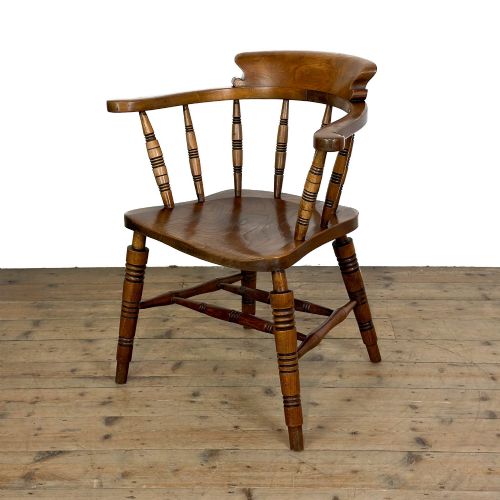
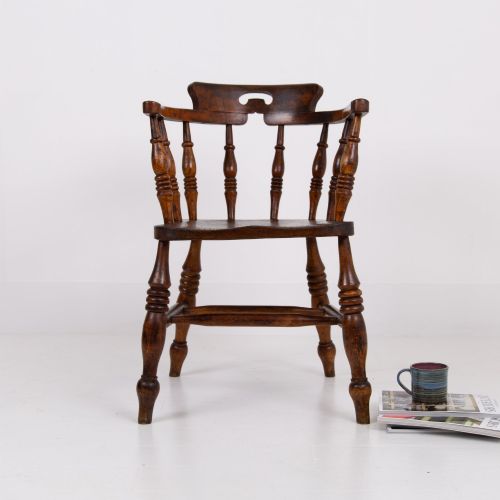
- A low-backed Windsor armchair with a curved continuous arm rail, commonly found in nineteenth century pubs and reading rooms. This form offers a comfortable, sturdy seat with low armrests designed for ease of movement.
- Windsor chair
- A wooden chair built with a heavy solid seat into which the legs and back spindles are independently tenoned. The construction method distributes stress effectively across multiple timber components.
- Comb back
- A Windsor chair variation where the top rail resembles the teeth of a comb, extending above the main spindle line. This regional variation provides additional upper back support.
- Settle
- A wooden bench featuring a high solid back to block draughts, often incorporating enclosed storage beneath the seat. These communal pieces stood near hearths in traditional taverns.
- Lathback
- A chair back constructed with flat vertical wooden slats rather than turned cylindrical spindles. The flat slats offer a distinct visual rhythm across nineteenth century seating.
Antique Pub Chair: Frequently Asked Questions
What is an antique pub chair?
An antique pub chair is a heavy commercial seating piece built from sturdy timbers like elm and beech during the nineteenth and early twentieth centuries. These chairs served patrons in public houses, taverns, and country kitchens.
They appear in forms such as smokers bows, captain chairs, and Windsor variants designed to withstand daily use. Their solid construction and utilitarian design distinguish them from domestic parlour furniture.
How do I identify a smokers bow?
A smokers bow is characterised by a low, continuous wooden armrail bent from a single piece of timber, supported by turned spindles above a saddle-shaped elm seat. It represents a specific robust development of the traditional Windsor chair.
These chairs date primarily from the Victorian era and were built for comfort and durability in public houses and commercial offices.
What woods were used for pub chairs?
Makers utilised native hardwoods such as elm for the shaped seats, paired with turned beech for legs and spindles. Ash, alder, pine, and satin birch also appear across the surviving pieces.
Selecting contrasting woods for different components provided both structural strength and varied visual grain patterns across the frame.
Can I use pub chairs around a dining table?
Pub chairs fit naturally around large dining tables due to their robust proportions and comfortable saddle seats. Their sturdy construction handles daily domestic seating without difficulty.
Matching sets or mismatched collections of nineteenth century country chairs add character and historical depth to modern dining spaces.
How do I date a nineteenth century chair?
Dating relies on observing construction techniques, tool marks, timber shrinkage, and the specific turning styles of the legs and spindles. Victorian and Edwardian examples show distinct regional variations in proportion and joinery.
Comparing the wear patterns and the method of joining the seat to the undercarriage helps narrow the period of manufacture.