
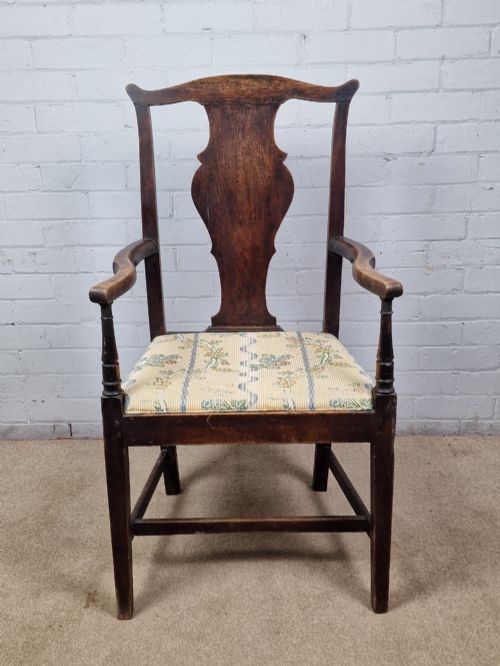
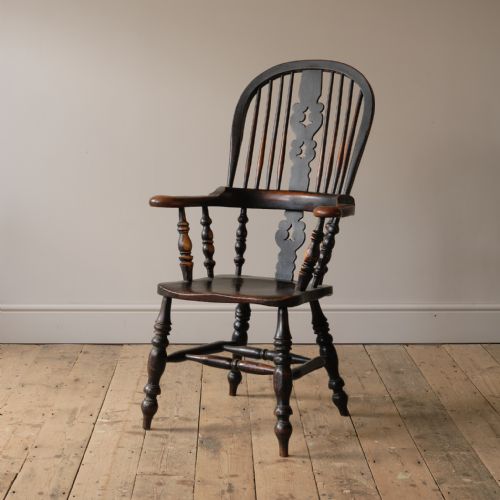
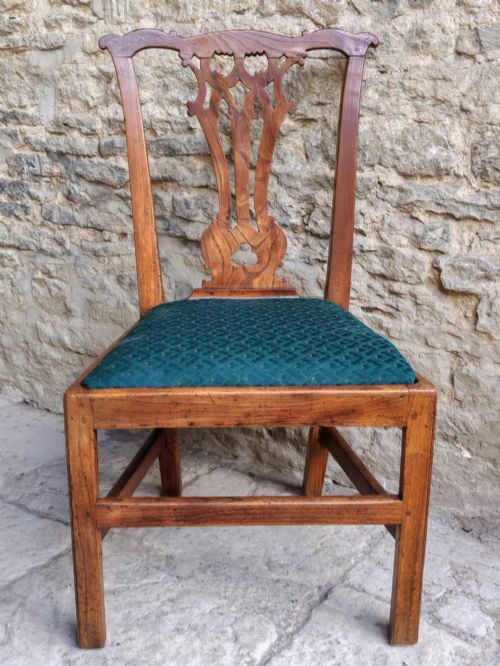
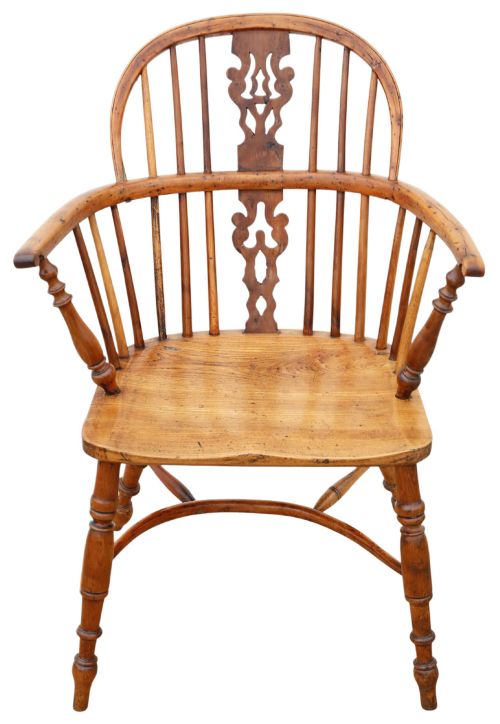



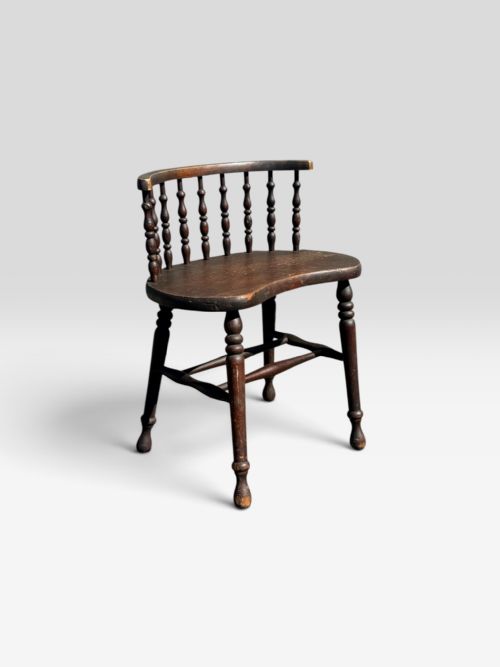
Country Wooden Desk Chair
These country wooden desk chair examples bring robust vernacular character and practical comfort to a workspace through centuries-old joinery traditions.
Country Wooden Desk Chair
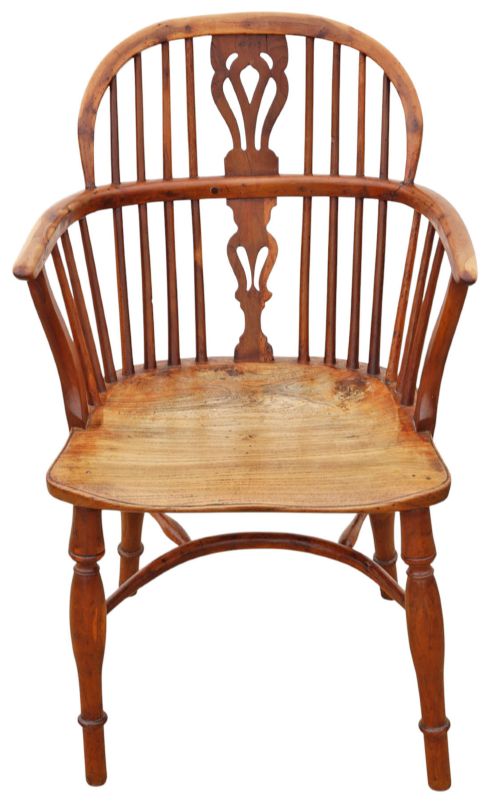
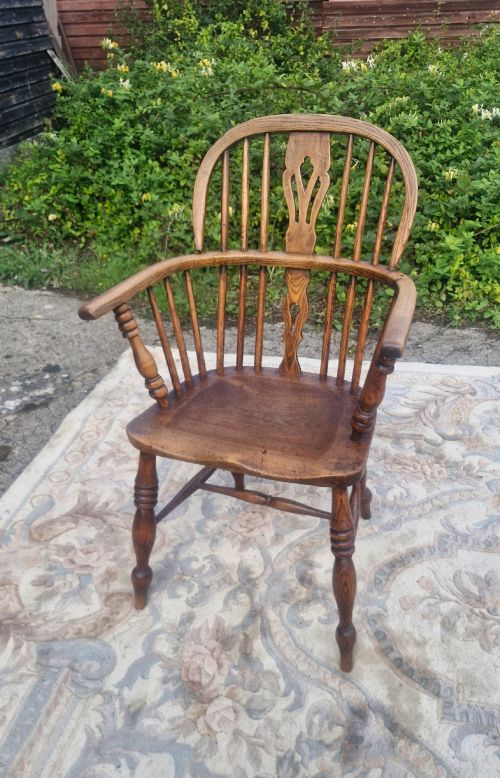
A country wooden desk chair typically manifests as a sturdy Windsor or smoker's bow form designed for daily utility in domestic and working interiors. These utilitarian seats span the eighteenth, nineteenth, and early twentieth centuries, drawing on regional English vernacular traditions.
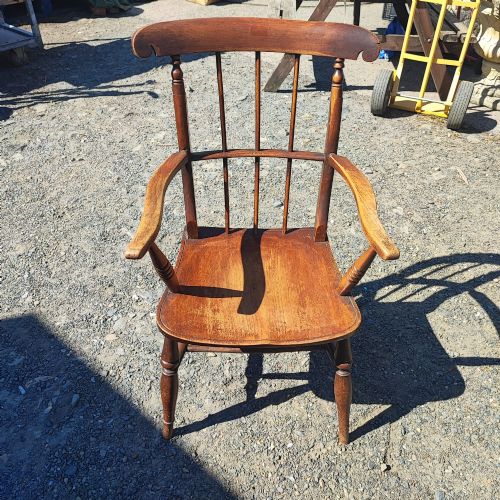
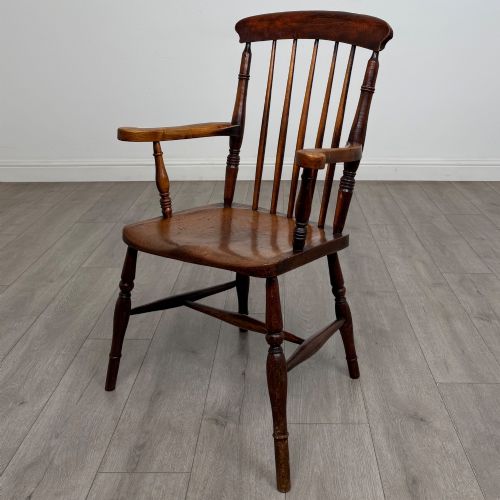
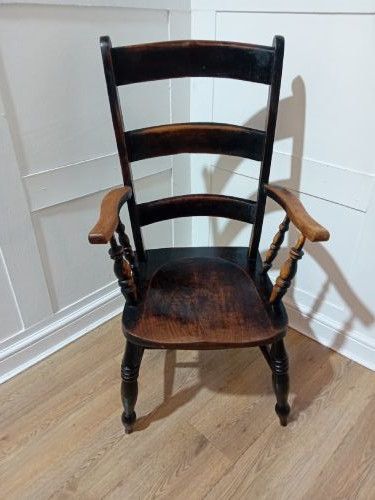
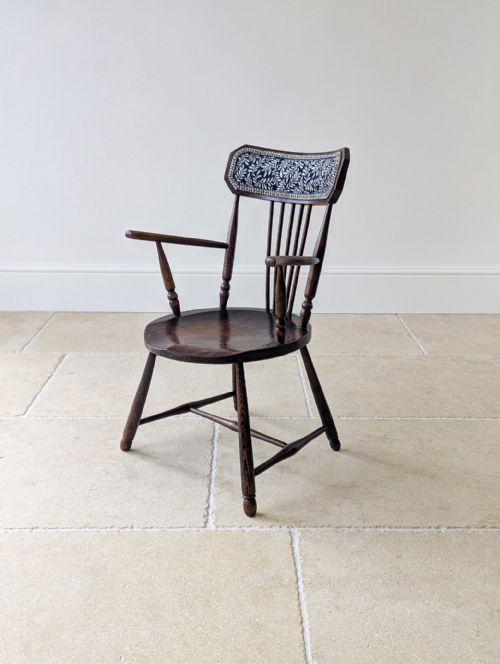
Most entries encountered on this page belong to the Windsor family, featuring saddle-shaped seats, spindles, and steam-bent arm rails. Other variants include stick-back, ladder-back, and captain's chair configurations originating from workshops across the country.
Makers constructed these chairs primarily for seating comfort at a writing table or desk, resulting in low-back, high-back, and broad-arm variations. Their enduring appeal lies in honest construction and timber patination accrued over generations of service.
How they were made
Craftsmen built these chairs by wedging spindles and legs directly into solid sculpted wooden seats, utilising contrasting timbers like elm for seats and ash or yew for bent parts and spindles. This combination provided both tensile strength and seated comfort.
Makers employed steam-bending techniques to form the characteristic bow backs and arm rails from single pieces of green wood, securing them with traditional wedged joints without metal fasteners. Beech, oak, and fruitwood also appeared depending on regional timber availability.
Listings feature timbers including elm, ash, oak, beech, and yew wood across the eighteenth and nineteenth centuries.
What varies in quality
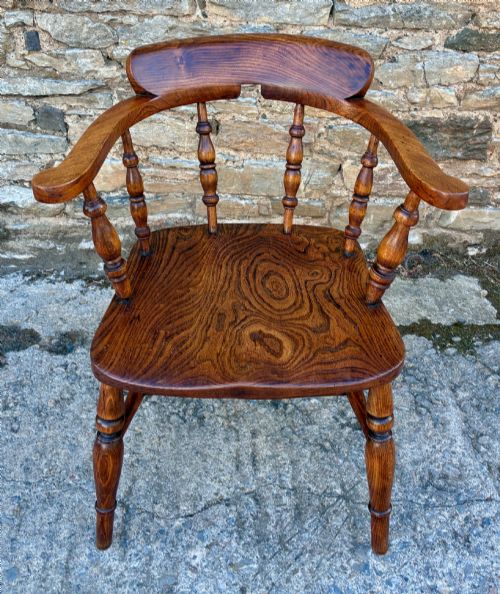
Quality rests upon the depth of the sculpted elm seat and the grace of the steam-bent horseshoe rail or comb back. Superior examples display balanced proportions, slender turned spindles, and tactile original surface patination.
Construction integrity distinguishes standard utilitarian seating from finer regional pieces, particularly the tightness of wedged leg joints and the selection of figured timbers like yew wood. Retaining an original finish rather than a modern surface elevation enhances the desirability of a piece.
J SPENCER
The Country Wooden Desk Chair Glossary
- Windsor chair
- A chair built with a solid wooden saddle seat into which all other components, including legs and back spindles, are socketed directly. They often feature bentwood armrails and hoops.
- Smoker's bow
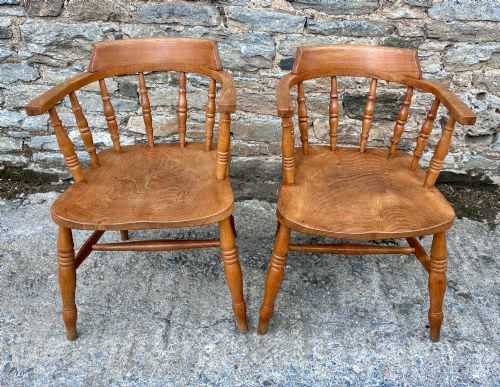
- A low-backed Windsor variant featuring a continuous curved arm and back rail supported by short spindles, commonly used in domestic smoking rooms and offices.
- Comb back
- A Windsor chair style where the upper back spindles rise into a horizontal headrest resembling a traditional hair comb. This form provides elevated upper back support.
- Hoop back
- A continuous steam-bent wooden bow forming the upper back and arm support of a chair. It distributes weight efficiently across the structural frame.
- Vernacular
- Objects designed by regional makers following local functional traditions rather than strict academic architectural styles. These pieces prioritize utility and local material availability.
Country Wooden Desk Chair: Frequently Asked Questions
What makes a Windsor chair comfortable?
Makers carved the solid wooden seats into a shallow saddle shape, which distributed weight evenly and accommodated the sitter comfortably during long tasks at a desk.
The angled splay of the turned legs and the flex of the spindle-and-bow backs also provided gentle give to the seated posture.
How do I identify a Thames Valley chair?
Thames Valley chairs typically utilise high-quality timbers such as yew wood and feature distinctive turned details, generous dimensions, and refined saddle seats.
These regional pieces often display superior cabinet-maker influences compared to simpler utilitarian farm chairs.
Are these chairs suitable for daily use?
These timber chairs were engineered for rigorous daily domestic and working life, utilising robust wedged mortise and tenon joinery that withstands regular movement.
Their solid construction makes them durable additions to modern workspaces when paired with appropriate seat cushions.
What is a smoker's bow?
A smoker's bow is a sturdy low-back armchair featuring a continuous bentwood rail supported by turned spindles above a solid wooden seat.
Originating in the nineteenth century, this form served as a comfortable writing or smoking chair in parlours and offices.