


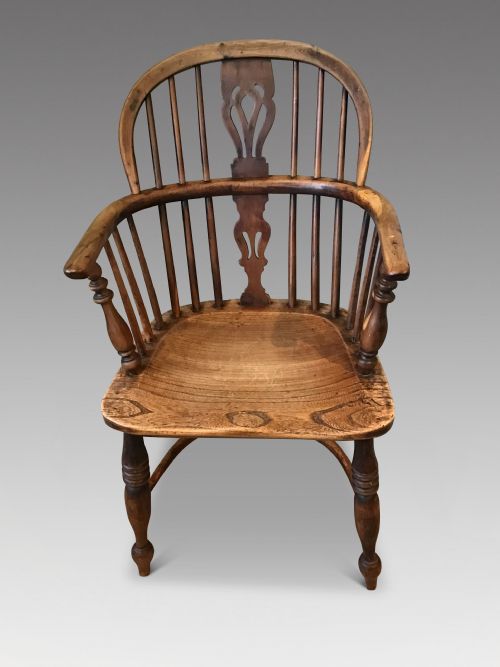

Yewwood Windsor Chair
A yewwood windsor chair offers enduring vernacular character and timber warmth, bringing practical seating rooted in English country tradition straight to your interior.
Yewwood Windsor Chair
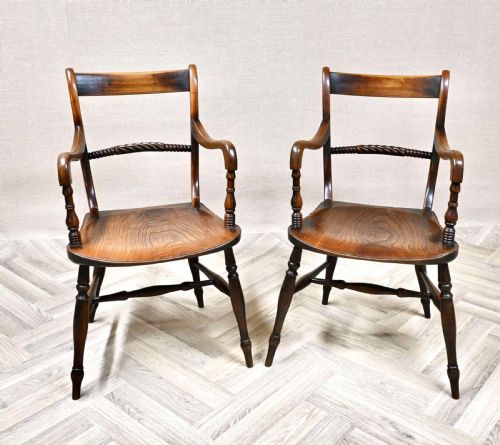
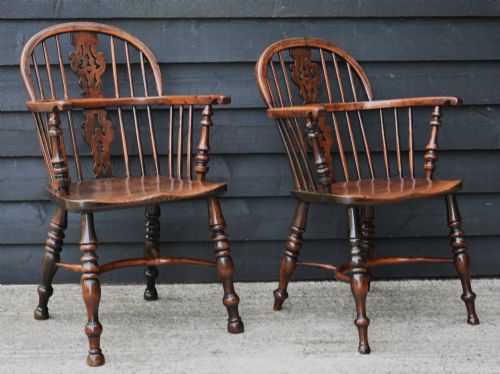
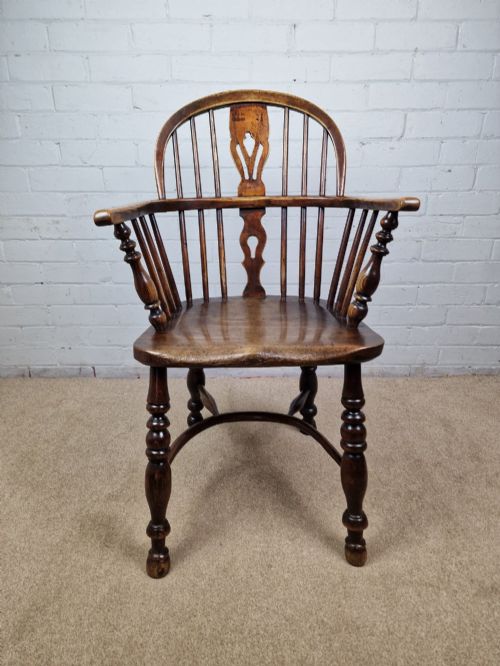
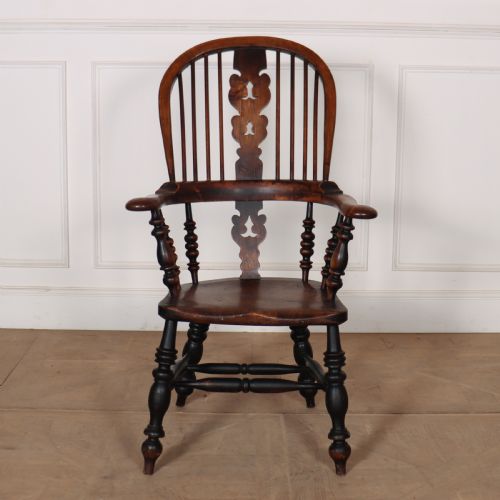
A yewwood windsor chair is a traditional wooden armchair featuring a solid saddle seat into which the legs, back spindles, and bow are directly wedged or tenoned rather than relying on a framed skeleton. The examples meeting you here span the Georgian and Victorian eras, alongside mid-nineteenth-century vernacular pieces originating from regional English traditions.
Most pieces on this page are armchairs configured in distinct regional styles, taking forms such as high backs, low backs, comb backs, and barbacks. Makers utilised native timbers, pairing yew and elm with ash, beech, and fruitwood to build seats that combined structural strength with flowing timber grain.
The aesthetic of a yewwood windsor chair belongs firmly to English country and vernacular design, showing the practical ingenuity of regional cabinet-makers and bodgers. These chairs served utility first in farmhouses and cottages, evolving into prized seating through their rich patination and exposed timber construction.
How they were made
Constructing a yewwood windsor chair relied on a mixed-timber technique where turners and chair-makers assigned different woods to specific structural stresses. The thick saddle seats were typically carved from solid elm for its interlocking grain that resisted splitting under the wedged legs, while the bent parts utilised the elasticity of yew, ash, or beech.
Parts like spindles and legs were turned on pole lathes in woodlands or workshops before being assembled using tapered joints and wedges. Bending the wooden bows and combs required steam or moisture treatment to shape the timber without fracturing the grain.
Yewwood Windsor Chair Retail Price Guide 2026
Typical asking prices for yewwood windsor chair among the pieces listed under this phrase on Sellingantiques today, from the lower quarter to the upper quarter. They describe what is for sale here now, not the wider market.
Many a chair survived centuries of family life simply because elm seats proved too stubborn for woodworm to conquer.
What varies in quality
Quality in a yewwood windsor chair rests largely on the depth of figure in the timber and the harmony of the mixed woods chosen by the maker. Highly figured yew combined with a well-sculpted elm seat commands greater attention than plain, utilitarian boards.
Structural integrity and the retention of original components dictate the standing of any piece. Chairs that preserve their original surface patination, wedged underpinnings, and balanced regional proportions represent the pinnacle of country craftsmanship.
Allsop Worksop
The Yewwood Windsor Chair Glossary
- Saddle seat
- A thick wooden seat base scooped out by hand to create a concave, comfortable depression. This shaped seat provides the rigid foundation that anchors all the vertical spindles and underframing.
- Comb back
- A Windsor chair design where the upright spindles pass through a flat wooden arm-rail and terminate in a low crest rail above. This creates a profile resembling the teeth of a comb.
- Bodger
- A woodland woodturner who produced chair legs and components on a pole lathe near the timber source. Their specialised green-wood turning supplied the raw parts for regional chairmakers.
- Vernacular
- An architectural or furniture-making style rooted in local traditions, materials, and practical utility rather than formal academic design. These pieces reflect regional workshop methods and available local timbers.
Yewwood Windsor Chair: Frequently Asked Questions
How do I identify a yewwood windsor chair?
Look for a solid carved wooden seat receiving exposed upright spindles and legs, combined with the distinctive, highly figured reddish-gold grain of yew timber. Regional variations often display characteristic arm shapes or crest rails that point to specific English counties.
Examining the underside reveals the construction methods, such as wedged tenons and mixed timber species like elm seats paired with ash or beech underframes.
Where were these chairs made?
English country workshops and regional centres produced these chairs, with specific designs emerging from the Thames Valley, Nottinghamshire, and Yorkshire. Country craftsmen utilised locally felled timber to build sturdy seating for domestic and commercial use.
Makers worked close to woodland sources, allowing them to select specific trees for their bending qualities and grain patterns before distributing the finished items to regional markets.
How do I care for a yewwood windsor chair?
Maintain the timber by keeping the chair away from direct heat sources and sudden temperature shifts that can dry out old wood. Applying microcrystalline wax periodically helps preserve the natural sheen and patination of the surface.
Avoid heavy liquid polishes and check the leg joints occasionally to ensure the wedged tenons remain stable within the solid seat.