

Antique Rustic Armchair
An antique rustic armchair brings tactile English country history into a room through honest vernacular timber construction.
Antique Rustic Armchair
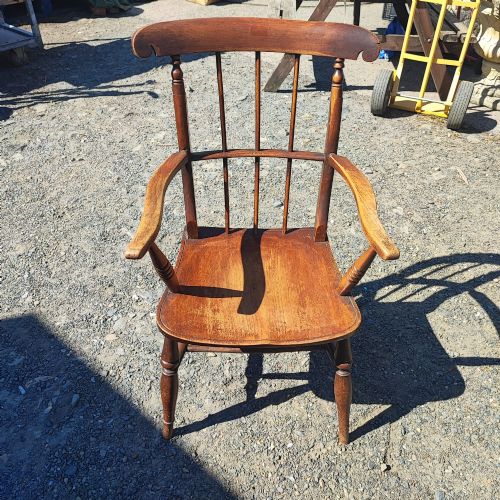
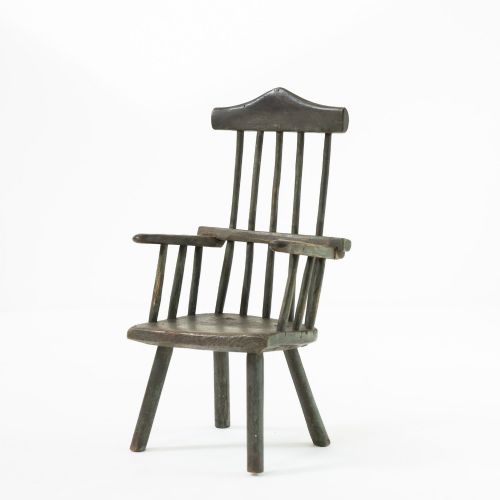
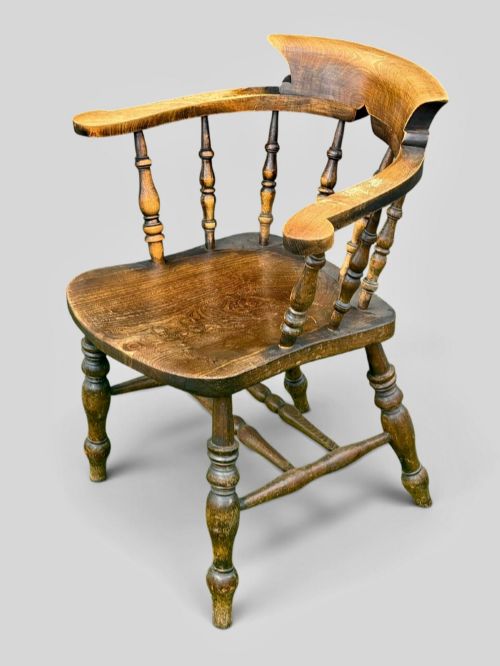
When buyers search for an antique rustic armchair, they encounter robust vernacular seating built for everyday domestic utility rather than formal parlour display. The selection spans 18th century examples through to the Victorian era, encompassing regional kitchen, farmhouse, and workshop traditions.
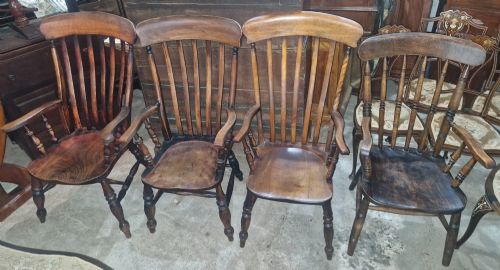
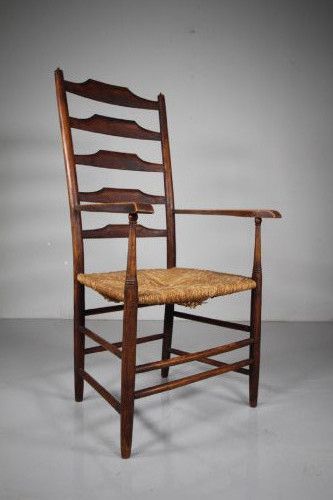
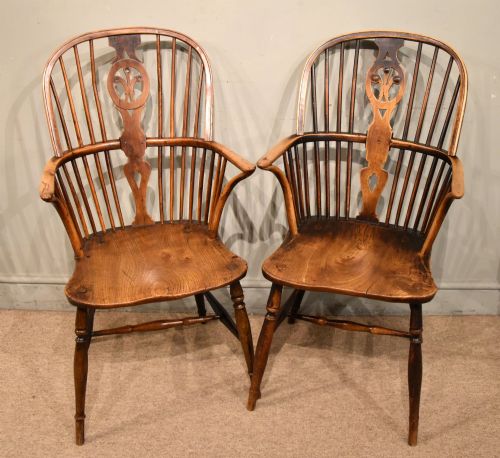
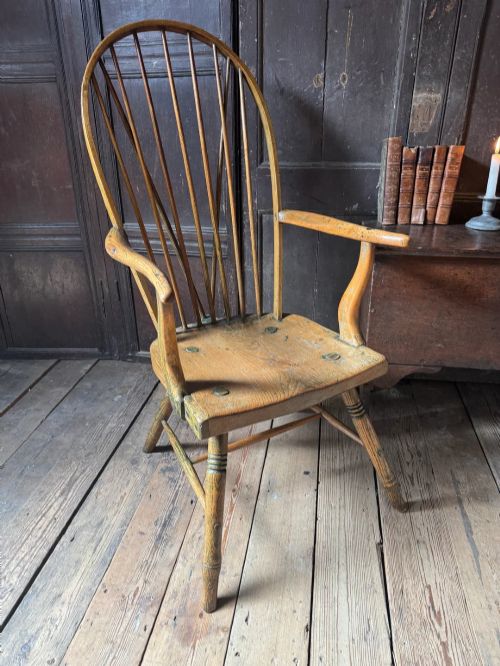
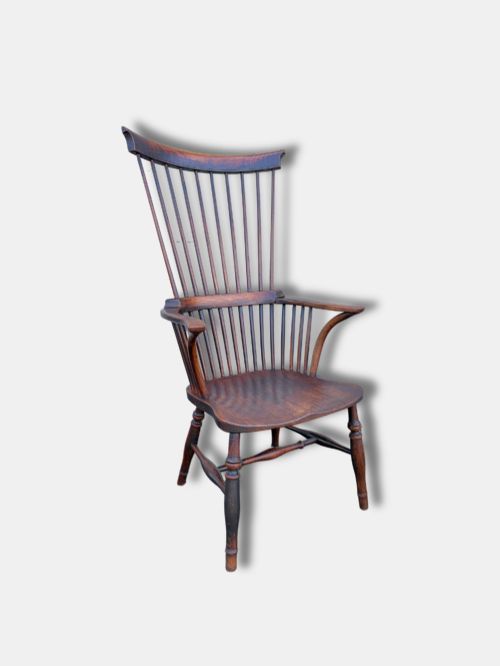
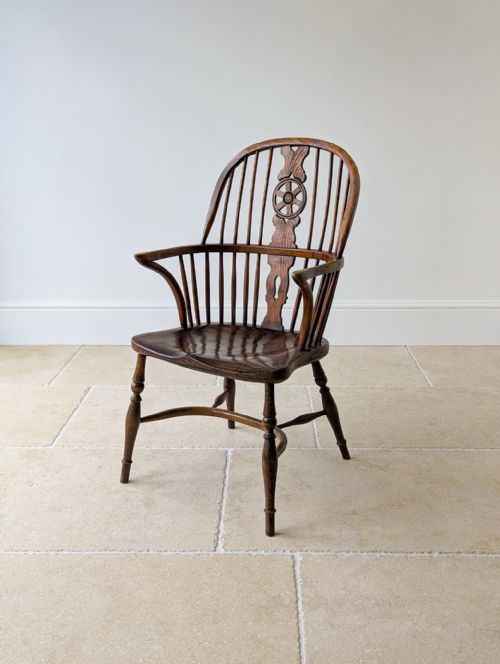
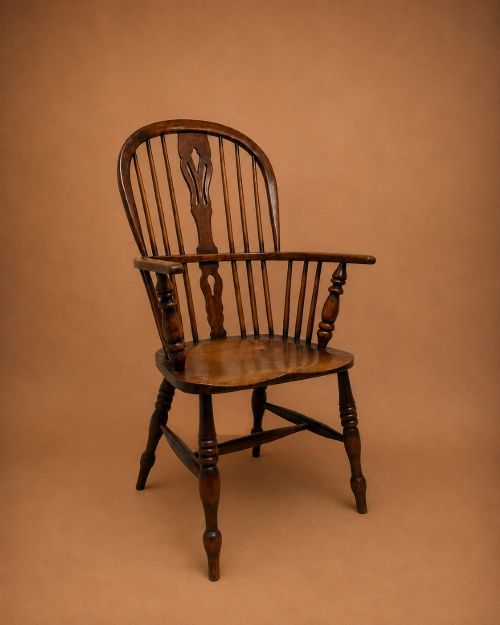
The form most frequently met on this page is the Windsor chair, alongside ladder-backs, stick-backs, and low-slung lambing chairs. These pieces originate primarily from English country workshops, utilising local hardwoods shaped by regional chair bodgers and village joiners.
How they were made
Makers combined contrasting native timbers to utilise their specific natural properties, frequently pairing elm seats with ash spindles, hoops, and legs. Elm provided a tough, anti-splitting base that could be deeply saddled by hand adze, while straight-grained ash offered steam-bent elasticity for the backs.
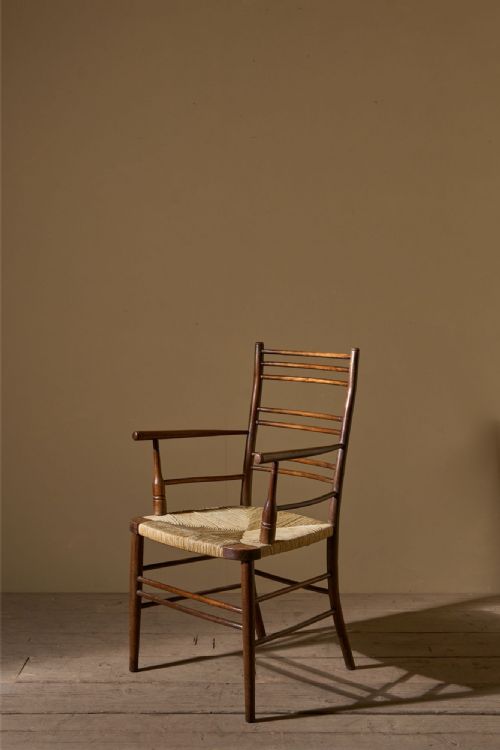
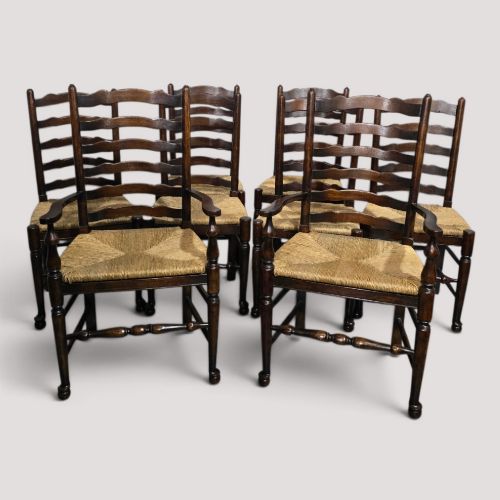
Construction relied on traditional joinery techniques such as pegged mortise and tenon joints, wedge-secured wedged legs, and steam bending. Rush also appears woven tightly into seats on oak frames, providing a flexible supporting surface without solid timber.
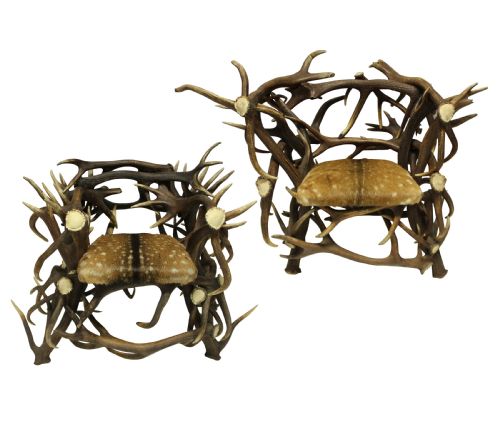
Twig construction makes an appearance among the archive pieces, offering a delightfully literal interpretation of rustic seating.
What varies in quality
Quality rests in the proportional balance of the turned components and the deep sculpting of the solid timber seat plank. Superior examples display fluent steam-bent hoops and slender, well-proportioned spindles that show confident hand-shaping rather than mechanical uniformity.
The integrity of the original construction and the preservation of authentic surface patination separate everyday utility pieces from finer vernacular items. Unaltered structural joinery and untouched aged timber surfaces carry far greater appeal than heavily restored examples.
Philip Clissett·Gabbitass Worksop maker
The Antique Rustic Armchair Glossary
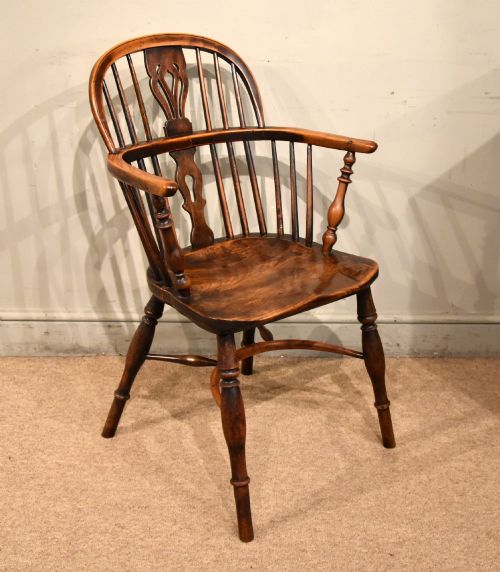
- Windsor chair
- A chair built with a solid wooden seat into which the legs, arms, and back spindles are independently inserted. These chairs developed distinctive regional variations across English counties.
- Comb back
- A Windsor chair variation where the tall back terminates in a horizontal top rail resembling the teeth of a comb. This style offers robust structural support through through-tenoned vertical spindles.
- Vernacular
- Objects designed and built by local craftsmen to satisfy practical regional needs without strict adherence to academic architectural styles. These pieces reflect local timber availability and traditional working methods.
- Bodger
- A travelling pole-lathe woodturner who worked in woodland clearings to produce rough-shaped chair legs and spindles for local workshops. They formed a vital link in the regional production of country chairs.
- Lambing chair
- An enclosed wooden armchair traditionally featuring high panelled sides and a hooded top to shield the occupant from cold draughts. These seating forms often incorporate a small drawer beneath the seat.
Antique Rustic Armchair: Frequently Asked Questions
How do I identify a Windsor chair?
A Windsor chair is characterised by a solid wooden seat plank that acts as the central anchor for all other structural parts. The legs and back pieces are tenoned directly into this thick slab rather than forming part of an integrated frame.
Regional variations further define them through the shape of the back, such as hoop-backs, comb-backs, or low-backs. These structural choices reflect the local traditions of English country joiners.
What woods were used for country armchairs?
Maker workshops relied upon native British hardwoods harvested from local woodlands. Elm served as the preferred material for the solid seat because its interlocking grain prevented splitting under heavy use.
Ash provided the flexible strength needed for steam-bent hoops and slender spindles. Beech, oak, and yew wood also appear frequently across the regional pieces listed here.
How were rush seats made?
Rush seating involved twisting dried marsh rushes into continuous cord and weaving them tightly around a structural wooden frame. This created a supportive, flexible platform without requiring solid boards.
Craftsmen often used rush on oak frameworks, particularly for ladder-back dining chairs and open armchairs. The woven surface softens with age while maintaining strong structural integrity.
What is a crinoline stretcher?
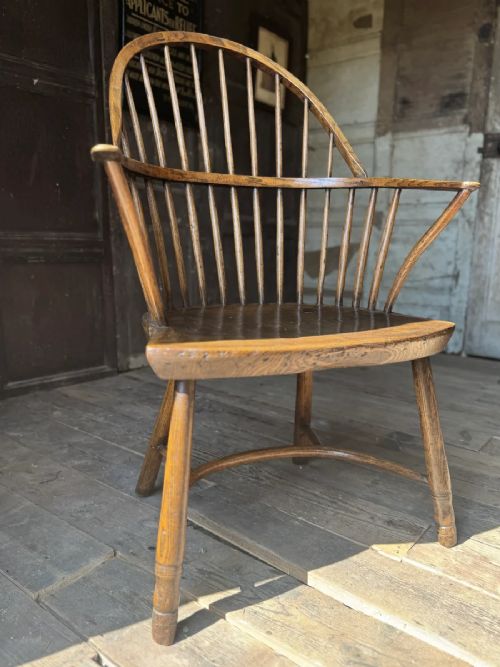
A crinoline stretcher is an arched wooden brace that connects the legs of a chair in a curved, horse-shoe formation. It reinforces the underframe and prevents the legs from splaying outward under weight.
This construction detail appears frequently on 18th century and early 19th century Windsor armchairs. It contributes significantly to the overall stability of the seating.