



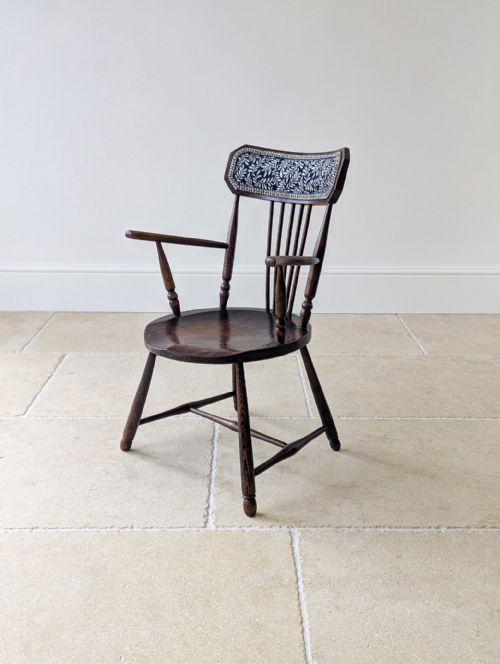
Antique Elm Seat
When you search for an antique elm seat, you are looking at generations of English country furniture shaped from timber selected for its tough grain.
Antique Elm Seat
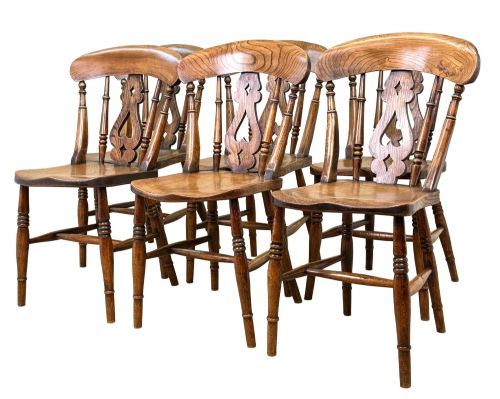
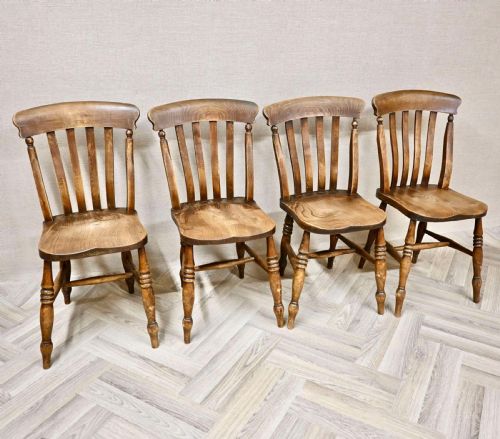
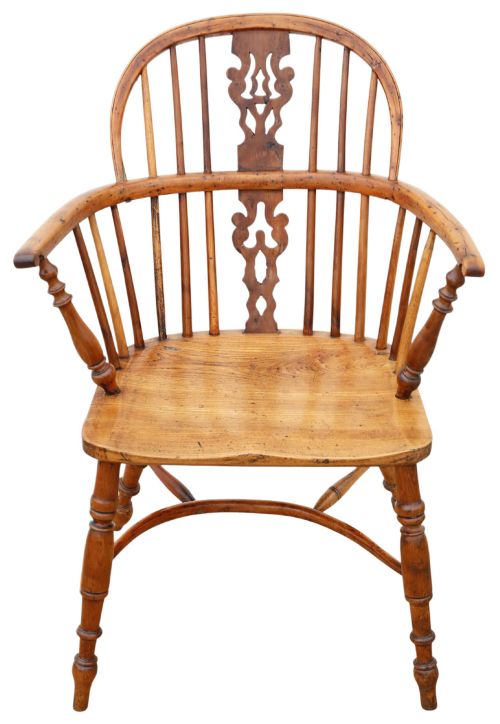
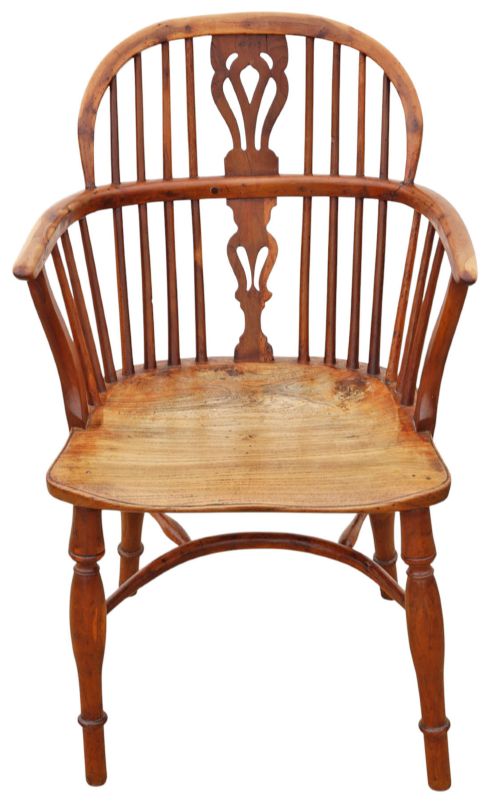
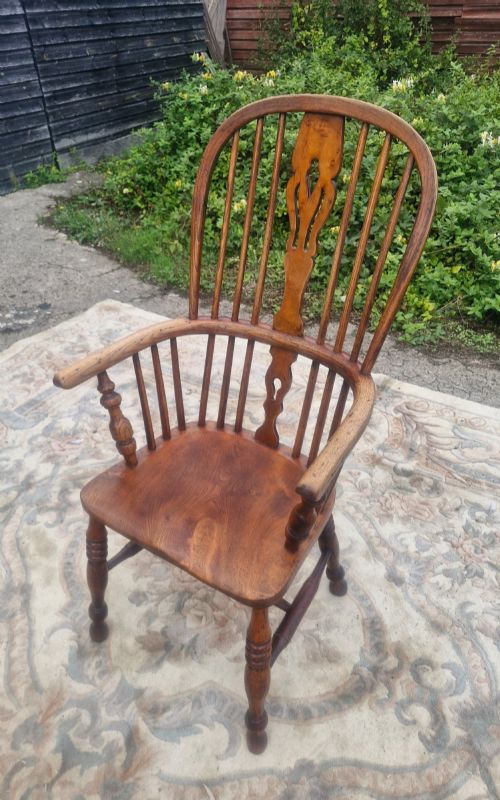
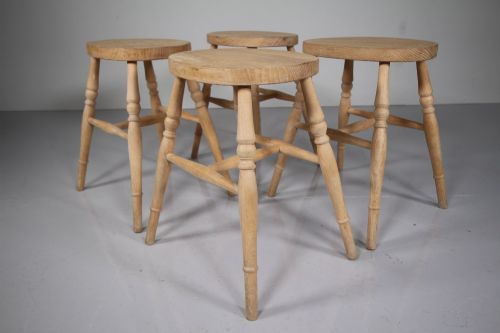
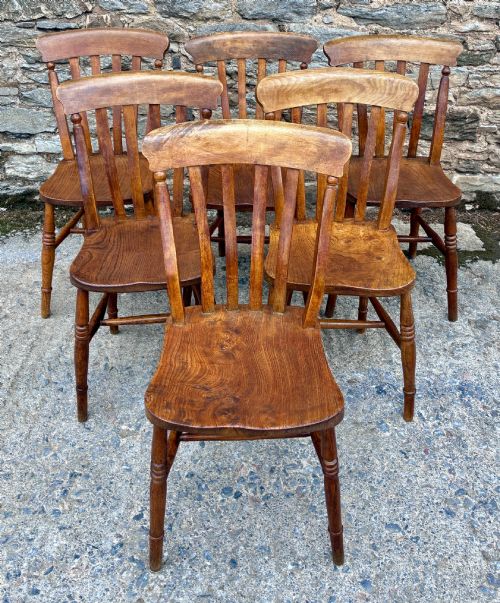
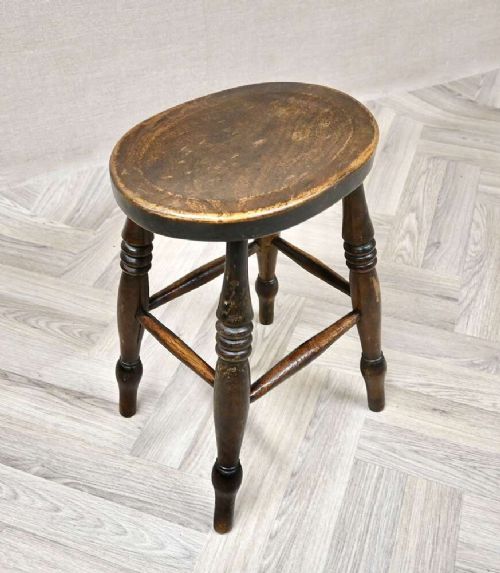
An antique elm seat forms the anchor of traditional country seating, appearing most often on this page in the guise of Windsor armchairs, farmhouse dining chairs, and low stools. These pieces range from 18th-century Georgian forms to Victorian kitchen chairs, with local vernacular styles defining their regional shapes.
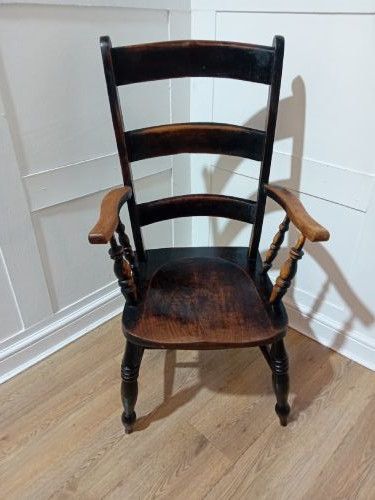
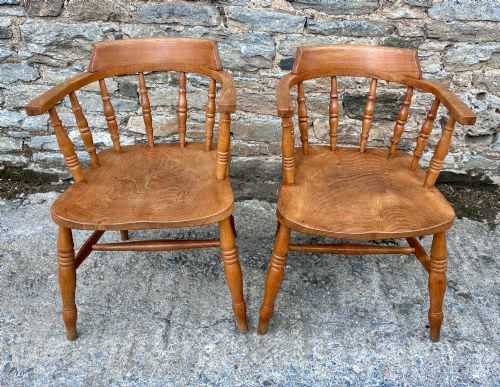
Makers frequently combined elm with ash, beech, or oak, turning the tougher woods for legs and spindles while carving the main seat from a single thick plank of elm. You will encounter everything from children's chairs and captain's bows to settles, benches, and rush-seated ladderbacks.
The heavy grain of the timber gives each chair or stool an individual character, showing deep saddle dishes and warm patinas built through decades of domestic use. Whether part of a matched dining set or standing alone as a fireside rocker, the elm seat remains the defining functional element of these vernacular designs.
How they were made
Country craftsmen relied on a mix of dense hardwoods, carving the central seat out of thick elm planks while turning ash or beech for the spindles, legs, and stretchers. Elm was chosen specifically for its interlocking grain, which resisted splitting when bodgers drove the legs and uprights directly into bored holes.
Seats were deeply sculpted or dished by hand using adzes and scorps to create an ergonomic hollow for the sitter before the undercarriage was wedged and pegged together. Surface finishes relied on natural wax, oil, and centuries of handling to develop a deep, unpolished sheen rather than heavy modern varnishes.
Listings feature periods spanning the Georgian era through to the Edwardian period, utilising elm, ash, beech, oak, yew, and rush materials.
What varies in quality
The distinction between ordinary utility seating and finer examples lies in the depth of the sculpted saddle and the balance of the turned components. Superior pieces show generous plank thickness with expressive figuring in the wood, whereas lesser items rely on thinner, flatter timber.
Construction integrity separates workshop output, with tighter joinery and well-matched timber sets commanding greater presence than mismatched replacements. Original surface patination and minimal structural alteration preserve the historical integrity that separates a standard kitchen chair from a distinguished regional vernacular piece.
The Antique Elm Seat Glossary
- Windsor chair
- A traditional wooden chair featuring a solid carved seat into which the legs and back spindles are directly inserted. Most examples use an elm seat paired with ash or beech framing.
- Smoker's bow
- A low-backed Windsor armchair with a continuous curved armrail, popular in Victorian domestic and commercial settings. These typically combine a generous elm seat with turned spindle supports.
- Saddle seat
- A wooden chair or stool seat shaped with a concave dip carved into the upper surface for comfort. This technique is particularly prominent in traditional elm seating.
- Rush seat
- A bottom woven from dried marsh rushes, fitted into a wooden frame or ladderback chair. This traditional seating method appears frequently alongside wooden plank alternatives.
- Settle
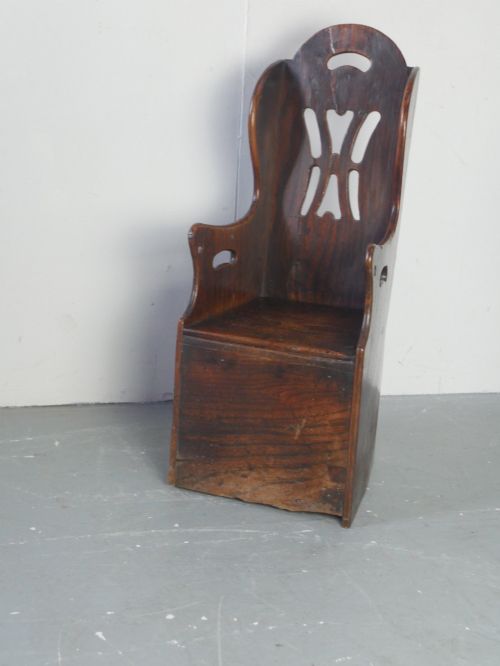
- A high-backed wooden bench with solid arms and a storage box beneath the seat. These practical pieces often incorporate robust elm panels and seats designed for draughty hallways or farmhouses.
Antique Elm Seat: Frequently Asked Questions
How do I care for an antique elm seat?
Feed the dry timber occasionally with a traditional beeswax polish, applying it sparingly with a soft cloth and buffing gently. Keep the piece away from direct heat sources and radiators to prevent the thick plank from splitting.
Avoid modern liquid cleaners or silicone sprays, which can penetrate open grain and ruin the historic patina. Gentle dusting and consistent indoor humidity are all that is required to maintain the finish.
Were these chairs used at dining tables?
Many of these pieces served as everyday kitchen and farmhouse dining chairs, especially when found in matched sets of four or six. Their sturdy construction made them ideal for heavy daily use around the hearth or table.
Single armchairs and captains' chairs were more often pulled up to desks or used as fireside seating. The variety of heights and widths reflects the informal nature of regional country furniture production.
What is a penny seat?
A penny seat refers to a specific style of round wooden seat found on traditional low stools and country chairs. The term describes the flat, circular profile reminiscent of a large coin.
These compact seats were turned or cut quickly for utility purposes, often paired with ash legs and spindles. They provide a simple, sturdy perch well suited to small spaces and firesides.
How can I tell an 18th-century chair from a Victorian one?
Earlier pieces from the Georgian period often display softer, hand-carved contours and thicker plank seats with deep adze marks. The turning on the legs tends to be more idiosyncratic and tied to specific regional traditions.
Victorian and later vernacular chairs frequently show more uniform machine assistance in the spindle turning while retaining the traditional elm seat. Examining the tool marks underneath the seat usually reveals the method of manufacture.