



Solid Elm Armchair
A solid elm armchair brings honest vernacular craftsmanship and rich grain into a room, spanning country kitchen chairs to formal Windsor designs.
Solid Elm Armchair
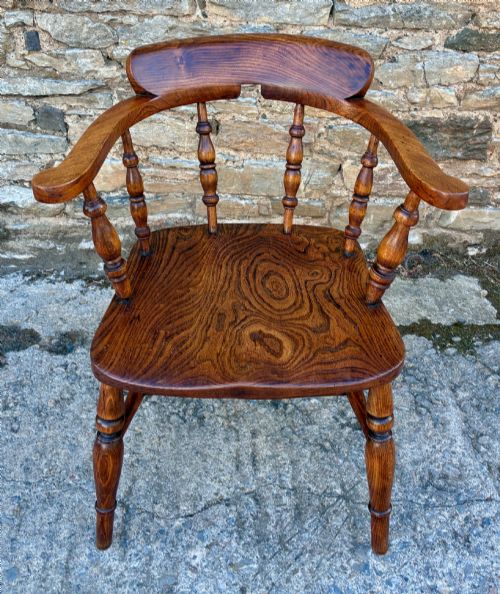
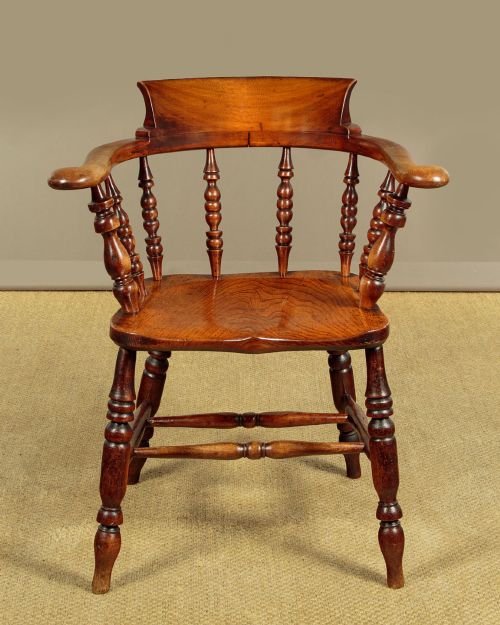
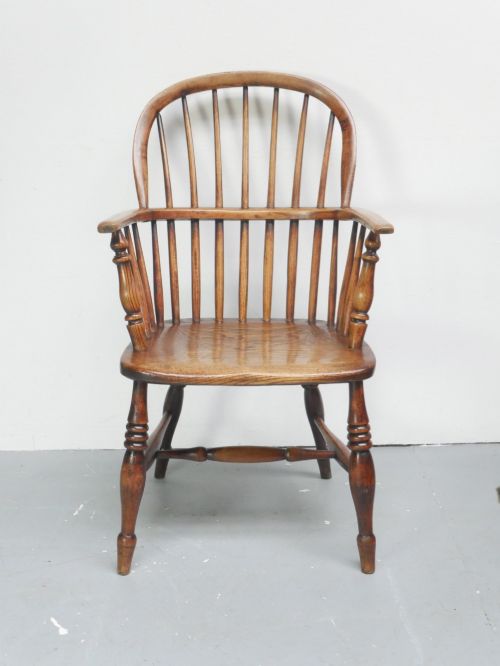
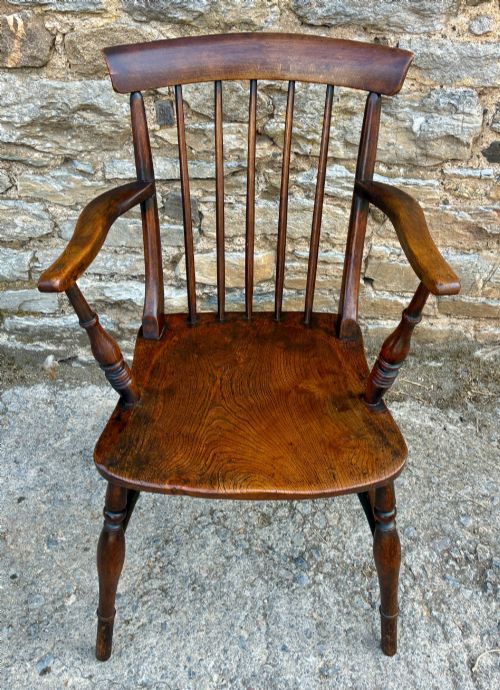
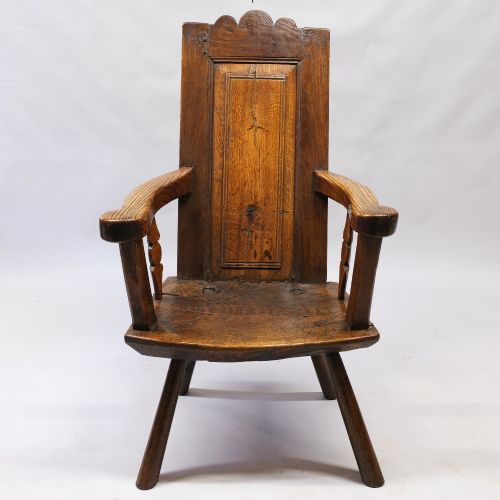
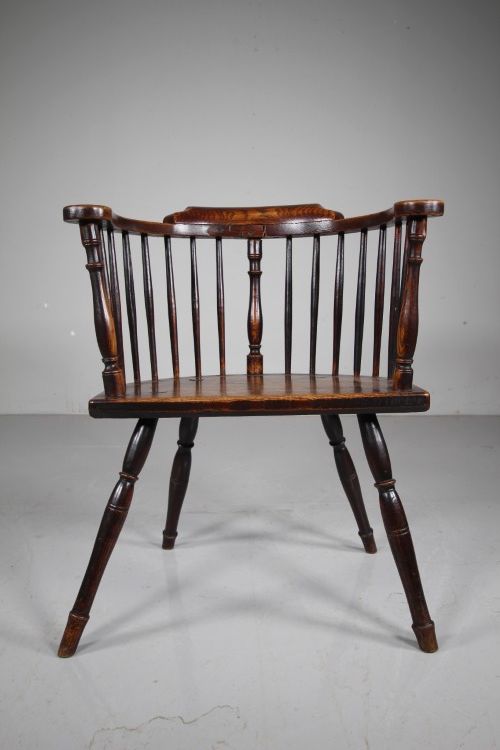
A solid elm armchair represents traditional British and European country seating, appearing in forms such as Windsor chairs, smokers bows, and panel-backed armchairs. These sturdy seats served as functional furniture in farmhouses, cottages, and provincial homes across centuries.
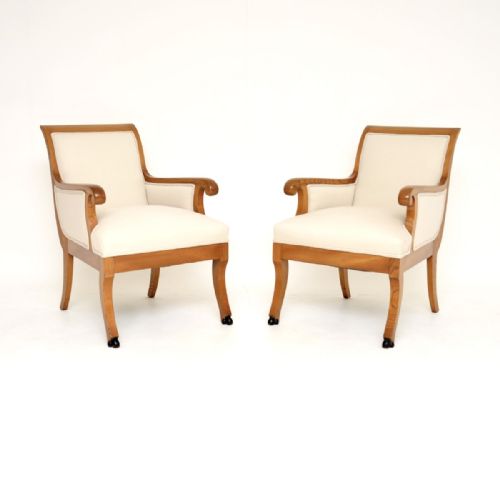
The pieces on this page lean heavily into the 18th and 19th centuries, including Victorian country iterations and Georgian vernacular pieces. Buyers frequently encounter regional variations like Scottish Windsors or low-back captain chairs alongside occasional continental pieces like Swedish neoclassical chairs.
Elm serves as the primary material for the seats and frames, often paired with ash, beech, alder, or oak for spindles and legs. This selection bridges simple kitchen seating with substantial library and desk chairs built for daily utility.
Construction and materials
Makers utilised elm for its tough, interlocked grain that resisted splitting when shaped into solid plank seats. This timber was frequently combined with ash for flexible steam-bent bow backs and beech for sturdy turned legs and spindles.
Joinery relied on traditional techniques such as wedged through-tenons and saddle-seated construction, where thick elm boards were hollowed out for comfort. Windsor and stick-back frameworks depended on tightly fitted turned components driven straight into drilled seat bases.
Listings feature solid elm armchairs spanning the 18th century through the Victorian era, utilising secondary woods like ash, beech, and alder.
Judging quality and character
Quality rests in the depth of the timber's figuring and the integrity of the original construction rather than decorative flourishes. A well-balanced frame with deep patination on the solid elm seat commands attention through honest wear and age.
Subtle differences in the turning of spindles, the comfort of the arm scrolls, and the integration of secondary woods like ash or beech distinguish provincial masterworks from standard utility seating.
Fred Walker
The Solid Elm Armchair Glossary
- Smoker's bow
- A low-backed wooden armchair with a continuous curved rail forming the arms and back, popular in offices and inns during the nineteenth century. This form is closely related to the captain's chair.
- Windsor chair
- A wooden chair constructed with a solid wooden seat into which the legs and back spindles are separately driven. These chairs often feature a bentwood bow and central splat.
- Penny seat
- A round or oval wooden chair seat shaped with a subtle central depression resembling a large coin. This shaping enhances the comfort of solid elm plank seats.
- Panel-backed chair
- An early seating form featuring a flat wooden panel set into the back frame, often seen in 18th-century country armchairs. The panel provides structural rigidity.
Solid Elm Armchair: Frequently Asked Questions
What is a solid elm armchair?
A solid elm armchair is a traditional wooden seat featuring a plank seat made from elm timber, often styled as a Windsor or country chair.
These pieces rely on native hardwoods for strength and display regional design variations from the eighteenth and nineteenth centuries.
How do I use a country armchair at home?
These armchairs function well as desk chairs, fireside seats, or accent pieces in a dining room or hallway.
Their robust construction suits daily use while adding rustic character to contemporary or traditional interiors.
How do I tell an 18th-century chair from a Victorian one?
Earlier pieces from the 18th century often display panel backs or heavier Georgian proportions with hand-carved details.
Victorian and later 19th-century examples frequently take the form of smokers bows, captains chairs, or machine-turned Windsor frames.
Why is elm used for chair seats?
Elm possesses an interlocking grain that makes the wood exceptionally tough and resistant to splitting under pressure.
This property allowed makers to hollow out thin, comfortable saddle seats without compromising the structural integrity of the chair.