

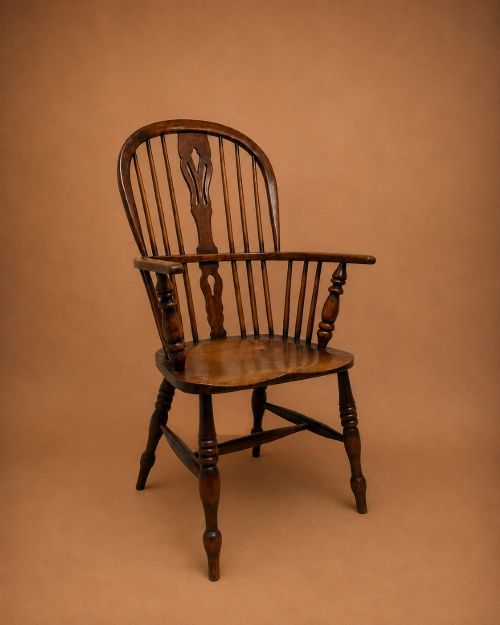
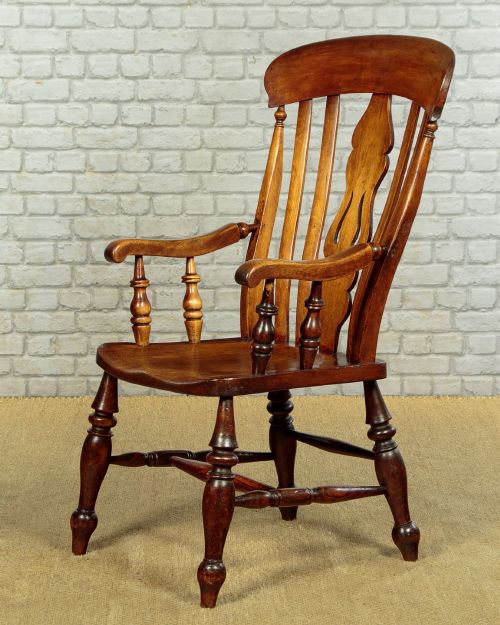
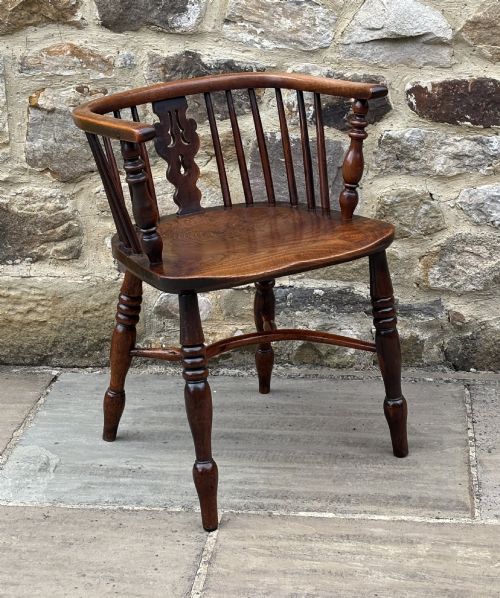
Turned Leg Windsor Armchair
A turned leg windsor armchair brings robust regional character and time-worn timber into a room, offering sturdy seating built for daily use.
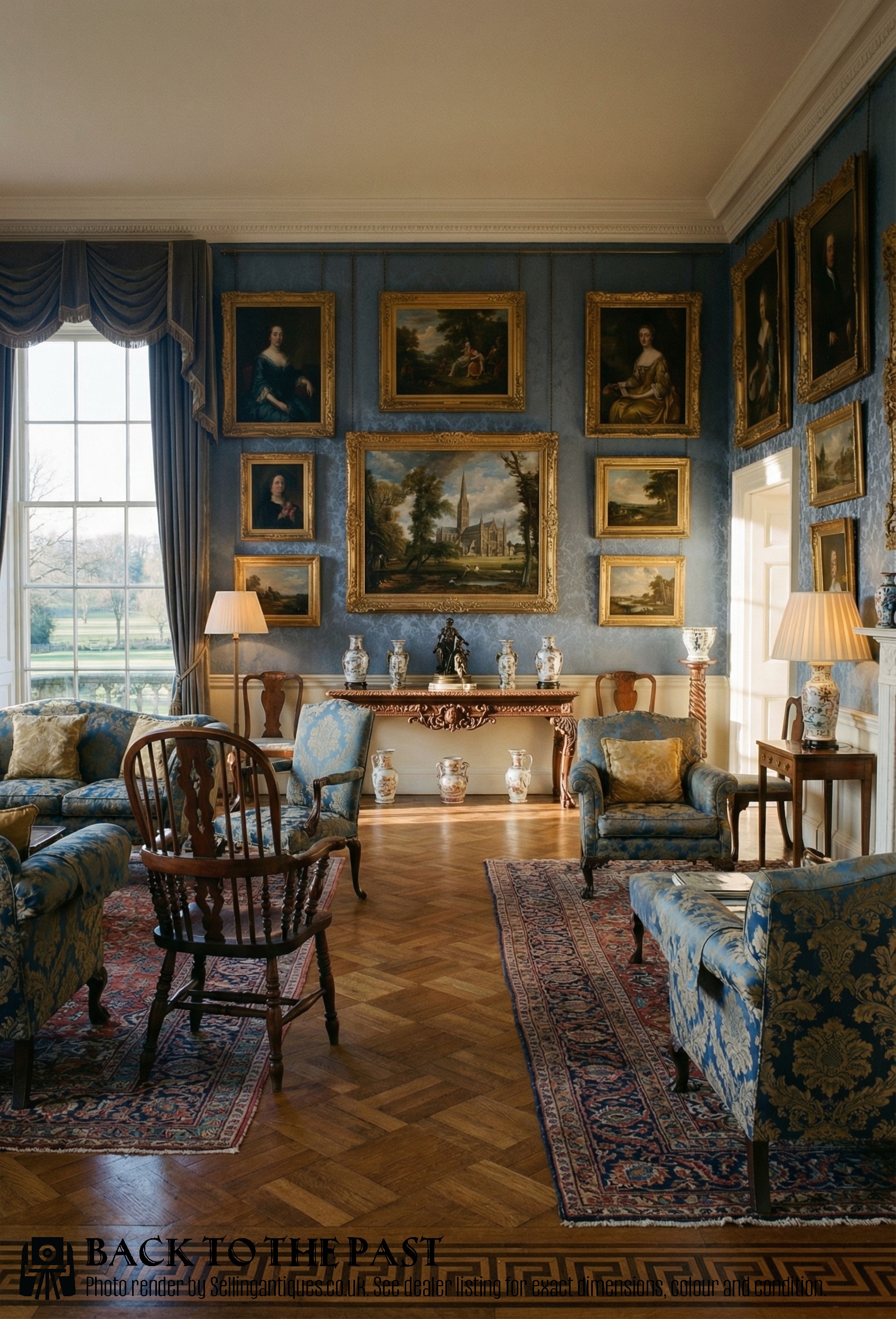
Turned Leg Windsor Armchair
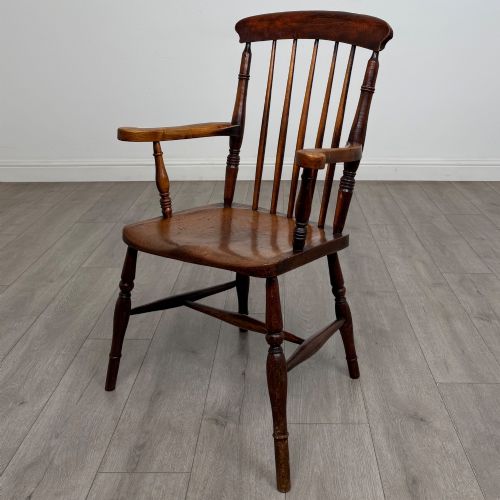
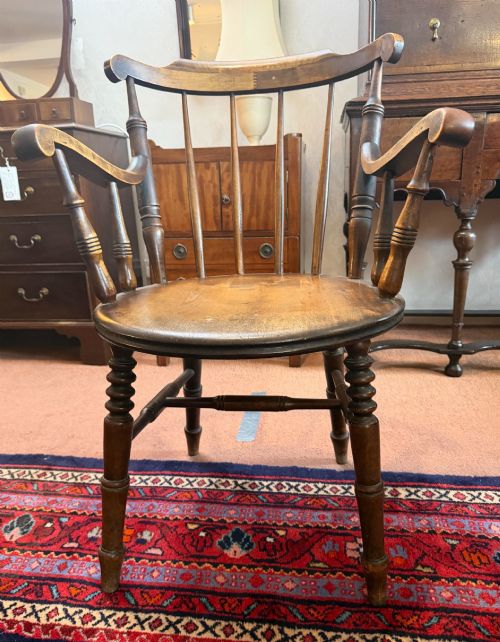
A turned leg windsor armchair is a traditional form of seating defined by its wooden saddle seat into which the legs and back spindles are wedged directly. When you search for this phrase, you encounter regional variations spanning the nineteenth century and the Edwardian period, often described under English country and provincial styles.
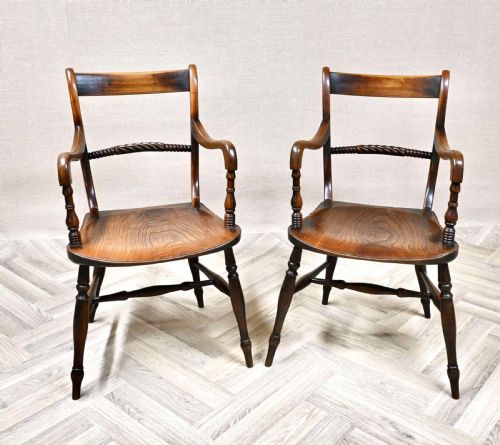
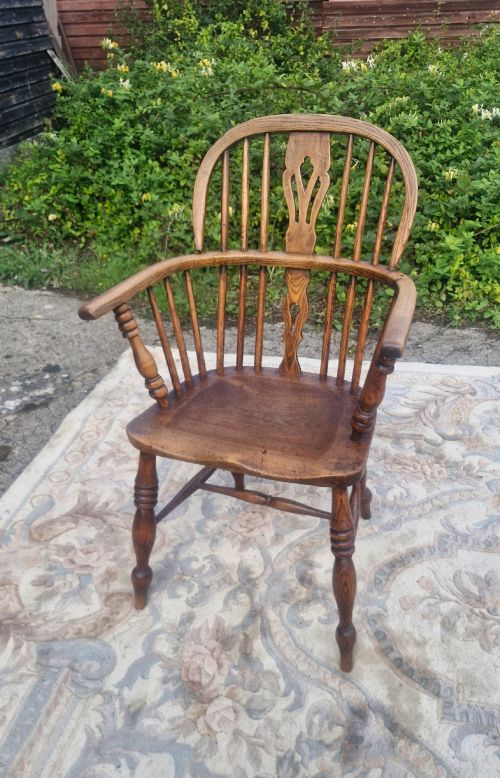
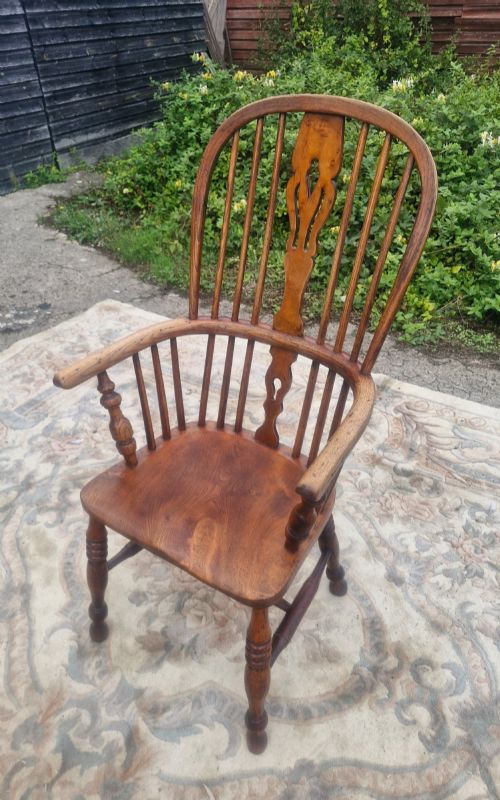
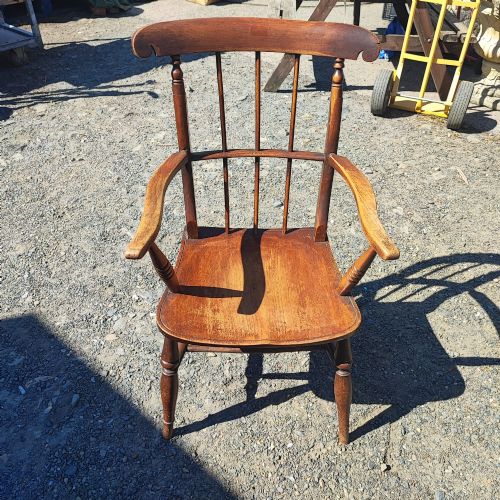
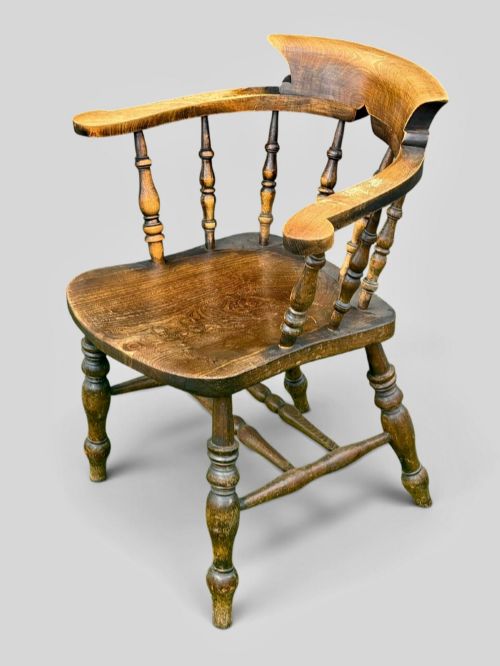
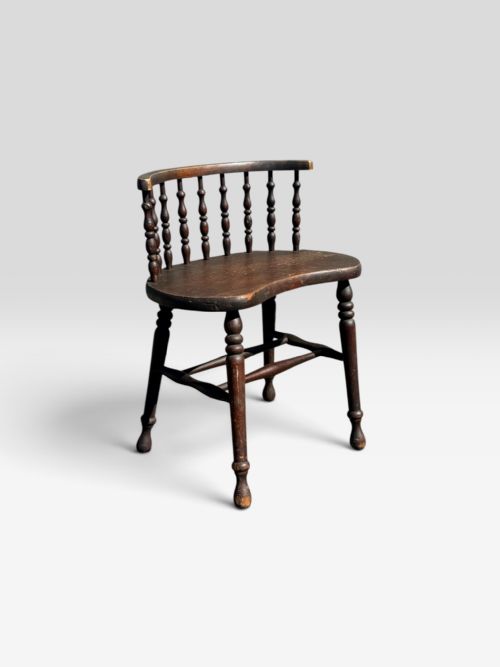
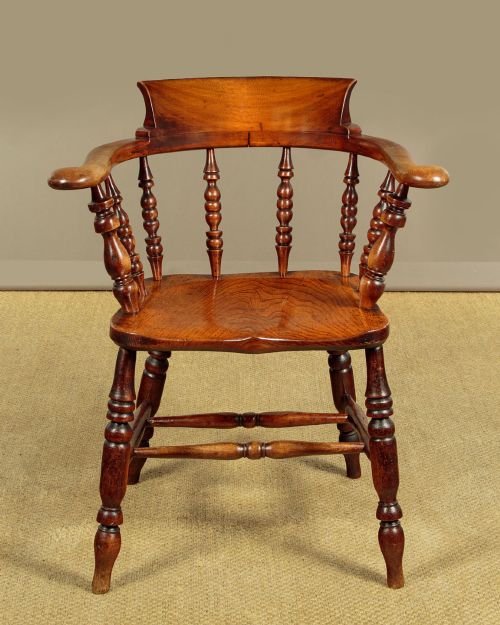
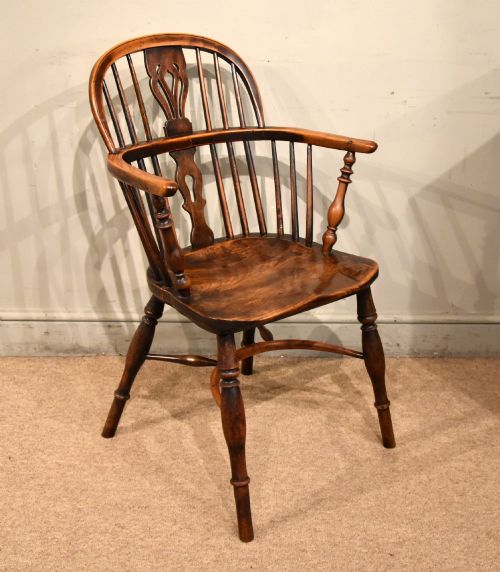
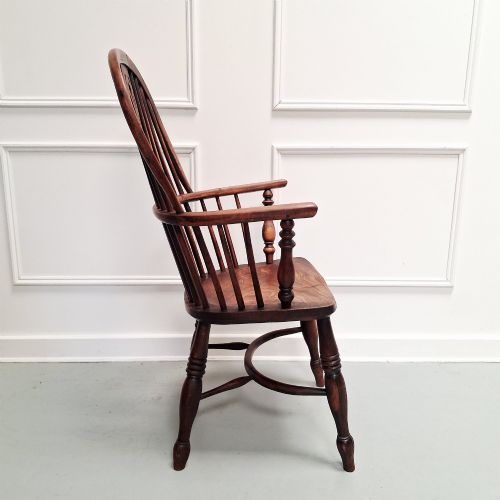
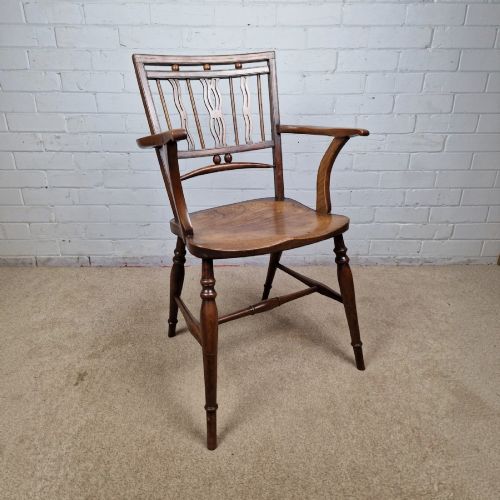
The pieces on this page appear as low back, high back, bar back, and hoop back designs, alongside specific regional types like Mendlesham chairs and smoker's bows. Armchairs, desk chairs, and child's high chairs represent the primary functional forms recorded in these listings.
Makers utilised local timbers, resulting in distinct combinations such as elm seats paired with ash, beech, or oak frames. You will also find examples rendered entirely in yew wood, fruitwood, alder, or oak across different nineteenth-century decades.
Materials and construction
Traditional makers built these chairs by boring holes directly into solid wooden seats, typically sculpted from elm, and wedging turned legs and back spindles into place. This pegged construction gave the frame its durability without reliance on metal fastners.
Turned components such as legs, stretchers, and spindle bars were shaped on a lathe using regional timbers like ash, beech, and fruitwood. Steam bending created curved hoops and backrests, while comb backs, splats, and wheel motifs were shaped to support the sitter.
Turned Leg Windsor Armchair Retail Price Guide 2026
Typical asking prices for turned leg windsor armchair among the pieces listed under this phrase on Sellingantiques today, from the lower quarter to the upper quarter. They describe what is for sale here now, not the wider market.
Listings span the Regency era, Victorian period, and Edwardian years, utilising elm, ash, beech, oak, yew wood, fruitwood, and alder.
Qualities of craftsmanship
Quality rests in the proportional balance of the turned undercarriage and the depth of the saddle seat shaping. A well-carved seat with deep, comfortable contours demonstrates superior regional joinery.
The selection of timber grain heavily influences the character of a piece, with figured yew wood or well-matched elm and ash showing higher decorative ambition. Original surface patination and tight, unmoved joints separate master provincial work from utilitarian workshop output.
J SPENCER
The Turned Leg Windsor Armchair Glossary
- Hoop back
- A continuous bentwood bow forming the backrest and arm rails of a chair. This technique provides structural strength while allowing for slender spindles.
- Crinoline stretcher
- An arched undercarriage stretcher linking the legs of a chair in a continuous curve. It adds rigidity to the turned leg assembly.
- Smoker's bow
- A low-backed Windsor armchair with a continuous curved arm rail and short turned spindles. These chairs were common in country homes and commercial establishments.
- Stick back
- A chair back constructed from multiple plain turned spindles rather than a solid carved splat. It is a defining feature of many vernacular country seating forms.
Turned Leg Windsor Armchair: Frequently Asked Questions
What is a turned leg windsor armchair?
A turned leg windsor armchair is a traditional wooden seat featuring legs turned on a lathe that fit directly into a solid sculpted seat.
These chairs rely on pegged joinery rather than upholstery, making them durable examples of historical country craftsmanship.
How were these chairs used historically?
They served as practical everyday seating in farmhouses, cottages, and provincial homes, functioning as fireside, desk, or dining chairs.
Their sturdy construction meant they could withstand heavy domestic use across generations without losing structural integrity.
How do I live with a windsor chair?
You can place a windsor chair in a hallway, study, or living room where its timber grain and traditional silhouette provide functional seating.
Keep them away from direct heat sources to prevent the seasoned woods, such as elm and ash, from drying out and shifting.
How do I tell different chair periods apart?
Earlier nineteenth-century pieces often utilise timbers like yew wood and feature distinct regional styling such as high hoops or Mendlesham characteristics.
Later Victorian and Edwardian examples frequently incorporate beech and elm combinations with simpler bar backs or wheel-back motifs.