

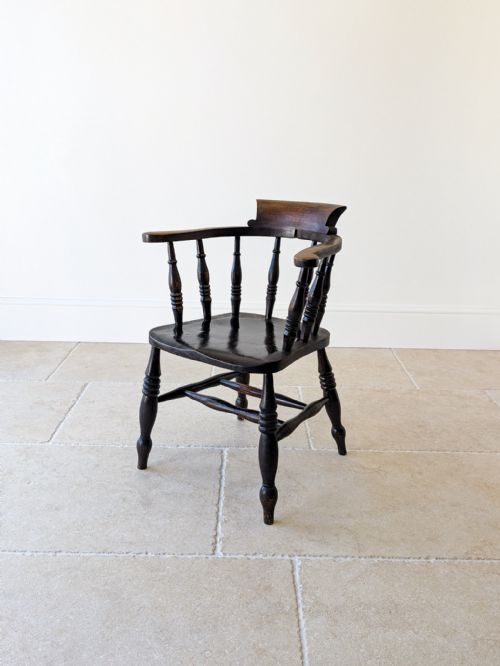
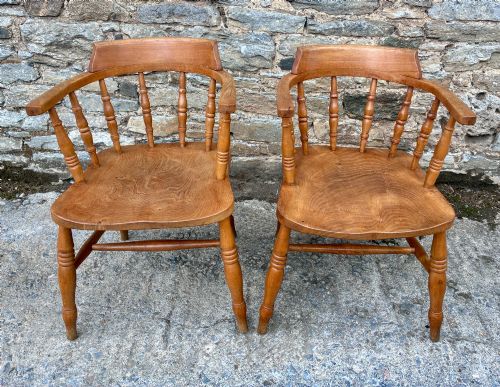
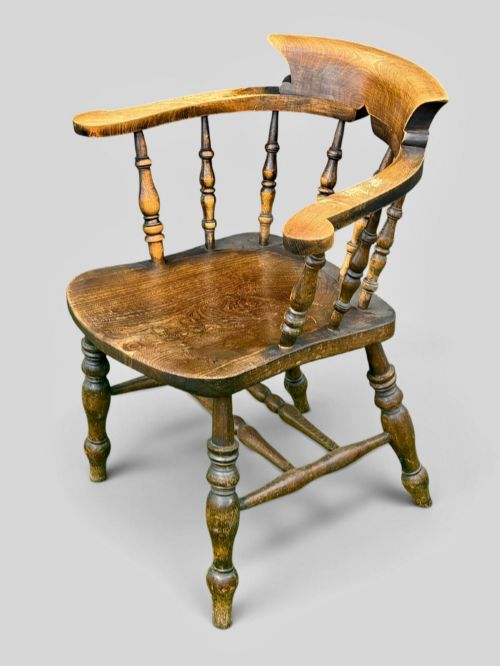
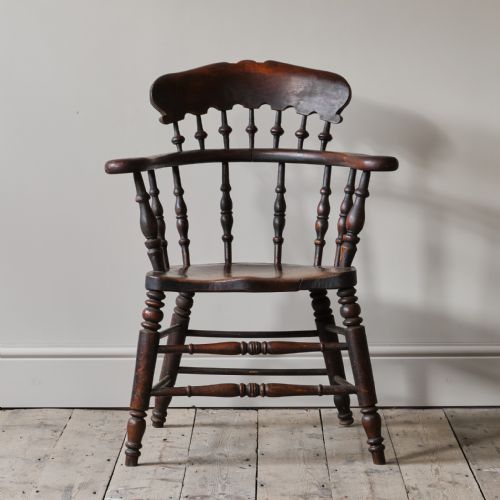

Traditional Elm Tub Chair
A traditional elm tub chair brings honest country vernacular craftsmanship and robust timber seating into a room.
Traditional Elm Tub Chair
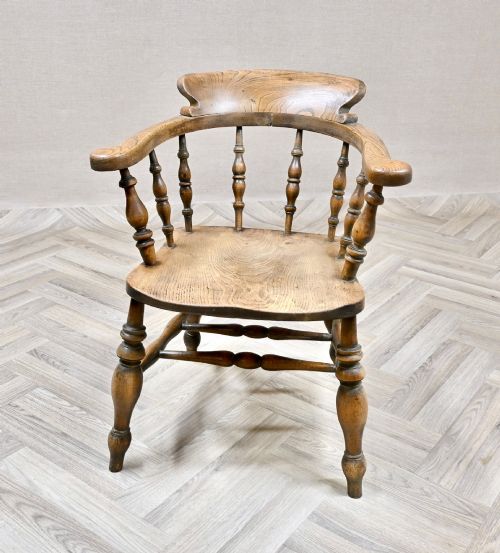
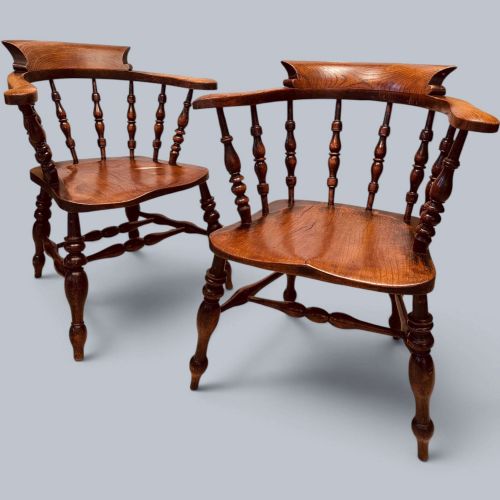
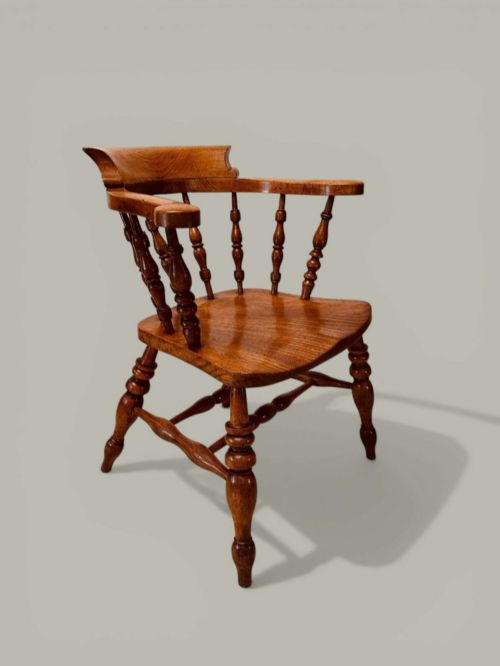
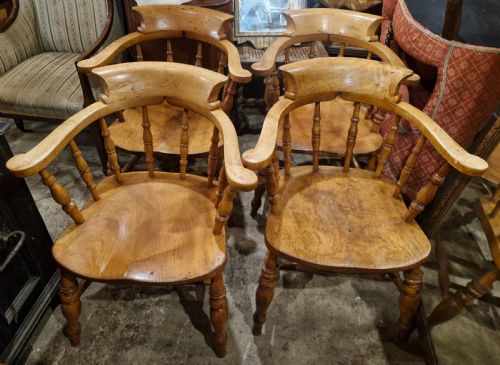
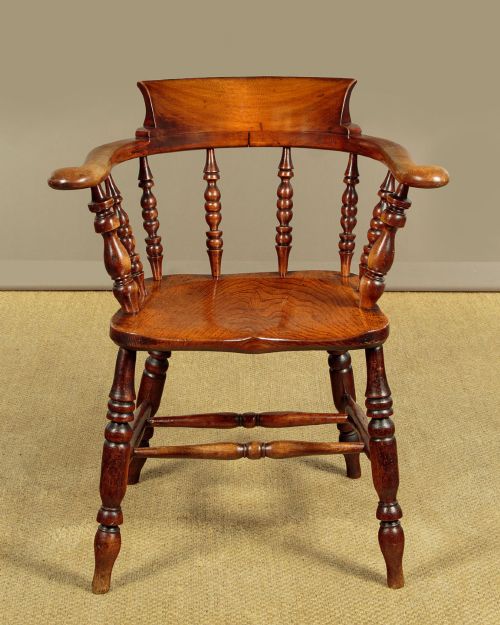
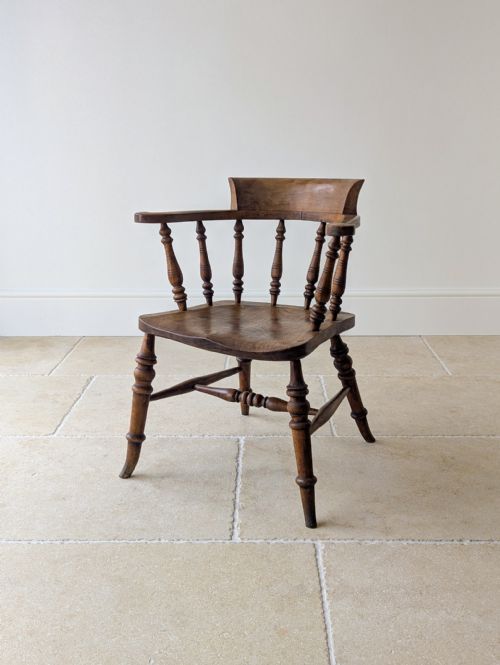
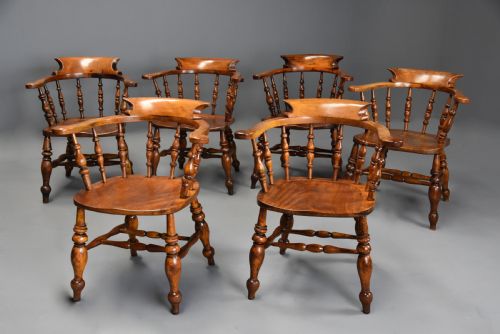
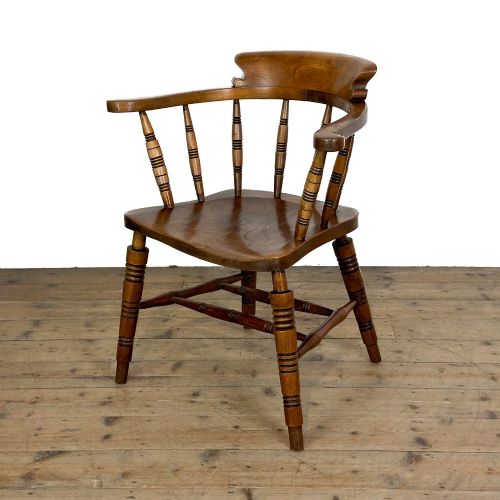
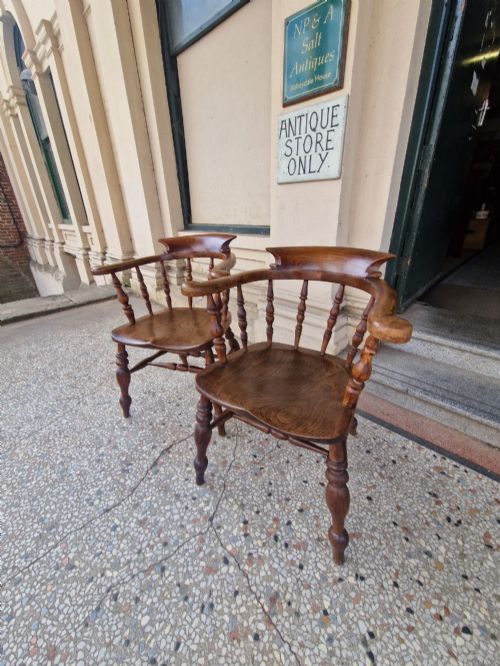
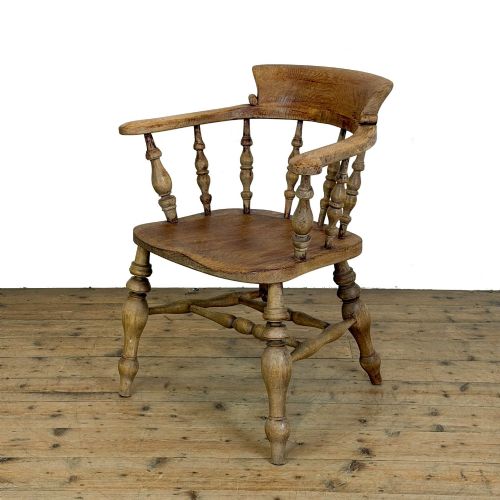
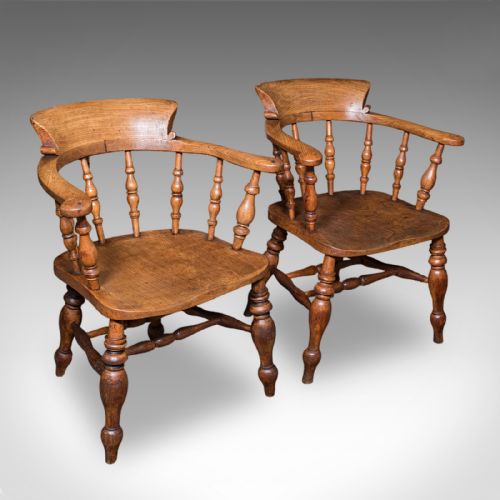
A traditional elm tub chair comprises sturdy low-backed seating rooted in nineteenth-century English country vernacular traditions. The pieces appearing here span the Victorian and Edwardian periods, frequently taking the form of Captain's chairs, smoker's bows, and Windsor armchairs.
Makers designed these low armchairs for sustained daily use in studies, offices, and dining rooms. They combine solid timber seats with curved backrests supported by turned spindles.
How they were made
Craftsmen built these chairs using solid elm for carved, saddle-shaped seats that absorbed daily wear. They paired this primary timber with ash, beech, and alder for steam-bent back rails and turned structural spindles.
Joinery relied on traditional Windsor construction methods, where legs and spindles are wedged directly into bored holes within the solid plank seat.
Traditional Elm Tub Chair Retail Price Guide 2026
Typical asking prices for traditional elm tub chair among the pieces listed under this phrase on Sellingantiques today, from the lower quarter to the upper quarter. They describe what is for sale here now, not the wider market.
Many of these sturdy captain's chairs spent decades supporting earnest smokers in nineteenth-century tavern corners before finding their way into modern studies.
What varies in quality
The degree of figuration and grain depth in the elm seat distinguishes standard examples from superior pieces. Seat thickness and the crispness of the turned arm supports also indicate the maker's skill.
Proportion and structural integrity govern overall merit, particularly the balance of the bentwood bow and the tightness of the historical joints.
The Traditional Elm Tub Chair Glossary
- Smoker's bow
- A low-backed Windsor armchair with a continuous curved rail sweeping around to form the arms, commonly associated with nineteenth-century taverns and parlours.
- Captain's chair
- A sturdy low-backed wooden armchair designed for desk or office use, featuring a rounded spindle back resting on a solid plank seat.
- Vernacular
- Everyday utilitarian furniture built by regional country craftsmen using locally sourced native timbers rather than following strict urban court styles.
- Windsor chair
- A chair constructed with a solid wooden seat into which the legs and back spindles are separately bored and secured.
- Steam-bending
- A woodworking technique applying moisture and heat to make timber pliable enough to form continuous curved back rails.
Traditional Elm Tub Chair: Frequently Asked Questions
Are these chairs comfortable for daily use?
The saddle-shaped wooden seats are carved to fit the body, offering surprising support for desk or dining work.
Adding a small loose squab cushion provides extra softness for extended sitting sessions.
How do I distinguish a smoker's bow from a captain's chair?
Both terms often describe similar low-backed Windsor armchairs with turned spindles and continuous wooden arm rails.
Regional makers and later retailers applied these names interchangeably during the nineteenth century.
What woods were used in these chairs?
Elm served as the primary choice for solid plank seats due to its resistance to splitting under heavy wear.
Ash, beech, and alder provided strong, straight grain suitable for steam-bent bows and turned structural legs.
How do I care for antique elm furniture?
Keep the timber away from direct heat sources and sudden temperature shifts to prevent wood shrinkage.
Apply natural wax polish periodically to nourish the dry grain and maintain the surface sheen.