


Rustic Ash Armchair
A rustic ash armchair brings centuries of vernacular craft into a room, offering robust seating shaped by country joiners.
Rustic Ash Armchair
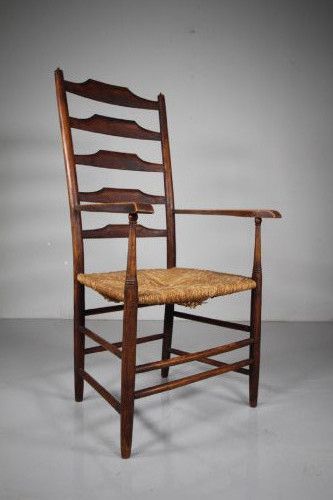
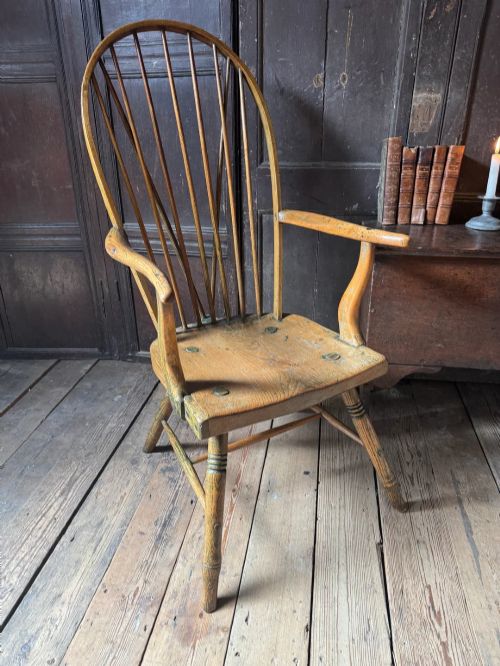
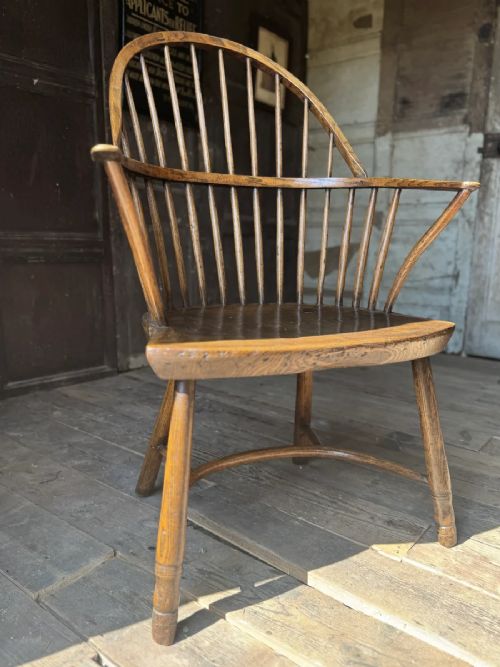
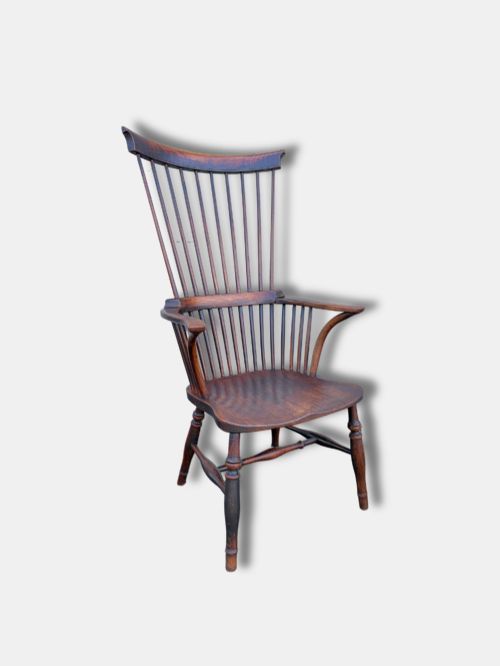
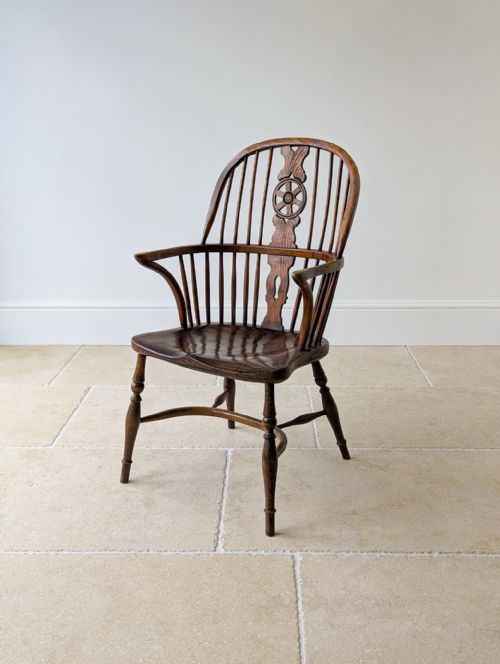
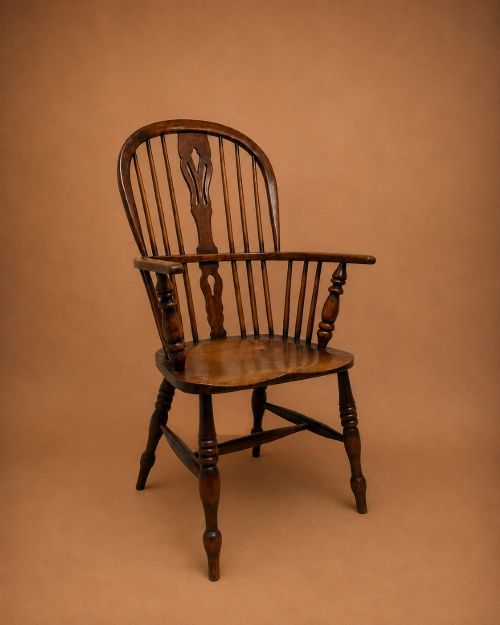
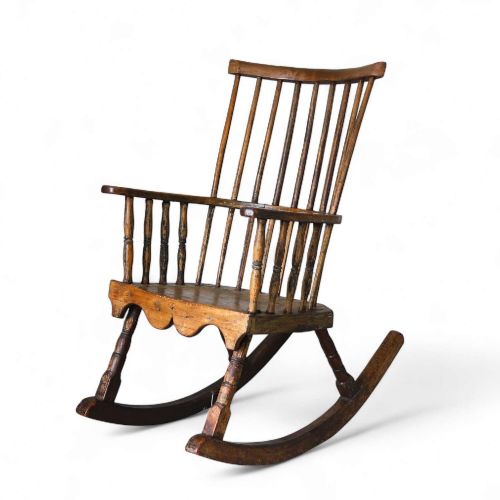
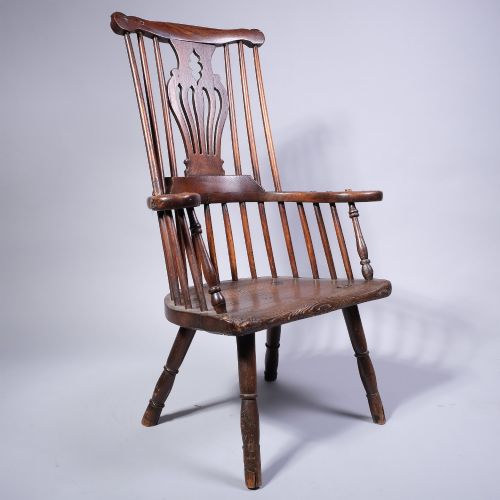
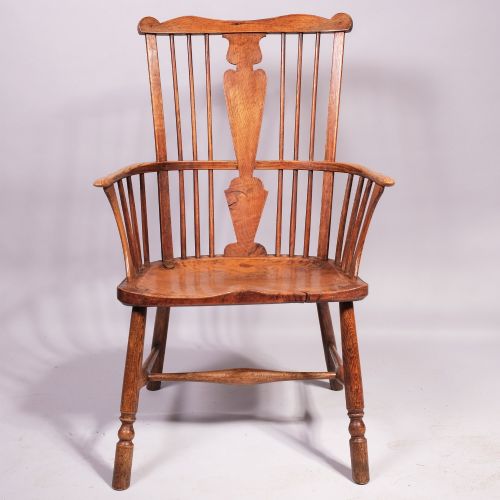
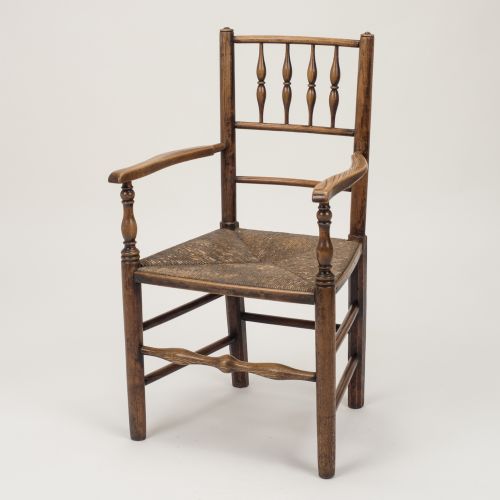
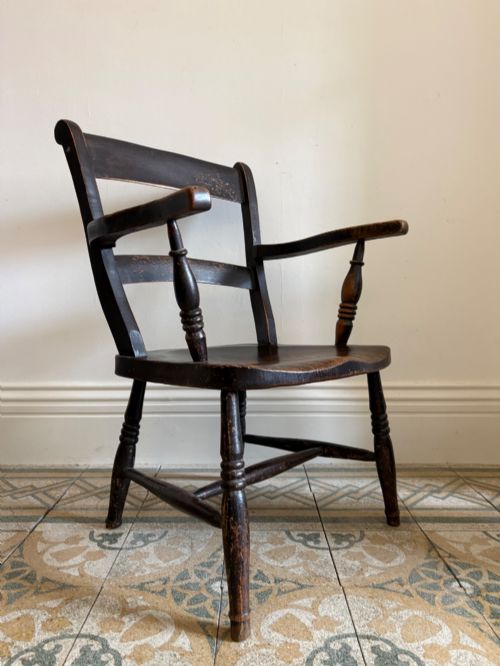
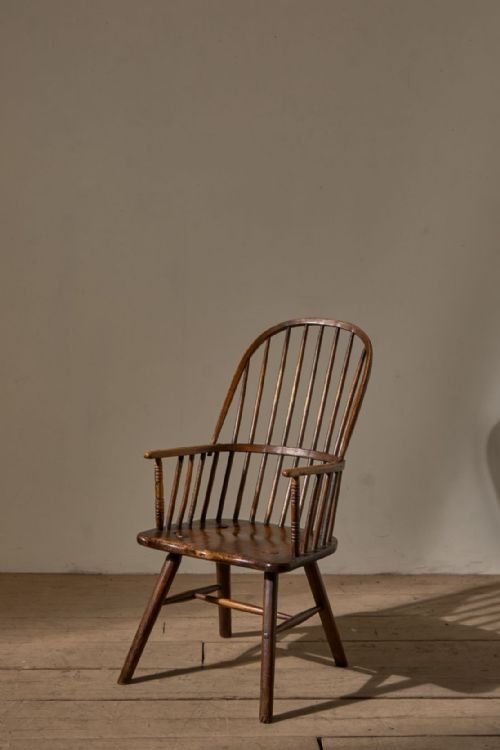
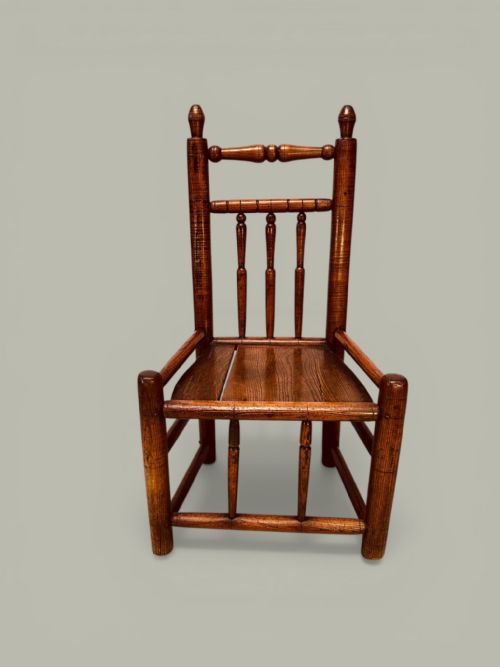
A rustic ash armchair embodies the practical seating traditions found in British country homes from the eighteenth and nineteenth centuries. These chairs span forms such as Windsor designs with hoop or comb backs, ladderbacks, and smokers bows.
The versions most frequently met on this page combine ash frames with elm seats, reflecting regional styles from the West Country, Thames Valley, and wider English shires. Makers built them for daily utility in farmhouses, cottages, and kitchens.
Collectors encounter diverse structural variations, including high hoops, low stick backs, and crinoline stretchers. Each piece demonstrates the resourcefulness of rural cabinet makers who utilised local timbers.
Materials and Construction
Makers selected ash for its strength and flexibility, employing it for steam-bent hoops, spindles, and legs. Elm served primarily for solid, saddled seats, providing a durable base that resisted splitting under heavy use.
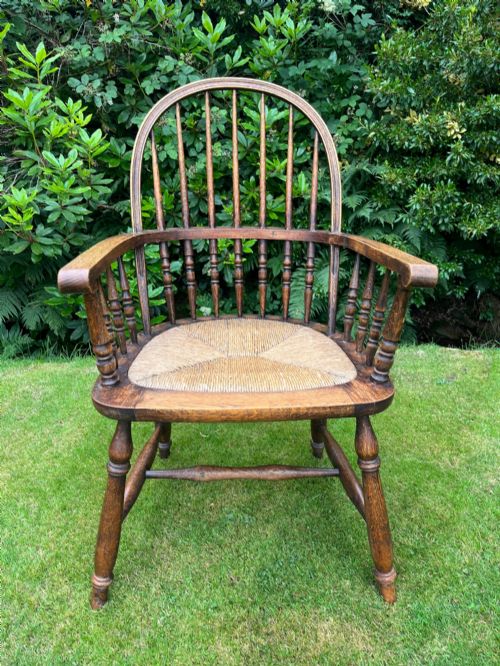
Joinery relied on traditional techniques such as bodgering and Windsor construction, where turned legs and spindles fit directly into drilled seats. Additional support came from rush for woven seating pads and fruitwood or oak accents in specific regional variants.
Many an eighteenth-century country chair owes its survival to decades of enthusiastic farmhouse toddlers and heavy woollen winter coats.
Assessing Quality and Character
Quality rests in the harmony of proportion, the depth of the timber's patination, and the integrity of the original construction. Chairs retaining their initial surface finish and unblemished structural joints command greater interest.
The refinement of the turnings on the legs and spindles distinguishes standard utility seating from finer regional craftsmanship. Subtle details, such as well-sculpted saddle seats and elegant comb backs, elevate an armchair above basic vernacular production.
Philip Clissett
The Rustic Ash Armchair Glossary
- Windsor chair
- A wooden chair built with a solid sculpted seat into which the legs and back spindles are separately inserted. This design developed deep regional variations across the English countryside.
- Comb-back
- A Windsor chair variation where the vertical spindles extend up to a horizontal crest rail resembling the teeth of a comb. This style often dates from the eighteenth and early nineteenth centuries.
- Crinoline stretcher
- A curved stretcher reinforcing the legs of a Windsor chair, shaped to resemble a ladies hoop skirt crinoline. It provides crucial lateral stability to the underframe.
- Smokers bow
- A low-backed Windsor armchair with a continuous curved arm rail and turned spindles, commonly found in nineteenth-century parlours and inns.
- Vernacular furniture
- Domestic objects made by local craftsmen following regional traditions rather than formal London styles. These pieces prioritise utility and local material availability.
Rustic Ash Armchair: Frequently Asked Questions
How do I date a rustic ash armchair?
Dating relies on observing construction methods, tool marks, and timber wear. Earlier eighteenth-century examples often feature broader saddle seats and simpler, hand-rived components.
Later nineteenth-century pieces frequently display more uniform machine turnings and standardised assembly techniques. Comparing the style of the comb or hoop back with documented regional types also helps narrow the decade of origin.
Were these chairs used for dining or working?
These armchairs served multiple domestic functions in farmhouses and cottages. Their sturdy build suited them for use at the farmhouse table, beside the hearth, or at a desk.
Lower stick backs and smokers bows provided comfortable seating for relaxing or smoking, while child versions accommodated younger family members.
How should I care for an antique ash and elm chair?
Maintain the timber by keeping the chair away from direct heat sources and sudden humidity changes. Apply a microcrystalline wax periodically to nourish the dry wood and protect the historic surface.
Avoid harsh chemical cleaners that strip the accumulated patination built up over centuries of handling.
What is the difference between a stick back and a Windsor chair?
A stick back is a specific subset of Windsor seating where round spindles or sticks are tenoned directly into the seat and top rail. Traditional Windsors often incorporate more complex bowed frames and shaped arm assemblies.
Both types share the central construction principle of inserting turned components into a solid wooden seat.