
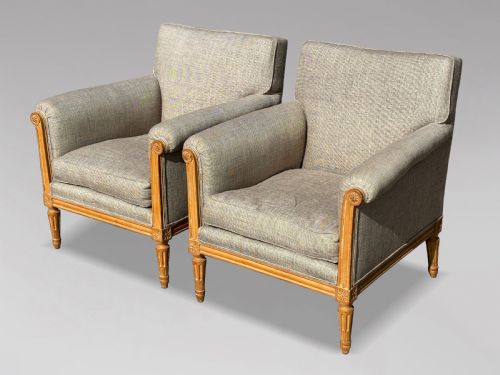

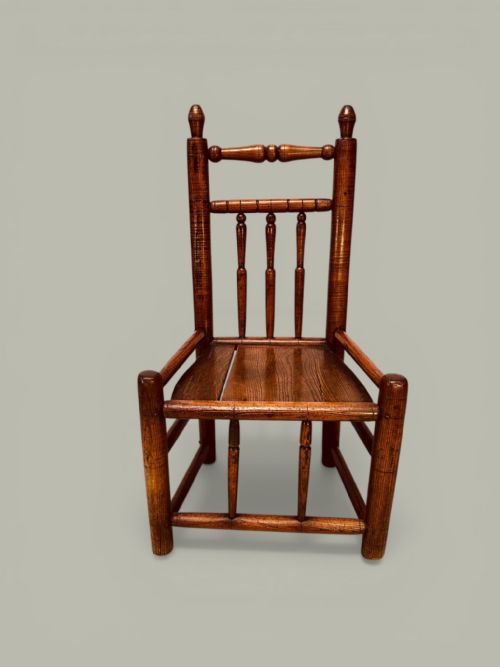


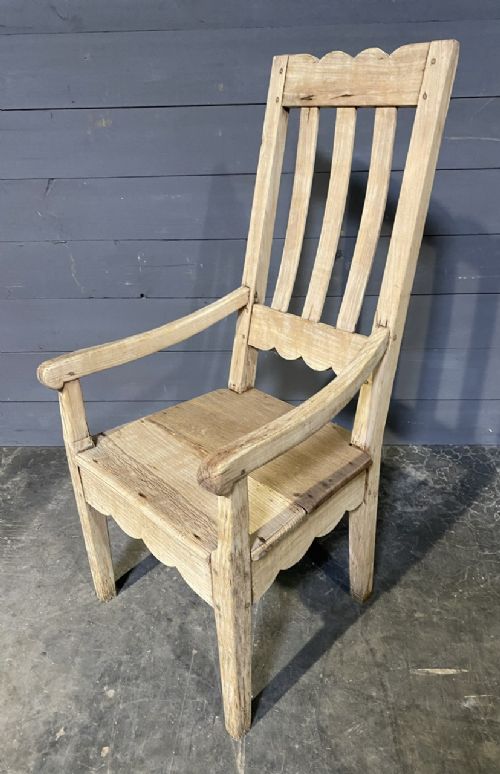
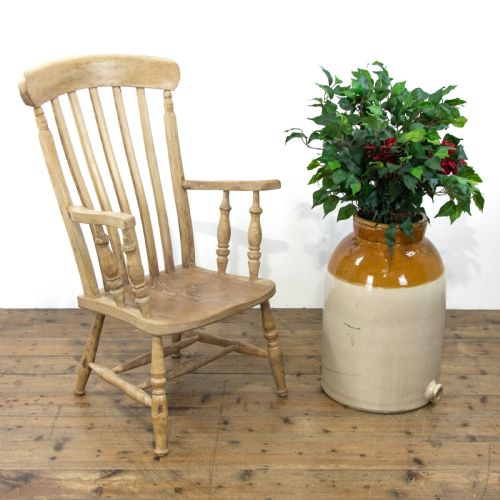
Natural Wood Armchair
Natural wood armchairs bring warmth and honest construction into a room, offering seating built from solid timber with visible grain.
Natural Wood Armchair
A natural wood armchair is a seat built primarily from timber, encompassing everything from country windsors to French revival frames. When buyers search for a natural wood armchair, they encounter pieces originating across the eighteenth, nineteenth, and early twentieth centuries. These chairs rely on domestic and exotic woods rather than heavy upholstery to define their visual character.
The selection on this page leans heavily toward nineteenth-century examples, with Victorian and Edwardian pieces appearing alongside earlier eighteenth-century forms. Regional country styles, including English Windsor designs and Scandinavian dug-out seats, form a significant portion of the available inventory. Buyers also find occasional French and Chinese iterations constructed from elm, ash, and teak.
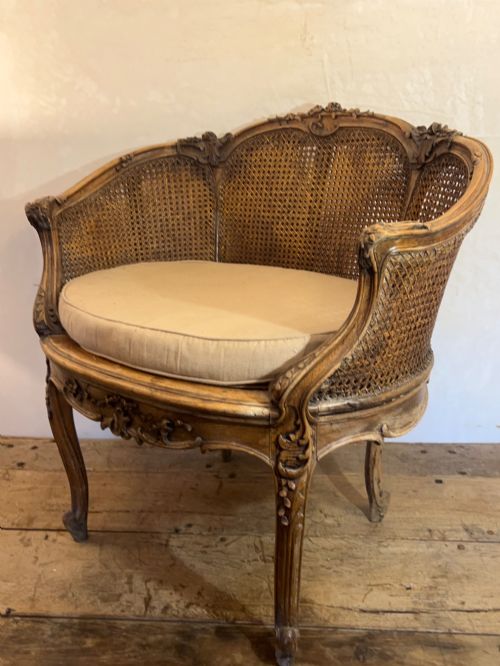
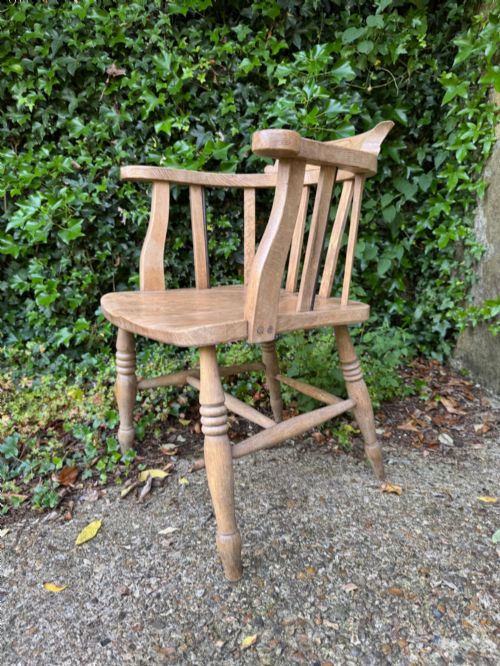
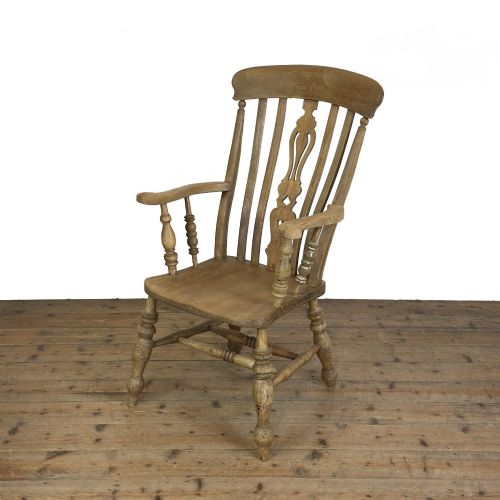
Forms vary from sturdy lath-back and stick-back armchairs to sculptural tree roots and horseshoe shapes. Some pieces arrive as bare frames ready for upholstery, while others present traditional rush or cane seating. Each object displays the distinct working methods of its period, whether rustic vernacular carpentry or refined European styling.
How they were made
Makers utilised native hardwoods such as ash, elm, oak, and walnut to ensure structural integrity in these armchairs. Ash and elm frequently appeared together in Windsor chairs, where the flexible ash provided steam-bent hoops and spindles while the dense elm formed a solid, comfortable seat. Carpenters also worked with pine, teak, and ordinary timber depending on regional availability and the intended function of the chair.
Construction techniques ranged from traditional green woodworking and pegging to sophisticated French joinery found in Louis XV and XVI style frames. Turners shaped components on a lathe before assembling the framework with mortise and tenon joints, often incorporating rush or rattan cane for seating inserts. Certain vernacular pieces utilised hollowed logs or tree roots directly, preserving the organic contours of the natural wood.
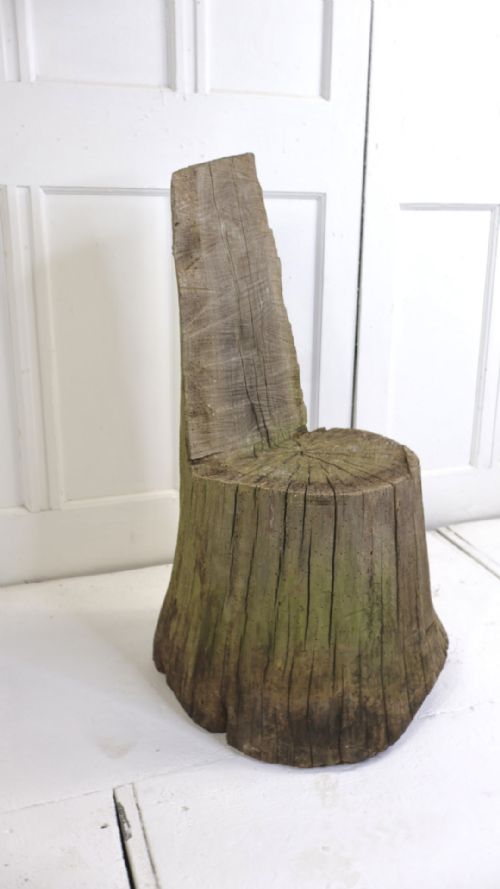
Several chairs on this page refuse conventional lumber entirely, shaped instead from living tree roots and hollowed tree trunks.
What varies in quality
Quality in a natural wood armchair rests upon the selection of timber and the integrity of the original construction. Pieces fashioned from well-figured ash, elm, or walnut with tight, undisturbed grain command greater appreciation than those built from lesser utility timber. The balance of proportions and the fluidity of turned spindles or carved arms also dictate the visual success of the piece.
The degree of original surface preservation marks another distinction between examples. Chairs retaining an honest, unstripped patina and deep wax finish demonstrate better historical survival than those subjected to heavy modern sanding or harsh chemical dipping. Structural soundness, minimal replacement of components, and tight joinery separate utilitarian workshop output from master cabinetmaker production.
E W Godwin
The Natural Wood Armchair Glossary
- Windsor armchair
- A chair built with a solid wooden seat into which the legs and back spindles are separately bored and wedged. These traditional seats often combine ash and elm for strength and comfort.
- Lath back
- A chair back featuring flat wooden slats, or laths, arranged vertically to support the sitter. This construction is common in nineteenth-century country seating.
- Rush seat
- A seating surface woven from dried marsh rushes twisted around a frame. It provides a resilient and traditional alternative to solid wood or upholstered pads.
- Turner's chair
- An early form of chair constructed entirely from turned wooden spindles and members fixed together with pegs. These pieces typically display geometric symmetry and sturdy triangular or square seats.
- Corbeille
- A French term describing an armchair with a rounded, basket-like back that curves continuously into the arms. It is frequently associated with Louis XV and later revival styles.
Natural Wood Armchair: Frequently Asked Questions
What woods are most common?
Ash and elm appear frequently in country seating, particularly in traditional windsor designs where contrasting timbers served different structural purposes.
Other pieces utilise oak, walnut, pine, and exotic woods like teak according to their period of origin and geographic provenance.
How do I care for the wood?
Maintain natural timber surfaces by applying a traditional beeswax polish occasionally to nourish the grain and protect against excessive dryness.
Keep wooden armchairs away from direct heat sources and strong sunlight to prevent the timber from splitting or warping over time.
Are these chairs comfortable to sit in?
Many wooden armchairs feature ergonomically carved seats and supportive spindles designed to fit the human body without requiring thick cushions.
Certain styles incorporate rush seating, cane panels, or upholstered pads to enhance comfort during extended periods of use.
How can I tell the age of a chair?
Examine the tool marks, joint construction, and wear patterns on the underside and hidden structural areas of the frame.
Tool methods such as hand-turning, pit-sawing marks, and pegged joinery point toward earlier manufacturing periods compared to modern mechanical fastenings.