
High Back Windsor
When you examine a high back Windsor, you find a vernacular seating form rooted in timber and turned spindles.
High Back Windsor
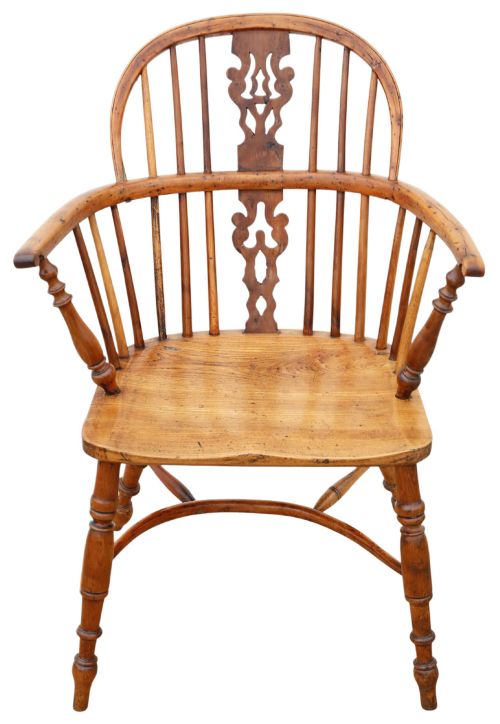
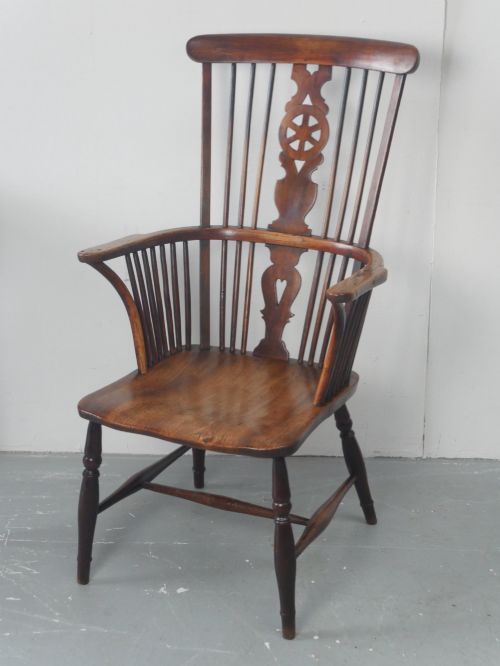
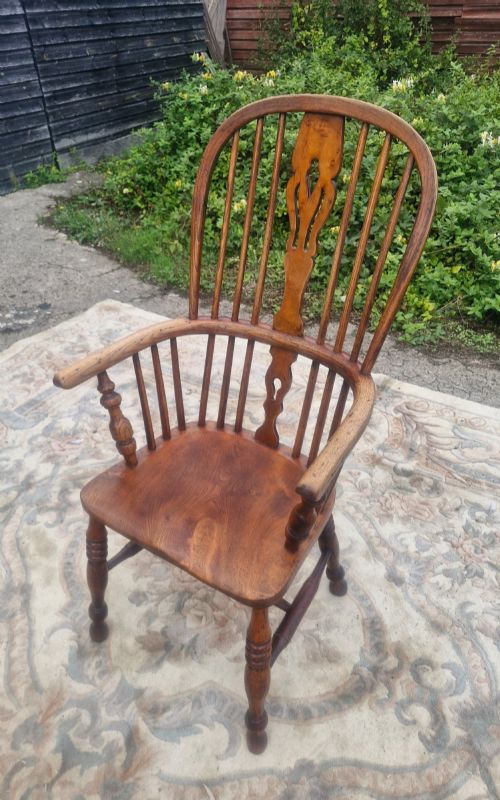
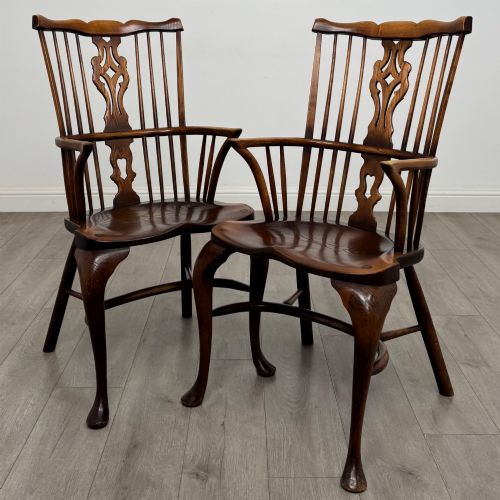
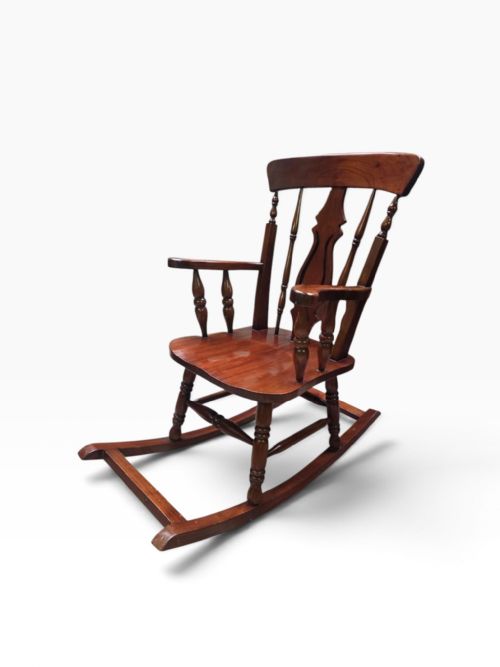
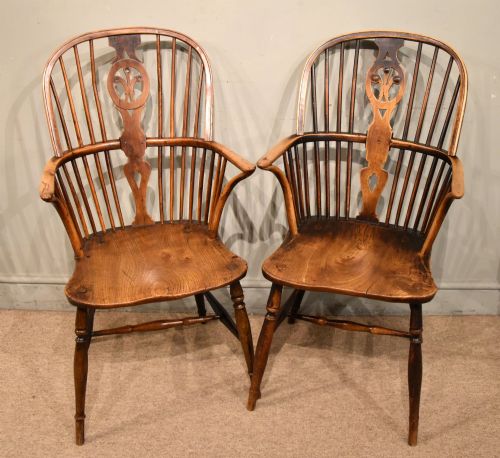
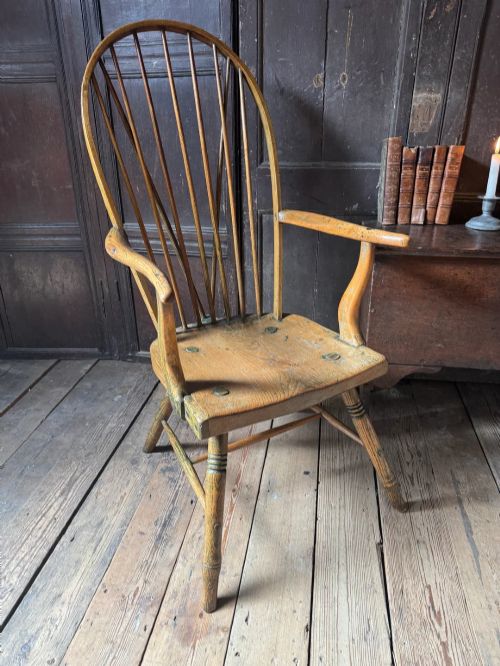
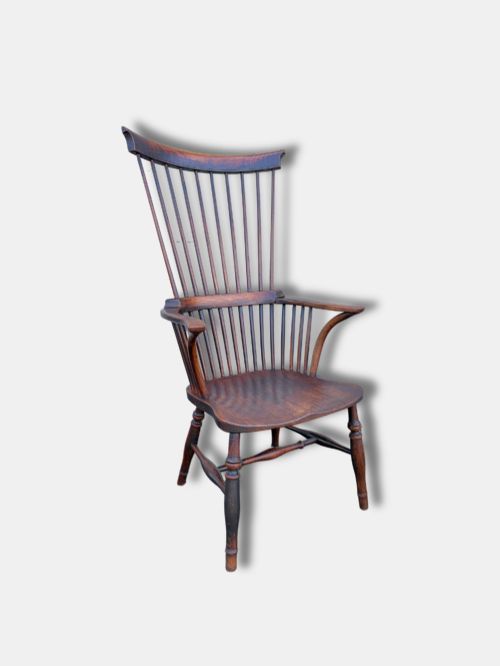
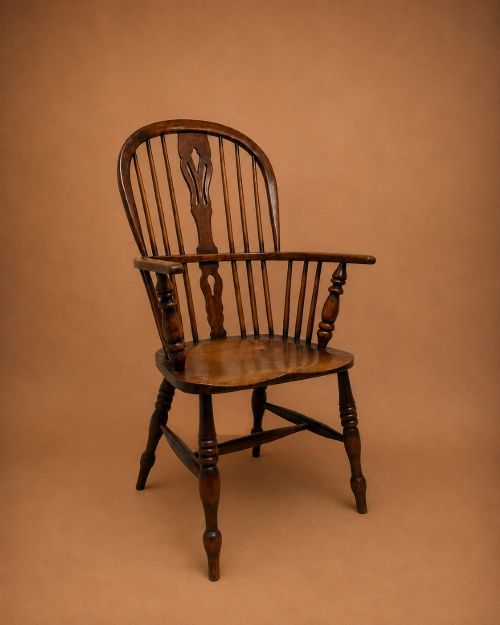
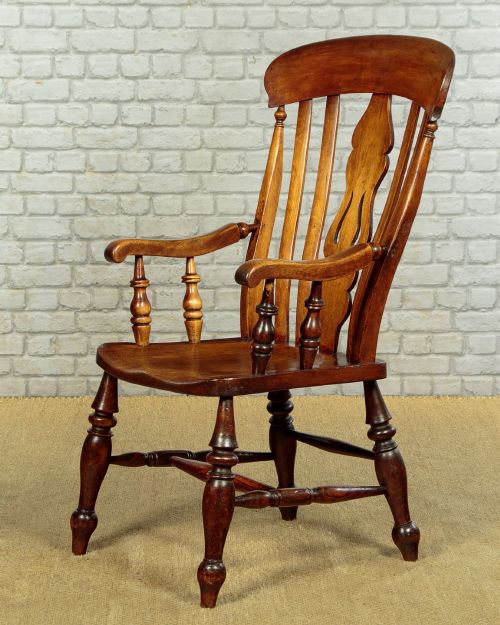
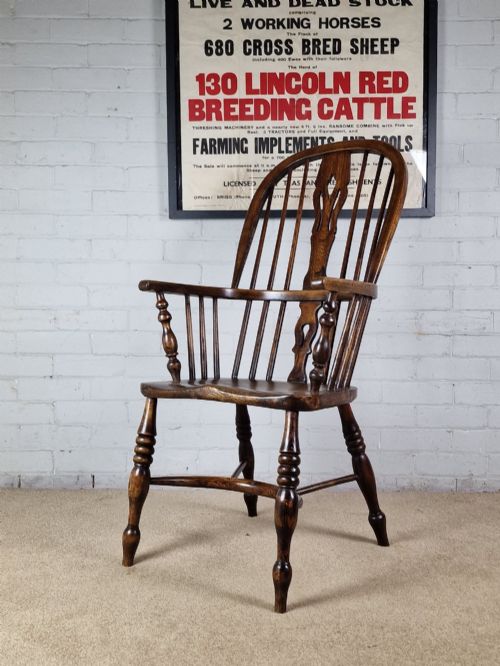
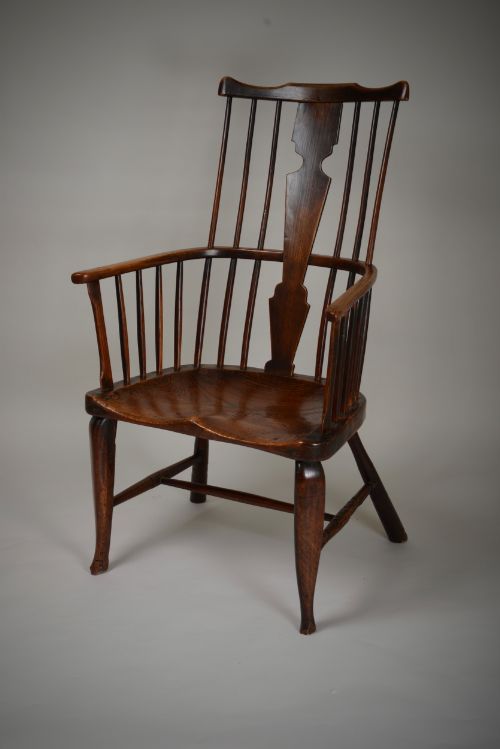
A high back Windsor is a traditional wooden seating form characterised by a solid shaped wooden seat into which the legs, bow and spindles are wedged directly. The tall back structure often incorporates a central splat or an array of vertical spindles rising to a high hoop, comb or wheel crest.
The versions most commonly met on this page span the eighteenth, nineteenth and early twentieth centuries, emerging from regional English workshops in counties such as Yorkshire, Nottinghamshire and the West Country. These regional pieces range from sturdy farmhouse armchairs in elm and ash to refined yew wood examples with crinoline stretchers.
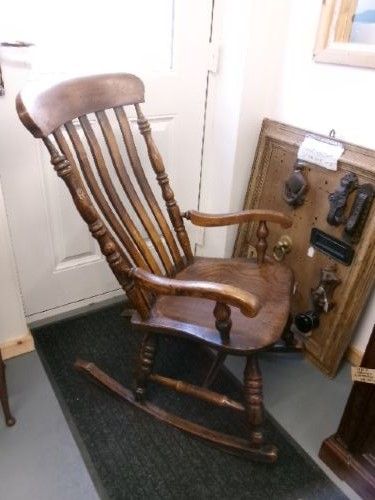
Beyond standard armchairs and rocking chairs, the form adapts into specialised variations including children's seating, nursing rockers and high chairs. Each piece reflects the vernacular design priorities of local makers who prioritized practical utility and robust construction over formal stylistic conventions.
Materials and Construction
Makers utilised a combination of contrasting timbers to handle different structural stresses within a single high back Windsor. Elm provided a split-resistant, highly figured seat slab, while ash or beech supplied the resilient bending strength needed for spindles, bows and legs.
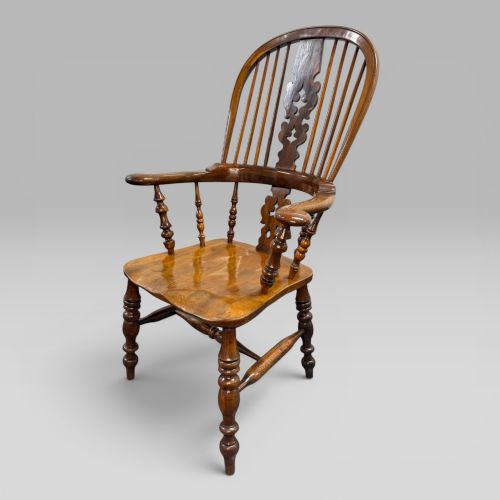
In finer regional variations, particularly those from Nottinghamshire and Yorkshire, yew wood was selected for its decorative grain and natural oil content. Frameworks relied on traditional stick-construction and wedged tenon joints, where components passed right through the solid seat block and were secured with wedges.
Turning lathes shaped the spindles, legs and crinoline stretchers, while drawknives and scutches carved the contoured seats. Steam-bending techniques allowed straight-grained ash or yew to form the continuous sweeping hoops of the high back variations.
High Back Windsor Retail Price Guide 2026
Typical asking prices for high back windsor among the pieces listed under this phrase on Sellingantiques today, from the lower quarter to the upper quarter. They describe what is for sale here now, not the wider market.
Some chairs retain tiny carpenter's benchmark numbers stamped under the seat, revealing how workshop teams kept matched spindle sets together.
Evaluating Quality and Design
The distinction between standard utility seating and the finest examples rests largely on the choice of timber and the ambition of the regional design. Highly figured burr yew wood and well-balanced proportions elevate a piece well above plain elm and beech kitchen chairs.
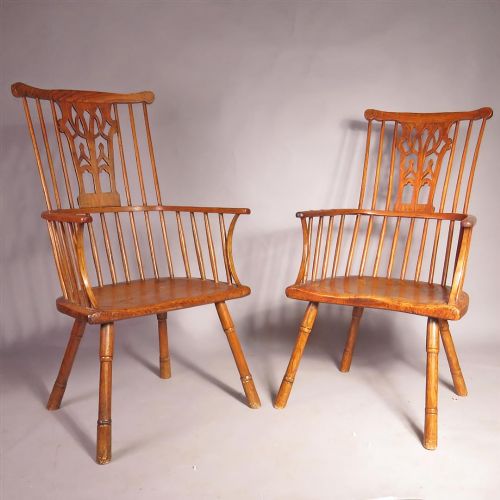
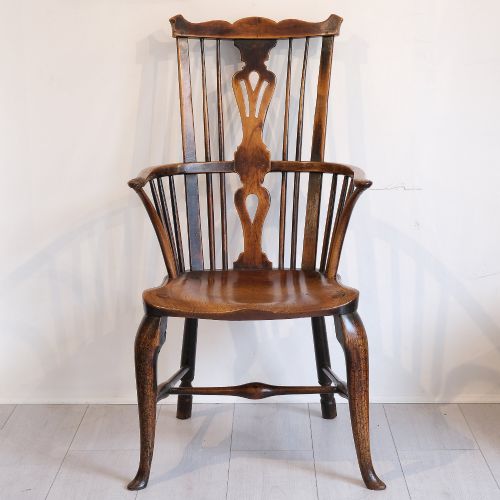
Structural grace is determined by the refinement of the arm supports, the crispness of the spindle turnings and the presence of sophisticated details like a crinoline stretcher. Variations in the comb or hoop back profile, along with regional traits such as a pierced central splat, separate ambitious workshop production from basic vernacular manufacturing.
Duncan McKellar of Fenwick·Allsop of Worksop·Nicholson Rockley·Hugh Shields·Fred Walker
The High Back Windsor Glossary
- Comb back
- A Windsor chair style where the vertical spindles extend upward to a horizontal crest rail resembling the teeth of a comb.
- Hoop back
- A continuous curved wooden bow that forms the top rail and arms of the chair in a single sweeping line.
- Crinoline stretcher
- An arched or bowed stretcher joining the legs below the seat, providing additional rigidity and often associated with better quality chairs.
- Vernacular
- Objects designed and built by local craftsmen using traditional regional methods and readily available local materials rather than following academic styles.
High Back Windsor: Frequently Asked Questions
What is a high back Windsor chair?
A high back Windsor is a traditional wooden chair built around a solid thick seat slab into which independent legs and back spindles are tenoned. The tall back provides substantial head and shoulder support, utilising steam-bent timber hoops or vertical comb rails.
These chairs developed distinct regional characteristics across England, with different counties favoring specific combinations of native timbers like elm, ash and yew. They served as primary seating in farmhouses, cottages and commercial spaces for centuries.
How do I date an old Windsor chair?
Dating relies on examining the timber selection, tool marks, construction methods and wear patterns on the seat. Earlier eighteenth-century examples often feature comb backs and figured yew wood, while nineteenth-century versions frequently employ ash, beech and elm in hoop-back or kitchen armchair formats.
Changes in turning styles for the legs and stretchers also offer clues to the period of manufacture. Regional traits and stamps from known makers help narrow down the decade of production.
How should I care for an antique Windsor?
Maintain antique wooden chairs by keeping them away from direct heat sources and sudden temperature fluctuations that can dry out the timber. Apply a traditional beeswax polish occasionally to nourish the dry wood and protect the historic surface finish.
Avoid excessive moisture and check the wedged joints periodically to ensure the structure remains stable under normal use.