
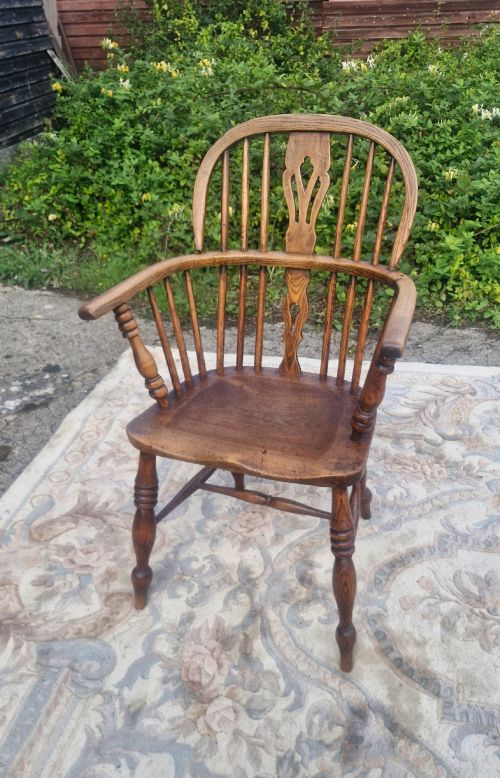
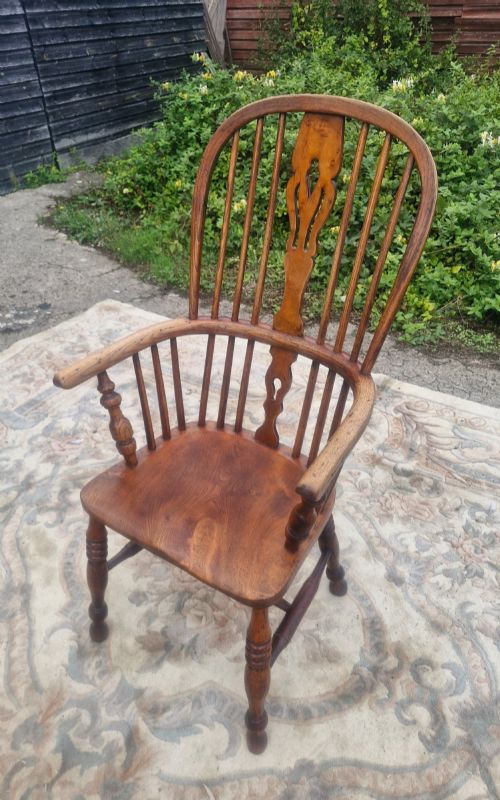


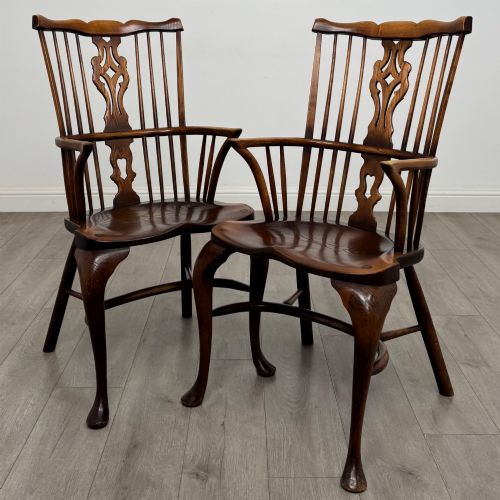
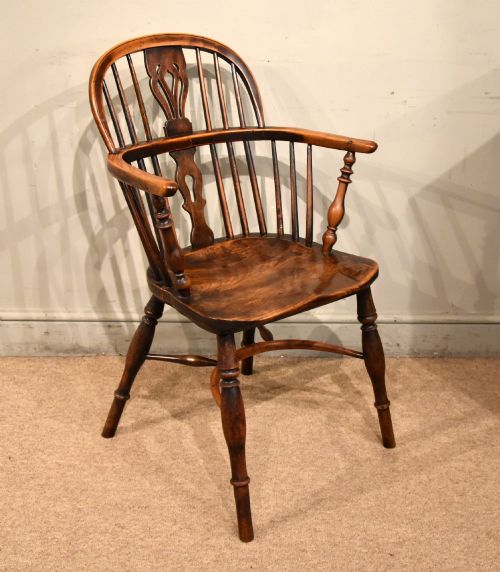
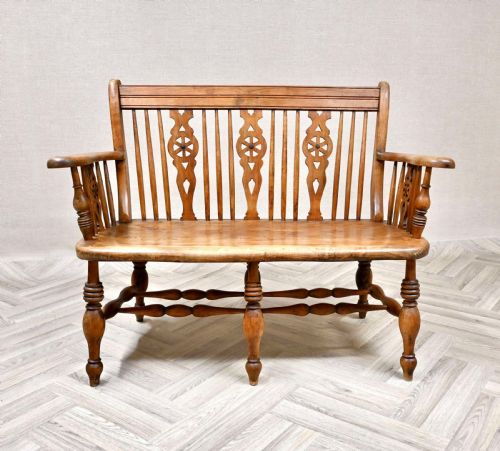
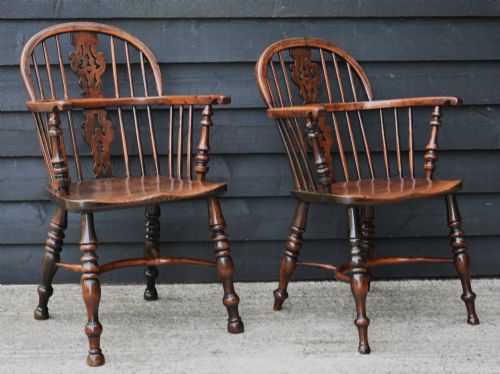
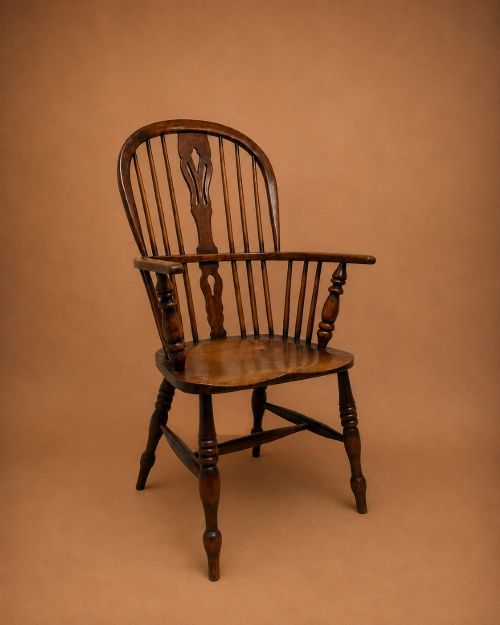
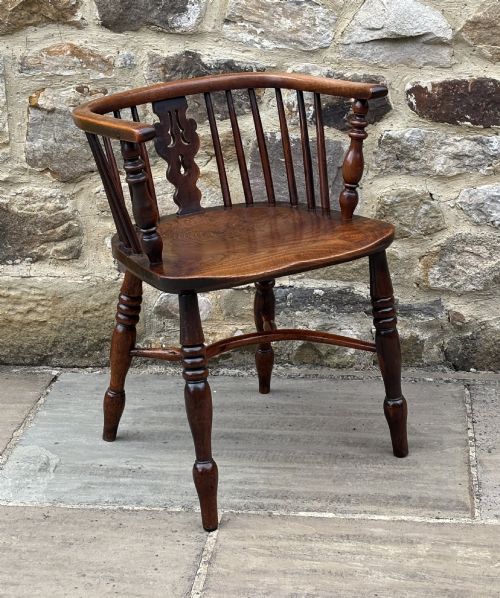
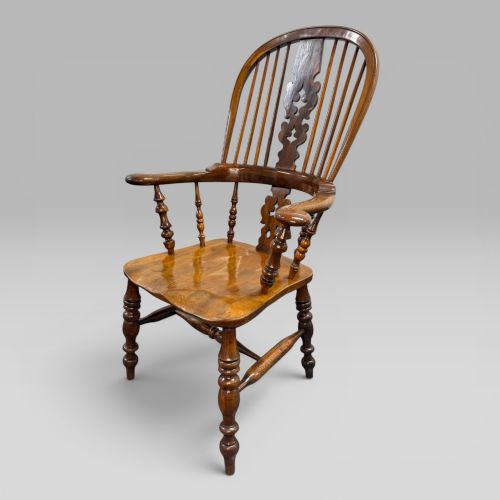
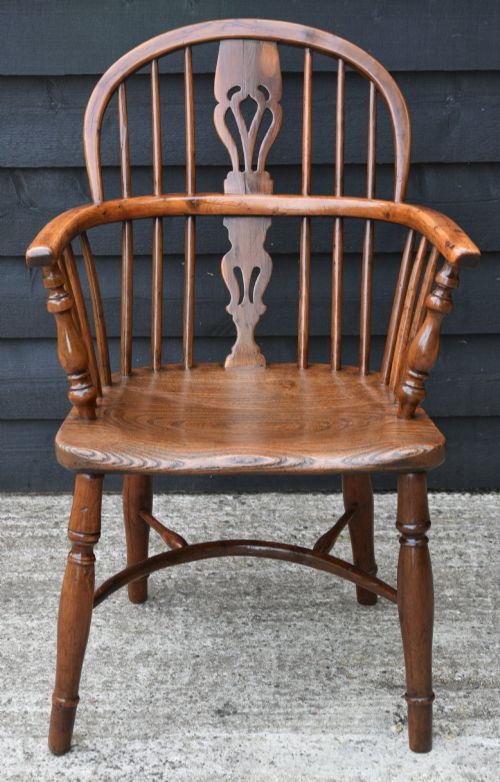
Pierced Splat Windsor
These pierced splat windsor chairs combine sturdy vernacular forms with timber construction, offering enduring comfort and character for daily sitting.
Pierced Splat Windsor
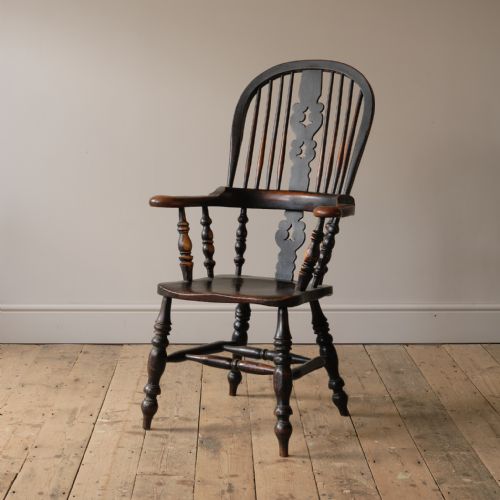
When you search for pierced splat windsor, you find traditional seating designed for robustness and domestic utility. The form relies on a stout wooden seat base holding turned legs below and a supportive back above.
The examples on this page span the eighteenth, nineteenth, and early twentieth centuries, encompassing periods from the Georgian era through the Victorian period and into Edwardian times. You encounter armchairs, carvers, dining chairs, benches, and rocking chairs shaped by regional English provincial makers.
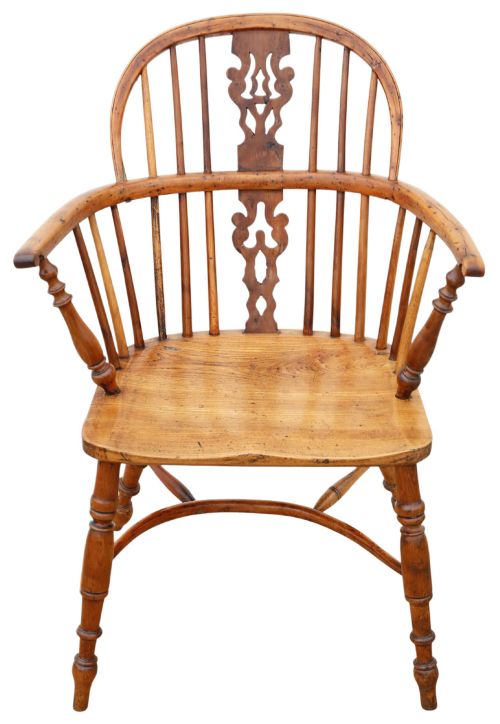
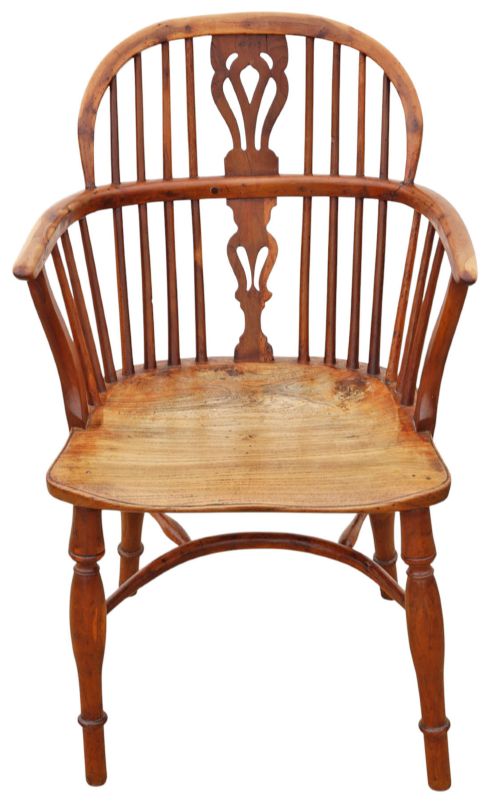
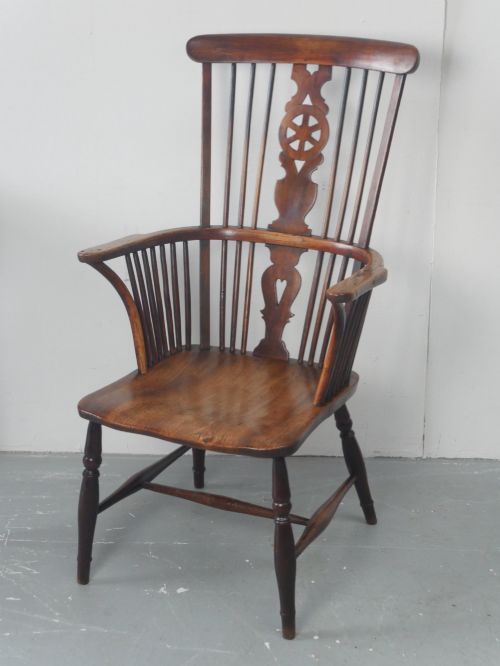
Most pieces show mixed timber construction typical of English country workshops. Common formats include low backs, high backs, hoop backs, wheel backs, and comb backs, often incorporating a central pierced splat within the framework.
How They Were Made
Maker construction combines solid wood seats shaped from a single slab with turned spindles and legs fitted into drilled socket holes. Traditional joinery secures the components tightly without relying on metal fixings.
Timbers are selected for specific structural roles, utilising dense yew or elm for seats and pliable ash, beech, or fruitwood for bent hoops and spindles. Grain orientation provides the necessary strength to support the arched backs and armbows.
Pierced Splat Windsor Retail Price Guide 2026
Typical asking prices for pierced splat windsor among the pieces listed under this phrase on Sellingantiques today, from the lower quarter to the upper quarter. They describe what is for sale here now, not the wider market.
Listings feature elm, yew, ash, beech, oak, fruitwood, and hardwood across eighteenth, nineteenth, and twentieth-century periods.
What Varies in Quality
The distinction between ordinary and superior examples lies in the selection and figuring of the timber, particularly the grain pattern visible in yew wood seats and elm panels. Rich colouration and well-defined figuring elevate an individual piece.
Proportion and turning execution also separate standard utilitarian seating from finer regional work. Crisp spindle profiles, balanced armbow sweeps, and well-executed pierced splats indicate higher standards of rural craftsmanship.
Gabbitass Worksop
The Pierced Splat Windsor Glossary
- Splater
- The vertical central slat positioned inside the back of a chair, frequently pierced for decorative effect. It provides lumbar support.
- Crinoline stretcher
- An arched underframe connecting the legs of a chair to provide rigidity and strength. It takes its name from the expanding fashion of the nineteenth century.
- Hoop back
- A continuous bentwood rail forming the back and armrests of an armchair. Steam is utilised to bend the timber into a curve.
- Comb back
- A chair design where vertical spindles rise through a horizontal headboard resembling the teeth of a comb. This style originates in the eighteenth century.
- Carver
- An armchair designed with open sides to accommodate heavy clothing or formal dining attire. These sit alongside matching single dining chairs.
Pierced Splat Windsor: Frequently Asked Questions
What is a pierced splat windsor chair?
A pierced splat windsor is a traditional wooden seat featuring a constructed back with a shaped central slat.
These pieces originate from English provincial workshops across the eighteenth and nineteenth centuries.
How do I identify a yew wood windsor?
Yew wood exhibits distinct figuring with deep amber tones and contrasting dark grain patterns.
Makers utilised this dense timber for seats and armbows due to its durability.
Where were these chairs made?
Provincial English joiners and specialist turners produced these seats using locally sourced regional hardwoods.
Different counties developed distinct regional variations in back shapes and stretcher arrangements.
How should I care for an antique windsor?
Keep wooden seating away from direct heat sources and sudden temperature shifts to prevent timber splitting.
Apply traditional wax polish occasionally to nourish the surface finish.