



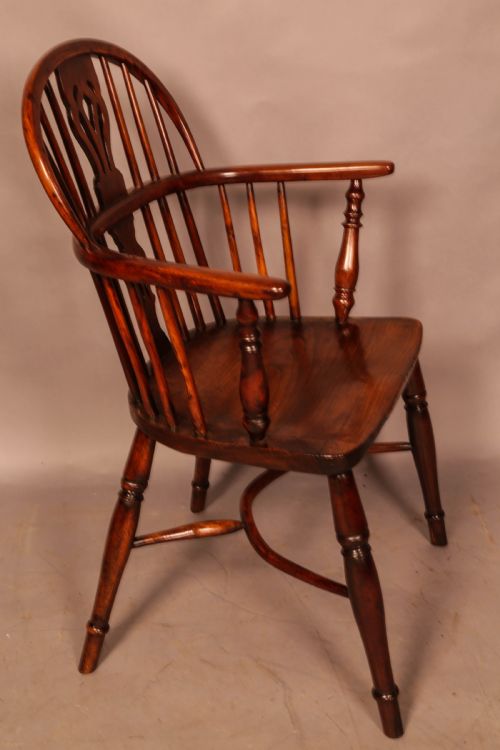

Rockley Windsor Chair
A rockley windsor chair brings robust English country vernacular character into a room, offering sturdy seating built from native timbers.
Defining the Rockley Windsor Chair
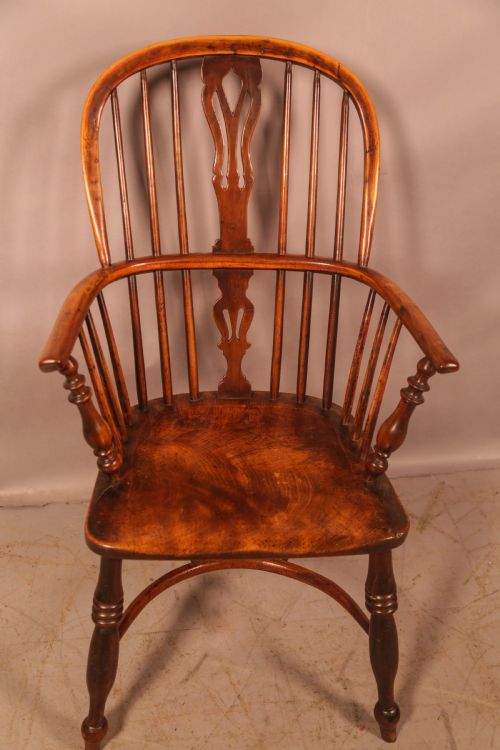
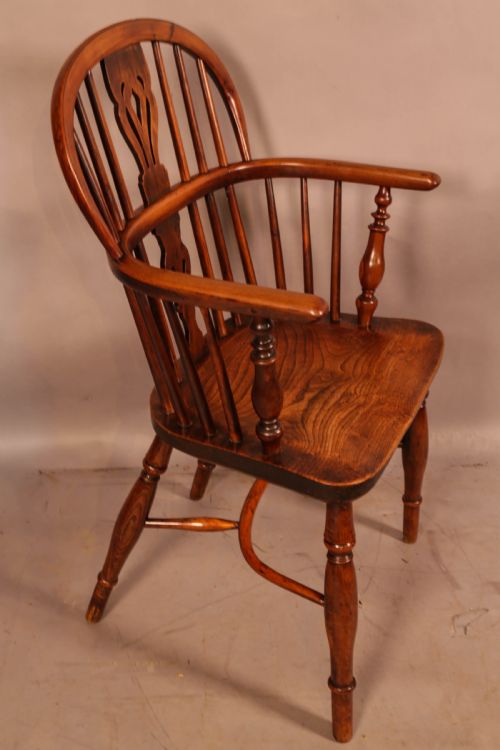
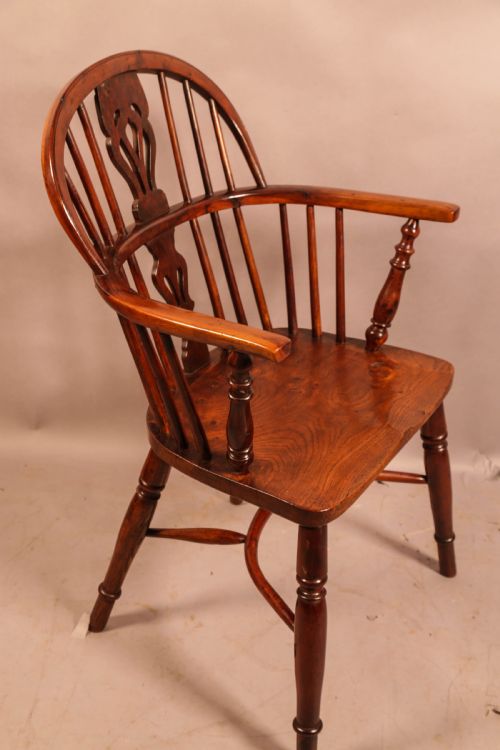
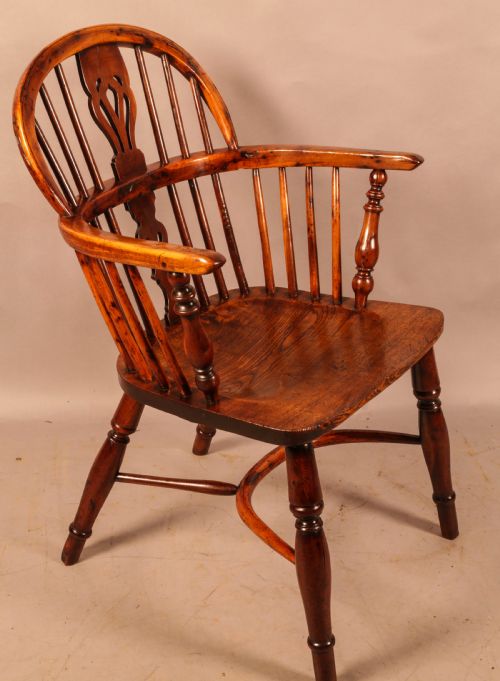
The rockley windsor chair encompasses robust seating pieces originating from the nineteenth century, classified broadly within English country and Georgian styles. These armchairs appear in low back and high back forms, designed with deep seats and sturdy spindle structures intended for daily domestic use.
Buyers encountering this group will frequently find low back and high back armchairs formed primarily from yew wood, alongside ash and elm combinations. These items reflect traditional regional workshop output, preserving solid construction methods that suit contemporary and period interiors alike.
Materials and Construction
Maker workshops utilised native timbers, pairing yew wood with ash and elm to build rigid frames that withstand heavy use. Seats were typically carved from solid elm blocks, while spindles, arms, and legs utilised the contrasting grain and flexibility of yew or ash.
Joinery relied on wedged tenons and traditional socket connections, binding the upright spindles and legs directly into the thick wooden seat. This method produced a unified structural skeleton without relying on metal fixings or complex internal framing.
Retail Price Guide 2026
Typical UK retail prices for rockley windsor chair, calculated from the Sellingantiques database of over a million retail prices indexed since 2003. This retail price guide relies exclusively on Sellingantiques data; no external sources or auction records are used, so the figures do not describe the wider market.
Some nineteenth-century makers stamped their surname directly into the timber, leaving a permanent signature of the workshop floor.
Evaluating Quality and Character
Quality rests in the selection of timber and the definition of the turned members, where rich yew grain or well-matched ash and elm demonstrate superior workshop output. Tighter turning on spindles and balanced proportions across the arms and back separate standard items from finer examples.
The presence of maker stamps or workshop attribution adds clear documentation to individual armchairs, elevating historical interest. Structural integrity and minimal timber replacement across the seat and undercarriage maintain the original aesthetic balance of the piece.
Nicholson Rockley·Fred Walker·Wheatland Rockley
The Rockley Windsor Chair Glossary
- Windsor chair
- A wooden armchair characterised by a central seat plank into which the legs and back spindles are independently inserted. This construction distributes weight directly to the undercarriage.
- Low back
- A chair design where the arms and back rail form a continuous, lower horizontal sweep around the sitter. This style provides compact proportions while maintaining sturdy arm support.
- High back
- A tall chair configuration offering extended vertical support behind the sitter's head and shoulders. These pieces often feature intricately turned spindles within an arched frame.
- Yew wood
- A dense native timber prized for its varied grain patterns and warm hue. Cabinet makers selected it for its resilience and decorative impact.
- Vernacular
- Design traditions rooted in local rural craftsmanship rather than formal metropolitan pattern books. These objects prioritise practical function and regional material availability.
Frequently Asked Questions
What is a rockley windsor chair?
A rockley windsor chair is a nineteenth-century wooden armchair produced in English country workshops, featuring a solid wooden seat with inserted spindles and legs.
These armchairs come in low back and high back formats, shaped from native timbers such as yew, ash, and elm.
How were these armchairs used?
These seating pieces served as durable everyday furniture in nineteenth-century domestic settings, positioned around farmhouse tables or beside hearths.
Their robust construction allowed them to withstand heavy daily use while providing ergonomic support through sculpted seats and supportive backs.
Which woods appear most frequently?
Listings show these armchairs constructed primarily from yew wood, alongside combinations of ash and elm.
Yew timber supplies a distinct figured grain, while ash and elm provide contrasting tones and structural strength for seats and undercarriages.