



Thames Valley Windsor
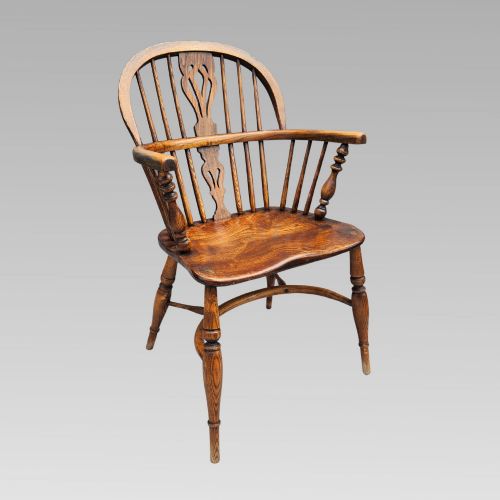
When you handle a thames valley windsor, you hold a piece of English country seating history shaped by generations of regional chairmakers.
Thames Valley Windsor
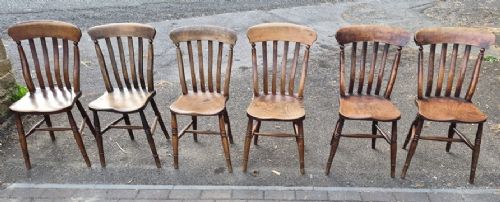
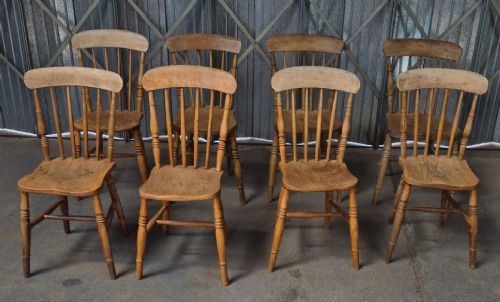
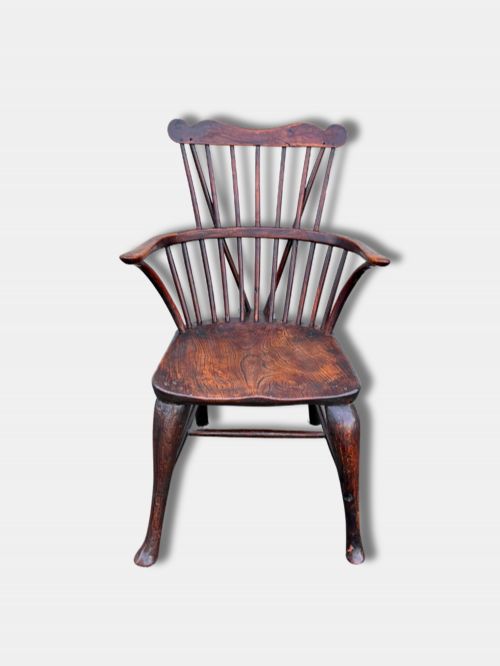
You will most frequently meet 19th-century examples in ash and elm, alongside finer variants in yew wood. The forms range from high-back and comb-back armchairs to kitchen sets and low-hoop models associated with makers such as Prior.
The selection also encompasses regional rocking chairs and occasional landscape watercolours depicting the local river scenery. Buyers choose these items for their organic material, sculptural construction, and deep historical connection to English vernacular design.
How they were made
Makers constructed these chairs by combining multiple native timbers within a single frame, utilising elm for the solid plank seat to resist splitting. They turned ash or beech for the spindles and legs on a pole lathe, while steam-bending flexible yew or ash for the curved armbows and back hoops.
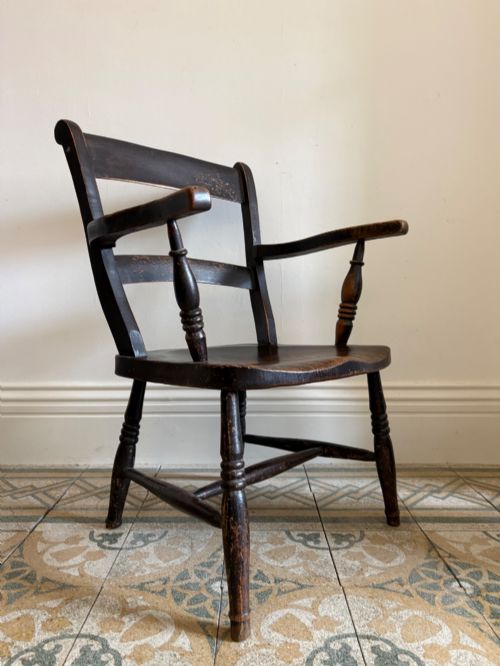
Traditional construction relied on wedged tenon joints driven straight through the seat plank, creating a rigid framework without metal fixings. Workshops often applied dark finishes or ebonised surfaces to unify the contrasting woods used in the construction.
Listings feature regional seating across the eighteenth, nineteenth, and early twentieth centuries, constructed primarily from elm, yew, ash, and beech.
What varies in quality
The distinction between standard examples and the finest work lies in the choice of timber and the complexity of the turning. Yew wood examples with rich grain patterns and substantial proportions sit at the upper end of the range, often displaying deep patination built over centuries.
Structural refinement also marks the better pieces, seen in the elegance of the central splat, the comfort of the sculpted comb or wheel back, and the grace of the arm scroll. Chairs retaining their original wedged undercarriage and symmetrical spindle arrangements demonstrate superior workshop origin.
Alfred Young Nutt·Robert Prior·Prior of Uxbridge·Rockley
The Thames Valley Windsor Glossary
- Comb back
- A Windsor chair variation where the vertical spindles extend upward to support a horizontal top rail resembling a traditional hair comb. This style appears frequently in 18th-century regional work.
- Broad arm
- A chair design featuring a widened, paddle-like wooden armrest intended for writing or dining convenience. These wider arms highlight the dense grain of yew or elm.
- Wheel back
- A chair back featuring an ornate pierced splat shaped like the spokes and rim of a carriage wheel. This decorative motif gained popularity during the 19th century.
- Ebonised
- Wood treated with a chemical stain or dark pigment to imitate ebony. This technique was applied to hide lesser timbers or to create stark contrast.
- Patina
- The deep, lustrous surface sheen developed on wooden furniture through decades of handling, polishing, and natural oxidation.
Thames Valley Windsor: Frequently Asked Questions
What is a thames valley windsor?
A traditional wooden chair featuring a solid carved seat with independent legs and back spindles inserted directly into the plank. These regional pieces developed distinct local characteristics along the river valley.
They rely on a combination of native hardwoods such as elm, ash, and yew, built for both domestic utility and durability.
How do I date an old windsor chair?
Dating relies on observing construction methods, tool marks beneath the seat, and the evolution of the back design. Earlier 18th-century examples often feature comb backs and primitive undercarriages.
Later 19th-century variants introduce wheel backs, stick backs, and more uniform factory-assisted turnings while retaining traditional wood combinations.
Why are yew wood chairs prized?
Yew wood was scarce and expensive, reserved for the most ambitious commissions and skilled regional makers. Its complex grain and warm colour give the wood a distinct visual depth.
Chairs built from yew often command greater interest among collectors due to the difficulty of working the dense timber.
How do I care for antique wood?
Keep wooden seating away from direct heat sources and sudden humidity changes to prevent timber movement and cracking. Feed the surface periodically with traditional wax polish.
Avoid modern liquid cleaners that strip away the historical patina built up over generations of use.