

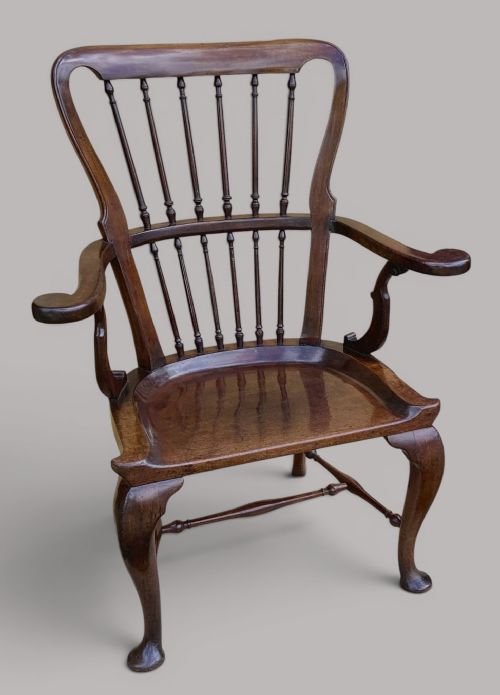


Cabriole Leg Windsor
These cabriole leg windsor chairs combine vernacular craftsmanship with curved leg forms, offering robust country seating.
Cabriole Leg Windsor
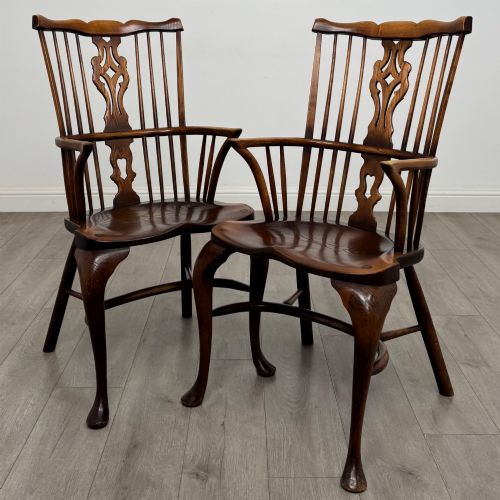
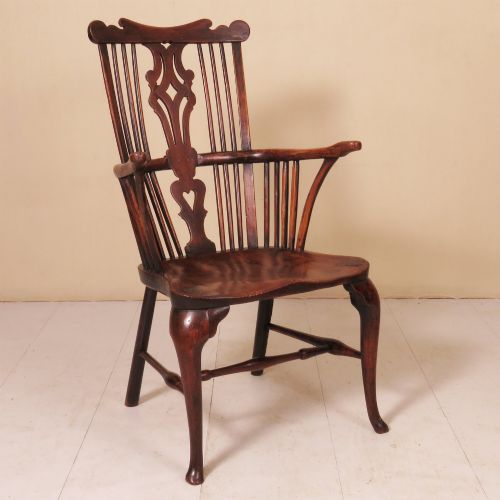
A cabriole leg windsor brings together traditional stick or comb back construction and curved cabriole supports. You are most likely to meet armchairs originating from the eighteenth and nineteenth centuries, often associated with Thames Valley makers.
The material selection generally spans native timbers like elm, yew, ash, oak, and cherrywood. These armchairs function as sturdy seating forms rooted in English country traditions.
Examples appear across Georgian, George II, and Edwardian periods. The integration of cabriole front legs distinguishes these regional variants from standard straight-legged country chairs.
Materials and Construction
Maker construction relies on combining resilient timbers for seats and spindles. Elm seats typically pair with yew wood, ash, or oak for the backs and structural elements.
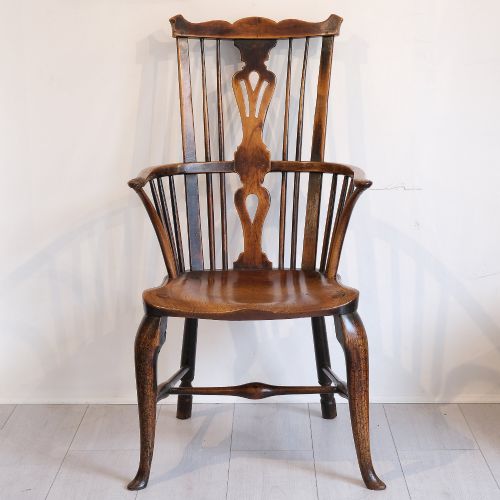
Legs are shaped into cabriole profiles, occasionally featuring pad feet. Turned spindles and bentwood elements complete the upper framework of the armchairs.
Some country elm stick chairs feature hidden heart details carved into the woodwork.
Quality Variations
Timber selection dictates the visual depth of the grain, particularly in yew and elm examples. Nicely figured wood surfaces elevate the appearance of country seating.
Proportion and execution of the cabriole leg shape influence the balance of the piece. Crisp turning on spindles and well-integrated joints demonstrate higher workshop competence.
The Cabriole Leg Windsor Glossary
- Cabriole leg
- A furniture leg that curves out and then in, resembling the leg of an animal. This form appears on specific regional windsor chairs.
- Comb back
- A chair back style where vertical spindles rise through a low, curved arm rail to meet a top crest rail. This resembles the shape of a traditional hair comb.
- Thames Valley
- A geographical style attribution for windsor chairs showing specific regional characteristics. These pieces frequently utilise yew wood and incorporate cabriole legs.
- Wheel back
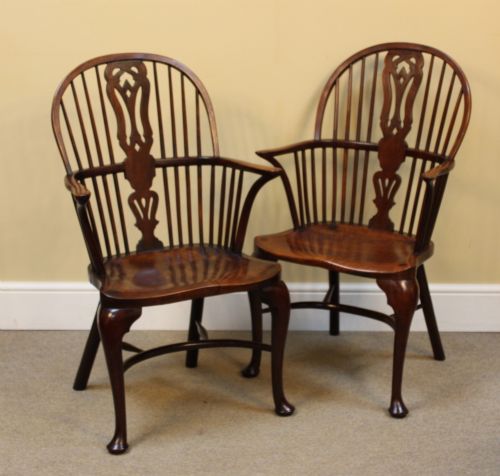
- A chair back design featuring a pierced wooden splat carved in the shape of a wheel. This decorative motif appears on later nineteenth-century variations.
- Crinoline stretcher
- A curved under-stretcher that links the legs of a chair in a continuous loop. It provides structural rigidity to country seating.
Cabriole Leg Windsor: Frequently Asked Questions
What is a cabriole leg windsor?
This seating form merges traditional stick-back or comb-back construction with curved cabriole front legs. The combination links vernacular chairmaking with more formal furniture styling.
Such armchairs emerge primarily from eighteenth and nineteenth-century English workshops, utilising native timbers like yew, elm, and ash.
Where were these chairs made?
Many examples originate from regional English workshops, particularly around the Thames Valley. Local timber availability dictated the choice of woods.
Craftsmen utilised seasoned regional hardwoods to build durable seating for domestic and commercial interiors.
How do I identify an eighteenth-century example?
Early pieces often display traditional joinery methods, patinated surfaces, and timber combinations such as yew and elm. Structural proportions tend to reflect regional vernacular traditions.
Examining the turning of the spindles and the shaping of the seat provides context for the period of manufacture.
Which woods were used?
Makers selected native British hardwoods based on strength and grain figure. Elm frequently formed the solid saddle seats.
Backs and legs incorporated yew wood, ash, oak, cherrywood, or beech to provide structural support and visual contrast.
How do I care for antique timber?
Maintain stable indoor humidity levels to prevent the timber from drying out or splitting. Keep chairs away from direct heat sources and strong sunlight.
Apply traditional wax polish sparingly to nourish the wood surface and preserve the historic patina.