



Worksop Windsor Chair
A worksop windsor chair is a sturdy English country armchair in yew and elm, prized for its distinctive regional joinery and timber character.
What They Are
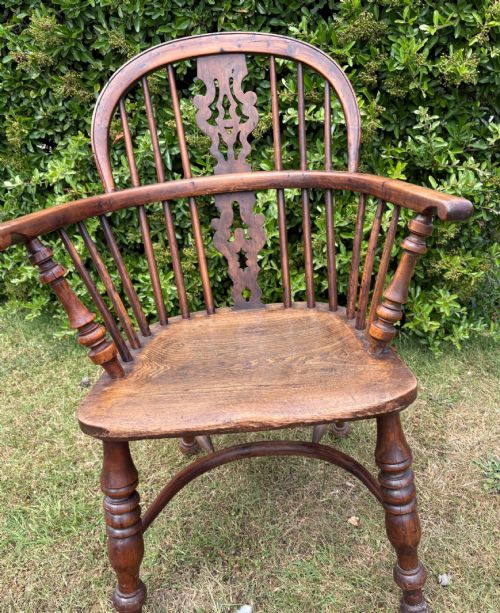
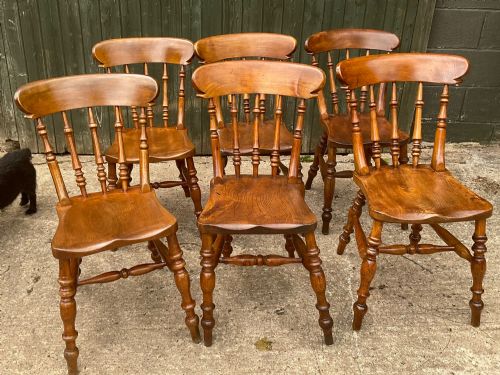
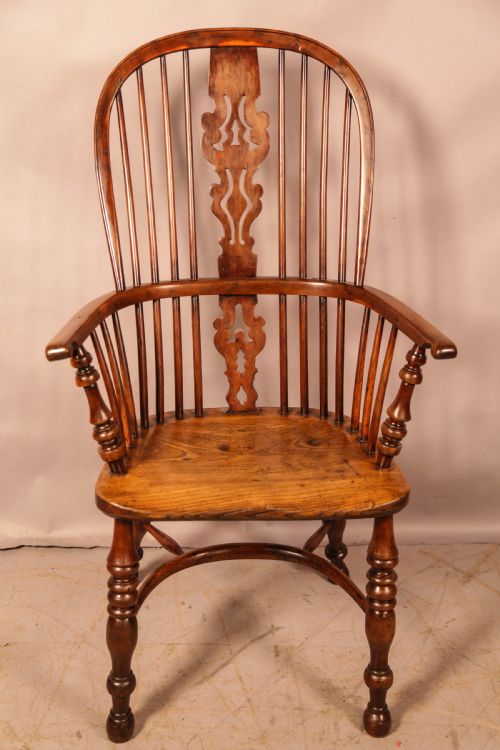
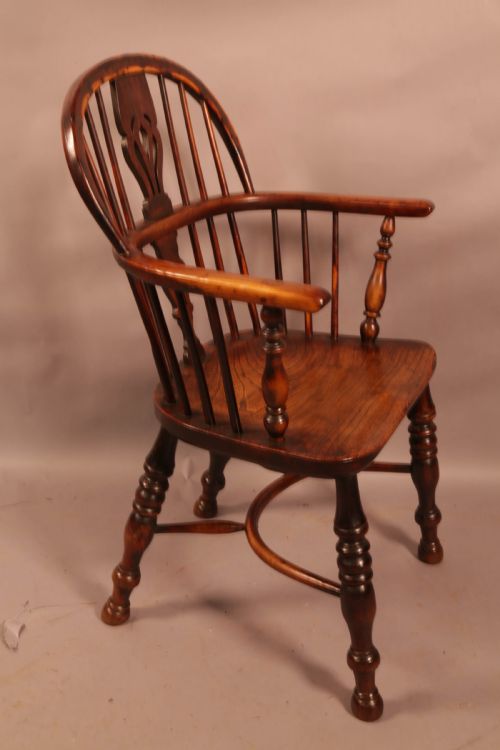
A worksop windsor chair belongs to the English regional country tradition, emerging from nineteenth-century workshops in Nottinghamshire. These armchairs appear in low back, high back, and broad arm configurations, shaped for domestic and kitchen utility.
The version most commonly met on this page is the nineteenth-century yew wood Windsor chair, often bearing the mark of local makers such as Gabbitass or Allsop. Elm also appears in combination with ash for certain structural elements.
Every piece shares the characteristic vernacular construction of a solid shaped seat holding turned legs and spindles. Regional variations distinguish the Worksop outputs from other English country seating.
How They Were Made
Maker workshops utilised yew wood for its rich grain and contrasting heartwood, turning spindles and legs on a lathe while shaping seats from solid slabs of timber. Elm and ash provided tough alternative woods for components requiring maximum tensile strength.
Construction relied on wedged tenon joints where legs and back spindles pass directly through the thick seat. This traditional Windsor method creates a rigid monocoque structure without relying on metal fixings.
Retail Price Guide 2026
Typical UK retail prices for worksop windsor chair, calculated from the Sellingantiques database of over a million retail prices indexed since 2003. This retail price guide relies exclusively on Sellingantiques data; no external sources or auction records are used, so the figures do not describe the wider market.
The listings demonstrate a strong preference for yew wood, supplemented occasionally by ash and elm in nineteenth-century armchairs.
What Varies in Quality
The distinction between standard kitchen models and finer specimens rests in the selection and figure of the yew wood. Highly figured timber with deep reddish-brown tones and complex grain patterns elevates a piece above plain utilitarian builds.
Design complexity also defines the tier, moving from simple low back forms to elaborate high backs and broad arm variants. The crispness of the spindle turnings and the ergonomic shaping of the solid seat further separate the grades.
Gabbitass Worksop·Allsop Worksop·Benjamin Gilling of Worksop·Spencer Retford Worksop
The Worksop Windsor Chair Glossary
- Windsor Chair
- A wooden armchair featuring a solid carved seat into which the legs and back are separately inserted. This construction method defines the vernacular seating of English country districts.
- Broad Arm
- A chair design incorporating an enlarged, flattened armrest intended for writing or resting. These wide wooden arms form an integral part of the overarching hoop or comb back structure.
- Yew Wood
- A dense softwood with a distinct contrasting grain, utilised extensively by regional makers for high-end country chairs. Its rich figure gives nineteenth-century examples their decorative presence.
- Low Back
- A seating format where the back rail sits beneath the sitter's shoulders, allowing freedom of movement in domestic settings. Many nineteenth-century regional examples adopt this compact profile.
Frequently Asked Questions
What is a worksop windsor chair?
A worksop windsor chair is a nineteenth-century regional armchair produced in Nottinghamshire. These pieces typically feature yew wood frames and traditional stick-back construction.
Makers in the area stamped or labelled their seating, creating a distinct subset of English country furniture defined by local turning styles and timber choices.
How were these chairs used?
These armchairs served as principal seating in nineteenth-century domestic kitchens, farmhouses, and workshops. The broad arm variants additionally provided a built-in surface for writing or tasks.
Their robust construction allowed for daily utility, while the shaped wooden seats offered functional support during extended periods of sitting.
How do I live with one?
Living with a nineteenth-century regional chair involves placing it away from direct heat sources and sudden humidity shifts. Yew wood and elm respond well to gentle waxing and standard indoor climates.
These armchairs function effectively as desk seating, hallway accents, or standalone reading chairs within traditional and contemporary interiors alike.
How do I tell periods apart?
Nineteenth-century examples display characteristic regional turning patterns on the leg spindles and arm supports. Earlier forms tend to feature simpler low-back profiles, while subsequent decades favoured high backs.
Maker attribution stamps assist in dating specific pieces, linking individual chairs to documented workshops operating within the Nottinghamshire district.