



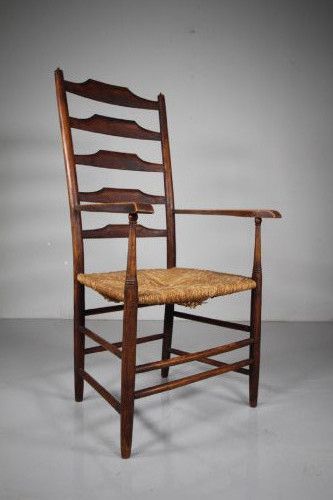
English Country Wooden Chair
An English country wooden chair brings honest vernacular craftsmanship and tactile rustic warmth straight into a modern interior.
Identifying an English Country Wooden Chair
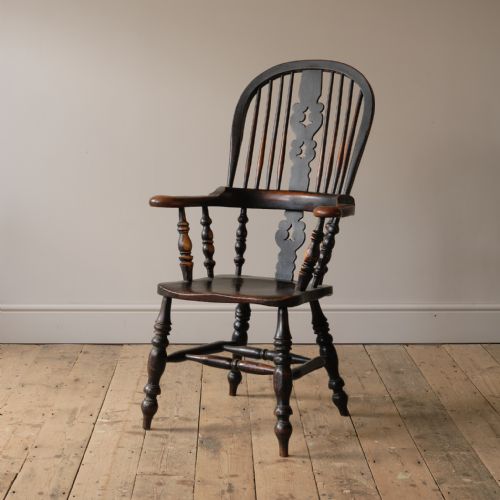
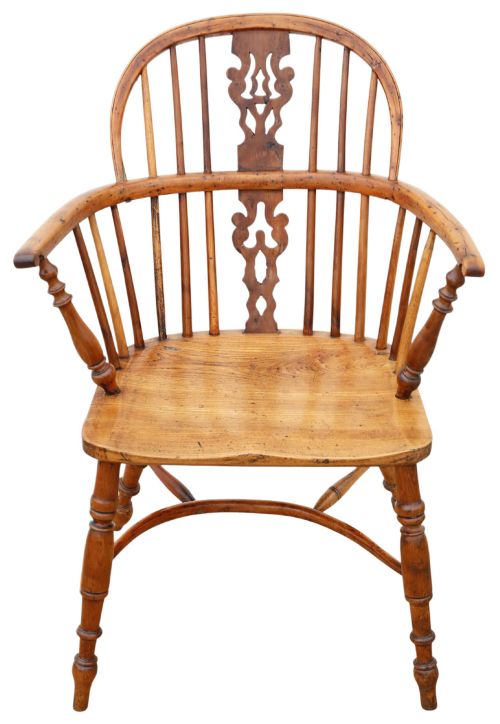
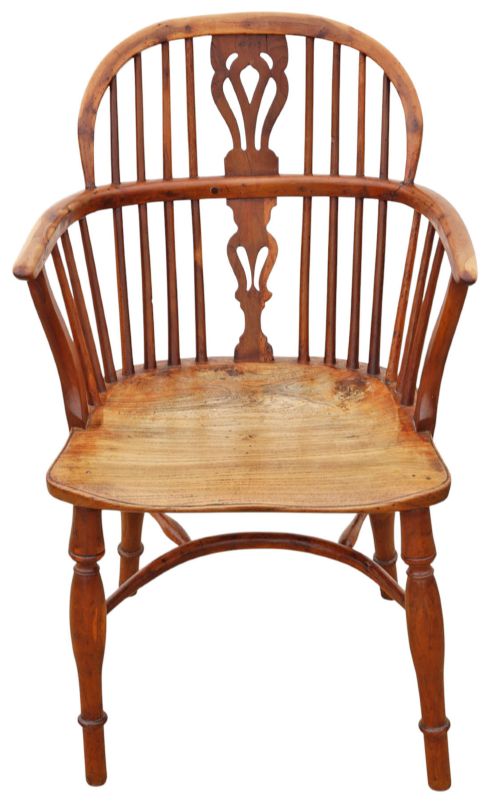
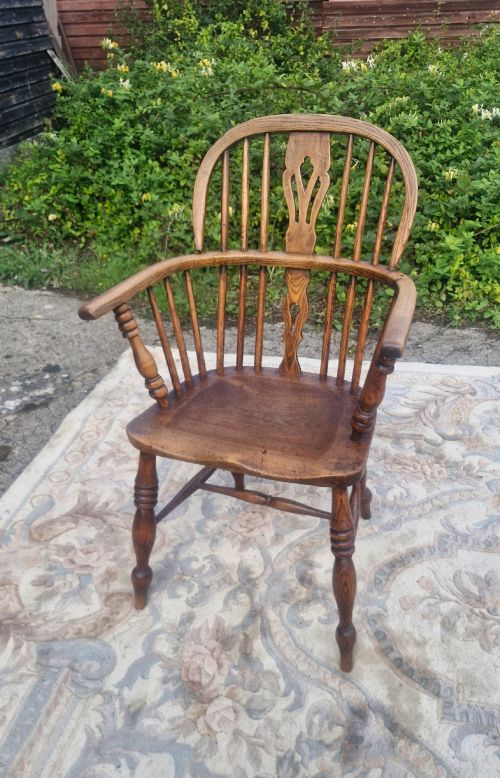
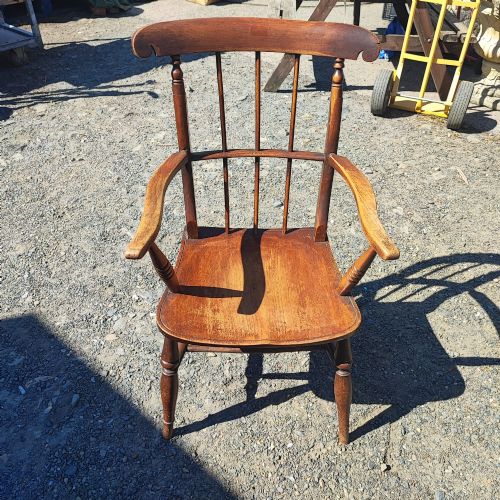
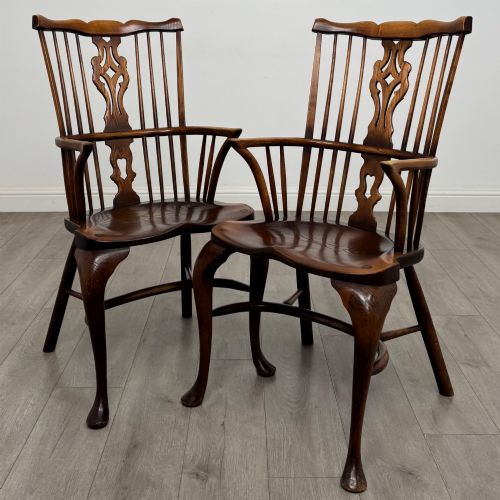
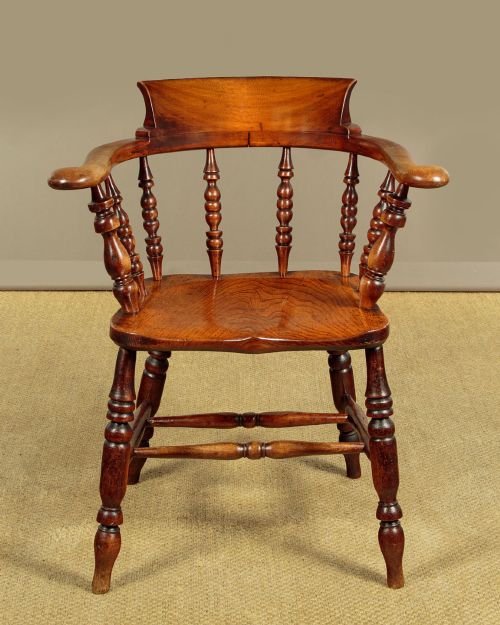
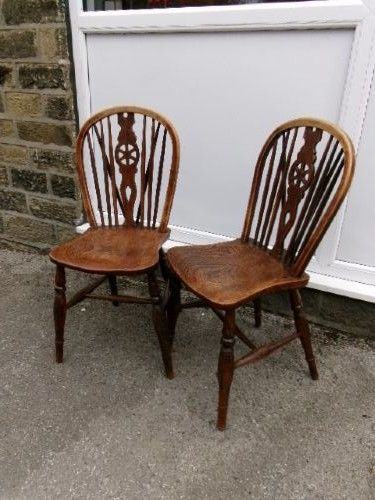
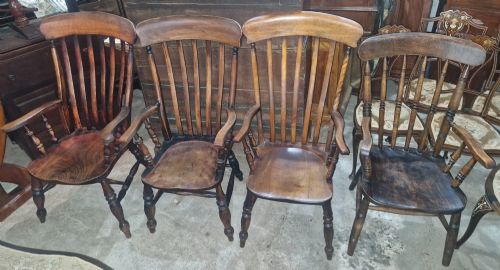
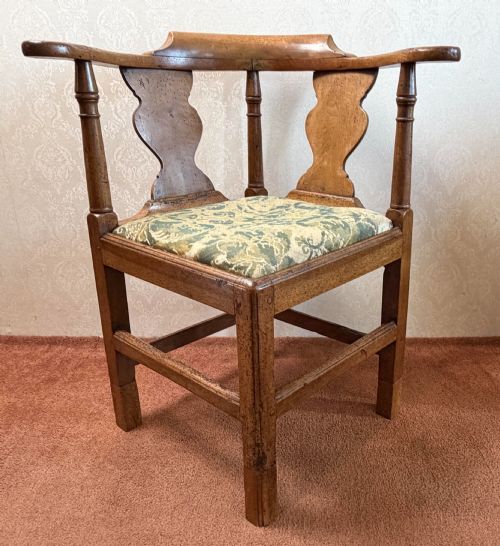
An English country wooden chair encompasses robust domestic seating built in regional workshops during the nineteenth century. These sturdy vernacular forms include high-back Windsor armchairs and broad arm variants produced in traditional British country styles.
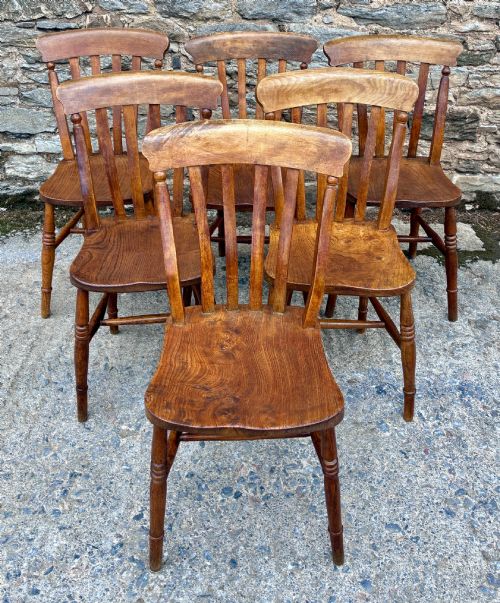
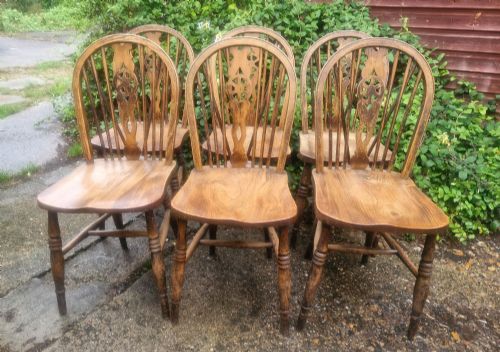
The specimens seen on this page stem from the Victorian era and the mid-nineteenth century, including regional Thames Valley and Worksop types. Buyers routinely encounter robust armchairs constructed with distinctive comb or high-back silhouettes suited to everyday domestic use.
Makers utilised local hardwoods to shape practical seating that met the rigorous demands of rural farmhouses and provincial homes. Every surviving example carries the straightforward utility of Georgian vernacular design translated into Victorian production.
Materials and Construction Methods
Craftsmen built each English country wooden chair by combining contrasting native timbers within a single frame. Workshops selected elm for heavily saddled seats, yew wood for figured spindles and bent arms, and ash or beech for turned undercarriages.
The traditional construction relies on wedged tenon joints where spindle legs and uprights pierce directly through the solid wooden seat slab. Steam bending allowed makers to shape continuous bow backs and arm hoops from resilient green wood without weakening the grain.
Retail Price Guide 2026
Typical UK retail prices for english country wooden chair, calculated from the Sellingantiques database of over a million retail prices indexed since 2003. This retail price guide relies exclusively on Sellingantiques data; no external sources or auction records are used, so the figures do not describe the wider market.
Judgements of Quality
Superior quality in an English country wooden chair rests upon the selective pairing of timbers, particularly rich figuring in yew wood and deeply sculpted elm seat bowls. Master turners demonstrated their skill through crisply profiled spindles and well-balanced wheel or pierced splats.
The integrity of the structural joints and the subtlety of the steam-bent hooping determine the enduring strength of the frame. Lesser examples display heavier proportions and simpler, plain-grained woods assembled with less attention to the ergonomic contouring of the seat.
Gabbitass of Worksop
The English Country Wooden Chair Glossary
- Windsor chair
- A traditional seating form characterised by a solid wooden seat into which the legs and back spindles are directly fitted. This construction provides exceptional stability without relying on a bulky underframe.
- Saddled seat
- A wooden seat base scooped and hollowed by hand using an adze and scorp to ensure ergonomic comfort. This shaping mimics the curves of an equestrian saddle.
- Comb-back
- A Windsor chair variation where the vertical spindles of the back extend upward to support a horizontal top rail resembling a traditional hair comb. This profile appeared frequently in nineteenth-century vernacular seating.
- Stretcher
- A horizontal wooden rod connecting the legs of a chair to reinforce the undercarriage against lateral stress. Turned stretchers add subtle decorative detail while locking the legs firmly into the seat base.
Frequently Asked Questions
What is a Windsor chair?
A Windsor chair is a distinct form of seating where all the structural components, including the legs and back spindles, are socketed directly into a solid carved wooden seat.
This method dispenses with a conventional frame, creating a remarkably durable piece of furniture suited to heavy daily use.
How do I date these chairs?
Dating relies on examining tool marks, timber selection, and construction wear consistent with nineteenth-century rural production methods.
Victorian and mid-nineteenth-century examples often display specific regional turning patterns and hand-finished patination developed through decades of domestic service.
Where were these chairs made?
Regional workshops across Britain produced these vernacular seats, with notable production centres in the Thames Valley and Worksop.
Local timber availability heavily influenced whether makers chose yew, elm, beech, or ash for each specific component of the chair.
How do I care for antique wood?
Maintain antique wooden furniture by keeping it away from direct heat sources and sudden humidity changes that cause timber to split.
Apply a traditional beeswax polish sparingly to nourish the grain and preserve the natural patina developed over generations.