
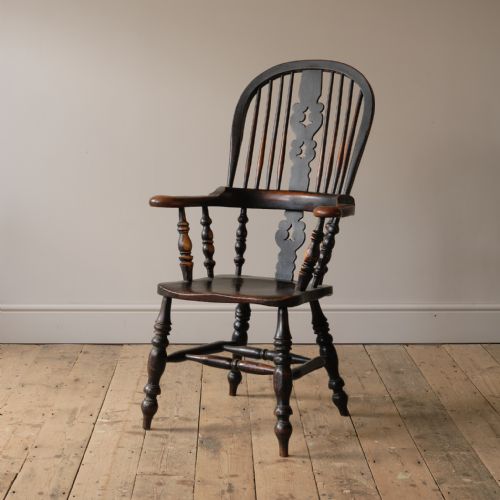
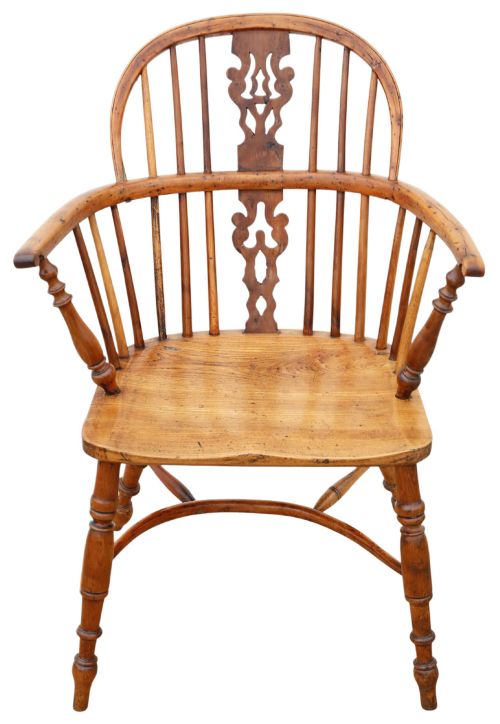
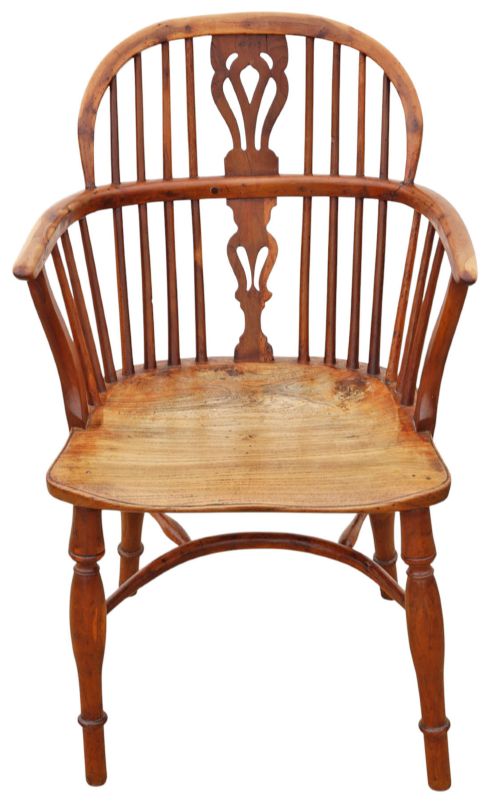
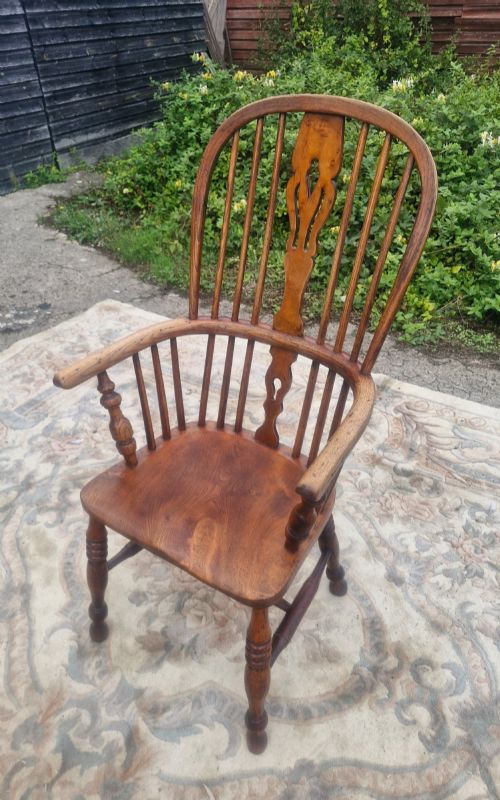

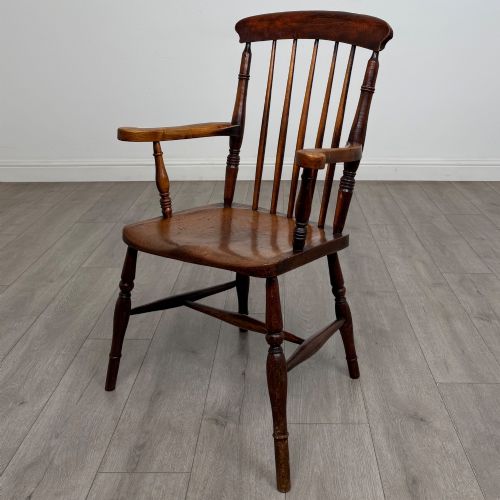

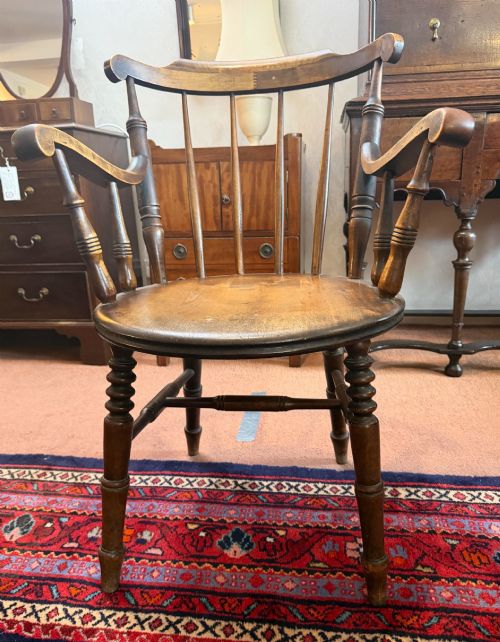
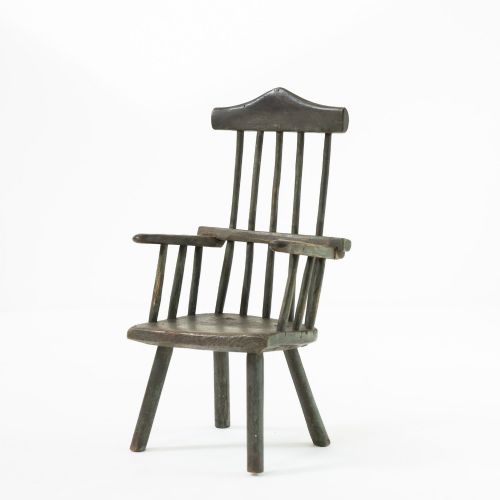
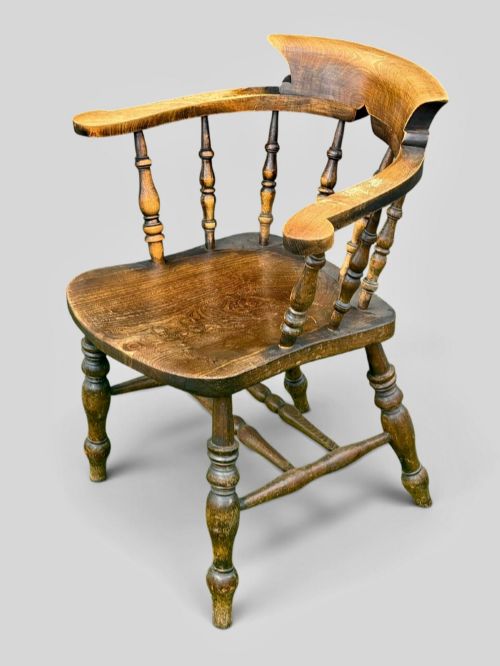
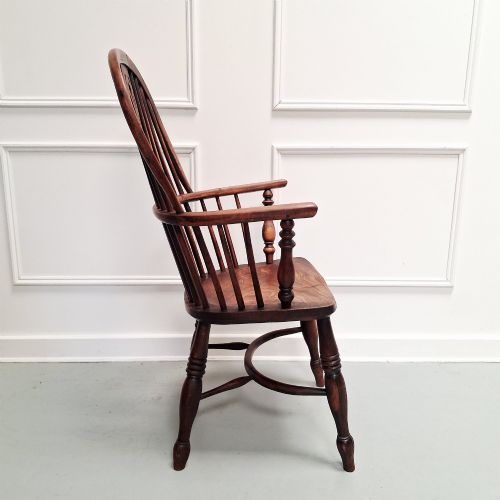
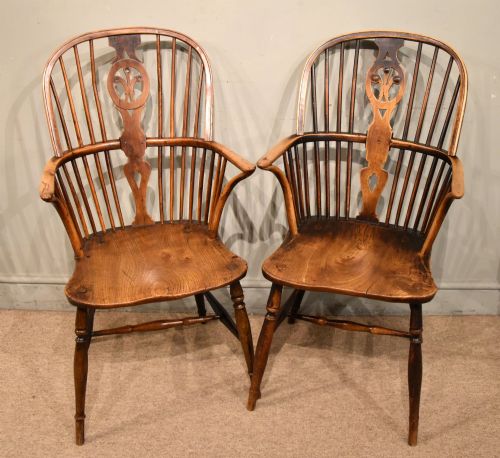
19th Century Windsor Armchair
When you search for a 19th century windsor armchair, you seek a traditional seat that combines vernacular woodwork with robust domestic comfort.
What these chairs are
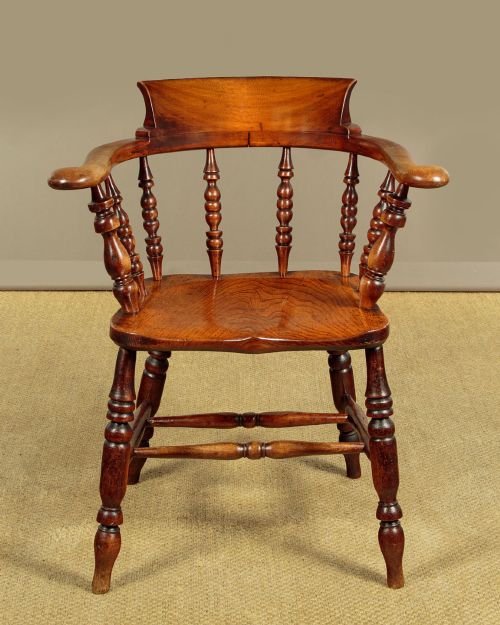
A 19th century windsor armchair is a distinct form of wooden seating where the legs and back are wedged directly into a solid sculpted seat. On this page, the most common examples pair elm seats with ash, yew, oak, beech, or fruitwood members.
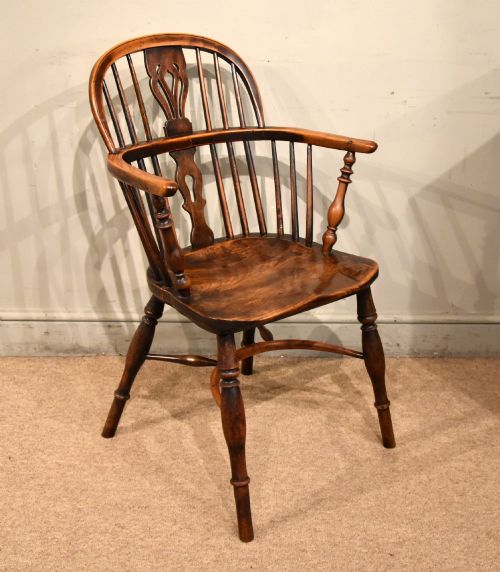
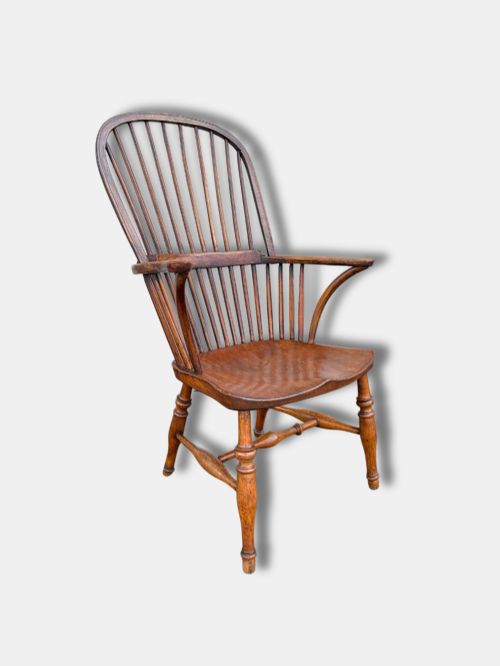
The styles span English country and vernacular designs, including high back, low back, hoop back, stick back, comb back, and splat back variants. Regional forms such as West Country and Welsh models also appear among the pieces.
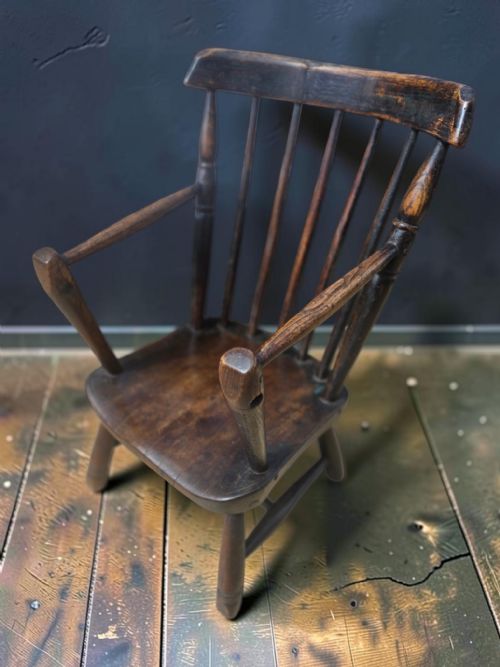
Beyond standard single chairs, the selection includes childs armchairs, rocking armchairs, matched pairs, and sets. These seating options derive from Regency, Georgian, and Victorian periods.
How they were made
Maker construction relies on a combination of turned spindles, steam-bent wood, and thick slab seats shaped from elm. Woods like ash and yew provide flexible strength for the bowed backs and slender sticks.
Joinery methods utilise wedged tenons passing entirely through the seat board to lock the legs and uprights in place. Additional rigidity often comes from bentwood stretchers, including crinoline stretchers found on high back examples.
Retail Price Guide 2026
Typical UK retail prices for 19th century windsor armchair, calculated from the Sellingantiques database of over a million retail prices indexed since 2003. This retail price guide relies exclusively on Sellingantiques data; no external sources or auction records are used, so the figures do not describe the wider market.
Listings feature ash, elm, yew, beech, oak, and fruitwood across Regency, Georgian, and Victorian periods.
What varies in quality
Quality in these chairs rests upon the selection of timber and the harmony of the timber combinations, such as yew wood contrasted with elm. The visual depth of the surface patina also separates standard seating from finer examples.
Structural refinement shows in the shaping of the solid elm seat and the balance of the turned spindles or steam-bent hoops. Regional variations and specific stretcher designs further distinguish the character of individual pieces.
Robert Prior
The 19th Century Windsor Armchair Glossary
- Elm
- A durable hardwood commonly used for the solid saddle seats of these chairs because it resists splitting when shaped. Its interlocking grain provides a strong foundation for the wedged legs.
- Yew
- A dense wood prized for its rich grain and utilised in high back and low back Windsor chairs. It offers both strength and decorative warmth.
- Hoop-back
- A style featuring a continuous bentwood bow forming the arms and backrest in one sweeping curve. This design distributes weight evenly across the structure.
- Crinoline stretcher
- An arched underframe connecting the legs of a chair for added stability. It gets its name from its curved resemblance to 19th century hooped petticoats.
- Stick back
- A vernacular construction method using multiple turned wooden spindles to form the backrest. These uprights slot directly into the seat and the top rail.
Frequently Asked Questions
What is a Windsor armchair?
A Windsor armchair is a wooden seat built with a thick solid slab base into which the legs and back components are socketed directly.
Unlike framed upholstery chairs, its strength comes from this pegged and wedged construction rather than an internal skeleton.
Where were these chairs used?
These chairs served mainly in domestic farmhouse kitchens, country cottages, and vernacular interiors throughout the nineteenth century.
Their robust build made them suitable for daily household tasks and fireside seating.
How do I date a Windsor chair?
Dating relies on observing structural forms, such as high hoop backs versus low spindle backs, alongside timber choices like yew or ash.
Period markers also point toward Regency, Georgian, and Victorian manufacturing traits.
How do I care for elm and ash furniture?
Keep wooden chairs away from direct heat sources and sudden humidity shifts to prevent the timber from drying or splitting.
Regular dusting and occasional light waxing preserve the natural surface patina without sealing the wood.