

Traditional Office Chair
A traditional office chair brings working history to your study, offering solid timber frames, swivel actions and leather upholstery designed for long hours at a desk.
Traditional Office Chair
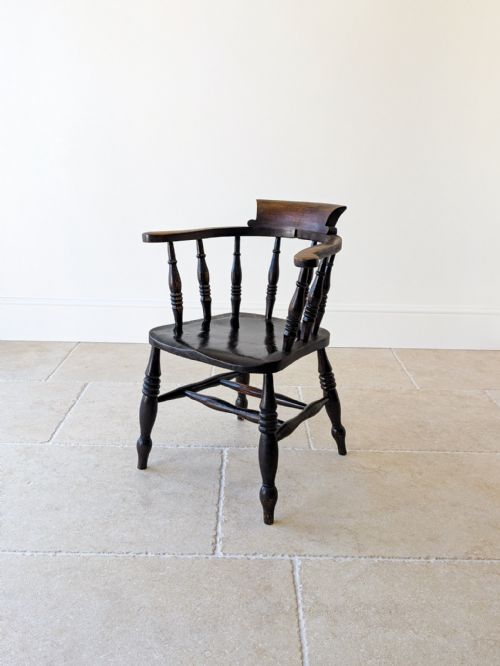
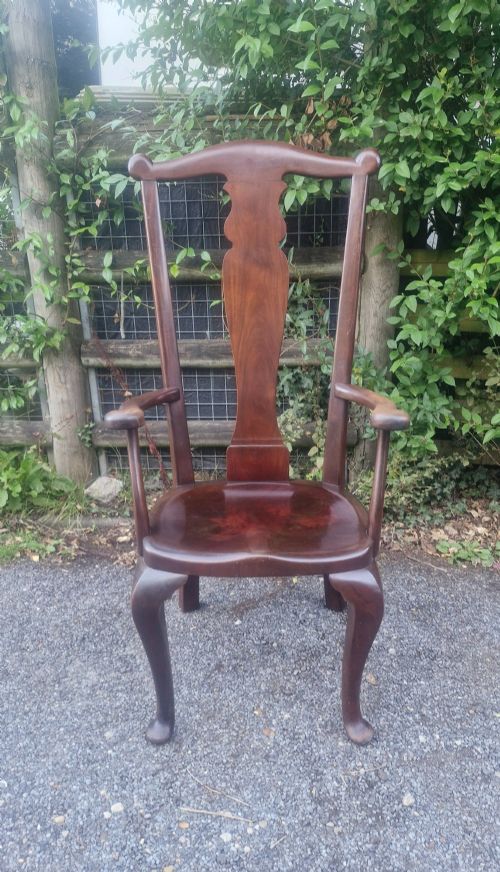
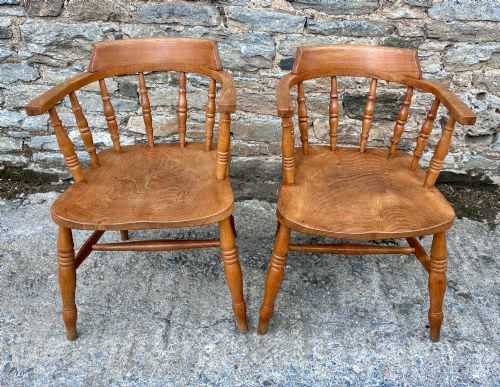
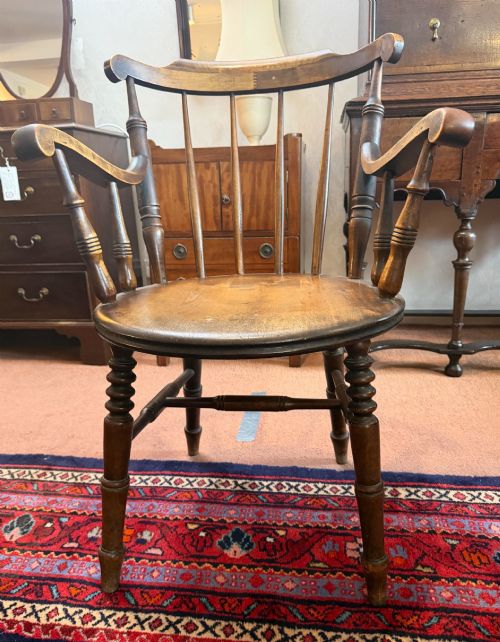
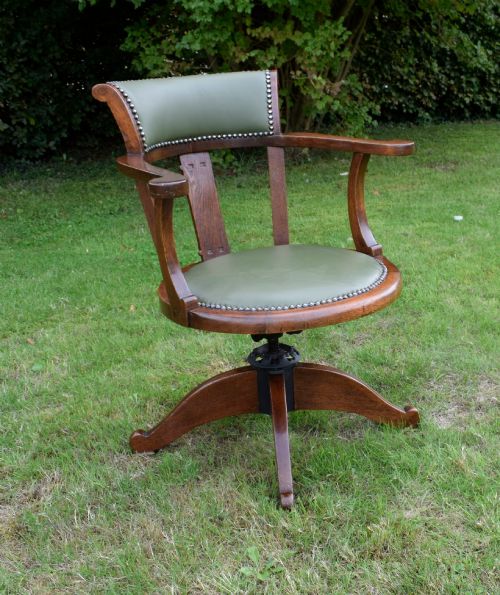
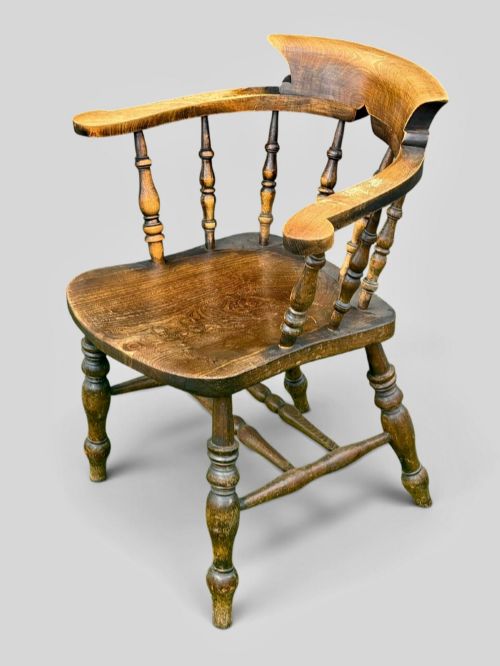
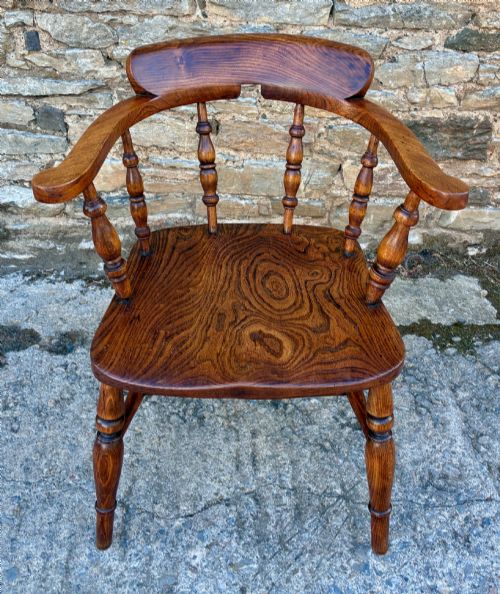
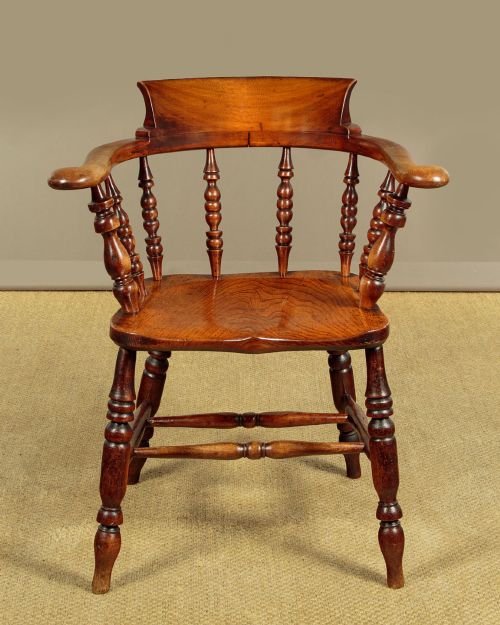
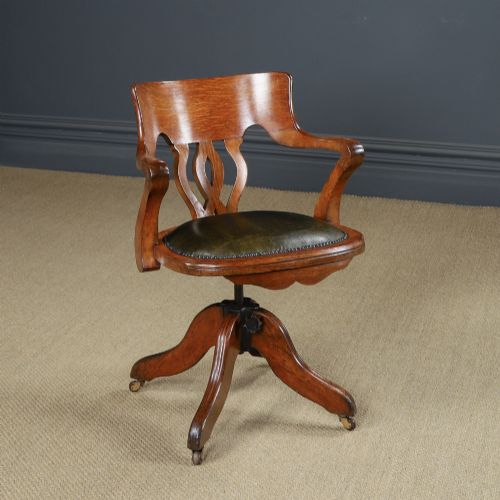
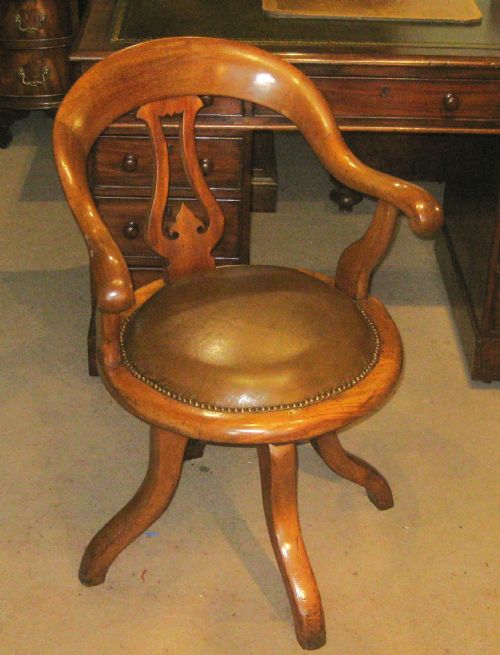
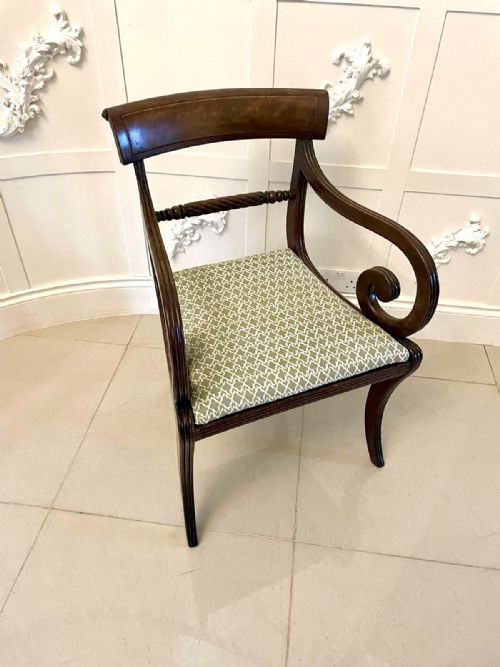
A traditional office chair serves as a practical seat for a desk or library, combining heavy timber construction with functional adjustments like revolving mechanisms. When you search for a traditional office chair, you encounter forms such as captain's chairs, smoker's bows, library armchairs and swivel desk chairs.
The pieces on this page span the nineteenth century, the Edwardian era and the early twentieth century, showing regional English provincial work alongside formal revival styles. Most examples rely on domestic hardwoods and practical seating designs intended for daily use in studies and offices.
Materials and construction
Cabinet makers built these chairs using sturdy timbers such as mahogany, oak, elm, ash, beech and walnut, often combining woods within a single frame for structural strength. Turning, steam-bending and carving shaped the spindles, arms and legs of captain's chairs and Windsor forms.
Revolving desk chairs incorporate brass and iron swivel mechanisms to allow movement, while upholstered variants feature leather, hide, velvet or cane secured with brass studs over padded seats.
What separates the best from the rest
Quality in these chairs rests on the selection of timber, the crispness of carved details, and the robustness of the turning on spindles and legs. Mahogany and golden oak frames with substantial dimensions and well-figured grain sit at the upper end of the scale.
The complexity of the mechanism also marks out superior examples, particularly early swivel and tilt systems that operate smoothly alongside sturdy timber construction.
The Traditional Office Chair Glossary
- Captain's chair
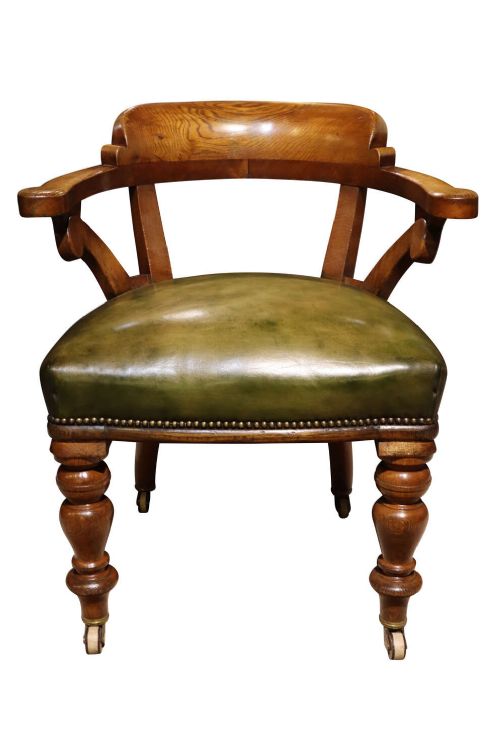
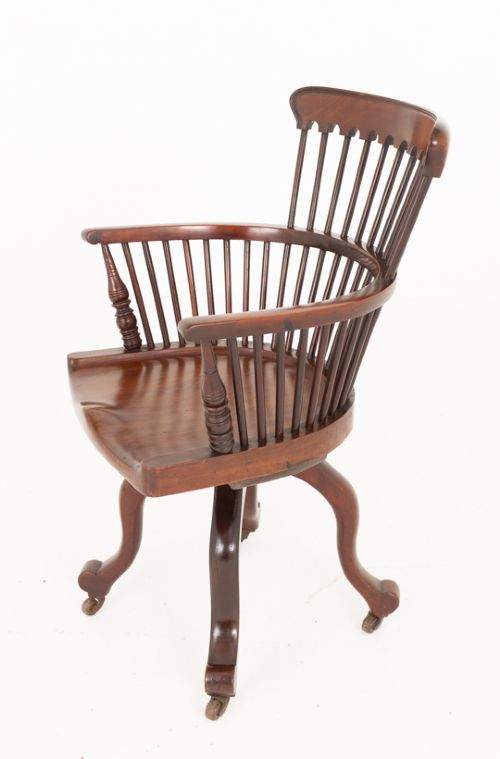
- A sturdy wooden armchair with a rounded low back and spindles, often set on a revolving base or traditional legs. These chairs were designed for comfort and stability during long periods of work.
- Smoker's bow
- A low-backed Windsor-style armchair featuring a continuous curved arm rail supported by turned spindles. It is a close relative of the captain's chair found in nineteenth-century offices and homes.
- Revolving desk chair
- An office chair mounted on a central pivot that allows the seat to turn through a full circle. Many Edwardian and Victorian versions also incorporate tilt mechanisms.
- Library armchair
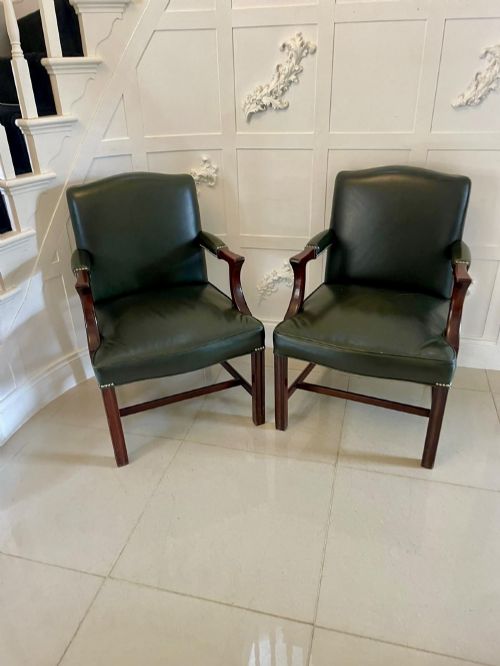
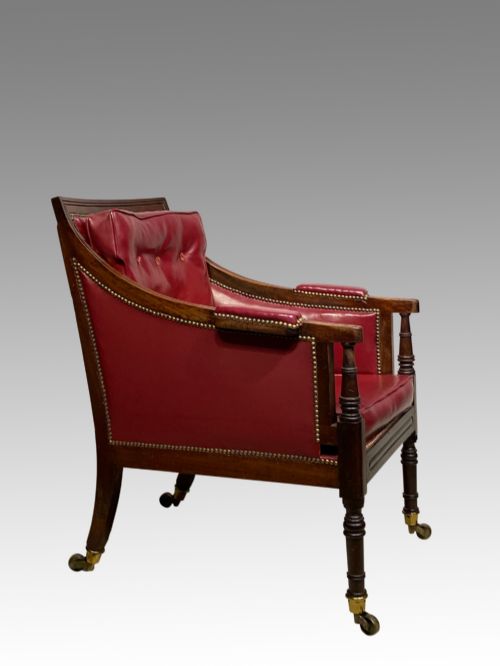
- A comfortable upholstered seat, frequently finished in leather with padded arms, intended for reading rooms and studies. These often display revival styles such as Georgian or Chippendale.
- Windsor chair
- A chair built with a solid wooden seat into which the legs and back spindles are wedged directly. Regional variations use timbers like elm, ash and beech.
Traditional Office Chair: Frequently Asked Questions
Are all traditional office chairs height adjustable?
Not all traditional office chairs adjust in height, as many standard captain's chairs and library armchairs rest on fixed wooden legs.
Only swivel and tilt models from the late nineteenth and early twentieth centuries incorporate mechanical columns that allow the seat height to be altered.
What woods were commonly used for office chairs?
Cabinet makers and provincial joiners utilised domestic hardwoods such as mahogany, oak, elm, ash, beech and walnut depending on the style and region.
Mahogany and oak appear frequently in formal library and desk chairs, whereas elm, beech and ash form the backbone of Windsor and captain's chairs.
How do I date a revolving desk chair?
Dating relies on examining the timber species, the style of the legs, and the engineering of the swivel mechanism beneath the seat.
Victorian examples often combine mahogany or oak with brass hardware, while Edwardian versions frequently introduce iron swivel and tilt assemblies alongside oak or beech frames.