
Victorian Smokers Armchair
When you select a victorian smokers armchair, you acquire a sturdy provincial seat built for enduring utility.
Victorian Smokers Armchair
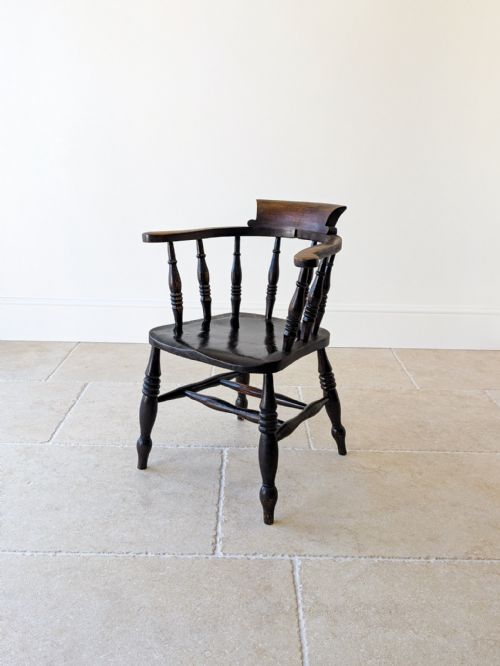
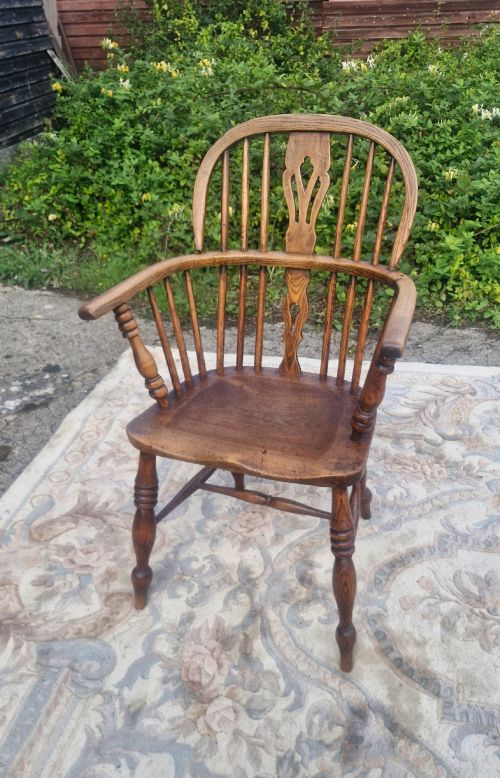
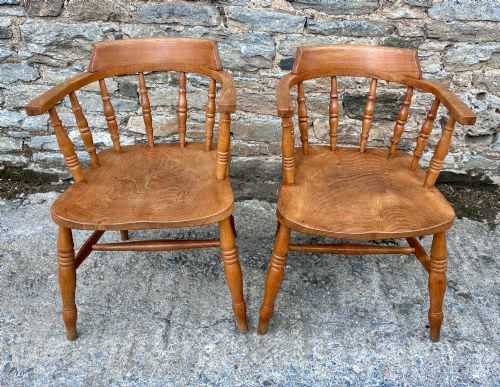
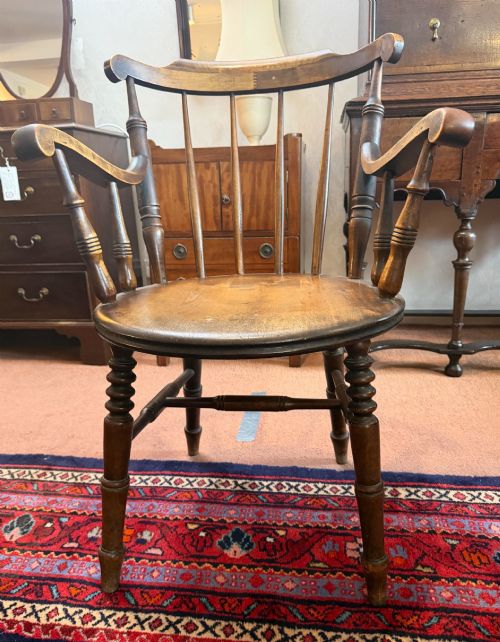
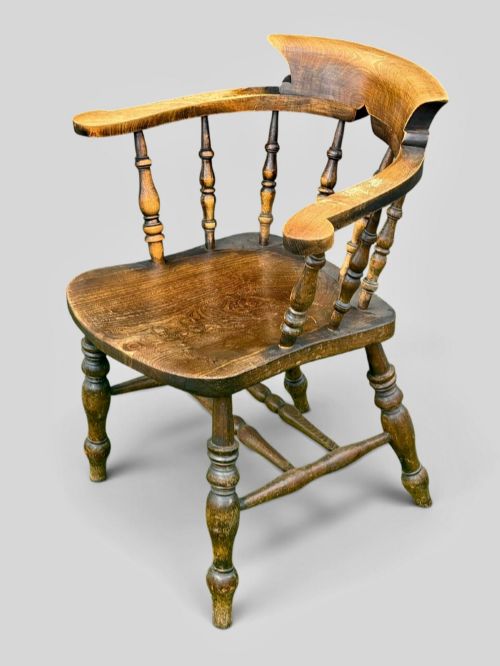
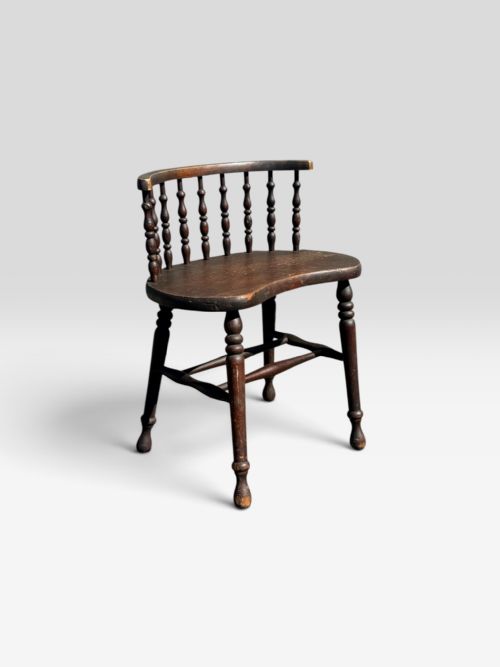
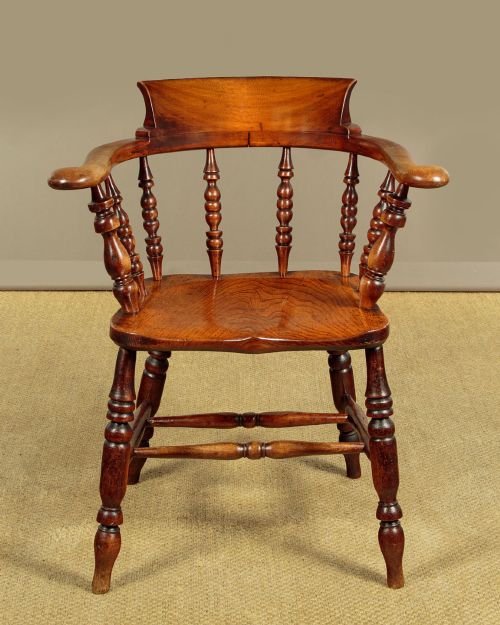
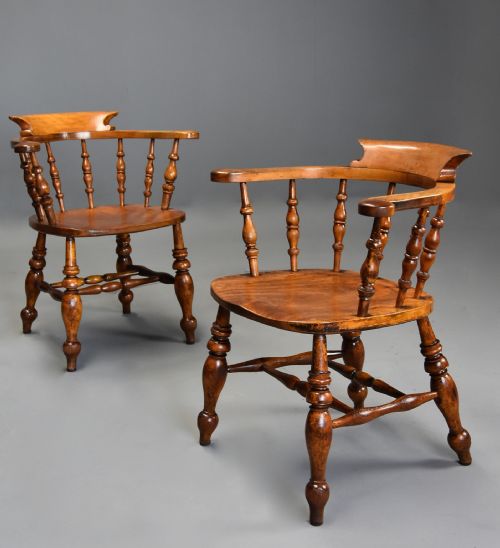
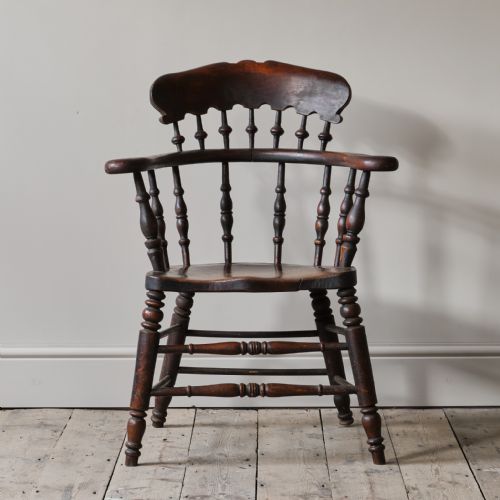
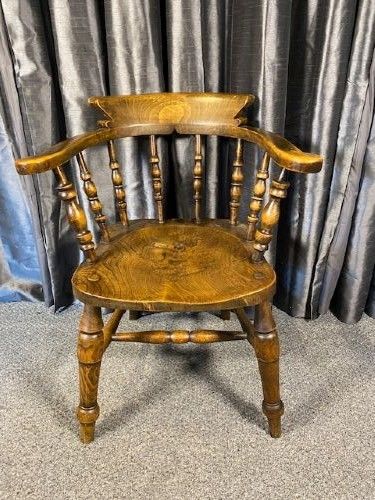
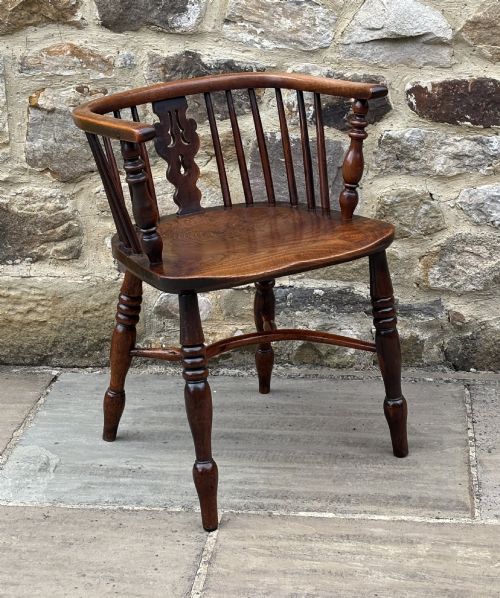
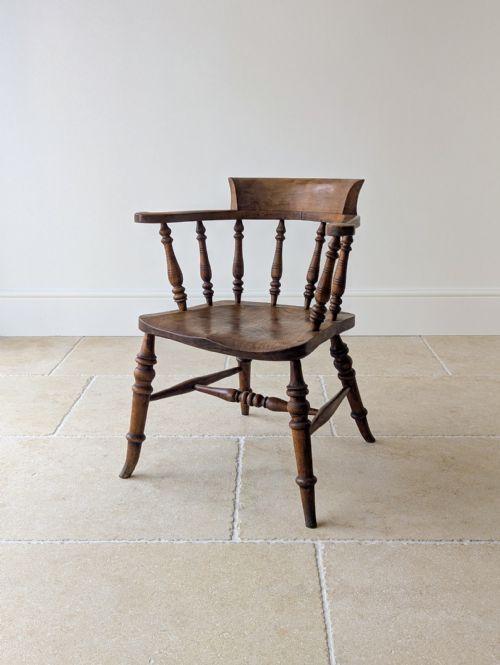
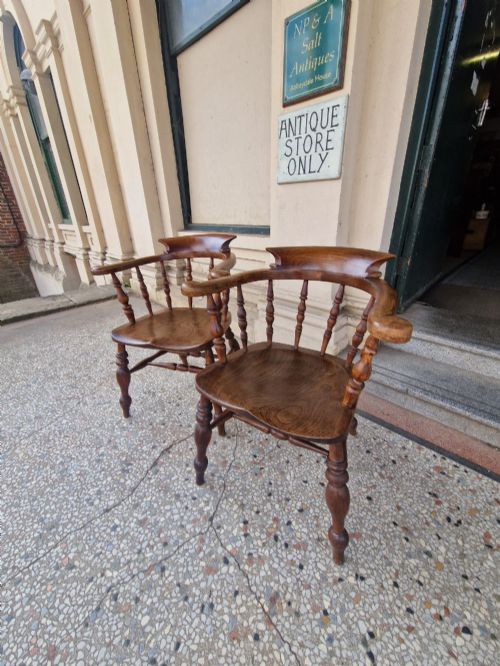
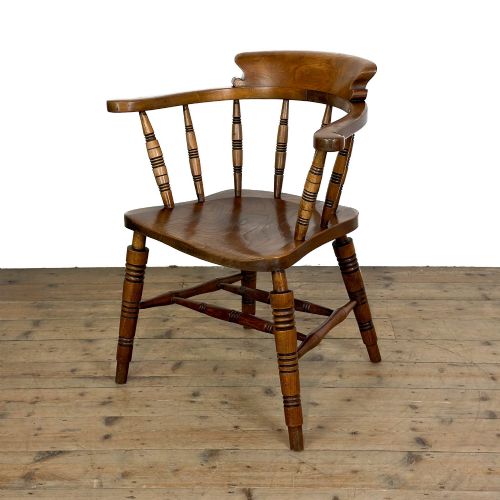
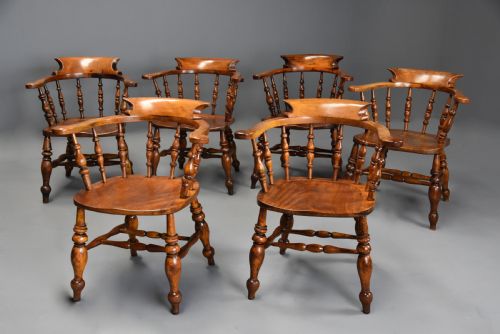
A victorian smokers armchair typically combines the low back of a Windsor form with sturdy wooden construction suitable for farmhouse kitchens or provincial offices. The most common iteration met on this page is the smokers bow, characterised by a continuous curved armrail supported by turned spindles.
Makers in provincial workshops, particularly around High Wycombe, produced these sturdy chairs utilising native hardwoods for daily domestic and office use. The designation often overlaps with captain chairs and desk armchairs across the nineteenth century.
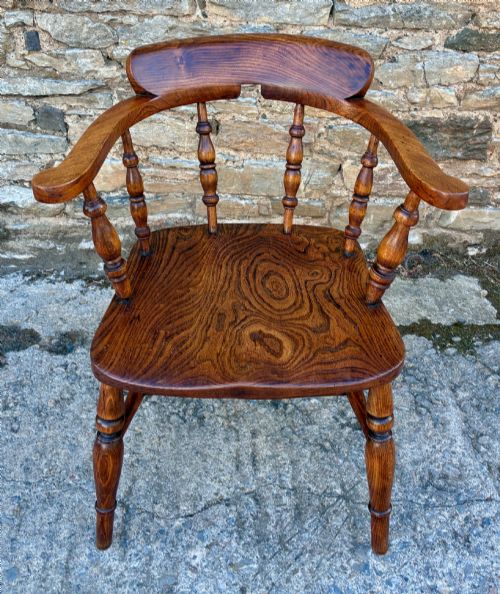
Examples range from simple elm and ash country models to polished mahogany and leather office chairs intended for professional spaces. The vernacular design prioritises comfort through a deeply saddled seat and a supportive, rounded backrest.
Materials and construction
Chairmakers relied on a combination of native timbers, pairing solid elm seats with bent ash or beech for the curved armrails and steam-bent bows. Yew and fruitwood appear occasionally in regional variants, offering distinct grain patterns and tonal depth.
Traditional Windsor construction techniques meant legs and spindles were wedged and pegged directly into the solid plank seat rather than joined with modern fixings. Brass fittings and leather upholstery appear on higher-status office and desk variants from the later Victorian period.
Generations of quiet contemplation have left these elm seats satisfyingly hollowed out.
Gradations of craftsmanship
The distinction between standard utility seating and superior examples rests upon the depth of the saddle carving in the seat and the fluidity of the steam-bent arm bow. Thicker plank seats and well-balanced spindle turnings separate workshop output from mass-produced later variants.
Patina accumulated through decades of domestic use imparts a deep warmth to the timber that cannot be replicated by artificial finishing. Original surface finishes and tight, undisturbed joints command greater regard among collectors than heavily restored examples.
Glenister High Wycombe·J.W. Read and Co
The Victorian Smokers Armchair Glossary
- Smokers Bow
- A low-backed wooden armchair with a continuous curved rail forming the arms and back, originating in nineteenth-century provincial England.
- Windsor Chair
- A chair built with a solid wooden seat into which the legs and back spindles are tenoned directly, rather than constructed around a traditional frame.
- Saddled Seat
- A wooden chair seat hollowed out by hand with an adze or scorper to mimic the ergonomic shape of a saddle for comfort.
- Spindle
- A slender, turned wooden rod used to support the backrail or armbow of a Windsor chair.
- Stretcher
- A horizontal wooden rod connecting the legs of a chair to provide structural rigidity and prevent the joints from loosening.
Victorian Smokers Armchair: Frequently Asked Questions
What is a smokers bow?
A smokers bow is a sturdy vernacular wooden armchair featuring a low, rounded back and a continuous bentwood rail serving as armrests. It developed from the traditional Windsor chair lineage during the nineteenth century.
These chairs were common in farmhouse kitchens, public houses, and provincial offices where durable seating was required. The design provides a comfortable posture through its curved back support and low profile.
How do I care for wooden armchairs?
Maintain these wooden seats by keeping them away from direct heat sources and sudden humidity changes that can cause timber to split. Apply a microcrystalline wax periodically to nourish the surface and preserve the historic patina.
Avoid aggressive cleaning agents or modern polishes containing silicone, which can penetrate open-grain woods like elm and ash. Gentle dusting with a soft cloth is sufficient for routine maintenance.
Were these used at desks?
Many nineteenth-century examples served as office or desk chairs, particularly variants fitted with leather upholstery or mahogany frames. Their sturdy proportions made them suitable for prolonged seating in professional environments.
Lower back heights allowed these chairs to tuck easily beneath writing tables and partner desks. Some versions incorporated swivels or castors for enhanced mobility in office settings.
How do I identify age?
Dating relies on examining tool marks, timber selection, and construction methods such as the thickness of the seat plank and the turning style of the legs. Earlier nineteenth-century examples often feature heavier elm seats and hand-turned ash components.
Later Victorian and Edwardian pieces frequently show more standardised lathe work and lighter framing timber. Documentation or stamped maker marks beneath the seat provide definitive attribution where present.