

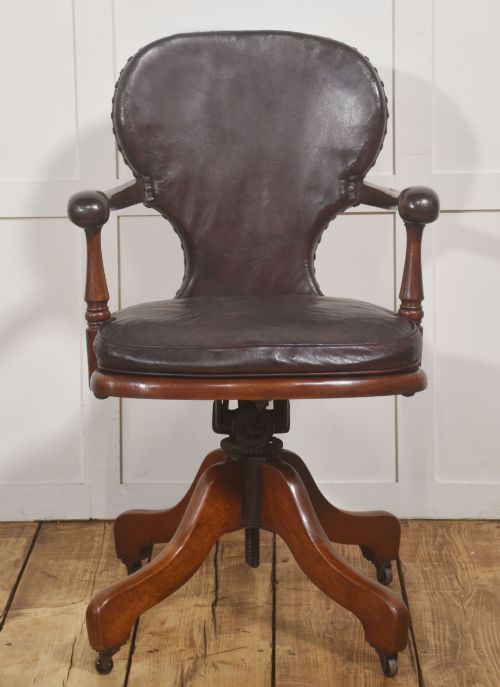
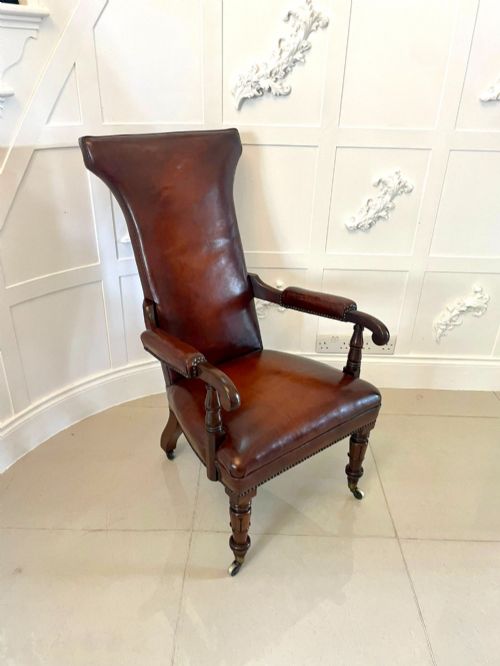
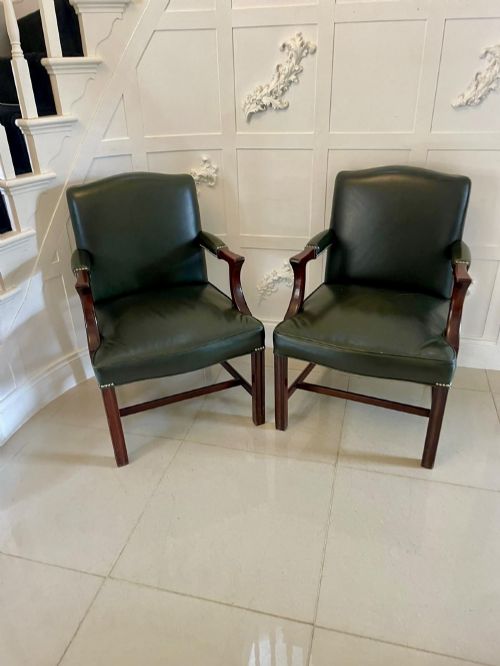
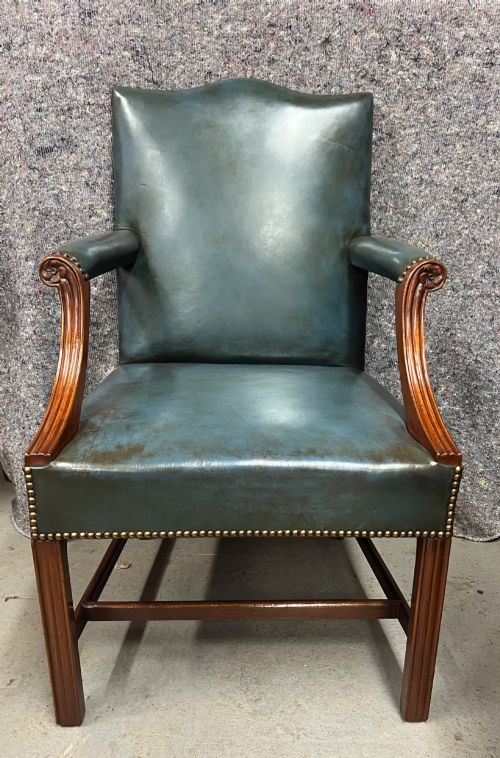
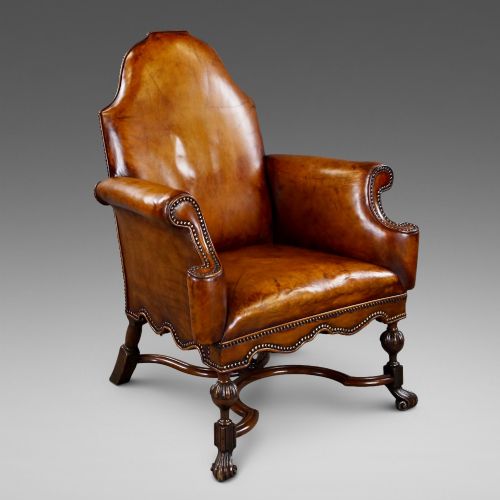
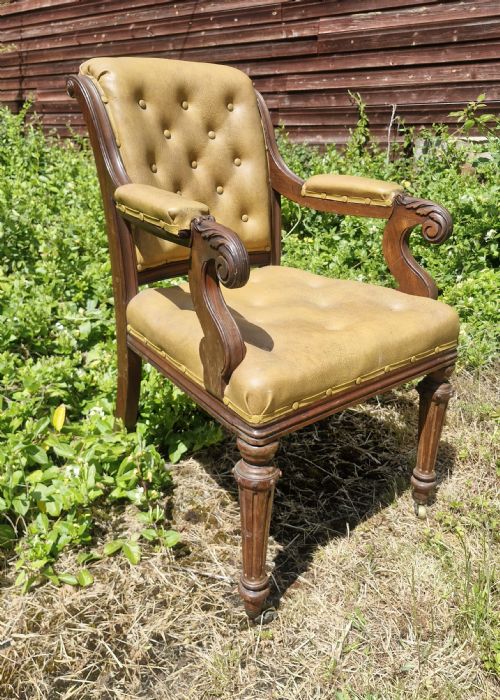


Traditional Executive Desk Chair
These traditional executive desk chair examples are substantial seating pieces built for heavy study, offering leather upholstery and rich timber frames that anchor a room.
Traditional Executive Desk Chair
A traditional executive desk chair serves as a functional workspace seat, appearing in forms such as desk chairs, armchairs, office chairs, and desk armchairs. These pieces emerge from periods spanning the mid nineteenth century through the early twentieth century, alongside Edwardian and general nineteenth century eras.
The styles found in this selection include Victorian, Edwardian, Georgian, and Queen Anne style variants, as well as Gainsborough style and eighteenth century style iterations. Buyers frequently encounter mahogany and walnut frames paired with leather seats, alongside oak and steel constructions.
Originating predominantly from English workshops, these items offer sturdy support for daily office tasks while maintaining period character. The primary variations lie in the choice of wood and the inclusion of swivel or revolving mechanisms.
How they were made
Frames are constructed from solid hardwoods like mahogany, walnut, and oak, joined using traditional cabinetmaking techniques to ensure stability under constant use. Timber components are turned, carved, or polished to achieve the desired period aesthetic.
Seats and backrests integrate durable upholstery materials, most notably leather and fabric, often secured with brass studwork or buttoning details. Swivel and revolving office chair variants incorporate functional steel and brass mechanical elements to allow movement.
Traditional Executive Desk Chair Retail Price Guide 2026
Typical asking prices for traditional executive desk chair among the pieces listed under this phrase on Sellingantiques today, from the lower quarter to the upper quarter. They describe what is for sale here now, not the wider market.
Some nineteenth-century gentlemen clearly took their gaming as seriously as their desk work, judging by the occasional mahogany gaming chair.
What varies in quality
The calibre of a traditional executive desk chair depends heavily on the selection of timber and the depth of carving in the frame. Higher tier pieces utilise dense, figured mahogany or walnut with hand-finished joinery.
Upholstery standards distinguish standard examples from finer specimens, particularly regarding the grade of leather and the precision of buttoning and brass detailing. The integration of robust revolving mechanisms also separates utilitarian office seating from grand library armchairs.
The Traditional Executive Desk Chair Glossary
- Mahogany
- A dense, reddish-brown tropical hardwood favoured for its stability and fine grain in nineteenth-century furniture. It takes a high polish and resists warping.
- Walnut
- A rich brown timber prized for its attractive decorative grain patterns and strength in traditional seating. It frequently appears in eighteenth-century style and Victorian pieces.
- Revolving
- A mechanical function allowing the chair to turn full circle on a central spindle, common in office and desk chair variants from the late Victorian period onward.
Traditional Executive Desk Chair: Frequently Asked Questions
How do I identify a Victorian desk chair?
Victorian examples typically feature dark mahogany or walnut frames with turned wooden components and buttoned leather upholstery. They often show heavier proportions compared to lighter Edwardian or Georgian style pieces.
Look for traditional joinery methods and patinated timber surfaces that indicate nineteenth-century production. The presence of a revolving office mechanism can also point toward the latter half of the nineteenth century.
Are these chairs comfortable for daily use?
These pieces were originally built for long hours at a partner desk or in a library, offering supportive upholstered backs and generous armrests. The inclusion of padding and leather ensures a practical seating experience for modern studies.
Swivel and revolving office chair variants provide mobility suited to contemporary desk setups. Buyers should check the seat height and depth to ensure compatibility with modern workspaces.
What is the difference between an armchair and a desk chair?
Desk chairs and desk armchairs are specifically scaled to fit beneath writing tables, often featuring tailored proportions and sometimes swivelling mechanisms. General armchairs may have wider frames or lower seating positions designed for relaxation rather than writing.
Traditional executive versions combine the supportive upright posture of an office chair with the refined timber frames of parlour seating.
How should I care for the leather upholstery?
Leather upholstery benefits from regular dusting with a soft, dry cloth and occasional treatment with specialist leather balms to prevent drying out. Keeping the material away from direct sunlight and heat sources preserves its suppleness.
Distressed green or red leathers retain their historic character best when treated gently without harsh chemical cleaners.