
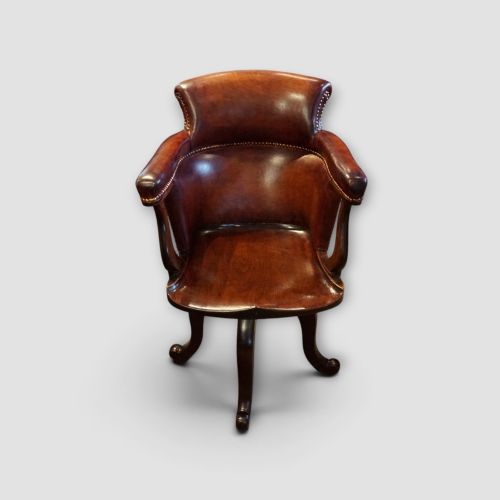

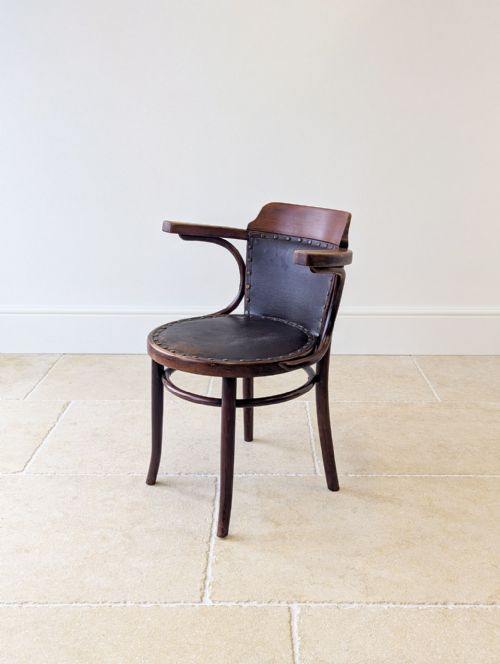
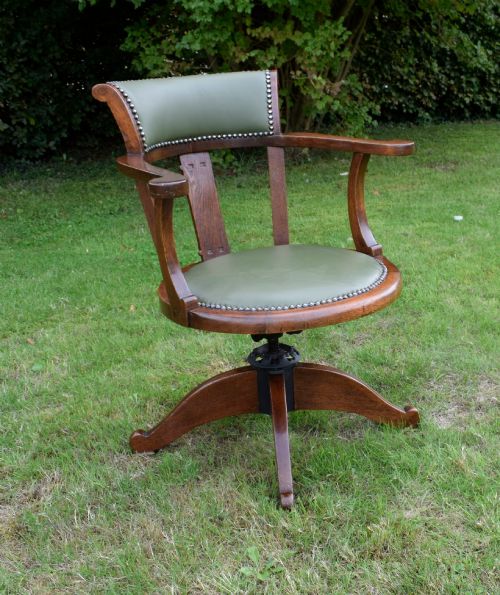
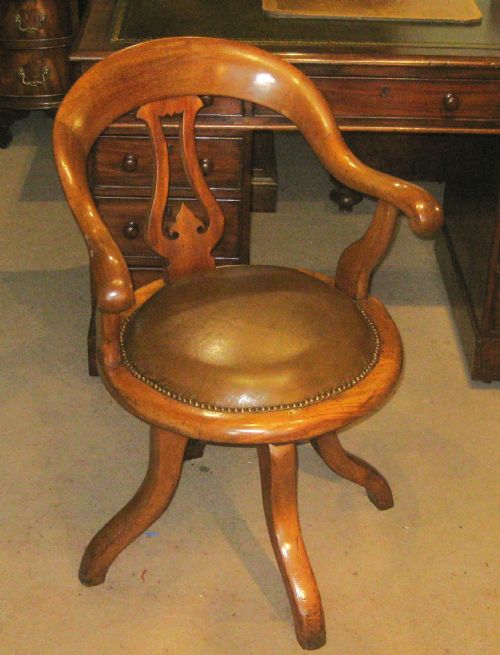


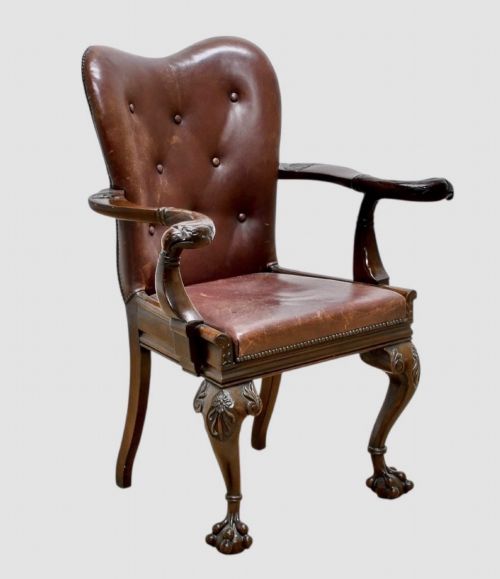
Vintage Leather Study Chair
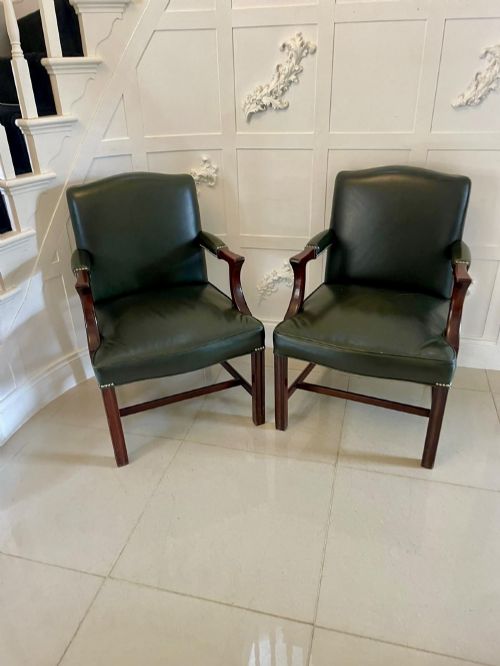
A vintage leather study chair provides the right seat for a desk or library, combining a sturdy wooden frame with durable hide upholstery.
Vintage Leather Study Chair
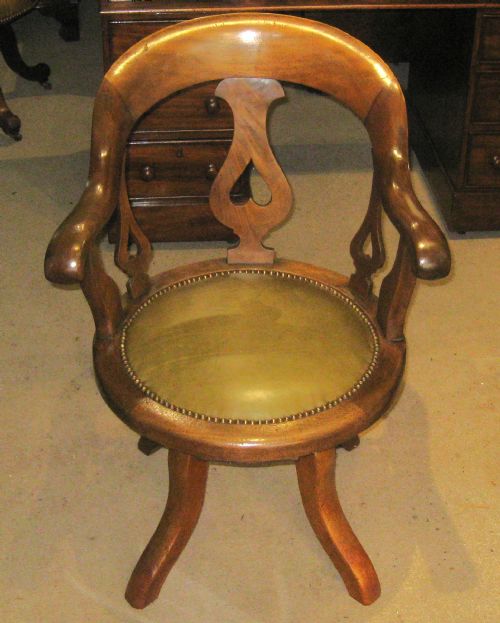
A vintage leather study chair serves as a practical seat for a desk, library, or office. When searching for a vintage leather study chair, you encounter forms ranging from stationary library armchairs to swivelling desk chairs with adjustable heights.
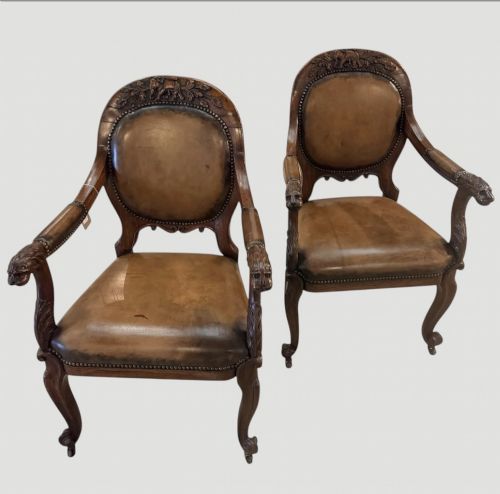
The selection on this page draws from the Victorian, Edwardian, and Georgian periods, alongside early twentieth-century examples. Common formats include revolving office chairs, deep club elbows, and open armchairs designed for writing tables.
How they were made
Frames rely predominantly on timber such as mahogany, oak, walnut, and beech, shaped through turning, carving, and bentwood techniques. Caning often appears alongside wooden elements in bergere panels.
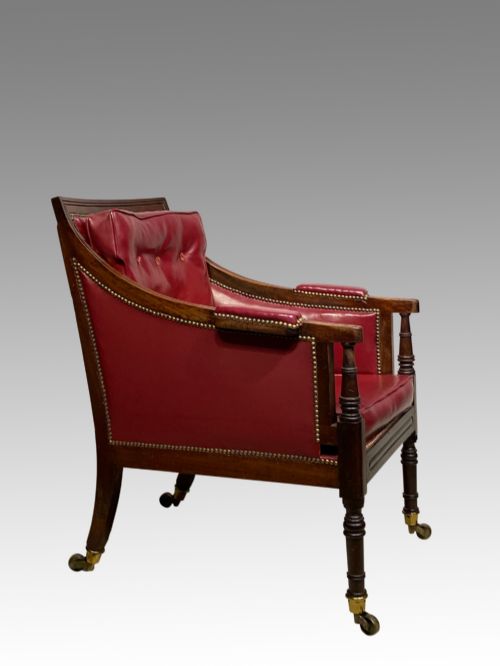
Upholstery involves leather secured to the seat or back, sometimes finished with buttons or brass studs. Swivel mechanisms incorporate metal components to permit rotation and height adjustment on nineteenth and twentieth-century office variants.
Vintage Leather Study Chair Retail Price Guide 2026
Typical asking prices for vintage leather study chair among the pieces listed under this phrase on Sellingantiques today, from the lower quarter to the upper quarter. They describe what is for sale here now, not the wider market.
Some nineteenth-century desk chairs feature concealed castors designed to help scholars glide quietly across parquet floors.
What varies in quality
The grade of timber and the depth of carving separate standard examples from finer commissions. Mahogany and walnut frames with careful joinery and well-figured grain sit at a higher level than utilitarian beech or oak variants.
The condition and tanning of the leather influence the character of the piece. Supple hides with even patination show superior material selection compared to replacement upholstery or heavily distressed surfaces.
The Vintage Leather Study Chair Glossary
- Gainsborough
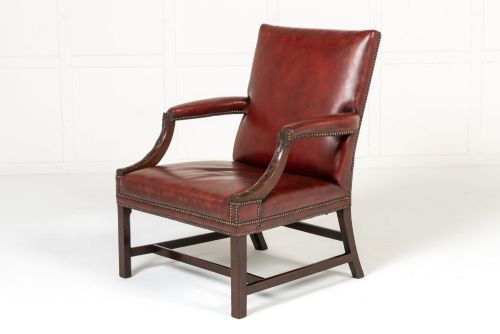
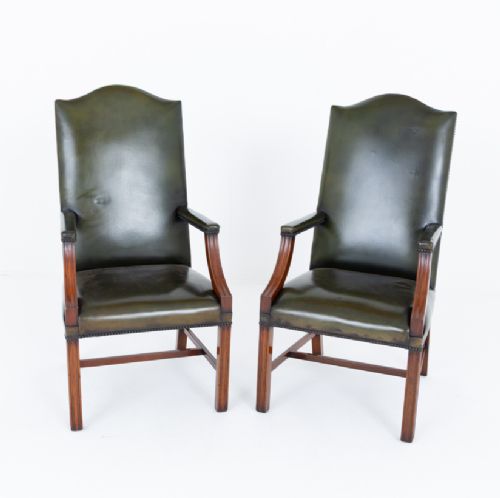
- A wide, high-backed armchair with open padded arms, originating in the eighteenth century. These chairs typically stand on carved cabriole or straight legs.
- Smokers Bow
- A low wooden armchair with a turned spindle gallery and a curved back rail. This robust vernacular form frequently served in offices and studies.
- Swivel
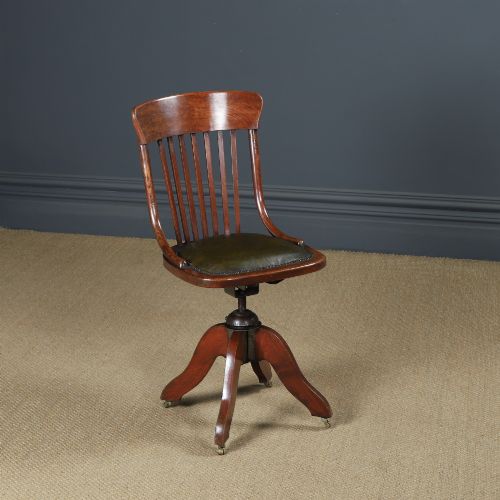
- A revolving mechanism allowing the seat to turn through a full circle. Nineteenth and twentieth-century desk variants often pair this with an adjustable height screw.
Vintage Leather Study Chair: Frequently Asked Questions
How do I identify a Victorian study chair?
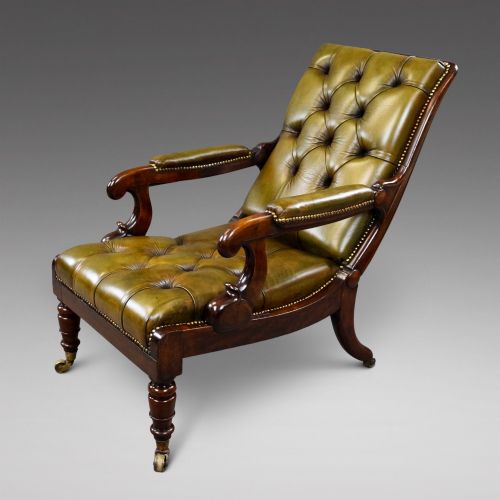
Victorian models frequently utilise golden mahogany or oak with substantial frames and buttoned leather upholstery. They often incorporate revolving mechanisms or deep library elbow designs.
Look for turned wooden supports, brass castor wheels, and traditional joinery methods typical of the nineteenth century.
Are these chairs suitable for daily desk work?
Many examples from the Edwardian and early twentieth century were built specifically for office and study use. Swivel and desk armchairs offer functional seating positions for modern workspaces.
Ensure the seat height and lumbar support match your desk requirements before committing to daily use.
What is the difference between a library chair and a desk chair?
Library chairs tend to be wider, lower, and heavily padded for relaxed reading. Desk chairs are generally upright, sometimes featuring swivel bases or narrower proportions to fit beneath writing tables.
Both types utilise leather upholstery and sturdy wooden frames across Victorian and Georgian styles.
How should I care for vintage leather?
Maintain the hide by applying a suitable leather conditioner to prevent drying and cracking. Keep the chair away from direct heat sources and strong sunlight.
Dust wooden frames regularly with a dry cloth and check mechanical swivel components for smooth movement.