


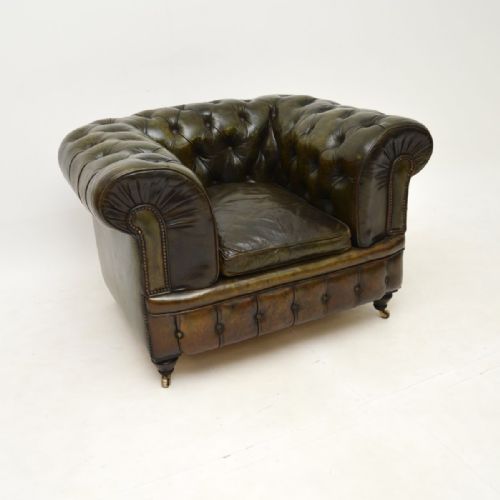
Green Leather Armchairs
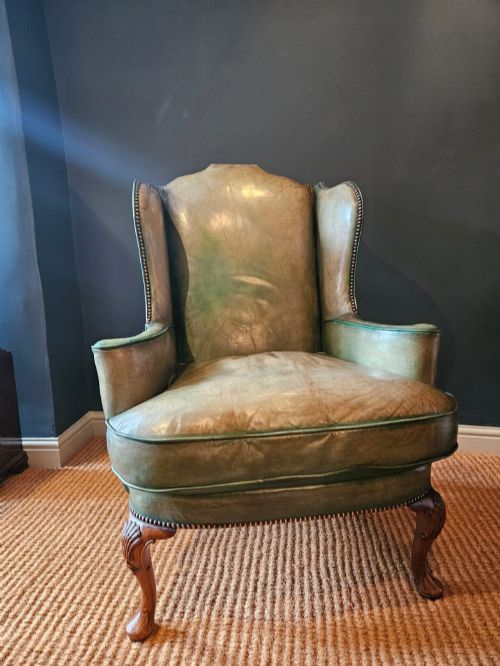
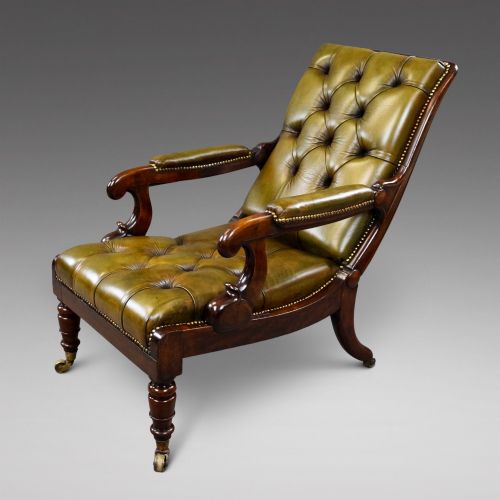
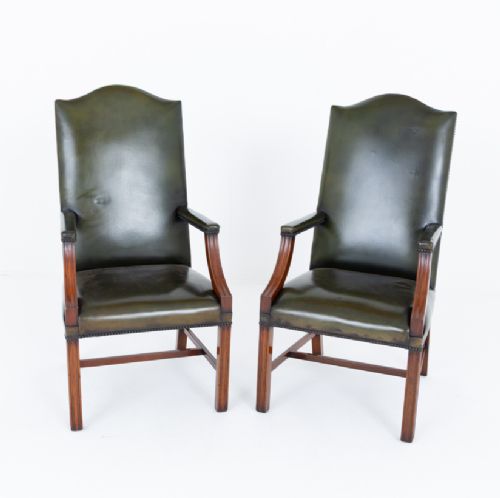
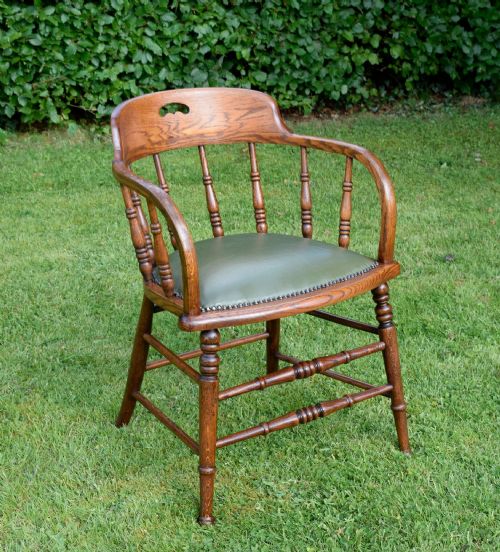
Green leather armchairs bring deep colour and substance to a room, ranging from robust Victorian library seating to refined Georgian revival designs.
What Green Leather Armchairs Are
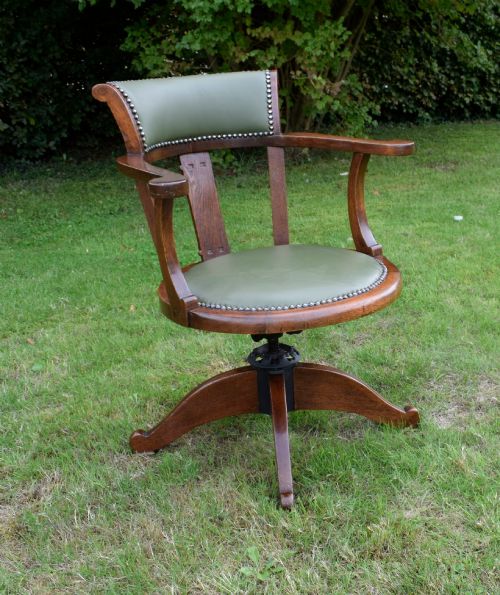
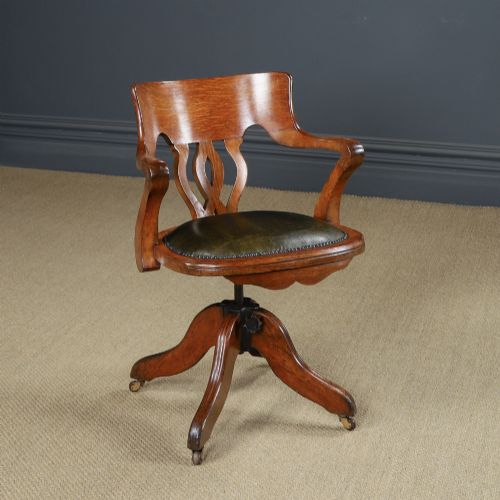
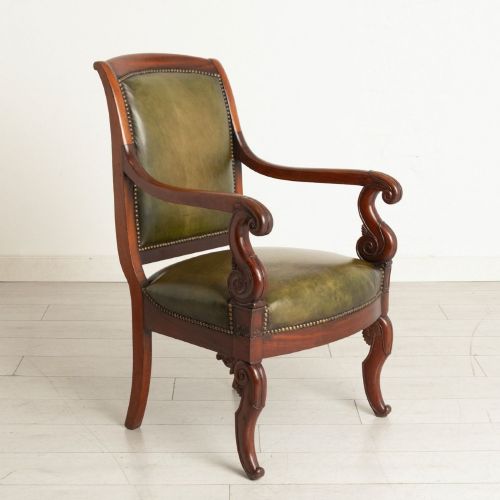
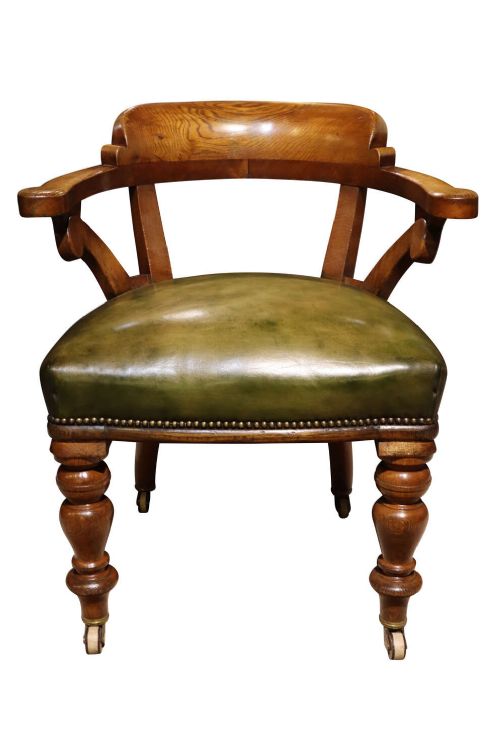
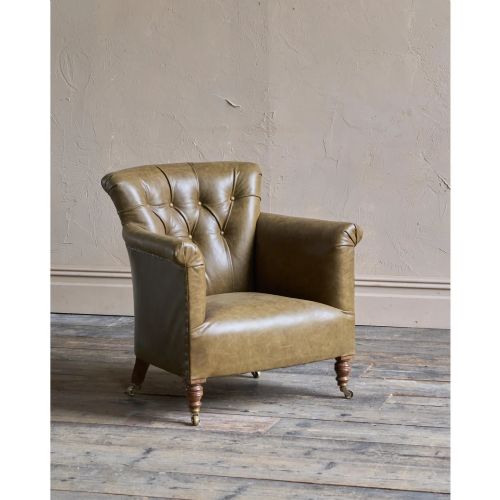
Green leather armchairs encompass a diverse array of seating designed for offices, libraries, and dining rooms across multiple centuries. When searching for green leather armchairs, buyers encounter various historical iterations spanning from the nineteenth century through the early decades of the twentieth century.
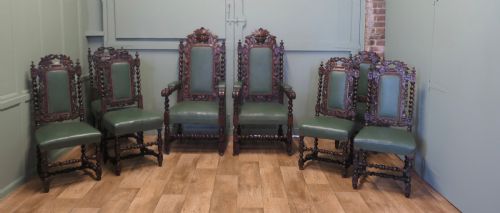
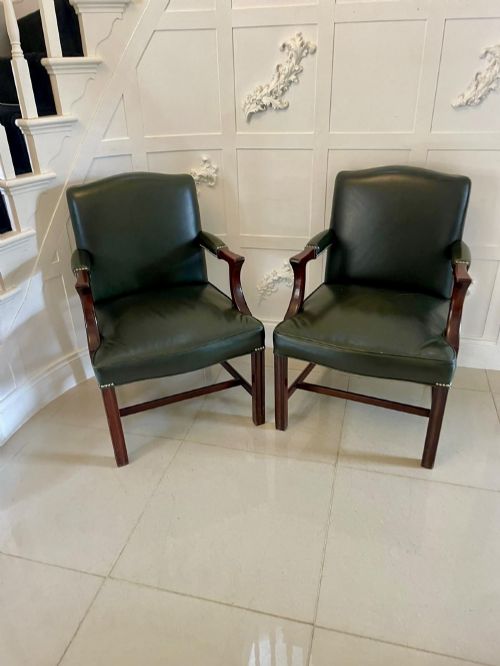
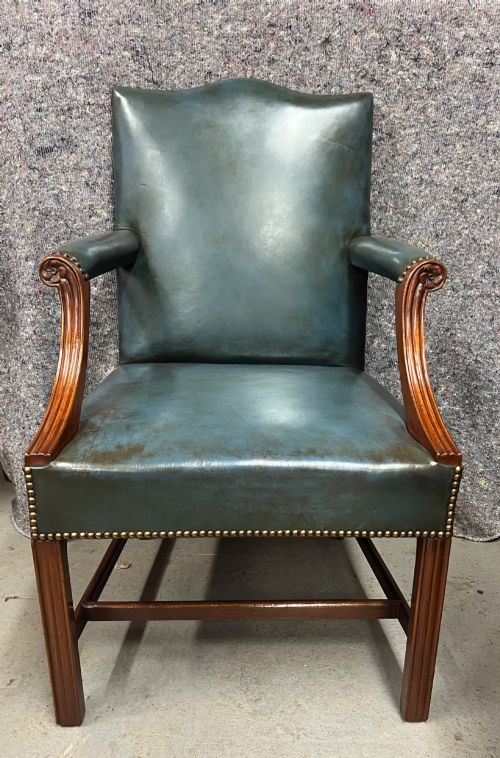
The selections on this page feature distinct forms including desk chairs, library chairs, and dining chairs. Materials like mahogany, oak, and beech form the structural frames that support the leather upholstery.
Revival styles heavily influence the selection, with Victorian Gothic, Georgian Revival, and Chippendale Revival pieces appearing frequently alongside pieces originating from specific contexts such as RAF Bomber Command.
How They Were Made
Construction relies upon solid hardwoods including mahogany, oak, beech, and other hardwoods to build sturdy frames capable of withstanding daily use. Timber components often feature traditional joinery and carved details characteristic of periods like the Victorian era and various revival movements.
Upholstery employs durable leather secured to the wooden frames, occasionally supplemented by brass details, cane work, or bergere panels. Craftsmanship reflects the prevailing standards of nineteenth and early twentieth-century workshops.
Retail Price Guide 2026
Typical UK retail prices for green leather armchairs, calculated from the Sellingantiques database of over a million retail prices indexed since 2003. This retail price guide relies exclusively on Sellingantiques data; no external sources or auction records are used, so the figures do not describe the wider market.
An unexpected military provenance appears among the oak and mahogany frames, offering upholstered armchairs directly from RAF Bomber Command.
What Varies in Quality
Quality differences emerge in the selection of timber and the execution of structural framing. Pieces built from dense mahogany or oak with refined revival detailing sit at a different level from utilitarian office or desk seating.
The refinement of the upholstery work and the integration of materials such as brass or cane further distinguish standard production from finer antique examples.
The Green Leather Armchairs Glossary
- Bergere
- A closed armchair with a cane panelled back and sides. This French-inspired form appears in library and drawing room seating.
- Gainsborough chair
- A wide, upholstered armchair with a low seat and open arms designed during the eighteenth century. Revival versions of this style date from the Victorian and later periods.
- Chippendale style
- A decorative style drawing on the eighteenth-century designs of Thomas Chippendale. Pieces in this tradition often feature rich mahogany frames and elaborate carving.
- Jacobean Revival
- A nineteenth-century style reviving seventeenth-century British furniture characteristics. These pieces typically utilise solid oak and display strong rectilinear forms.
Frequently Asked Questions
What periods do these green leather armchairs represent?
The inventory spans the nineteenth century through to the 1930s. Pieces reflect eras such as the Victorian period and various early twentieth-century decades.
Revival movements heavily shape the dates, including Georgian and Jacobean revivals alongside specific twentieth-century contexts.
Which wood types are used in the frames?
Frames employ hardwoods such as mahogany, oak, and beech. These timbers provide the structural foundation for the leather upholstery.
Some examples incorporate secondary materials like cane and brass to complement the primary wooden structures.
Are these chairs suitable for a modern desk?
Several listings specifically comprise desk chairs and library chairs from the late nineteenth and early twentieth centuries. These forms function effectively in contemporary workspaces.
Dimensions and ergonomic heights vary according to the original intended use of each specific armchair.
What styles are most common in this selection?
Revival styles dominate the offerings, including Georgian Revival, Chippendale Revival, and Jacobean Revival. Victorian Gothic pieces also feature prominently among the available seating.
These stylistic choices mirror the historical appetite for reinterpreting classic British furniture designs.