
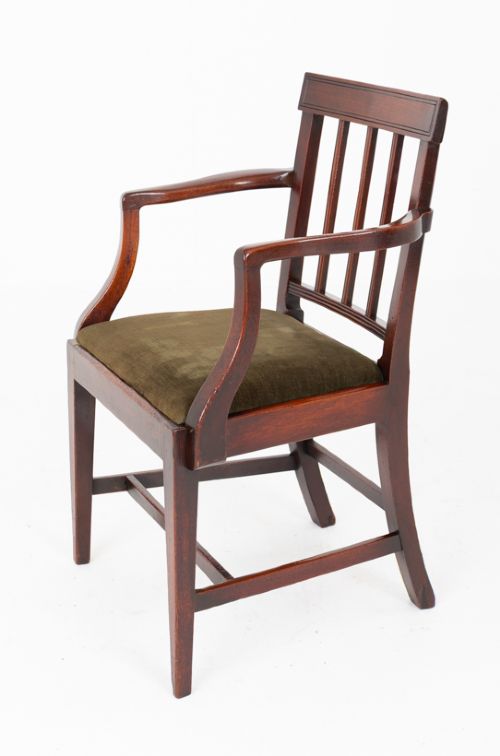
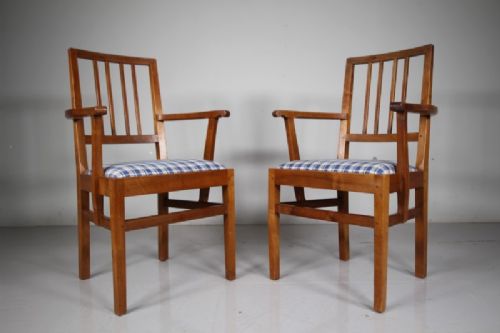
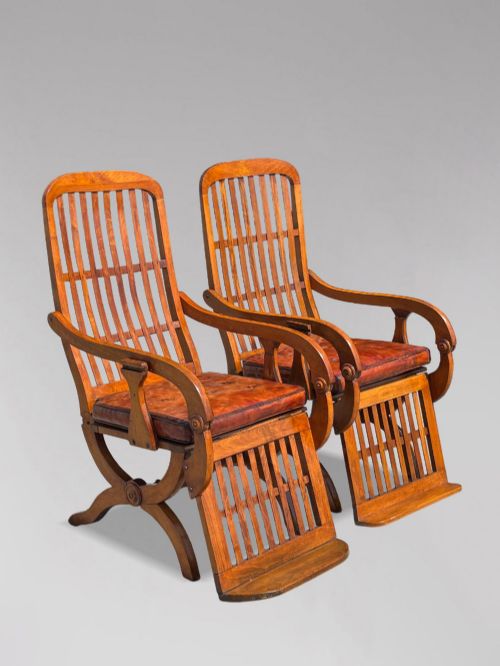
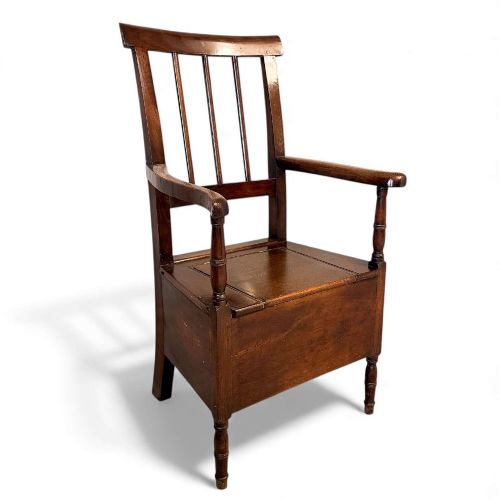
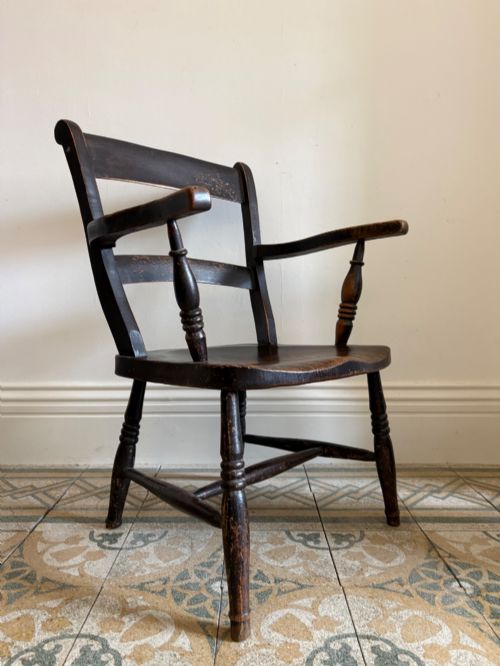
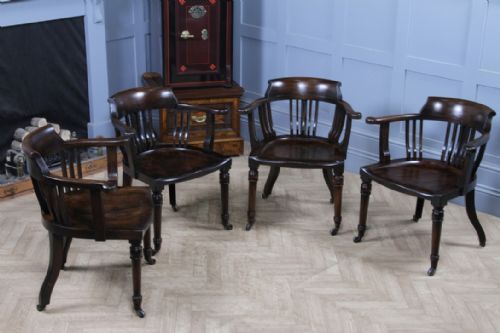


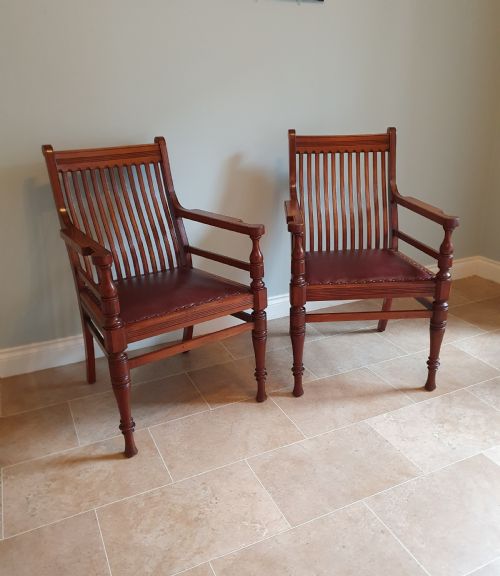
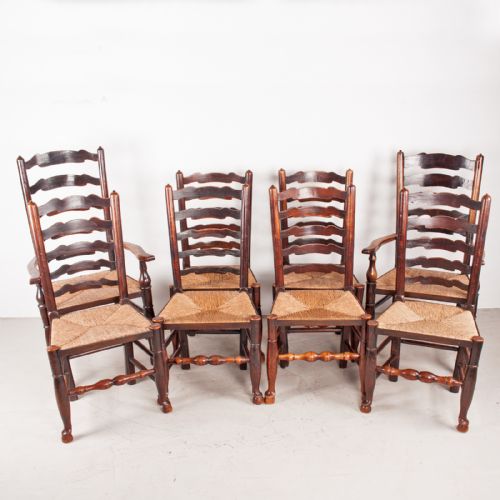


Slatted Back Armchair
A slatted back armchair provides sturdy, practical seating built from honest timbers that suit both country houses and studies.
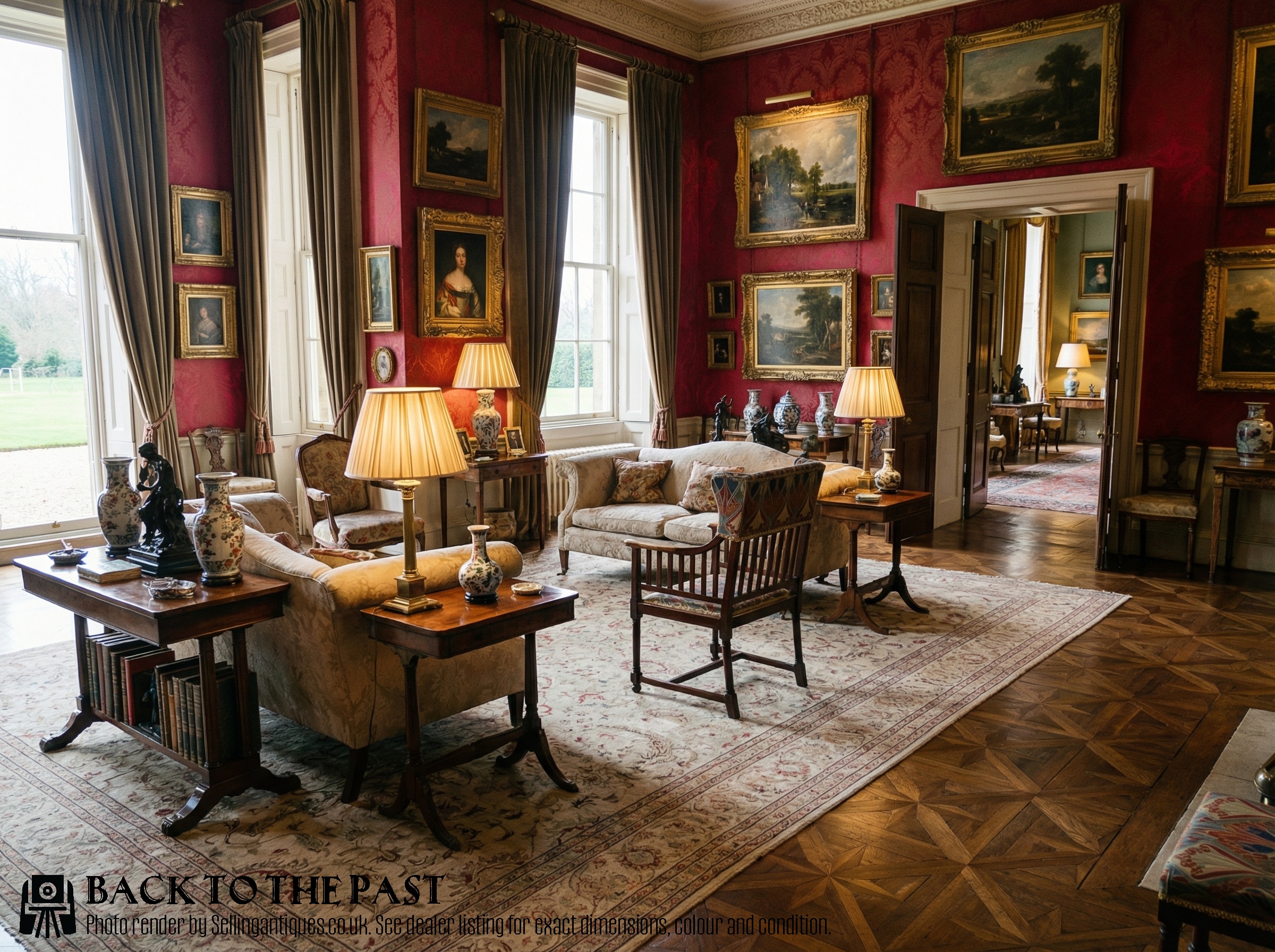
Slatted Back Armchair
A slatted back armchair draws from vernacular traditions, featuring open wooden uprights that support the sitter with simple geometry. Buyers encounter regional Windsor forms alongside formal mahogany library and desk variations.
The evidence shows periods spanning from the seventeenth century through the Edwardian era and into the nineteen-thirties. Vernacular country pieces in elm and ash sit alongside formal Georgian and Victorian office seating.
Makers utilised local timbers to construct chairs for diverse domestic tasks, ranging from fireside reading to writing at a desk. These seats vary from rustic ladderbacks to sophisticated Arts and Crafts designs.
Materials and construction
Craftsmen paired durable hardwoods like oak, mahogany, and walnut for frames with resilient woods such as beech, ash, and elm for spindles and seats. These materials were shaped using turning lathes, steam-bending, and traditional joinery.
Upholstery materials appear in leather, fabric, rush, and velvet inserts, secured to wooden bases. Metal components like brass swivel mechanisms and castors support later nineteenth and twentieth-century office chairs.
Some early commode chairs hid domestic secrets behind polite wooden slats.
Assessing quality in construction
Quality rests in the integrity of the timber selection and the precision of the joinery linking the slats to the seat and crest rail. Superior examples maintain structural firmness without excessive modern repairs or replaced primary elements.
Refined carving, intelligent ergonomic shaping of the armrests, and well-chosen grain patterns distinguish high-status library or salon chairs from utilitarian workshop seating.
Edward Barnsley·E W Godwin·James Shoolbread
The Slatted Back Armchair Glossary
- Lath back
- A chair design utilising flat wooden slats or laths arranged vertically in the backrest.
- Vernacular
- Objects built by regional craftsmen following local traditions rather than strict metropolitan pattern books.
- Carver
- An armchair, frequently designed to match a set of smaller dining chairs.
- Commode chair
- A seating item constructed with a concealed chamber pot or receptacle beneath the seat.
- Barley twist
- A woodworking technique turning timber into a spiral column resembling twisted barley sugar.
Slatted Back Armchair: Frequently Asked Questions
What is a slatted back armchair?
A slatted back armchair is a wooden seat featuring vertical or horizontal wooden bars supporting the backrest. These chairs range from country Windsor forms to formal office and library seating.
They offer robust construction and distinct regional styles developed across centuries of British and continental woodworking.
How were these armchairs used historically?
These armchairs served various domestic and professional duties, including reading by the fire, writing at a desk, and dining. Office variants provided swivel and revolving mechanisms for daily workspace tasks.
Country versions offered durable seating for kitchens and farmhouses, while mahogany library models suited aristocratic rooms.
How do I care for antique wooden chairs?
Maintain antique wooden chairs by keeping them away from direct heat sources and sudden humidity changes that cause timber to split. Apply appropriate wax polishes sparingly to nourish the original finish.
Check joinery periodically to ensure that pegged or glued joints remain stable under regular weight.
How do I date a slatted back armchair?
Dating relies on identifying timber species, tool marks, joinery methods, and stylistic cues associated with periods like the Georgian, Victorian, or Edwardian eras. Regional vernacular pieces often retain characteristics specific to local traditions.
Hardware components, such as early brass castors or iron swivel screws, provide further clues to the manufacturing decade.