
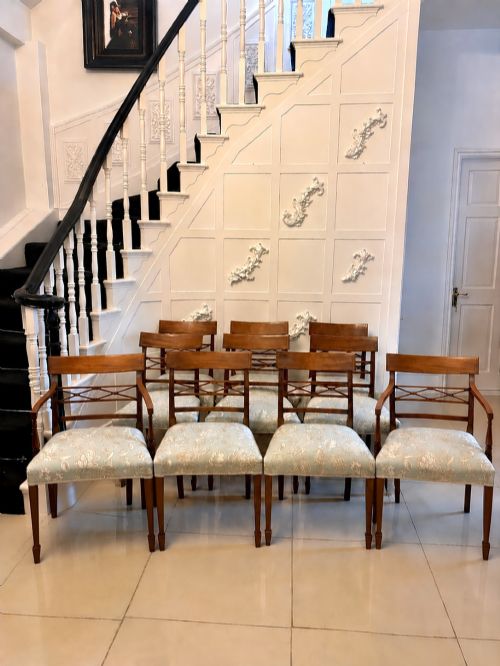
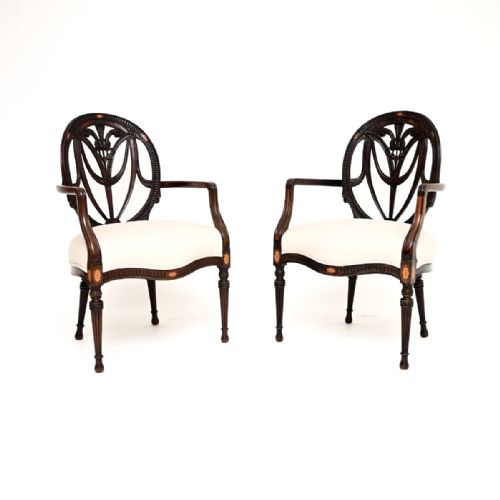
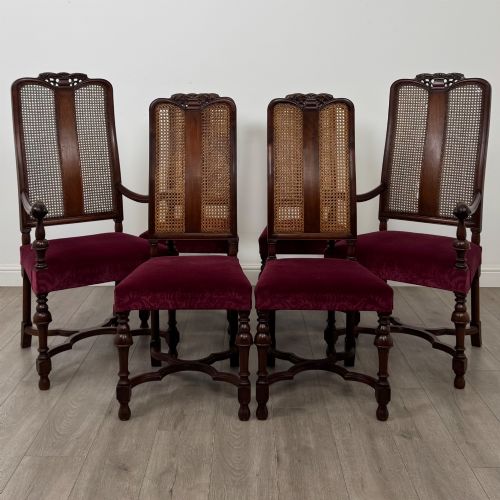
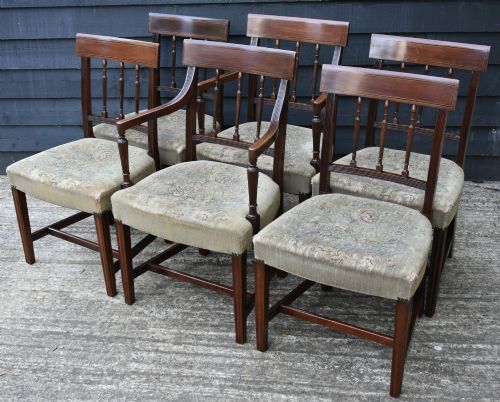
Vintage Mahogany Carver
A vintage mahogany carver is a sturdy single armchair designed to sit at the head of a dining table, combining rich timber with supportive armrests.
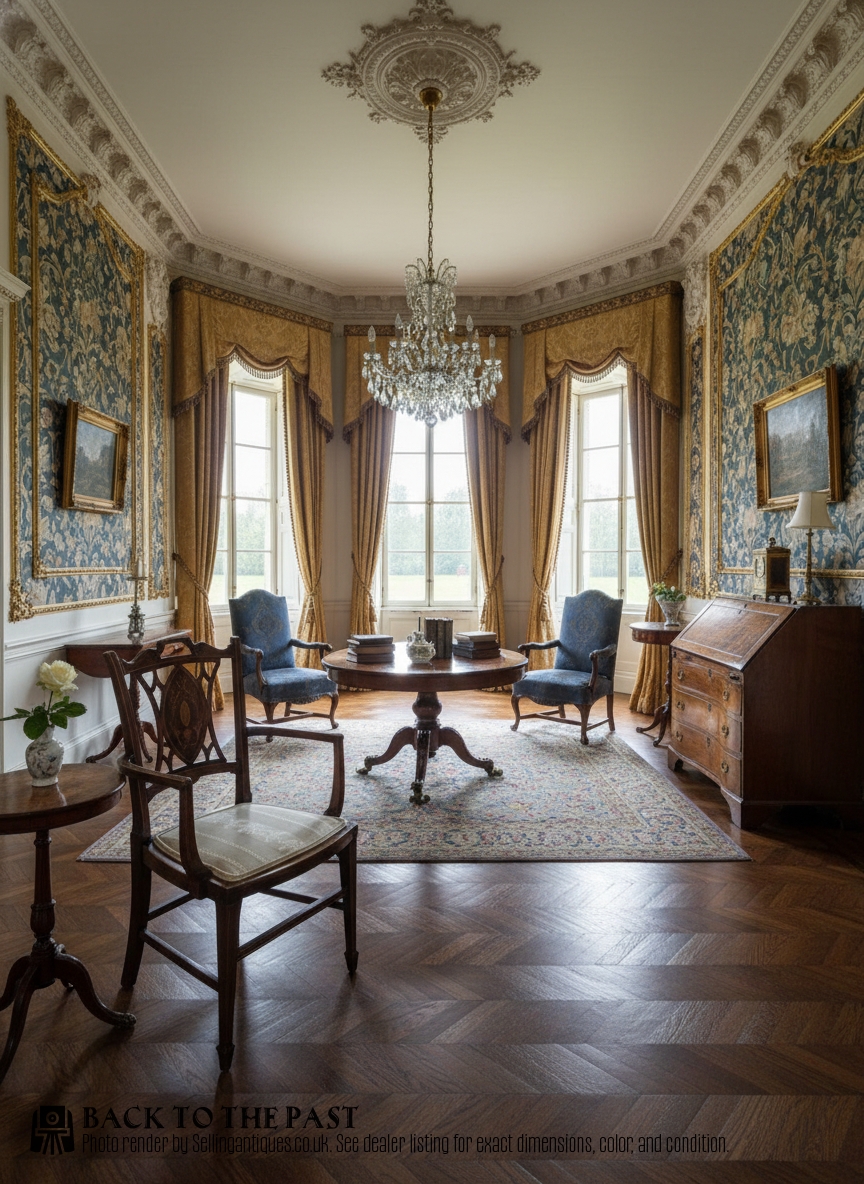
Vintage Mahogany Carver
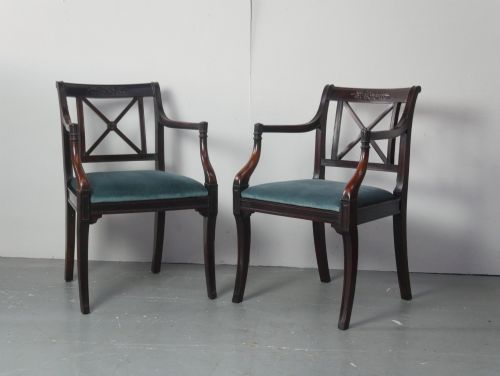
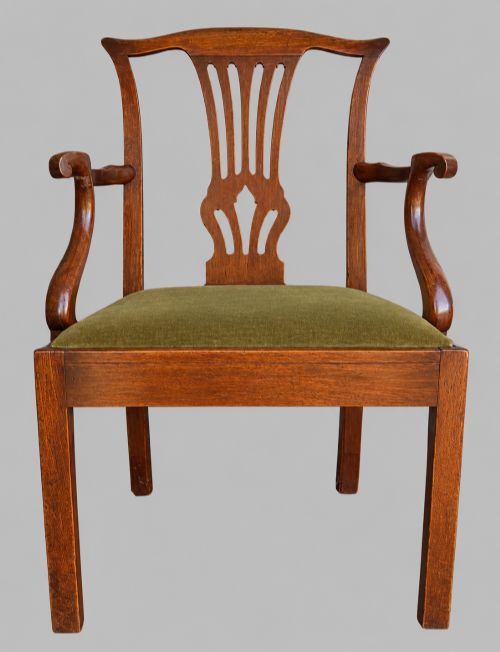
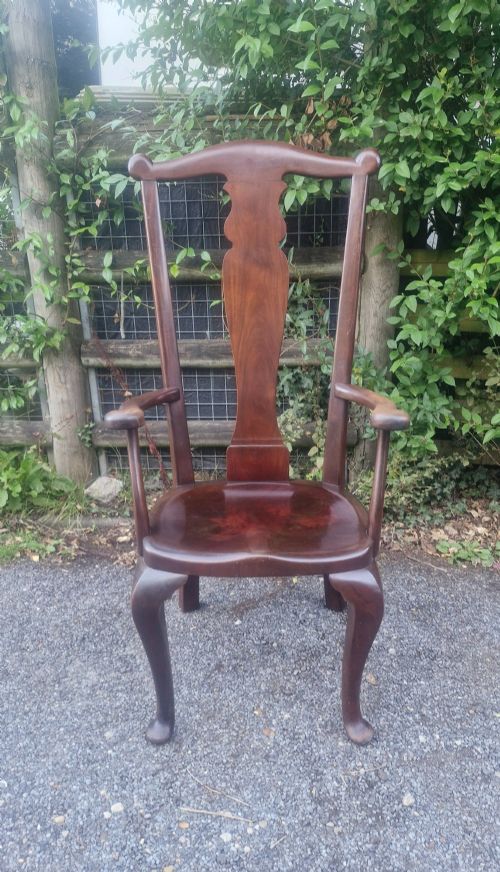
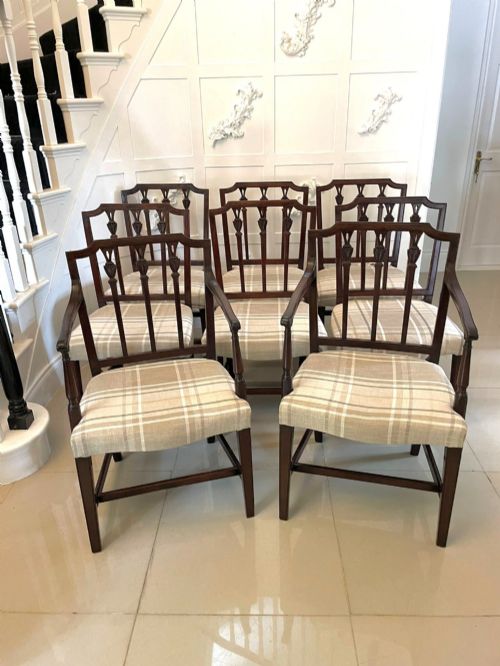
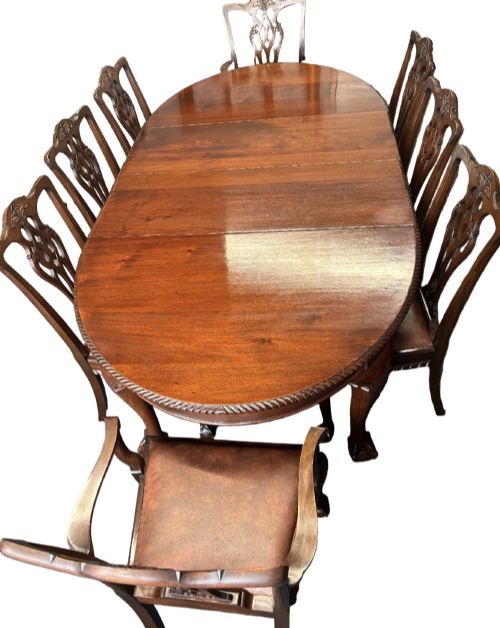
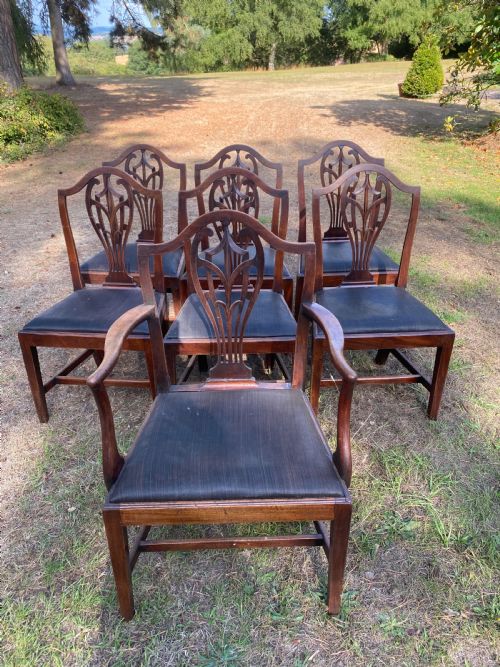
A vintage mahogany carver provides a solid timber seating option typically placed at the head of a table alongside matching dining chairs. These pieces appear in forms ranging from eighteenth-century originals to later revivals from the Victorian, Edwardian, and twentieth-century periods.
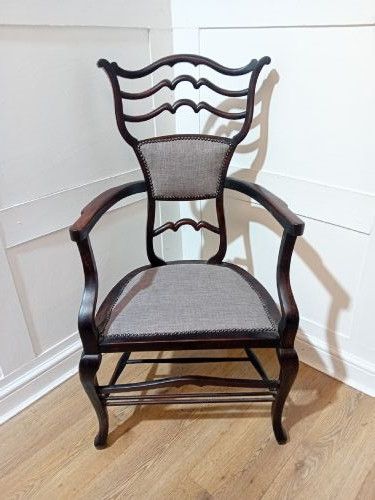
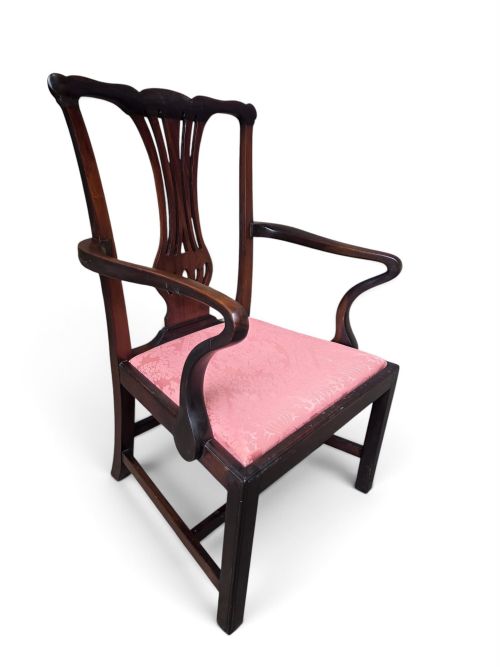
The most common examples on this page are revival pieces from the Edwardian era and the early twentieth century, echoing earlier Georgian, Chippendale, Hepplewhite, and Regency designs. They function as both functional dining seating and decorative open armchairs for a desk or salon.
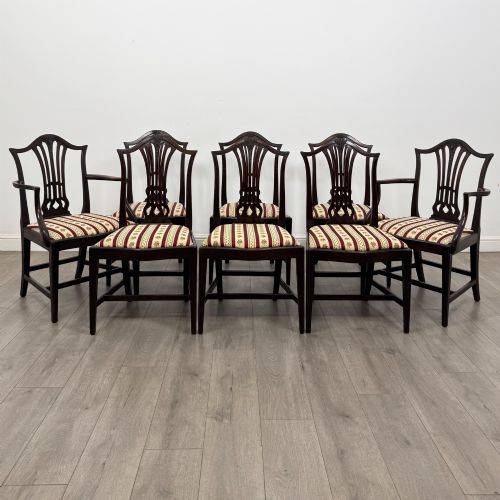
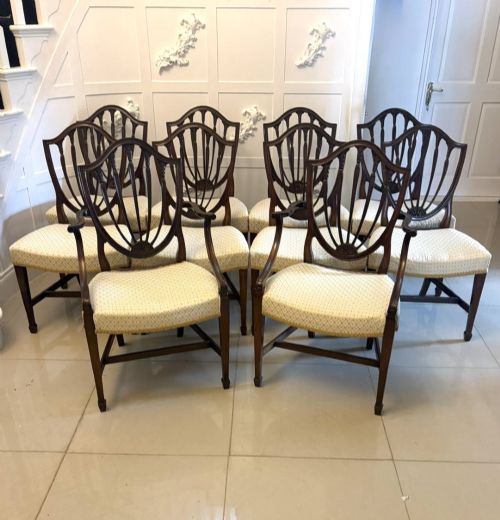
Makers and workshops constructed these chairs in various regional styles, including shield backs, lyre backs, and open arm configurations. Buyers encounter single chairs, pairs, and armchairs matched with larger sets of dining chairs.
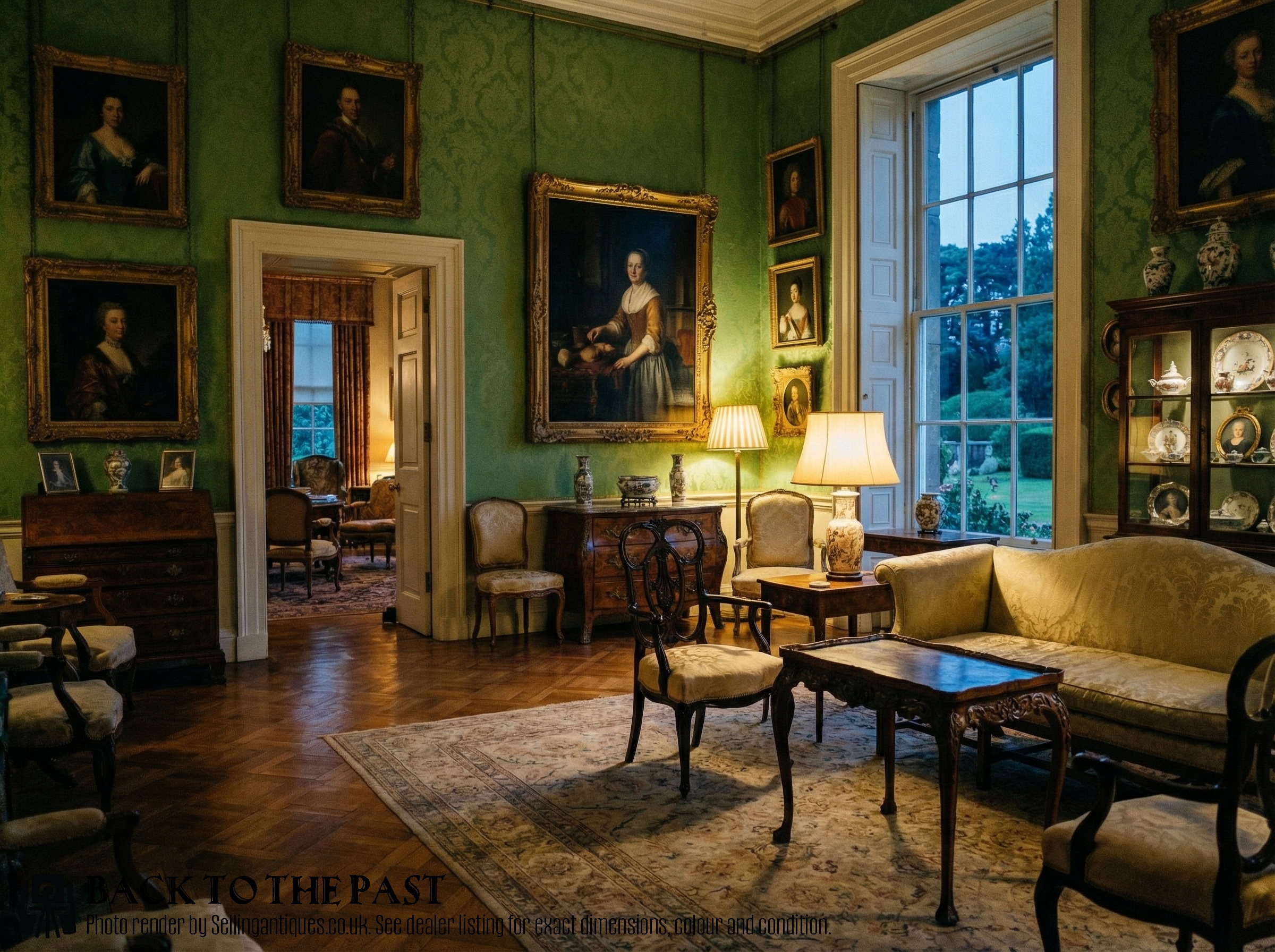
How they were made
Cabinetmakers utilised dense mahogany timber for the primary frame, often selecting it for its deep grain and structural strength. Workshops combined this durable wood with secondary supports and joinery techniques suitable for daily use.
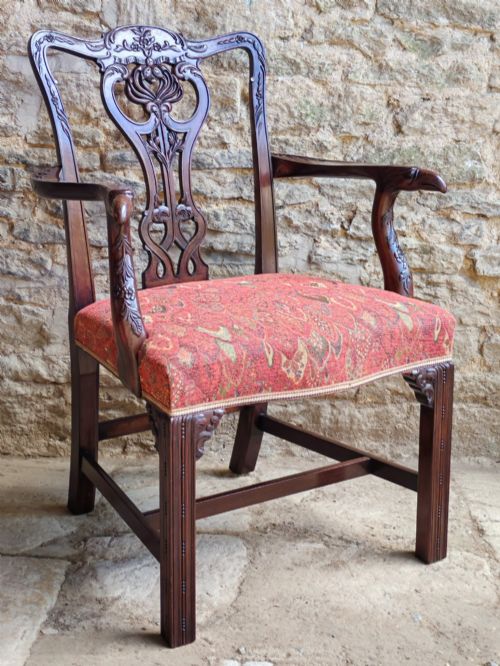
Upholstered versions incorporate drop-in seats or pad seats covered in fabric, velvet, or leather, secured with brass tacks. Other variations feature woven cane inserts or carved wooden splats within high or shield-shaped backs.
Vintage Mahogany Carver Retail Price Guide 2026
Typical asking prices for vintage mahogany carver among the pieces listed under this phrase on Sellingantiques today, from the lower quarter to the upper quarter. They describe what is for sale here now, not the wider market.
Listings feature mahogany carvers spanning the eighteenth, nineteenth, and twentieth centuries, including Edwardian and Victorian interpretations.
What varies in quality
The crispness and depth of the carved details on the splats, arms, and legs distinguish finer examples from simpler production pieces. Sharp hand-carving requires considerable skill and elevates the visual weight of the timber.
The choice of mahogany grain and the integrity of the joinery determine the overall longevity and stability of the frame. Superior items maintain tight joints and balanced proportions without relying on excessive secondary reinforcement.
Howard and Sons·Alfred Allen of Birmingham·Maple and Co
The Vintage Mahogany Carver Glossary
- Carver
- A dining chair fitted with armrests, traditionally set at the head or foot of the table.
- Splath
- The central vertical slat of wood within a chair back, often carved or pierced in revival styles.
- Shield Back
- A chair back shaped like a heraldic shield, popular in Hepplewhite and later revival designs.
- Lyre Back
- A chair back featuring a central splat shaped in the outline of a stringed musical instrument.
- Cockpen
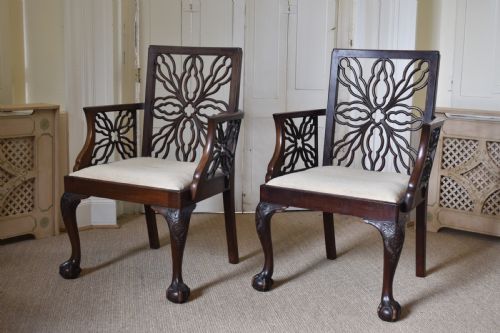
- A Chinese-inspired lattice design utilised in open armchairs and seating frames during the eighteenth century and later.
Vintage Mahogany Carver: Frequently Asked Questions
What is a carver chair?
A carver chair is an armchair built with a slightly wider seat and supportive armrests to accommodate a person at the head of a dining table. These chairs match or complement the surrounding side chairs in a dining set.
Historically, they provided extra comfort for the host or head of the household during lengthy meals. Today, they also serve as occasional or desk chairs in studies and living rooms.
How do I date a mahogany carver?
Dating involves examining the timber grain, construction methods, and stylistic cues such as shield backs or tapered legs. Pieces often reflect the prevailing revival tastes of the Edwardian period or the Victorian era rather than original eighteenth-century manufacture.
Cabinetmakers across different centuries copied earlier Georgian and Regency designs, making secondary wood analysis and wear patterns essential clues for determining age.
Can I mix carvers with other chairs?
Mixing a carver with different dining chairs is a traditional way to assemble a functional seating arrangement around a table. Many historical sets paired two armchairs with six or eight single side chairs.
Matching the timber species, such as mahogany, helps maintain visual harmony even when the precise carving styles or periods vary slightly.
How do I care for mahogany and leather?
Maintaining mahogany requires dusting with a soft cloth and avoiding direct sunlight to protect the rich colour of the timber. Periodic polishing preserves the sheen of the wood surface without building up residue.
Leather seats benefit from conditioning to keep the material supple and prevent cracking. Gentle cleaning protects the original hide and any surrounding brass hardware.