
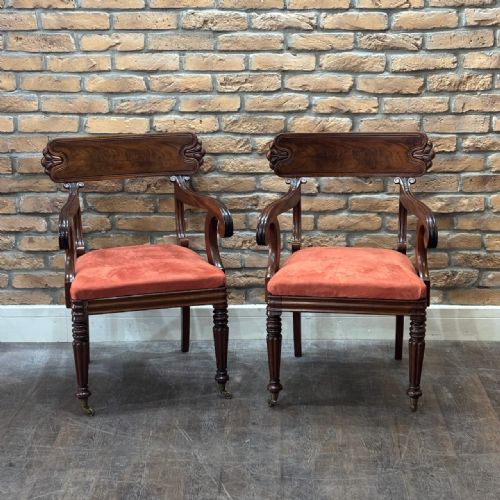
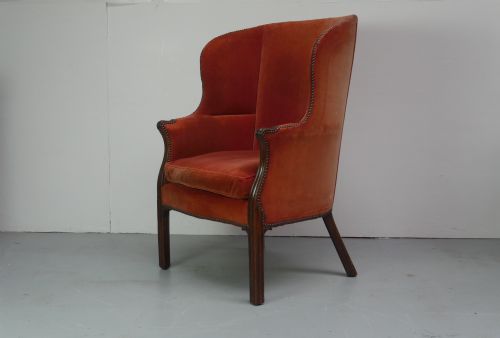


Terracotta Velvet Armchair
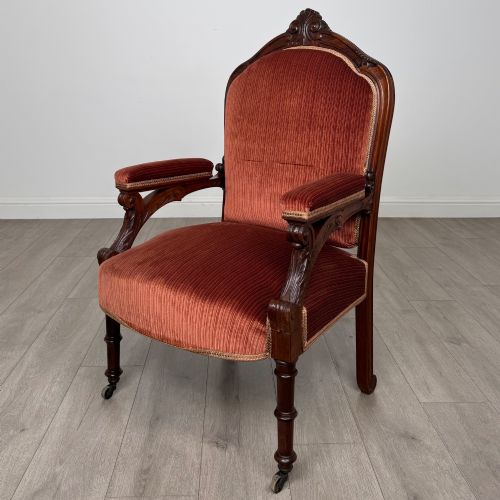
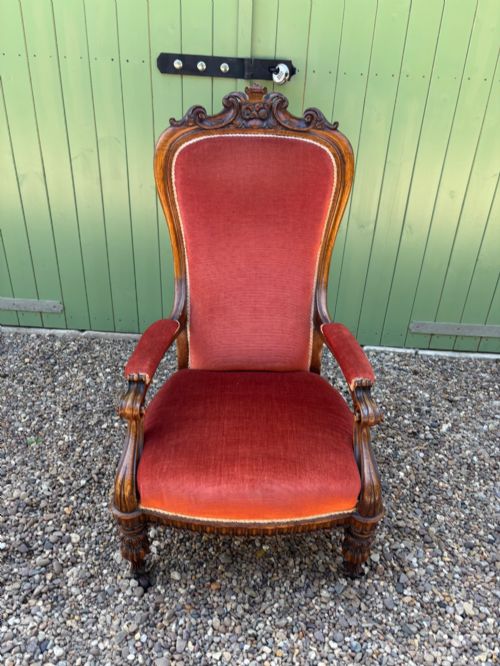
These terracotta velvet armchairs combine deep-toned textile upholstery with period woodwork, offering both period character and practical seating.
Terracotta Velvet Armchair
A terracotta velvet armchair brings together robust historic frames and warm-hued pile textiles, spanning eras from the eighteenth century to the Edwardian period. When searching for a terracotta velvet armchair, buyers encounter pieces upholstered in burnt orange tones, chenille twill, and plush pile fabrics.
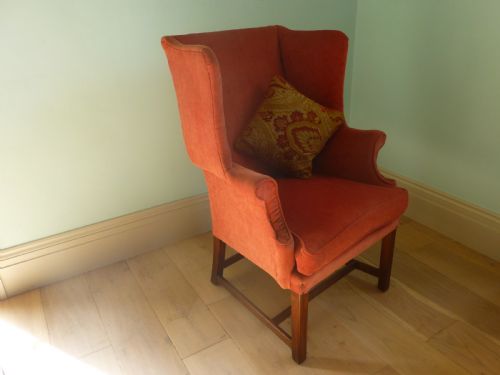
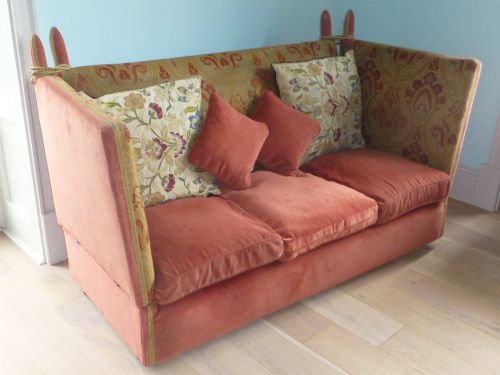
The selections range from Georgian wingbacks and Victorian button-back occasional chairs to Louis XV style carved walnut frames and Knole settees. Victorian examples and nineteenth-century rosewood or mahogany designs appear most frequently in these listings.
These armchairs serve as functional living furniture while displaying distinct period traits, such as barrel backs, open wooden arms, and parcel gilt detailing. The combination of dense fabric and sturdy timber construction defines this category of seating.
How they were made
Makers built the structural frames of these armchairs using dense hardwoods such as mahogany, rosewood, walnut, oak, and timber. Joinery methods relied on traditional cabinet-making techniques to support the weight of the upholstered bodies.
Upholstery involved securing tactile textiles like velvet and chenille twill over padded foundations, often accented with brass elements. Carved wooden details on frames demonstrate the hand-shaping work of period artisans.
Terracotta Velvet Armchair Retail Price Guide 2026
Typical asking prices for terracotta velvet armchair among the pieces listed under this phrase on Sellingantiques today, from the lower quarter to the upper quarter. They describe what is for sale here now, not the wider market.
Upholstery materials in these records include orange velvet, burnt orange chenille twill, and terracotta velvet.
What varies in quality
The refinement of the wooden frame's carving and the choice of dense timber set superior examples apart from standard builds. Pieces exhibiting detailed French carving or fine mahogany and rosewood display higher craftsmanship.
The richness and depth of the velvet or chenille upholstery contribute significantly to the overall standard of the piece. Matching the period style of the frame accurately to its upholstery style marks the distinction at the upper end.
The Terracotta Velvet Armchair Glossary
- Terracotta velvet
- A woven pile fabric dyed in a warm brownish-orange earthenware shade. It provides a tactile, light-absorbing surface on period seating.
- Wingback armchair
- A high-backed chair featuring protective side panels designed to shield the sitter from drafts. This form spans Georgian and Edwardian eras.
- Knole settee
- A historic sofa style featuring adjustable drop arms tied with decorative braids. It originates from seventeenth-century English interior design.
- Parcel gilt
- A decorative technique where specific raised portions of a wooden frame receive a thin application of gold leaf. It highlights carved details against a dark timber background.
- Chenille twill
- A textured fabric woven with fuzzy yarns in a diagonal pattern. It adds durability and a soft hand to nineteenth-century upholstery.
Terracotta Velvet Armchair: Frequently Asked Questions
What periods do these armchairs come from?
The listings span several centuries, including the eighteenth century, the Victorian era, the nineteenth century, and the Edwardian period.
Specific designs range from Georgian revival styles to mid-nineteenth-century rosewood easy chairs.
Which woods were used for the frames?
Cabinet makers utilised a variety of hardwoods depending on the prevailing style of the decade.
Commonly recorded timbers include mahogany, rosewood, walnut, and oak, alongside general timber structures.
How do I identify a Victorian armchair?
Victorian pieces often feature button-backed upholstery, rosewood or mahogany frames, and substantial proportions.
They frequently incorporate styles such as open armchairs and occasional chairs with deep pile fabrics.