
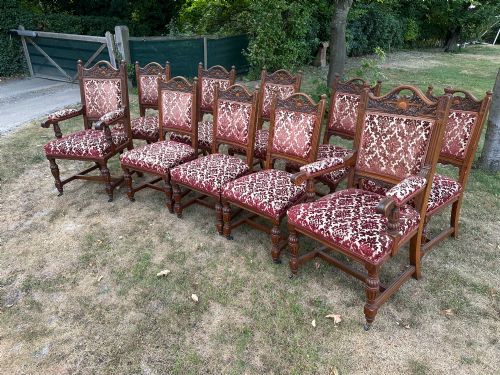
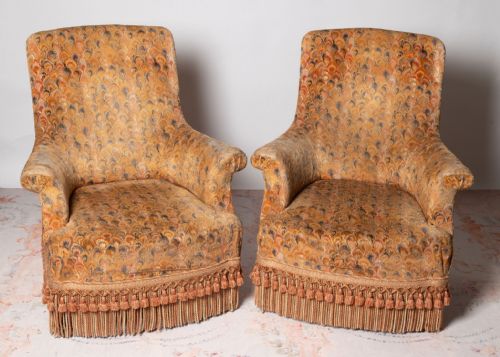


Patterned Velvet Armchair
A patterned velvet armchair brings rich texture and period character into a room, offering both comfort and strong visual presence.
Patterned velvet armchair types
A patterned velvet armchair covers a varied selection of seating forms originating from the nineteenth century and around nineteen hundred. Buyers searching for a patterned velvet armchair encounter diverse styles including Georgian revival, Louis XV revival, Rococo revival, and Regency forms.
The surviving pieces include large proportioned open armchairs, a pair of small open armchairs, and an early twentieth century Georgian style winged armchair. Other forms recorded are a hall porters or boudoir chair and an antique tub chair.
Makers and workshops also produced functional desk chairs during the nineteenth century, utilising mahogany alongside other timber frames. These chairs served various domestic and formal interior settings, from studies to boudoirs.

Materials and construction
Frames rely upon traditional timber construction using mahogany, walnut, and ebonised wood. Some examples incorporate painted wood finishes and brass details to accent the structure.
Upholstery combines textile surfaces with velvet coverings. Frames range from open arm configurations to enclosed winged designs and tub shapes.
Retail Price Guide 2026
Typical UK retail prices for patterned velvet armchair, calculated from the Sellingantiques database of over a million retail prices indexed since 2003. This retail price guide relies exclusively on Sellingantiques data; no external sources or auction records are used, so the figures do not describe the wider market.
Some nineteenth century makers added gilt accents to ebonised wooden legs just to catch the candlelight.
Assessing quality
Quality separates through the execution of the timber frame, whether in carved mahogany or ebonised and gilt wood. The refinement of revival styles, from Georgian to Rococo, dictates the sophistication of the piece.
The integration of the textile upholstery with the underlying wooden structure defines the overall finish. Heavier proportions and detailed leg work indicate higher ambition in the design.
The Patterned Velvet Armchair Glossary
- Winged armchair
- An armchair featuring protective side panels designed to shield the sitter from draughts. These upholstered pieces often follow Georgian revival designs.
- Tub chair
- A curved seating form where the back and arms form a continuous rounded barrier. Ebonised and gilt legs frequently support these nineteenth century examples.
- Open armchair
- A seat featuring un-upholstered armrests that expose the supporting timber frame. These appear in both small pairs and larger nineteenth century proportions.
- Ebonised wood
- Timber treated with a dark finish to resemble ebony. This technique highlights gilded elements on nineteenth century chair legs.
Frequently Asked Questions
What is a hall porters chair?
A hall porters chair is a specialised seating form designed for draughty entrance halls. These pieces typically feature high, enclosed backs.
They provided shelter for attendants and footmen stationed near doorways in large houses during the period.
How do I style a tub chair?
A tub chair fits well in smaller spaces or corners due to its rounded footprint. The compact shape works effectively in bedrooms and studies.
Pair it with low tables to maintain clean sightlines across the room.
Where did desk chairs originate?
Desk chairs emerged to serve administrative and study spaces in nineteenth century homes and offices. They combined mobility with supportive seating structures.
Mahogany frames and upholstered seats were standard for these functional items.
What defines Rococo revival style?
Rococo revival style draws inspiration from the ornate, fluid designs of the mid-eighteenth century. Makers utilised curved lines and natural motifs.
This aesthetic returned to popularity during the nineteenth century across various seating forms.