


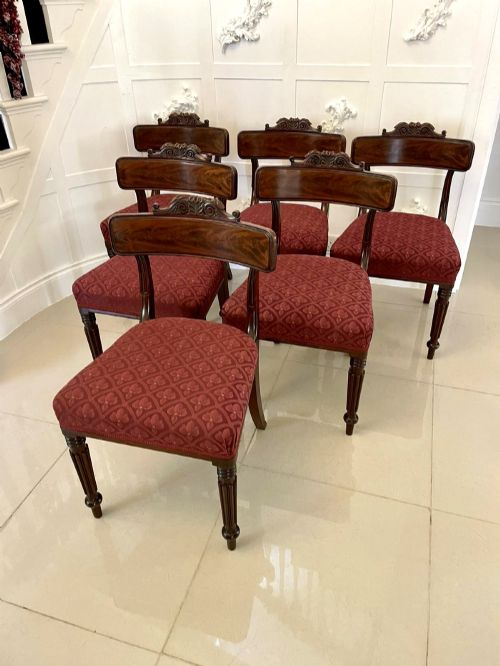
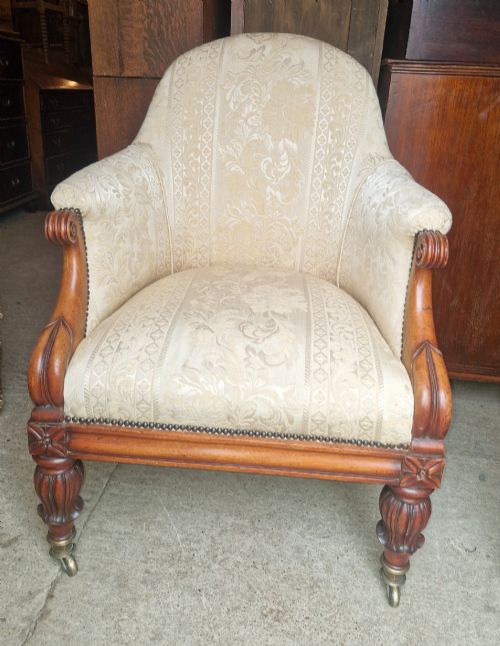
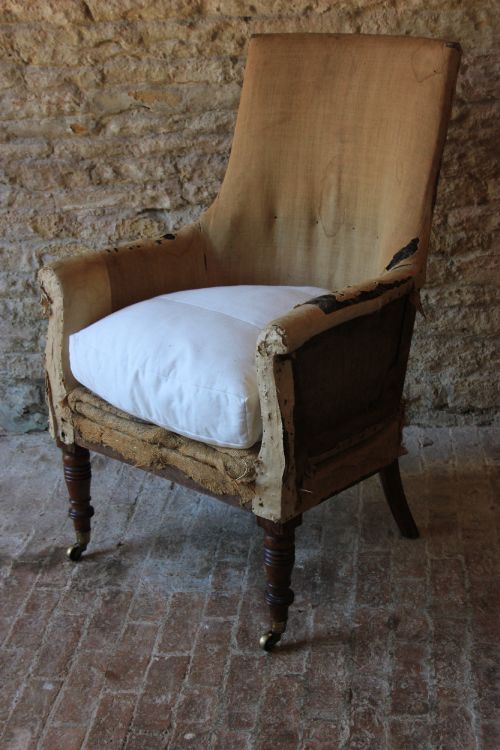
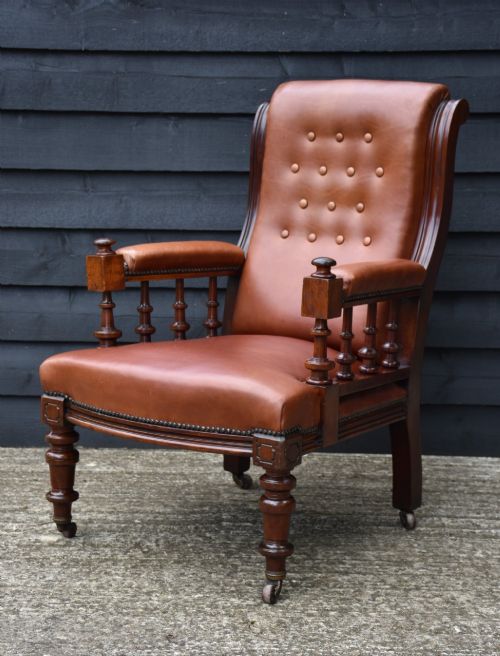
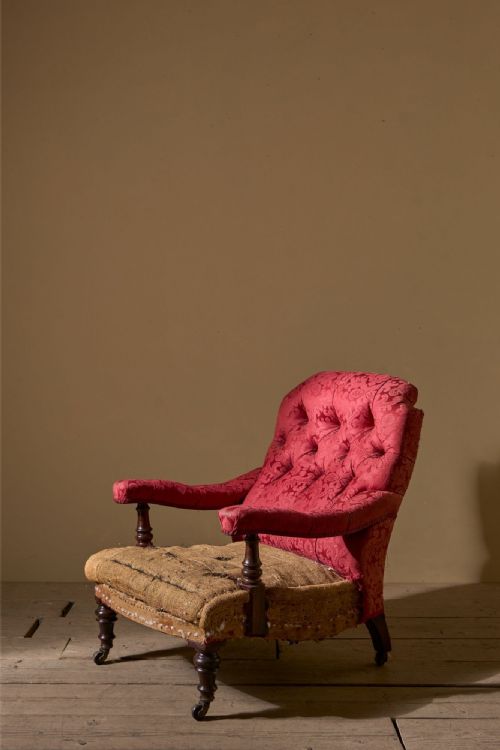
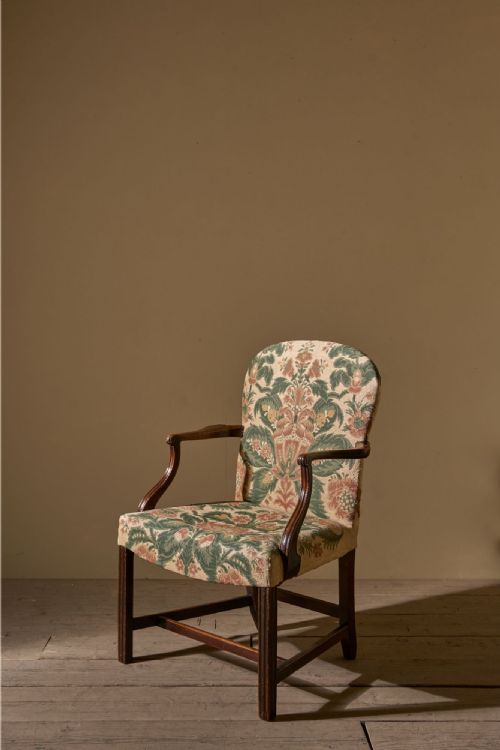
Upholstered Library Chair
An upholstered library chair brings sturdy timber frames and comfortable padded seating to any room, offering traditional sitting spaces for reading and writing.

The Form and Character of Library Seating
An upholstered library chair is a substantial armchair designed for reading rooms, studies, and drawing rooms, often featuring deep proportions and padded armrests.
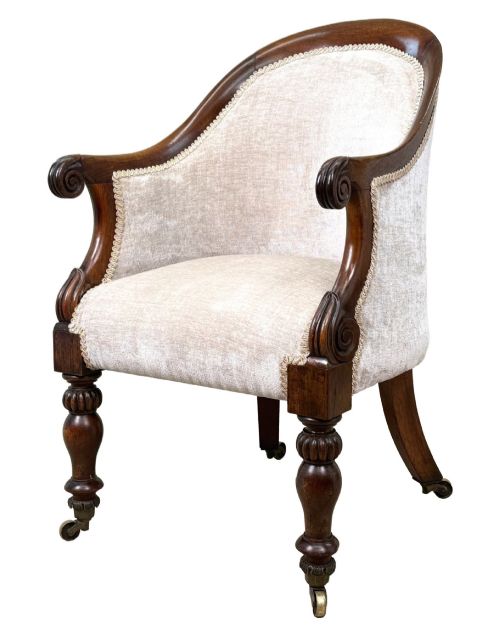
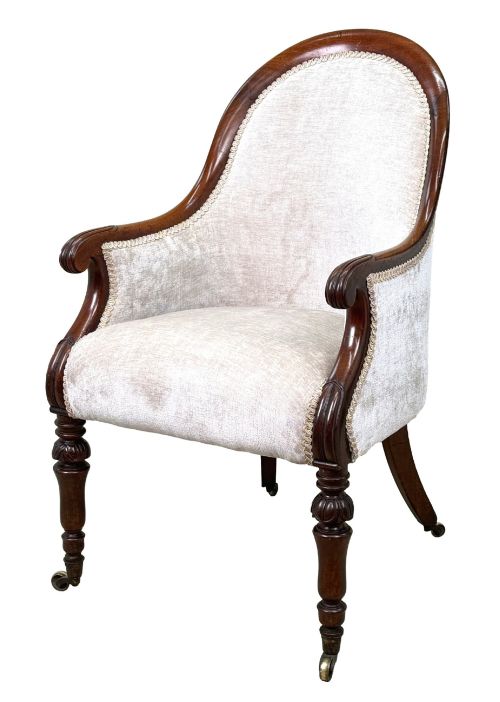
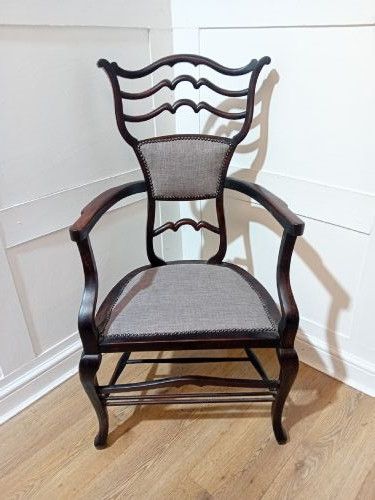
Buyers searching for an upholstered library chair encounter pieces originating from the Georgian, Regency, Victorian, and Edwardian periods, constructed as open armchairs, wingbacks, or tub seats.
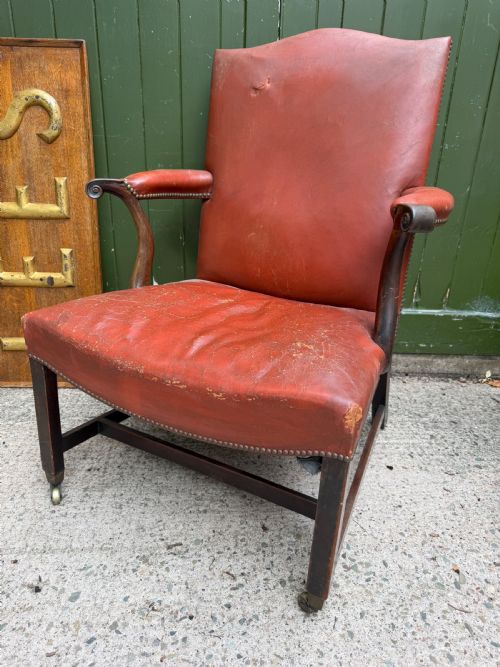
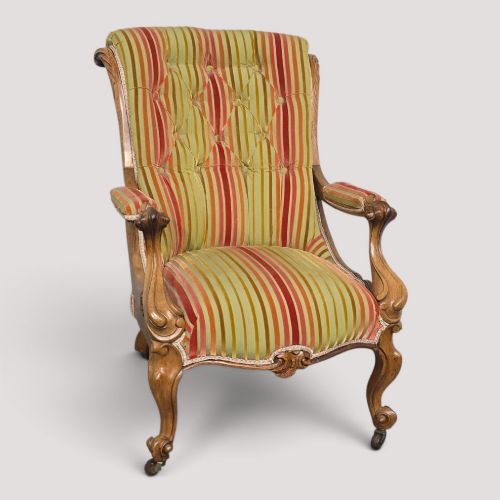
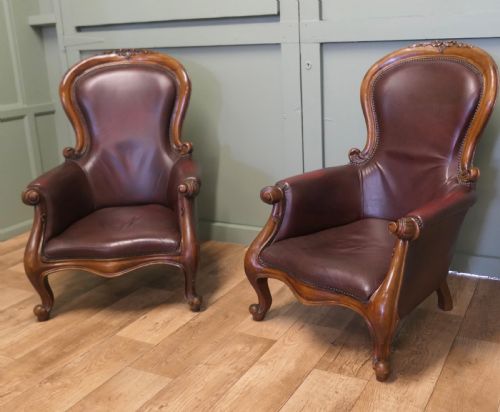
The materials and styles range from mahogany and walnut frames with leather or velvet coverings to English country house designs and French-influenced fauteuils.
Materials and Construction
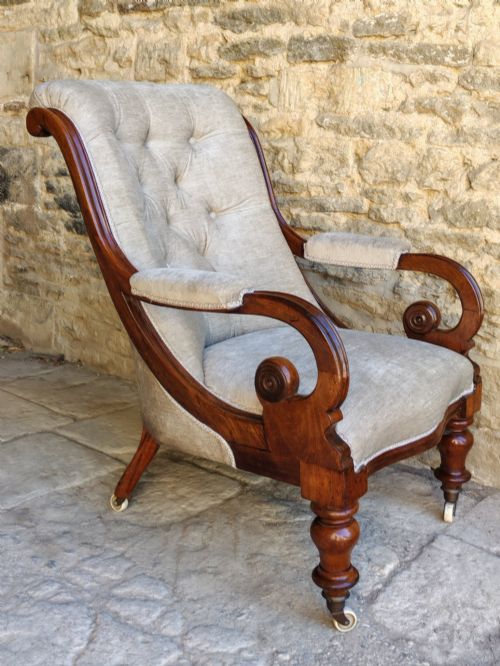
Frames rely on dense hardwoods such as mahogany, walnut, and oak, frequently shaped into curved rails, scroll arms, or curule designs.
Traditional stuffing employs materials like hessian, calico, and hair, finished with top coverings of leather, velvet, silk, or woven fabric.
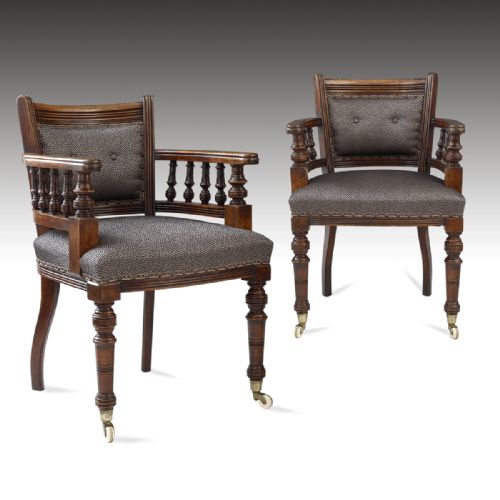
Castors in brass support the feet of many timber frames, allowing heavy seating to move smoothly across floorboards.
Retail Price Guide 2026
Typical UK retail prices for upholstered library chair, calculated from the Sellingantiques database of over a million retail prices indexed since 2003. This retail price guide relies exclusively on Sellingantiques data; no external sources or auction records are used, so the figures do not describe the wider market.
Listings feature mahogany, walnut, and oak timbers combined with leather, velvet, silk, and hessian across Victorian, Regency, and Edwardian periods.
Distinctions in Build and Finish
Excellence rests in the integrity of the timber framing and the precision of the joinery, which dictates how well the chair withstands daily use.
Superior execution shows in the refinement of carved details on mahogany or walnut frames and the quality of the hide or woven textile selected for the upholstery.
Cope and Collinson·Howard and Sons·J and T Scott
The Upholstered Library Chair Glossary
- Curule
- A form of X-shaped cross-frame derived from ancient Roman seats. This architectural support appears on Regency library chairs.
- Fauteuil
- An open-armed wooden armchair originating in France. These seats feature exposed polished timber frames alongside upholstered arm pads.
- Hessian
- A coarse woven fabric utilised as foundational webbing and stuffing containment within traditional upholstery. It provides underlying tension for padding.
- Castor
- A small wheel attached to the base of furniture legs. Brass versions frequently appear on nineteenth-century library armchairs to ease movement.
- Wingback
- An armchair featuring protective side panels attached to the backrest. These upholstered projections block drafts and contain warmth.
Frequently Asked Questions
What defines an upholstered library chair?
An upholstered library chair is a sturdy, padded seat built with a timber frame and designed for reading or desk work. These armchairs typically combine generous proportions with comfortable backrests and arm supports.
They appear in various styles from the eighteenth century onward, utilising materials such as mahogany, leather, and velvet to create a durable seating option for domestic studies and libraries.
How were these chairs used historically?
These seats provided comfortable places for reading, writing, and prolonged sitting in private libraries and studies. Their deep padding and supportive arms accommodated readers for hours at a time.
Positioned near desks or bookshelves, they functioned as heavy, permanent fixtures of intellectual spaces within large houses and town residences.
How do I care for leather upholstery?
Leather surfaces benefit from regular dusting with a soft cloth and occasional treatment with appropriate conditioning balms. Keeping the hide nourished prevents cracking and preserves its supple texture over time.
Avoid placing these chairs in direct sunlight or close to heat sources, as extreme temperatures dry out natural leather and timber frames alike.
How can I tell different periods apart?
Period identification relies on observing frame shapes, leg designs, and carving details. Regency models often display architectural elements like curule X-frames, whereas Victorian versions lean toward buttoned leather and heavy mahogany frames.
Later Edwardian and twentieth-century examples introduce lighter marquetry inlays or relaxed Bridgewater proportions while retaining traditional core structures.