






Chinese Rosewood Armchair
A chinese rosewood armchair delivers striking form and dense timber, offering collectors a substantial anchor for a traditional interior.
Chinese Rosewood Armchair
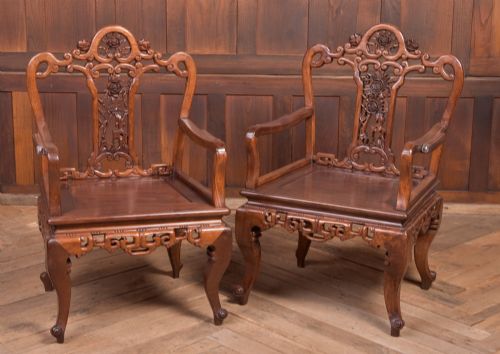
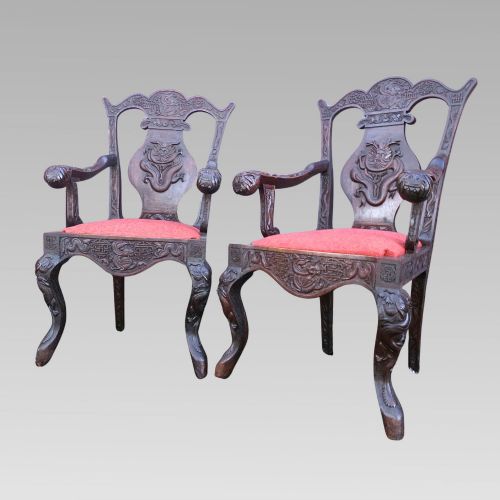
When you search for a chinese rosewood armchair, you encounter seating constructed from dense exotic timbers, frequently designated as hardwood or hongmu within the records. These pieces emerge predominantly from the nineteenth century, encompassing Qing dynasty examples alongside later export variants.
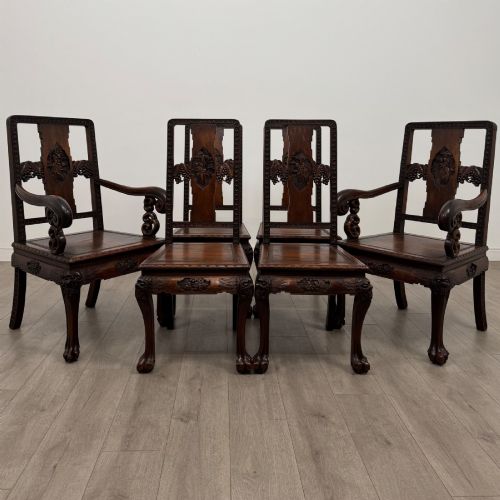
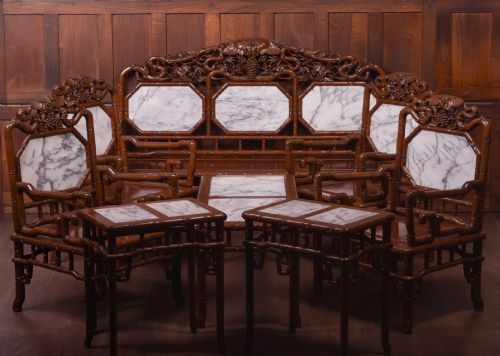
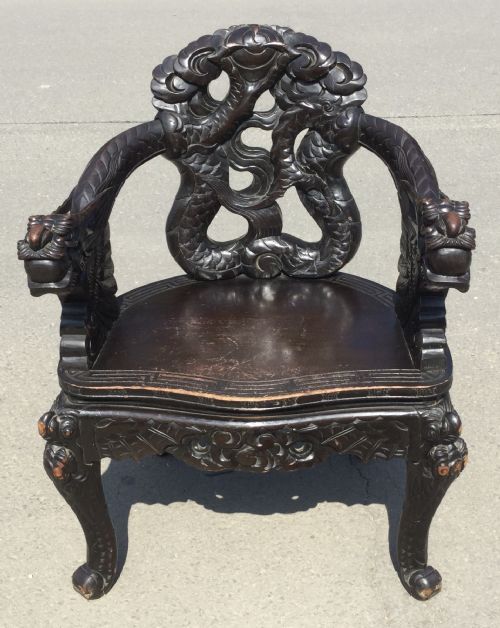
The available inventory extends from singular library chairs to pairs of throne chairs, parlour suites, and corner chairs. You frequently meet ornate versions featuring carved dragons or horseshoe configurations, alongside simpler hall furniture inlaid with mother of pearl.
Materials and construction methods
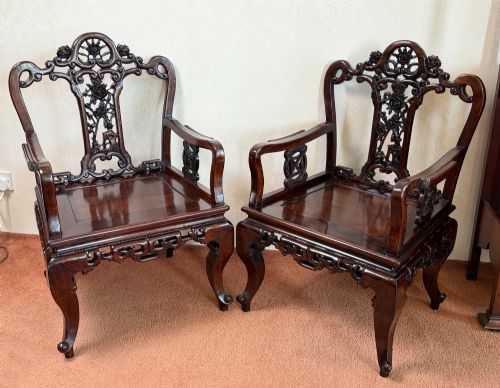
Maker workshops built these chairs using heavy tropical timbers like rosewood and hongmu, selecting them for their natural weight and deep colour. Artisans carved intricate relief directly into the structural framework, depicting motifs such as dragons and traditional foliage.
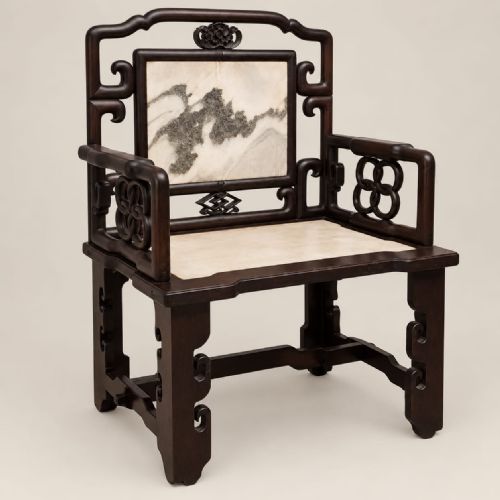
Certain pieces integrate contrasting panels of marble into the backrest, while others incorporate delicate mother of pearl inlay. Joinery methods relied on traditional interlocking construction to manage the dense nature of the hardwood without relying on metal fixings.
Chinese Rosewood Armchair Retail Price Guide 2026
Typical asking prices for chinese rosewood armchair among the pieces listed under this phrase on Sellingantiques today, from the lower quarter to the upper quarter. They describe what is for sale here now, not the wider market.
Listings demonstrate a strong presence of nineteenth-century Qing dynasty pieces, utilising rosewood, hongmu, and carved hardwood alongside marble and mother of pearl.
Distinctions in craftsmanship
The upper tier of these armchairs displays exceptional depth in the carved relief work, where details like dragon scales and facial expressions remain crisp and deliberate. Lesser examples exhibit shallower, more hurried carving that softens the contours of the ornament.
Material selection also dictates the standing of a piece, with dense hongmu and well-figured rosewood commanding greater visual authority than plain dark hardwood. The integration of decorative elements like marble or mother of pearl inlay requires precise fitting that separates high workshop output from standard production.
The Chinese Rosewood Armchair Glossary
- Hongmu
- A traditional Chinese classification for dense, red-hued hardwoods used in fine furniture manufacture. This timber provides the heavy structure and deep natural tone seen in many nineteenth-century seating pieces.
- Mother of pearl
- The iridescent internal layer of mollusc shells utilised for decorative inlay. Artisans carved this material into thin sections to create floral or geometric patterns set flush into the wooden surface.
- Throne chair
- A large, formal seating form with substantial proportions and authoritative vertical backs. These chairs typically display superior carving density and heavier framing than standard parlour seating.
Chinese Rosewood Armchair: Frequently Asked Questions
How do I identify a Qing dynasty armchair?
Qing dynasty chairs are distinguished by formal carved motifs such as dragons and traditional imperial iconography executed in heavy hardwoods. Their construction reflects traditional joinery methods established during the nineteenth century.
Examination of the timber density and the depth of the hand carving helps separate these period pieces from twentieth-century export variations.
What is hongmu wood?
Hongmu translates literally as red wood and serves as a term for various dense tropical hardwoods utilised in traditional Chinese furniture. It possesses significant weight and a rich dark coloration that deepens with age.
Furniture made from this material resists wear effectively due to the extreme hardness of the timber fibres.
How were mother of pearl inlays applied?
Artisans cut thin sections of shell into precise decorative shapes and fitted them directly into hand-cut recesses within the rosewood surface. The surrounding wood was then scraped flush to secure the inlay.
This painstaking technique created luminous contrast against the dark background of the carved hardwood.
Where should I place a heavy hardwood armchair?
These substantial chairs function well as focal points in studies, reception rooms, or hallways where their architectural presence can be appreciated. Their dense construction makes them stable standalone seating.
Positioning them away from direct heat sources protects the polished hardwood and any integrated marble or shell elements from thermal shock.