

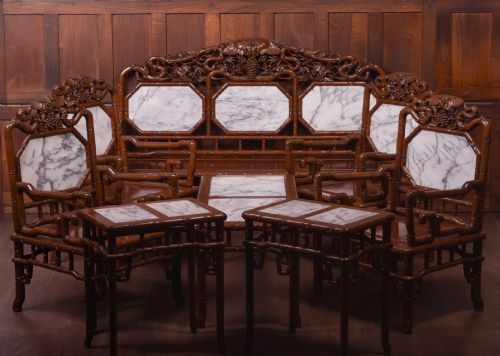
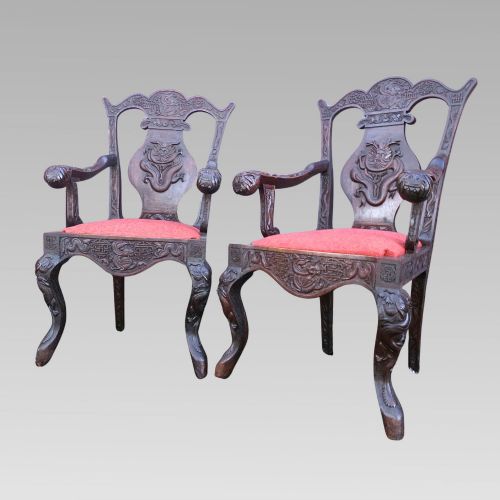


Oriental Hardwood Chairs
These oriental hardwood chairs bring solid timbers and sculptural carving into a room, offering substantial seating with distinct regional forms.
Oriental Hardwood Chairs
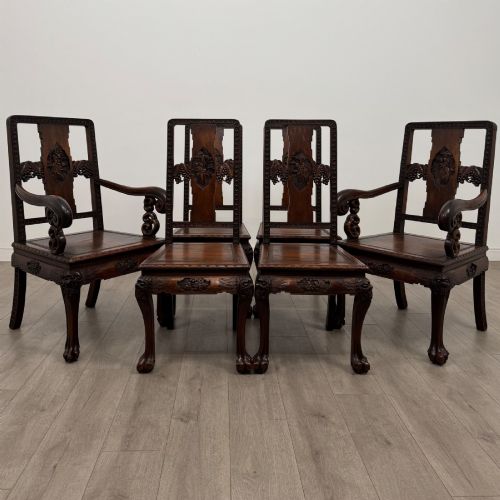
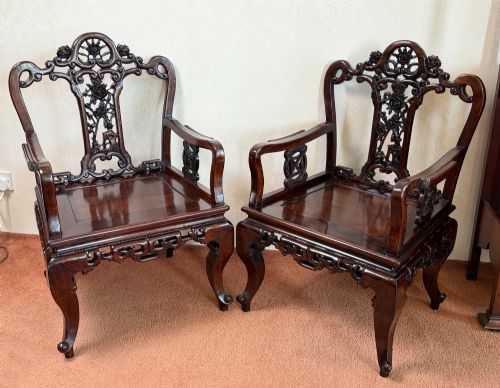
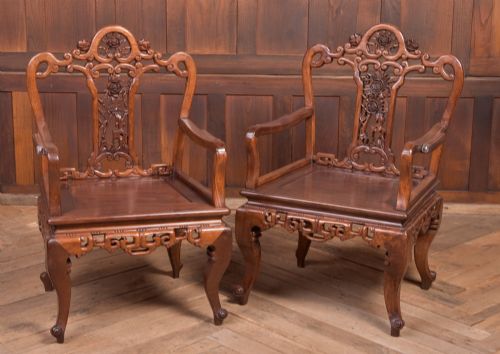
Oriental hardwood chairs encompass seating pieces produced across centuries in styles such as Qing Dynasty, Chinese Export, and Anglo-Indian, ranging from single elbow seats to large parlour suites. Buyers searching this phrase most frequently encounter 19th-century examples, including horseshoe-back armchairs, throne chairs, and solid side chairs.
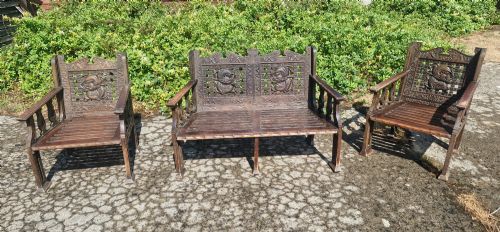
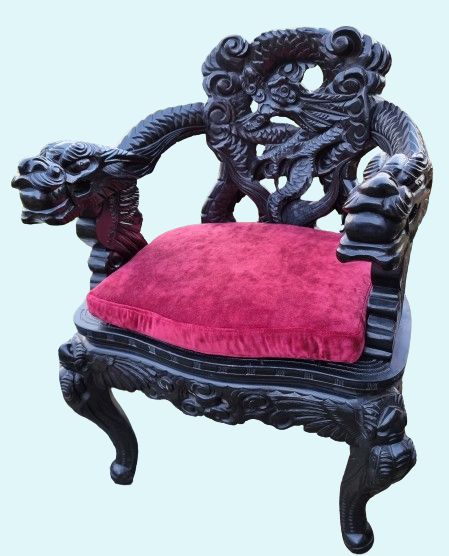
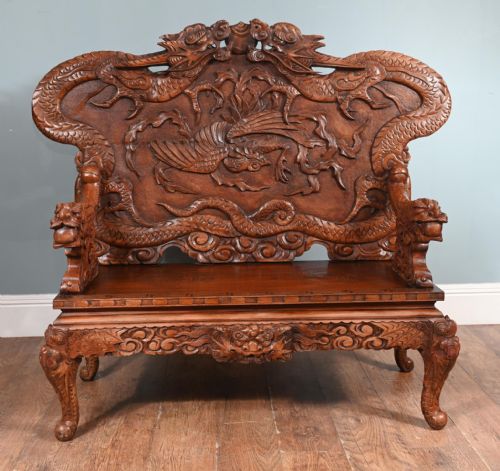
The selection extends to benches, settles, and folding variants, often featuring carved motifs, dragon details, or plain panelled seats. Forms range from traditional Chinese hall furniture to Middle Eastern inlaid X-frame seating and Burmese conservatory suites.
Makers utilised dense timbers and regional construction methods, producing functional seating that served scholarly, ceremonial, and domestic roles. Surviving pieces include matched pairs, individual armchairs, and multi-piece dining or seating sets.
How they were made
Carpenters constructed these pieces using dense timbers such as rosewood, hongmu, teak, elm, and huanghuali, joined with traditional mortise and tenon framing. Many items incorporate carved decorative elements, low-relief panels, or pierced splats executed directly in the solid wood.
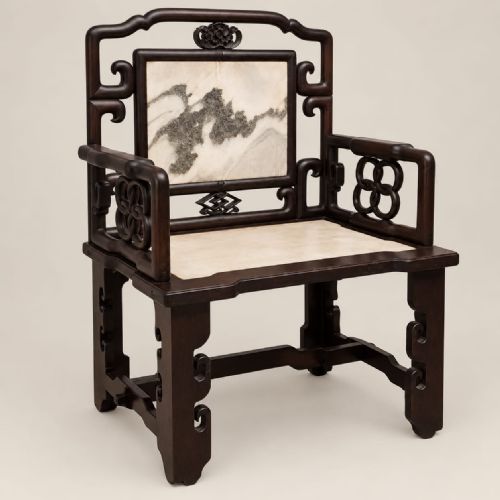
Surface finishes include clear polish to display the natural grain, dark lacquer, or applied cinnabar layers. Selected pieces incorporate contrasting materials, using mother-of-pearl inlay, brass wire, marble inserts, or nacre-shell to accent the primary timber structure.
Listings feature structural timbers including rosewood, elm, teak, and hongmu across 18th, 19th, and early 20th century periods.
What varies in quality
Quality rests in the selection of timber and the crispness of the joinery and carving. Dense woods like hongmu and huanghuali show tighter grain and allow for sharper, deeper relief work than softer fruitwoods or plain elm.
Proportion and structural integrity separate standard utility pieces from finer examples. Balanced curves on horseshoe backs and tight, stable frame joints indicate superior workshop production.
The Oriental Hardwood Chairs Glossary
- Horseshoe-back
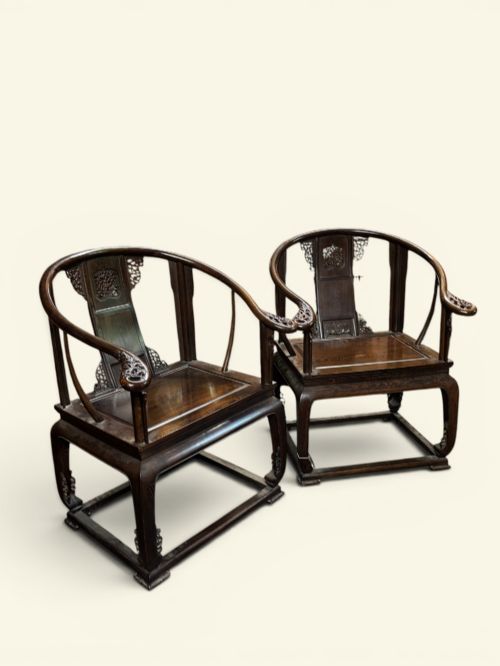
- A continuous curved crest rail that sweeps down to form the armrests. This ergonomic form appears frequently on chairs from the Qing Dynasty.
- Hongmu
- A translation meaning red wood, applied to dense, heavy tropical hardwoods used for formal furniture. It holds a dark reddish-brown tone and polishes to a smooth finish.
- Cinnabar lacquer
- Layers of coloured resin applied to a base and carved when dry. It creates tactile relief panels depicting figures, dragons, or floral motifs.
- Corner armchair
- A square seat designed to fit into room angles, featuring a diagonal orientation. The back rail wraps around two adjacent sides.
- Settle
- A wooden bench with a high back and solid arms, designed to block draughts in domestic interiors. Examples often incorporate storage compartments beneath the seat.
Oriental Hardwood Chairs: Frequently Asked Questions
How do I identify a horseshoe-back armchair?
The defining feature is the continuous curved top rail that forms both the backrest and the arms in one sweeping line. This form supports upright posture and often rests on tapering spindles or a solid central splat.
These pieces frequently date from the nineteenth century or earlier, utilising dense timbers that provide the necessary strength for the curved members.
Where were these chairs placed originally?
Formal rooms, halls, and scholars' studies housed these seats, where hongmu and rosewood throne chairs denoted status. Lighter elm or bamboo-style versions served everyday domestic functions.
Larger residences also utilised benches and parlour suites in reception spaces, while pairs of armchairs flanked tables or doorways.
How do I care for hardwood and lacquer surfaces?
Maintain the timber by dusting with a dry cloth and applying natural wax sparingly to preserve the grain. Keep pieces away from direct heat sources and rapid humidity changes to prevent timber movement.
Lacquer and cinnabar surfaces require gentle cleaning without abrasive polishes or excessive moisture to protect the layered finish.
What is the difference between side chairs and armchairs?
Side chairs feature a seat and back without armrests, designed to sit against a wall or around a dining table. Armchairs incorporate elbow supports, offering a more substantial profile for use as standalone seating.
Both types share construction methods and decorative motifs within matched dining sets or parlour suites.