


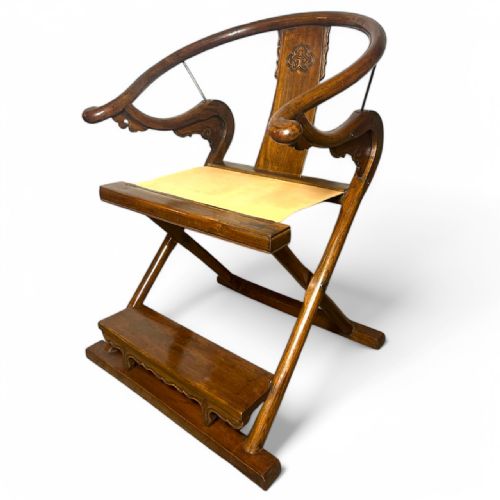
Asian Carved Wood Chairs
Asian carved wood chairs bring sculptural presence and deep cultural craftsmanship into a room.
Asian Carved Wood Chairs
Asian carved wood chairs encompass distinctive seating forms originating from various Eastern traditions, spanning centuries of woodworking heritage. When exploring this selection, buyers encounter functional seating that doubles as intricate sculptural art for the interior.
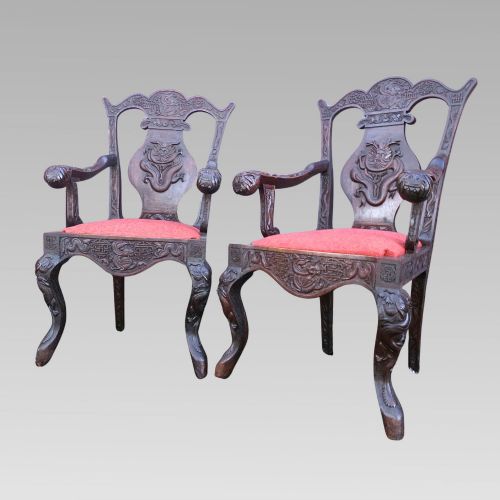
The assortment on this page leans heavily toward traditional Chinese designs alongside Burmese and Anglo-Indian examples. Visitors regularly discover armchairs, benches, and throne chairs representing traditional aesthetics and regional artistry.
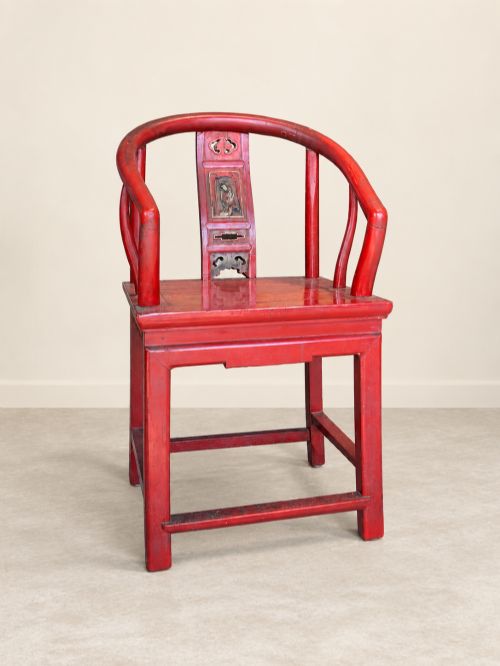
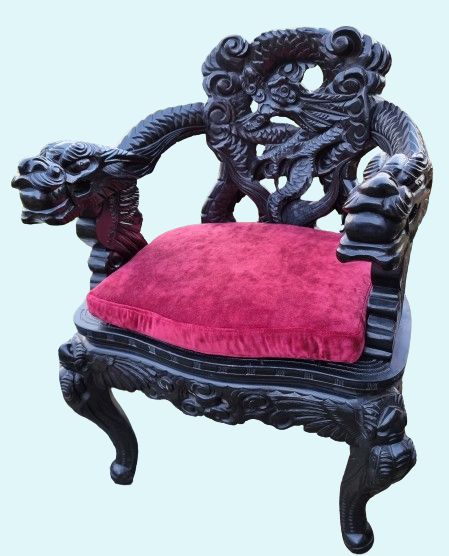
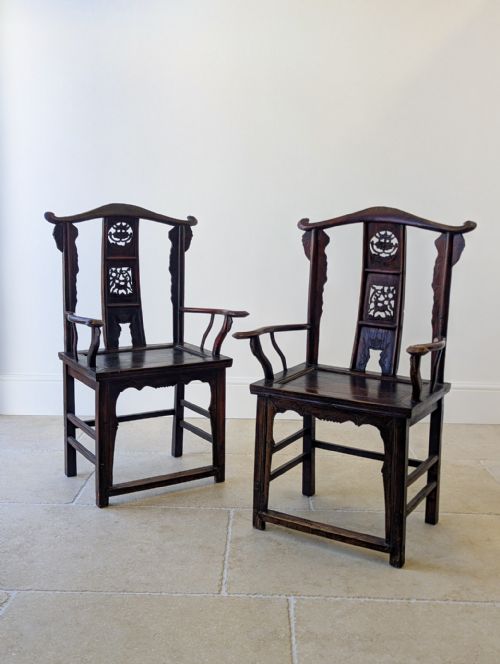
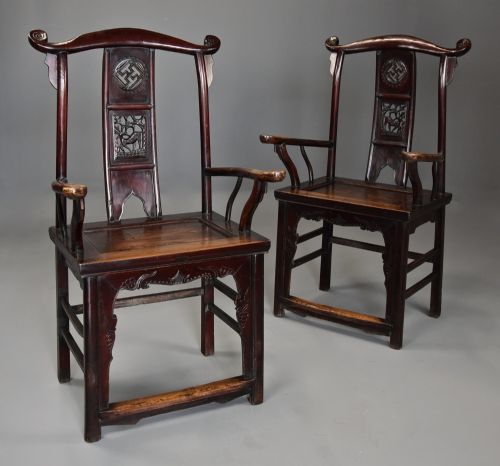
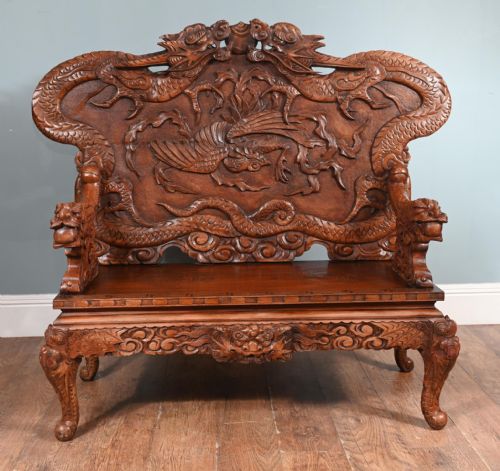
Makers utilised dense timbers and structured silhouettes to create seating that served domestic, ceremonial, and scholarly purposes. These pieces range from simple elm lamp hanger chairs to heavily ornamented Qing Dynasty dragon armchairs.
Materials and Methods
Construction relies heavily on dense timbers such as hardwood, rosewood, teak, and elm, providing structural integrity for intricate joinery. Artisans shaped these resistant materials using traditional woodworking methods without relying on modern fasteners.
Surface treatments frequently involve traditional lacquer techniques, including red lacquer and cinnabar finishes, which protect the wood while adding rich colour. Skilled carvers applied deep relief work directly into the solid timber to depict dragons, foliage, and daily scenes.
Available listings feature pieces spanning the 19th century through to 1920, predominantly constructed from elm, hardwood, and rosewood.
Evaluating the Craft
The distinction between standard examples and exceptional pieces rests upon the depth, precision, and sharpness of the hand-carved detailing. Superior chairs display crisply defined motifs where figures and scrollwork retain their original dimensionality.
Patina and timber selection dictate the visual hierarchy among these chairs, with well-preserved natural grain or original lacquer layers commanding greater appreciation. The integrity of the traditional joinery and the survival of original surface finishes further separate ordinary items from masterworks.
The Asian Carved Wood Chairs Glossary
- Hardwood
- Dense, durable timber harvested from slow-growing trees, frequently utilised for structural stability and fine carving in traditional Asian furniture.
- Lacquer
- A protective and decorative coating derived from natural resins, applied in multiple layers and often carved when dry.
- Yoke-back
- A traditional chair design featuring a curved top rail resembling an ox yoke, providing ergonomic support for the sitter.
- Horseshoe-back
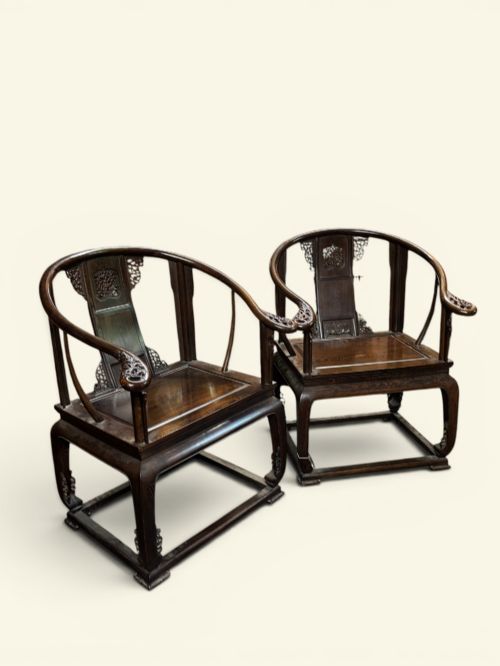
- A continuous, semicircular top rail and armrest assembly that curves gracefully around the occupant.
- Throne chair
- An imposing, highly ornamented seating form designed for ceremonial use or for figures of authority.
Asian Carved Wood Chairs: Frequently Asked Questions
How are Asian carved wood chairs used today?
These chairs function effectively as statement pieces in hallways, living rooms, and studies, adding architectural weight to contemporary interiors.
Their striking silhouettes allow them to stand alone as sculptural art or serve as functional seating around dining tables and desks.
What woods were used to make these chairs?
Cabinetmakers primarily worked with dense regional timbers including rosewood, teak, elm, and general hardwoods capable of supporting deep relief carving.
Selected pieces also incorporate secondary woods beneath specialised surface finishes like red lacquer and cinnabar.
How do I identify a Qing Dynasty chair?
Qing Dynasty pieces often exhibit formal symmetry, robust proportions, and deeply carved symbolic motifs such as dragons and traditional foliage.
They frequently employ heavy hardwoods or throne-style architecture reflecting the formal court aesthetic of the period.
How should I care for lacquered wood furniture?
Lacquered surfaces require protection from direct sunlight and sustained moisture fluctuations to prevent the finish from drying or cracking.
Routine dusting with a soft, dry cloth preserves the underlying patina without introducing harsh chemical cleaning agents.