




Pair Chinese Elbow Chairs
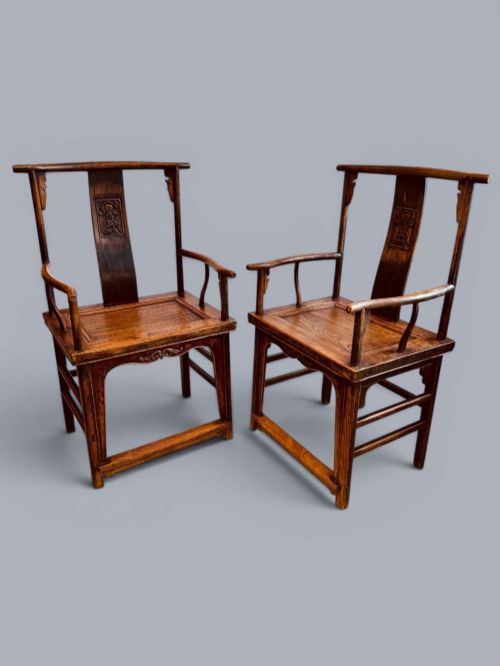
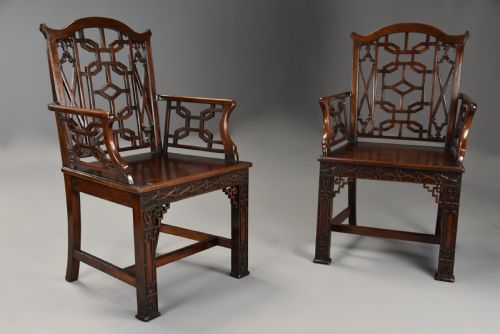
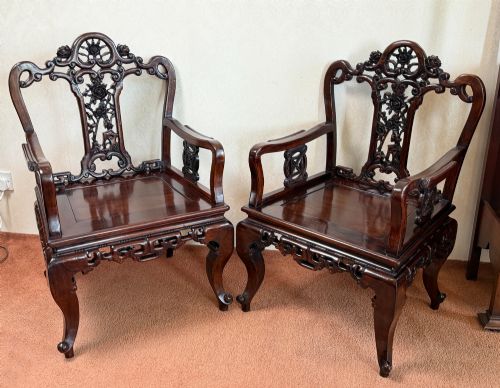
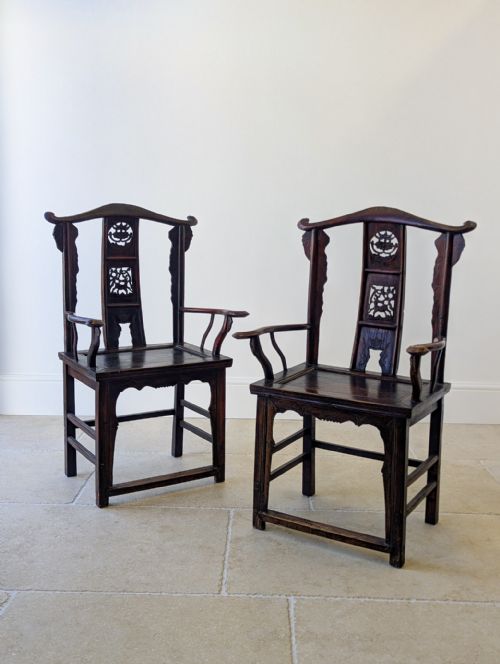
These pair chinese elbow chairs are substantial hardwood armchairs that anchor a room with calm, structural authority.
Pair Chinese Elbow Chairs
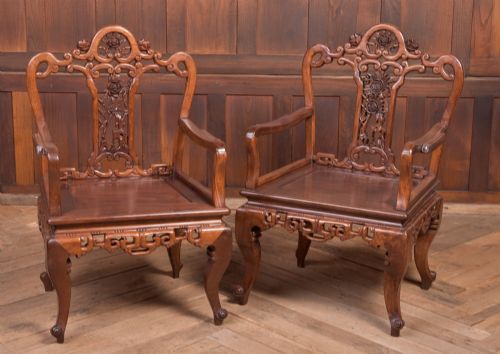
When you search for pair chinese elbow chairs, you find robust armchairs originating from nineteenth-century workshops, often styled in the manner of the Qing dynasty or later revival periods. Most examples meeting this description are constructed as matched sets from dense timbers, designed with supportive armrests and upright backs that reflect traditional craftsmanship.
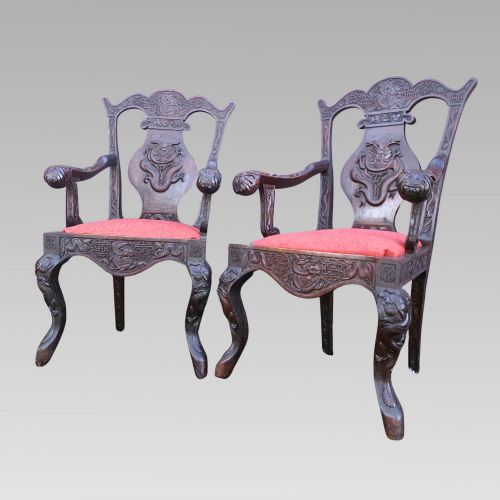
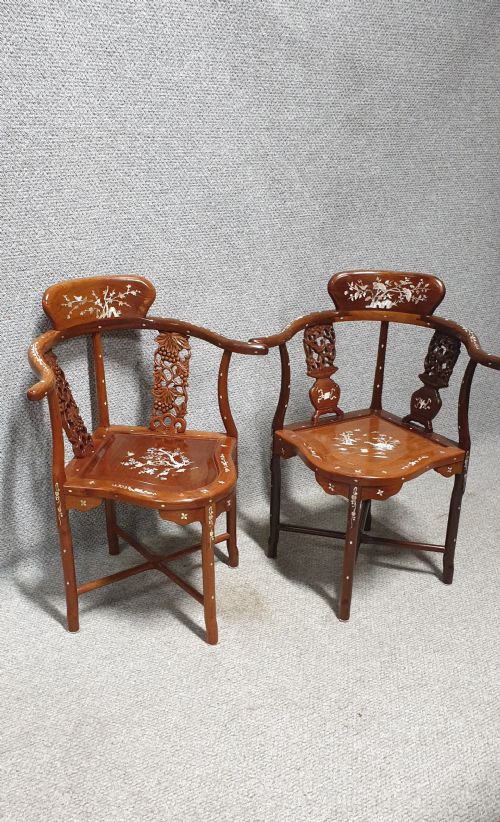
The selection on this page ranges from yoke-back and throne chair forms to simpler elm armchairs finished in red lacquer. These seating pieces appear across multiple distinct periods, including Victorian era imports, late nineteenth-century examples, and early twentieth-century interpretations.
How they were made
Makers built these chairs using dense timbers such as rosewood, teak, dark hardwood, and elm, relying on traditional joinery that held fast without relying on modern hardware. Surfaces were frequently carved with deep relief motifs depicting dragons or subtle linear details, while others received coats of red lacquer for a smooth, protective finish.
Selected variants incorporated woven cane seats for flexibility and coolness, whereas others provided platforms for fabric upholstery. The combination of heavy structural woods and deliberate surface finishes ensured the timber endured through decades of use.
Pair Chinese Elbow Chairs Retail Price Guide 2026
Typical asking prices for pair chinese elbow chairs among the pieces listed under this phrase on Sellingantiques today, from the lower quarter to the upper quarter. They describe what is for sale here now, not the wider market.
Some nineteenth-century makers hid secret dragons within the armrest curves, daring you to find them.
What varies in quality
The distinction between standard examples and superior pieces rests upon the crispness of the timber carving and the density of the wood selected. Chairs fashioned from heavy rosewood or teak with deep, hand-chiselled dragon motifs demonstrate a higher standard of workshop output than simpler, plain-timber counterparts.
Symmetry within the pair also dictates quality, as matched frames that retain identical joinery proportions and balanced lacquering reflect careful original production and attentive preservation over time.
The Pair Chinese Elbow Chairs Glossary
- Yoke-back armchairs
- Chairs featuring a distinctive upper rail curved like an ox yoke, offering ergonomic support for the head and shoulders.
- Elbow chairs
- Seating constructed with integrated armrests designed to support the elbows and forearms of the sitter.
- Qing dynasty
- The final imperial dynasty of China, spanning from sixteen-forty-four to nineteen-twelve, known for sophisticated hardwood furniture traditions.
- Cane
- Woven rattan material used to create resilient, breathable seat panels within a wooden frame.
- Lacquer
- A durable resin finish applied in multiple layers to seal and colour wood surfaces.
Pair Chinese Elbow Chairs: Frequently Asked Questions
How do I place them?
These armchairs work well as statement seating flanking a fireplace, positioned at opposite ends of a long table, or standing alone in a hallway.
Because they possess strong vertical lines and dark timber tones, they balance rooms with neutral walls and subtle textiles.
Are they comfortable to sit in?
Traditional wooden armchairs offer firm, upright support rather than deep cushion sinking, encouraging an alert posture.
Versions with woven cane or upholstered inserts provide a slightly softer seating experience while maintaining rigid structural integrity.
How do I date them?
Dating relies on identifying timber species, carving styles, and construction techniques, alongside any recorded provenance from periods such as the nineteenth century or nineteen-twenty.
Subtle shifts in joinery methods and the presence of original red lacquer or later revival styling help narrow the decade of production.
How do I care for the wood?
Maintain the timber and lacquer surfaces by dusting gently with a dry, soft cloth and avoiding direct exposure to strong sunlight.
Keep the chairs away from sudden temperature fluctuations to prevent the dense hardwood and traditional joinery from drying out.