





Chinese Yoke Back Chairs
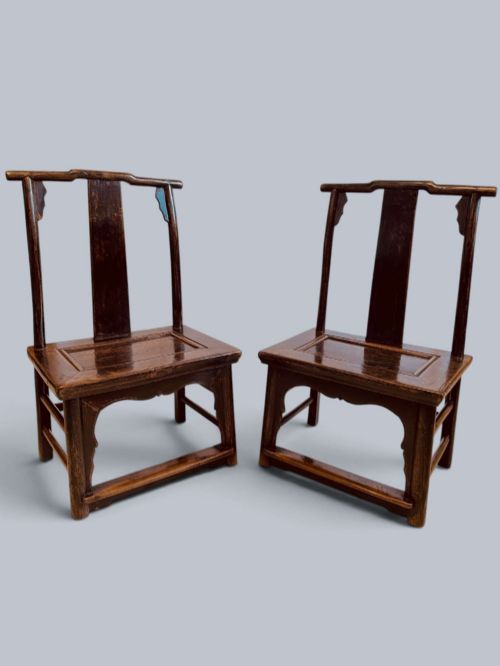
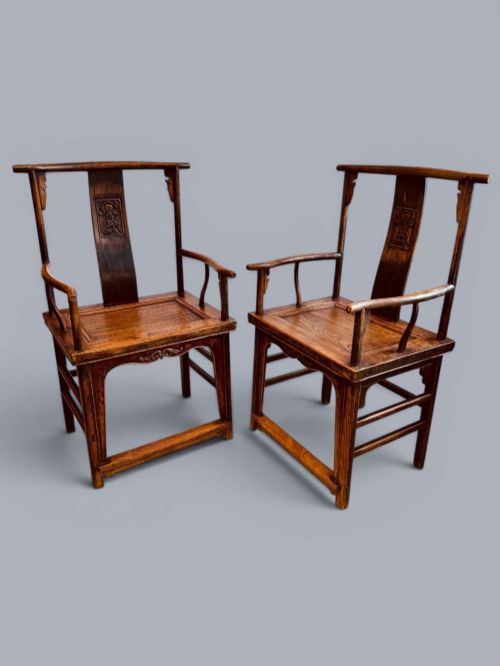
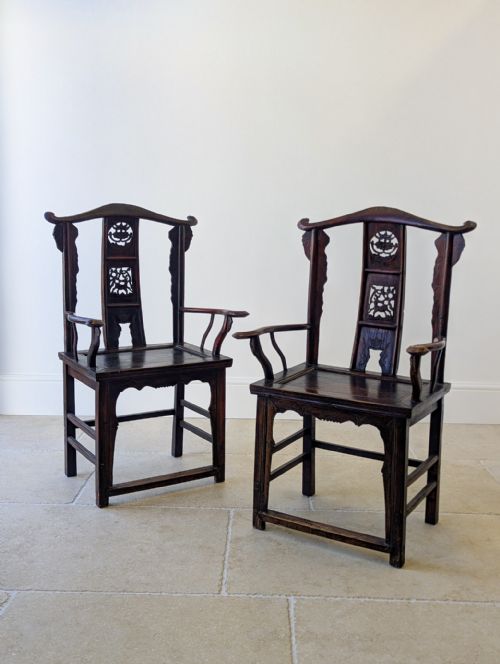
Chinese yoke back chairs are striking elm and hardwood forms from the Qing Dynasty, prized for clean architectural lines and graceful crestrails.
Chinese Yoke Back Chairs
Chinese yoke back chairs encompass traditional seating forms built with distinctive protruding crestrails resembling traditional animal yokes. Collectors searching this phrase encounter nineteenth century examples alongside eighteenth century pieces, spanning armchairs, side chairs, hall chairs, and benches.
The selections appearing here predominantly feature elm wood construction, often accompanied by historic red lacquer surfaces or painted wood finishes. Armchair configurations and concubine chairs dominate the available forms, reflecting regional traditional Chinese workshop output from the Qing period.
Materials and Construction
Construction relies heavily on elm and dense hardwoods joined through traditional woodworking methods rather than metal fixings. Surfaces frequently display applied red lacquer, gold leaf highlights, or simple painted wood treatments over the timber grain.
Makers shaped the characteristic crestrails and curved backsplats to support the sitter while maintaining structural integrity across decades of use. The integration of softwood elements alongside primary timbers appears in specific regional pieces.
Chinese Yoke Back Chairs Retail Price Guide 2026
Typical asking prices for chinese yoke back chairs among the pieces listed under this phrase on Sellingantiques today, from the lower quarter to the upper quarter. They describe what is for sale here now, not the wider market.
Current listings feature elm, lacquer, hardwood, gold leaf, and painted wood across nineteenth and eighteenth century periods.
Judging Quality and Character
Quality rests in the retention of original surface treatments, whether aged red lacquer, gold leaf accents, or untouched elm patina. Pieces displaying crisp joinery and balanced proportions distinguish themselves from heavily restored examples.
The subtlety of the crestrail curve and the depth of the timber grain determine the visual impact of each chair. Original finish integrity separates standard utility seating from finer scholar chairs.
The Chinese Yoke Back Chairs Glossary
- Yoke-back
- A chair design featuring a top rail that extends beyond the vertical back posts, resembling a traditional ox yoke.
- Qing Dynasty
- The imperial dynasty of China lasting from sixteen forty-four to nineteen eleven, encompassing the primary manufacturing eras seen in these listings.
- Elm
- A durable, tough timber utilised extensively for traditional Chinese furniture making due to its pliable nature when steamed.
- Lacquer
- A traditional protective and decorative coating derived from tree sap, frequently applied in red hues on these seating forms.
- Concubine chair
- A specialised lower seating form designed for relaxed domestic use within traditional Chinese interiors.
Chinese Yoke Back Chairs: Frequently Asked Questions
How old are these chairs typically?
The pieces available range primarily from the nineteenth century into the early twentieth century, with occasional eighteenth century examples appearing.
Craftsmanship aligns with traditional Qing Dynasty methods, reflecting the prevailing styles of their respective manufacturing decades.
Where were these chairs used originally?
These seating forms served multiple domestic and formal functions within traditional Chinese homes, from scholars' studies to reception halls.
Armchairs and side chairs accommodated daily seating, while benches provided flexible options for larger rooms.
Are pairs common in these listings?
Many examples are offered as matched pairs, reflecting how traditional Chinese seating was commissioned and arranged symmetrically in rooms.
Single armchairs and benches also appear for buyers seeking accent pieces.
What woods should I expect to find?
Elm wood forms the primary material foundation for the majority of these listings, complemented by various hardwoods and softwoods.
Surface treatments such as red lacquer or painted finishes frequently cover the underlying timber.