





Qing Dynasty Side Chairs
Qing dynasty side chairs combine structural restraint with precise carving, offering collectors seats defined by centuries of traditional Chinese joinery.
Qing Dynasty Side Chairs
When you search for qing dynasty side chairs, you are looking at formal seating originating primarily from the eighteenth and nineteenth centuries, spanning eras through to nineteen twenty. These pieces include matched pairs and individual examples intended for domestic halls and reception rooms rather than casual lounging.
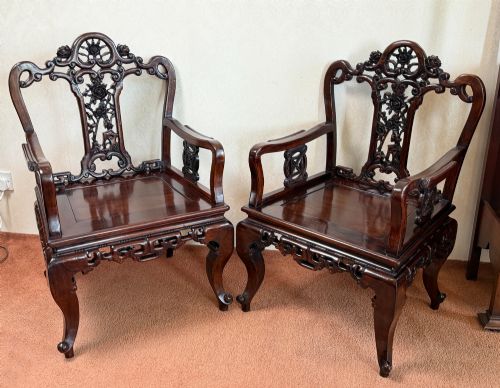
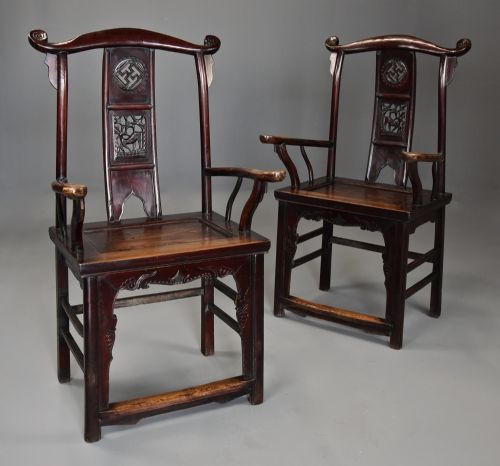
The forms on this page include yokeback chairs, lamp hanger designs, and carved hall chairs fashioned from various Asian timbers. Many survive as pairs, reflecting their original domestic placement flanking tables or walls within traditional Chinese interiors.
How they were made
The construction relies heavily on dense hardwoods such as rosewood, hongmu, and huanghuali, alongside resilient domestic elm and lacquered wood surfaces. Carpenters utilised complex mortise and tenon joinery without metal fasteners, allowing the timber to expand and contract naturally across seasonal changes.
Surface finishes range from polished natural grain displaying deep patination to original red lacquer and painted wood decorations. Carved details on splats and aprons were executed by hand, varying from simple geometric panels to intricate figurative motifs.
Qing Dynasty Side Chairs Retail Price Guide 2026
Typical asking prices for qing dynasty side chairs among the pieces listed under this phrase on Sellingantiques today, from the lower quarter to the upper quarter. They describe what is for sale here now, not the wider market.
Concubine chairs in this collection offer a slightly lower, relaxed profile for domestic leisure.
What varies in quality
Quality in qing dynasty side chairs rests on the selection of timber and the crispness of the joinery and carved ornament. Dense hardwoods with rich natural figures and minimal replacement parts stand at the upper end of the scale.
The integrity of the original lacquer or patina dictates the visual appeal of softer woods like elm. Pieces retaining their structural rigidity without excessive movement in the joints demonstrate superior initial craftsmanship.
The Qing Dynasty Side Chairs Glossary
- Yokeback chair
- A traditional seating form featuring a crestrail that curves upwards at the ends resembling a yoke. This design provides ergonomic support for the occupant.
- Lamp hanger chair
- A specific variant of Chinese seating with rounded crestrails that project outwards. The profile resembles the wooden stands used to suspend domestic oil lamps.
- Hongmu
- A translation meaning red wood used by collectors to describe dense tropical hardwoods. These timbers include various species prized for weight and dark colour.
- Patina
- The surface sheen and colour developed through handling, age, and exposure to light over many decades. It serves as an indicator of untouched antiquity.
Qing Dynasty Side Chairs: Frequently Asked Questions
Are these chairs comfortable for daily use?
Traditional Chinese seating was designed with an upright posture in mind, reflecting historical standards of etiquette and deportment.
While structurally sound for modern sitting, they lack the upholstered cushioning found in later Western armchair designs.
How do I identify a genuine period piece?
Examination of the joinery reveals the traditional construction methods utilised by historical Chinese cabinetmakers.
Genuine examples display appropriate timber shrinkage, honest wear around the footrests, and consistent patination across the surfaces.
Why do many of these chairs come in pairs?
Formal Chinese reception rooms were arranged symmetrically around a central altar table or wall hanging.
Ch<bos>7
Consequently, seating was constructed in matching pairs to maintain balance and harmony within the domestic interior space.
How should I care for hardwood furniture?
Maintain stable indoor humidity levels to prevent the dense timbers and traditional joints from splitting or loosening.
Apply occasional natural wax and avoid placing the pieces near direct heat sources or strong sunlight.