
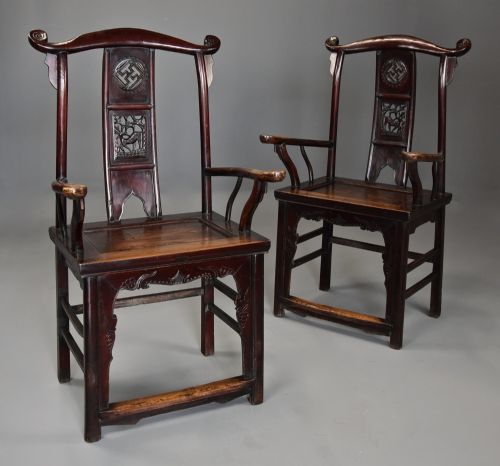


Antique Asian Side Chairs
Antique Asian side chairs bring sculptural form and rich timber to a room, offering functional seating rooted in centuries of tradition.
Antique Asian Side Chairs
These pieces encompass seating furniture originating from Asian workshops, predominantly taking the form of side chairs, armchairs, hall chairs, and lamp hanger chairs. When browsing antique asian side chairs, a buyer most frequently encounters examples fashioned during the nineteenth century, including pieces associated with the Qing Dynasty and Burmese temple traditions.
Forms range from simple elm dining seats to elaborate carved hardwood throne chairs and red lacquer yokebacks. Such furniture serves both practical seating needs and decorative roles as accent pieces within contemporary and traditional interiors alike.
Materials and construction
The construction relies heavily on dense timbers such as elm, hardwood, teak, and hongmu, chosen for their structural strength and capacity for fine detail. Joinery techniques traditionally avoided metal fasteners, depending instead on intricate interlocking joints.
Surfaces receive specific finishes including painted decoration and original red lacquer coatings, which protect the timber while developing a deep patina over decades of use.
Several chairs arrive with names recalling temple gatherings and concubines, carrying centuries of domestic stories in their timber.
Judging quality and character
Quality reveals itself in the crispness of the woodcarving, the structural integrity of the joinery, and the condition of the surface finish. Pieces retaining their original lacquer or unpainted patinated hardwood command greater interest from collectors.
Proportion and balance distinguish finer examples, particularly in regional variations such as yokeback or lamp hanger forms where the sweep of the timber dictates the overall visual elegance.
The Antique Asian Side Chairs Glossary
- Yokeback
- A chair design featuring a curved top rail resembling a traditional yoke. This distinctive crest often provides ergonomic support for the shoulders and head.
- Hongmu
- A category of dense, heavy Asian hardwoods highly prized for furniture making. The timber accepts intricate carving and ages to a rich tone.
- Lamp hanger
- A chair style characterised by protruding top rail ends that resemble devices used for suspending lamps. It represents a classic form within traditional Chinese seating.
- Patina
- The surface sheen and texture developed through age, handling, and wear. A desirable patina shows genuine historic use without obscuring the timber detail.
Antique Asian Side Chairs: Frequently Asked Questions
How do I style these chairs at home?
These chairs work well as single accent pieces in hallways or living rooms where their sculptural forms can be appreciated.
Pairing them with neutral modern furnishings allows the traditional timber and lacquer finishes to stand out as focal points.
Are these chairs comfortable for daily sitting?
Many traditional designs focus on upright posture, particularly yokeback and hall chair variants intended for formal use.
Adding a simple loose cushion can adapt firmer wooden seats for longer periods of relaxation.
What periods do these pieces typically date from?
The available selection centres primarily on the nineteenth century, spanning from the eighteen-seventies through to the early twentieth century.
Stylistic markers often align with Qing Dynasty aesthetics or regional Burmese temple traditions.
How should I care for lacquered wood?
Lacquered surfaces require protection from direct sunlight and extremes of humidity to prevent cracking or fading over time.
Dusting gently with a dry, soft cloth is usually sufficient for routine maintenance.