




Chinese Elm Chairs
These chinese elm chairs bring sculptural timber forms and centuries of craftsmanship straight into a modern interior.
Materials and construction methods
Joinery relies on traditional woodworking techniques without modern metal fasteners, allowing the timber to expand and contract naturally over centuries. Artisans selected elm wood for its fibrous strength and distinctive grain pattern, which accepts both transparent polishes and opaque surface treatments.
Certain surfaces receive coats of red lacquer or applications of gold leaf to highlight carved details on the back splats and crest rails. Pickled finishes appear on specific examples, altering the natural blonde tone of the wood while preserving its tactile grain.
Separating the ordinary from the exceptional
Quality rests heavily on the retention of original surface treatments, such as red lacquer or natural patination built up through long use. Pieces retaining their early finishes show a depth of character that stripped or heavily restored timber simply cannot replicate.
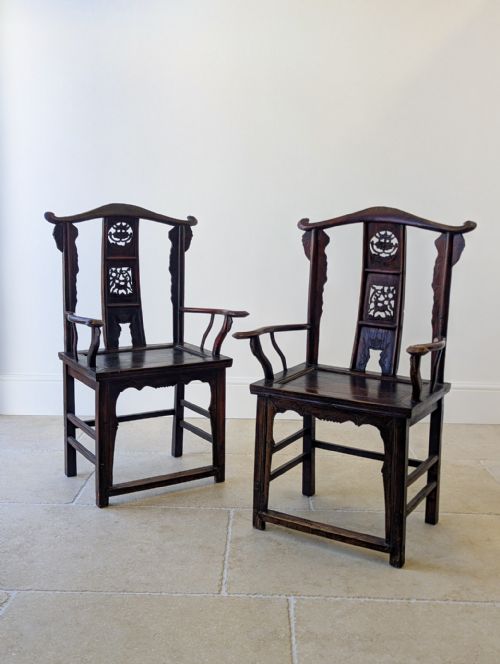
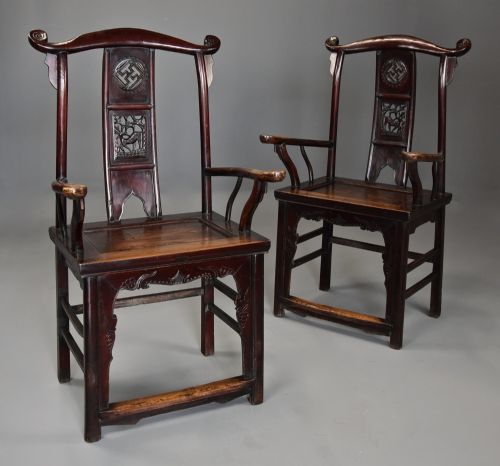
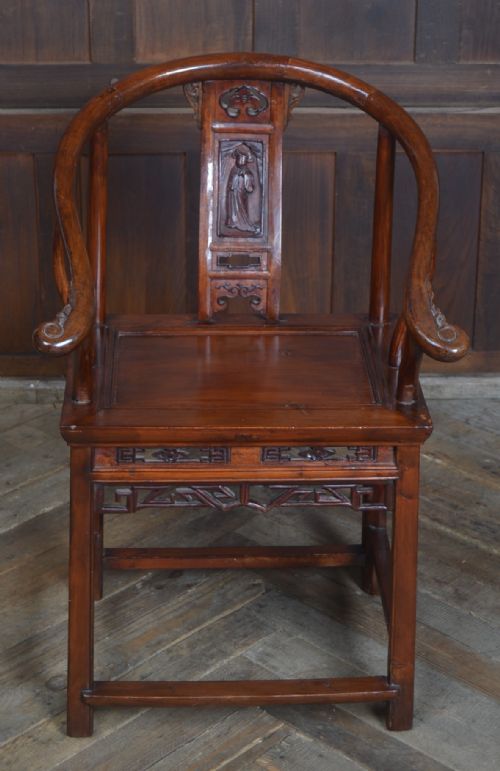
The sophistication of the carving on back splats and the precision of the joinery distinguish higher tier examples from standard provincial seating. Well-executed yoke backs and sweeping horseshoe arms display a fluency of line that marks out superior work.
Listings feature elm, hardwood, and lacquer, alongside specific surface treatments like gold leaf and pickled finishes.
The Chinese Elm Chairs Glossary
- Yoke-back
- A chair style featuring a top rail that curves upwards and outwards resembling an ox yoke. This design supported the user's posture during long periods of reading.
- Horseshoe chair
- A form characterised by a continuous curved crestrail and armrests that sweep down in a single fluid arc. It is also known as a circle chair.
- Scholar's chair
- A minimalist form of seating designed for literati and officials, prioritising understated elegance and ergonomic support. They often display subtle carvings on the central splat.
- Patina
- The surface sheen and texture developed by wood and lacquer over decades of handling and exposure to light. A good patina indicates age and gentle use.
- Qing Dynasty
- The final imperial dynasty of China, spanning from the seventeenth to the early twentieth century. Many surviving elm chairs date from the later decades of this period.
Chinese Elm Chairs: Frequently Asked Questions
What is a yoke-back chair?
A yoke-back chair has a prominent top rail that curves upward at the ends, bearing a visual resemblance to an animal yoke. This architectural element provides a comfortable headrest or handhold.
Craftsmen often paired this feature with a carved central splat to offer lumbar support. They remain among the most prevalent armchair styles found in traditional Chinese seating.
Can I use these chairs at a modern dining table?
These elm armchairs work effectively around a dining table provided you check the clearance height beneath the table apron. Many examples were built with lower seating platforms than contemporary European chairs.
Their substantial armrests mean they require more lateral space than simple side chairs. Selecting open arm designs helps maintain a sense of openness in a dining room.
How should I care for lacquered elm wood?
Maintain lacquered elm surfaces by dusting gently with a dry, soft cloth and avoiding harsh chemical cleaning products. Direct sunlight can degrade old lacquer and dry out the underlying timber over time.
Keeping indoor humidity levels stable prevents the elm from splitting or warping. Natural wax can be applied sparingly to unlacquered areas to preserve the patina.