



Chinese Seating
Chinese antique seating encompasses wooden armchairs, benches, stools, and garden seats spanning the Qing dynasty and later periods, chosen for distinct craftsmanship and material depth.
Chinese Seating
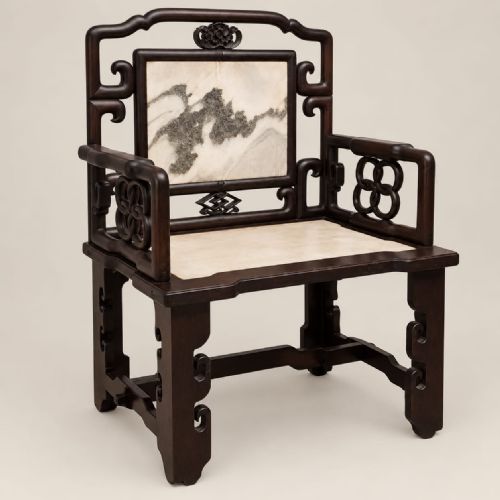
Chinese antique seating spans functional forms including armchairs, yokeback armchairs, benches, altar benches, window seats, stools, and garden seats. These objects originate from various periods such as the nineteenth century, nineteen hundred, and nineteen thirty.
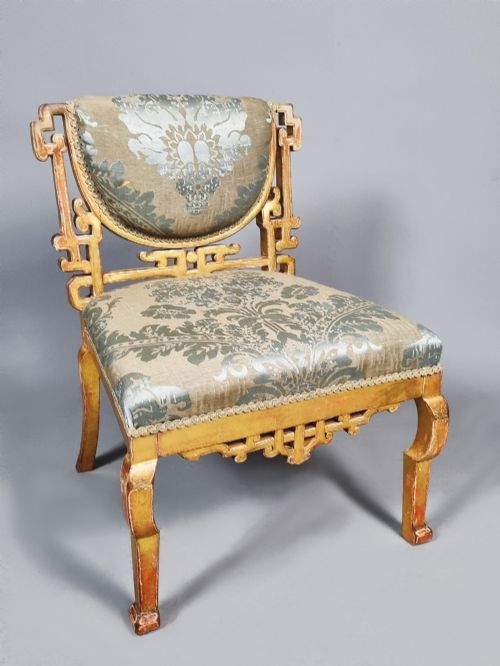
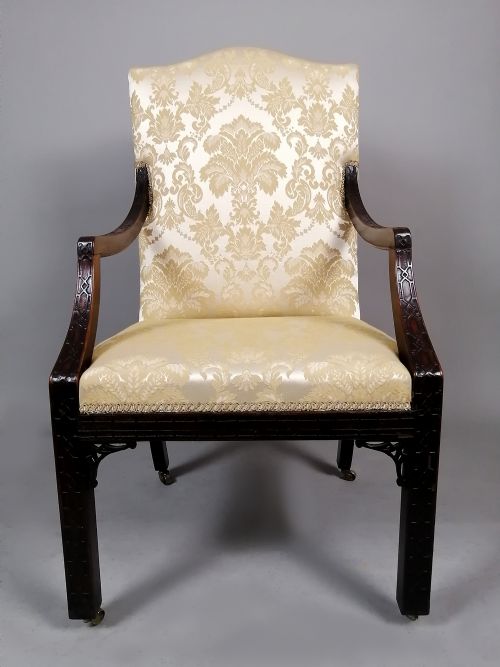
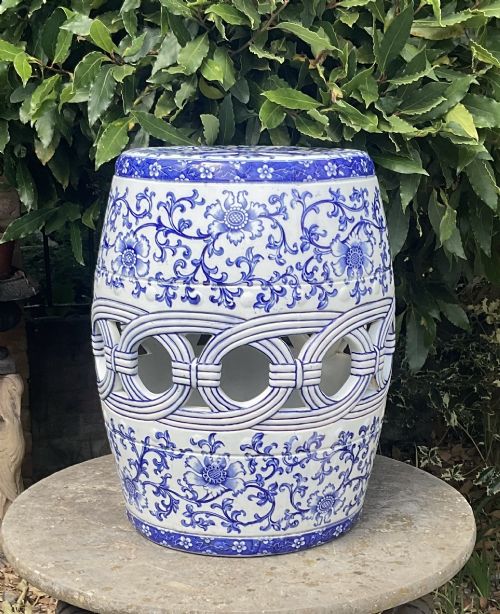
The selection includes traditional forms like horseshoe hall benches, throne chairs, folding armchairs, and garden barrels made from porcelain or pottery. Buyers encounter both traditional domestic seating and pieces influenced by Chinese export styles or European interpretations like Chinese Chippendale.
Makers and workshops produced these items utilising native timbers, lacquers, and ceramics, creating functional furniture alongside decorative figural seating and textile seating mats.
What varies in quality
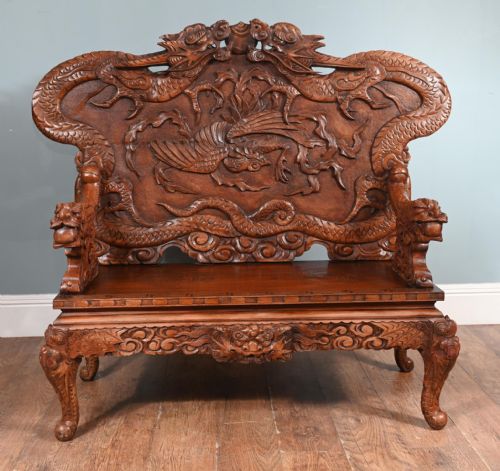
Quality depends upon the selection of timber and the depth of carving, where crisply defined dragon motifs and articulated joinery distinguish superior items from simpler utility furniture.
The preservation of original finishes, such as intact red lacquer, patinated elm surfaces, or well-maintained giltwood and polychrome pigment, defines the integrity of surviving examples.
Structural harmony between proportions and decorative elements governs the distinction between standard production items and exceptional throne chairs or scholarly benches.
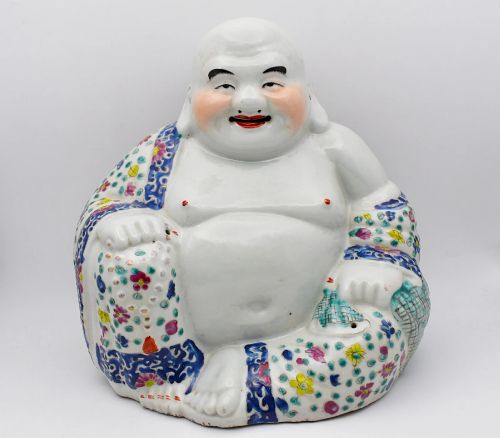
A smiling porcelain Budai figure watches over the seating arrangements from a quiet corner of the archive.
Waugh and Son·Minton·Zhu Mao Ji
The Chinese Seating Glossary
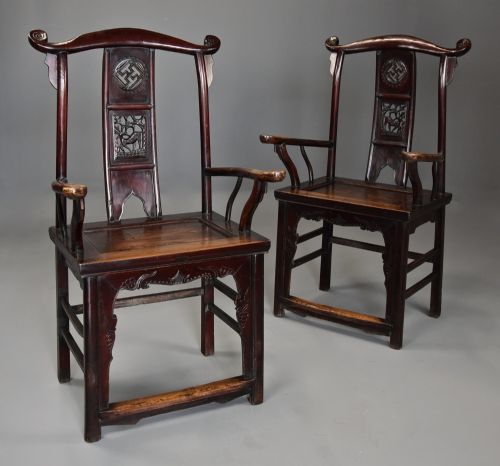
- Yokeback armchair
- A traditional Chinese chair style featuring a crestrail that curves upwards at the ends like the horns of an ox or the yoke of a cart.
- Cinnabar lacquer
- A traditional Chinese decorative technique involving multiple layers of coloured lacquer applied to a base and carved with intricate motifs.
- Cockpen chair
- A style of Chinese Chippendale chair characterised by an open lattice back and straight legs, popular during the eighteenth and nineteenth centuries.
- Hongmu
- A dense, dark tropical hardwood used in traditional Chinese furniture making, prized for its weight and fine grain.
- Famille rose
- A palette of opaque enamel colours introduced in Chinese porcelain decoration during the Qing dynasty, featuring prominent pink hues.
Chinese Seating: Frequently Asked Questions
What is a Chinese altar bench?
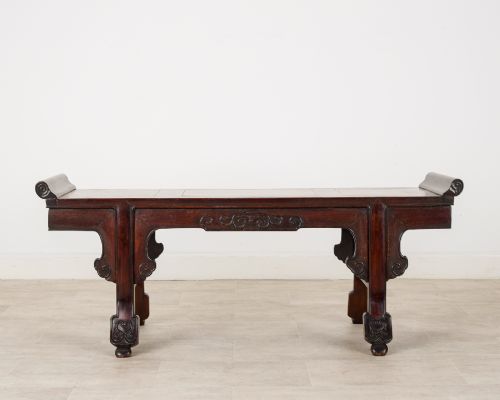
An altar bench is a long, narrow wooden form originally designed for domestic or temple altars, repurposed in modern interiors as a window seat or hallway furniture.
These pieces typically feature straightforward joinery and sturdy hardwood or elm construction, reflecting traditional domestic layouts.
How do I identify a Qing dynasty chair?
Qing dynasty chairs often display dense hardwood construction, elaborate dragon carvings, or formal throne proportions intended for official use.
Examining the depth of the hand-carving and the natural patina of the wood helps determine the age and origin of these formal pieces.
Where were ceramic garden seats placed?
Ceramic barrel garden seats served as functional seating or decorative stands in courtyards, gardens, and interior reception spaces.
Their glazed porcelain or pottery construction allowed them to withstand outdoor exposure while displaying blue and white painting or polychrome enamel details.
What is a horseshoe hall bench?
A horseshoe hall bench incorporates a continuous curved backrest rail that sweeps downward to form armrests, offering an ergonomic wrap-around seat.
Such seating types often utilise elm or rosewood and appear in both domestic halls and formal reception areas.